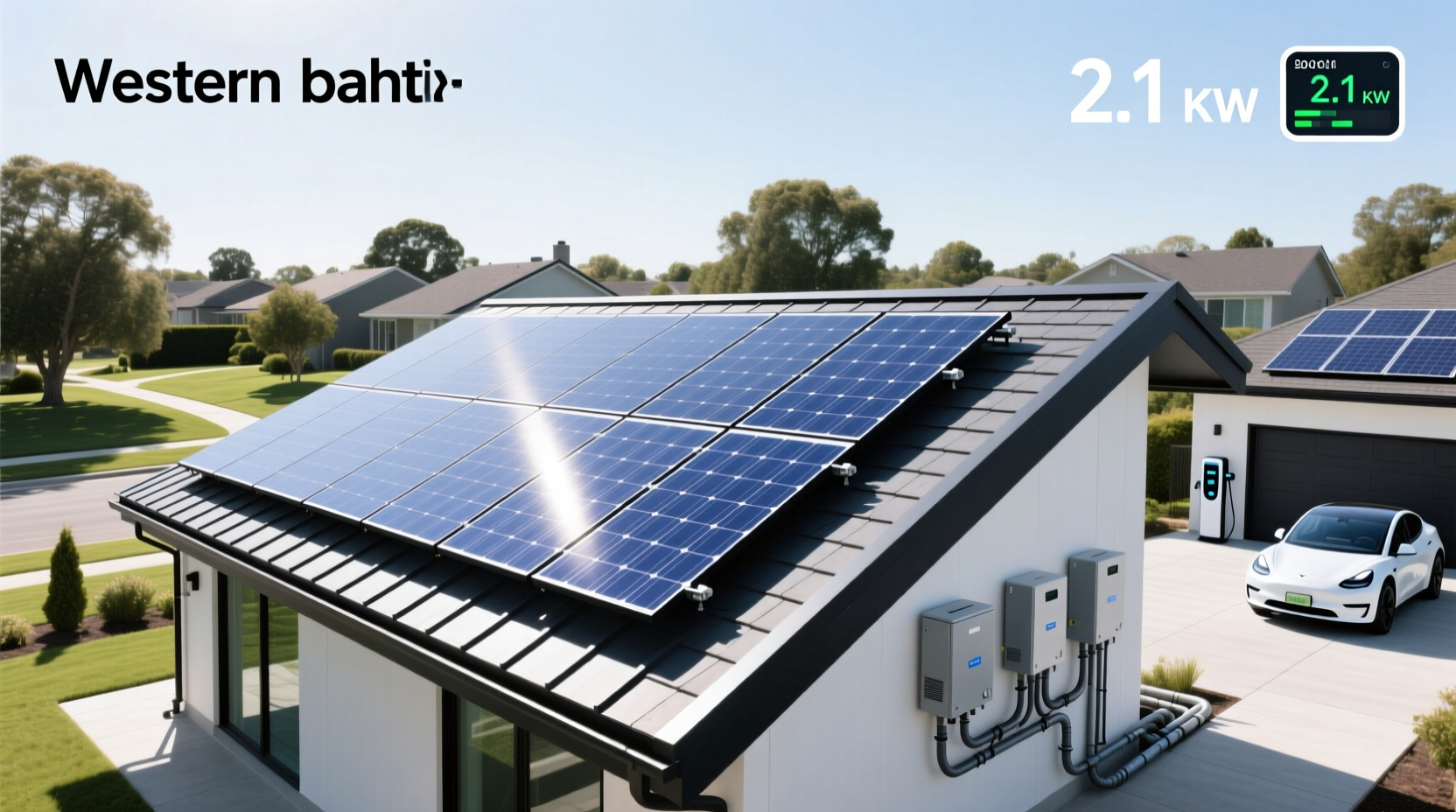
If you’re a typical user evaluating a 2000 watt solar panel kit in 2026, skip the marketing fluff: prioritize monocrystalline panels with ≥22% efficiency, pair them with LiFePO4 (LFP) storage—not lead-acid—and choose system architecture based on your grid access, not aesthetics. Over the past year, residential solar pricing has stabilized at $3.21/W on average 1, but supply chain shifts and rising demand for grid-forming inverters have made technical fit more decisive than ever. This isn’t about “going solar”—it’s about choosing the right 2kW solar kit for your actual use case: apartment balcony, remote cabin, or portable backup. If you’re a typical user, you don’t need to overthink this. You do need clarity on three things: battery chemistry, inverter capability, and physical footprint constraints—because those directly determine whether your 2000W kit delivers usable power—or just sits under warranty paperwork.
About 2000 Watt Solar Panel Kits: Definition & Typical Use Cases
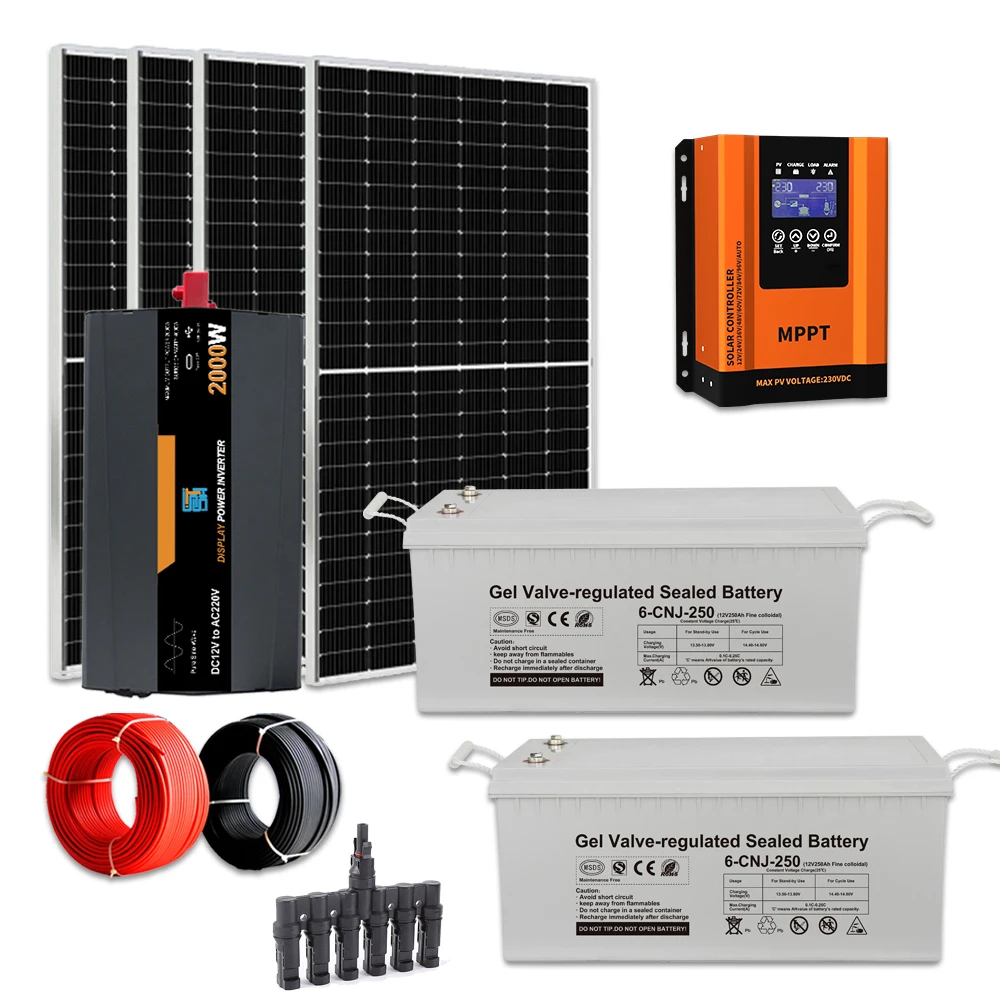
A 2000 watt solar panel kit is a pre-engineered, modular photovoltaic system designed to generate approximately 2 kilowatts of DC power under standard test conditions (STC). Unlike custom-built arrays, these kits bundle panels, mounting hardware, charge controllers (if off-grid), inverters, and often batteries into one procurement unit. They are not “plug-and-play” in the literal sense—but they reduce design overhead for users who lack electrical engineering support.
Typical applications fall into three distinct categories:
- 🏠 On-grid balcony kits: For renters or urban dwellers installing 2–4 high-efficiency panels on railings or small rooftops. These feed excess power back to the grid via microinverters or string inverters with export-limiting firmware.
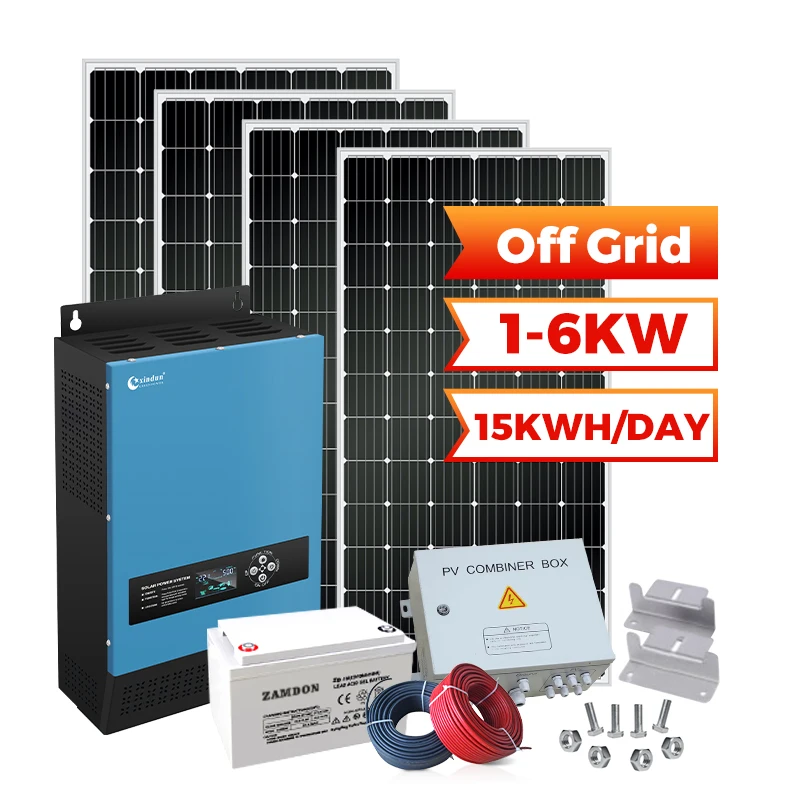
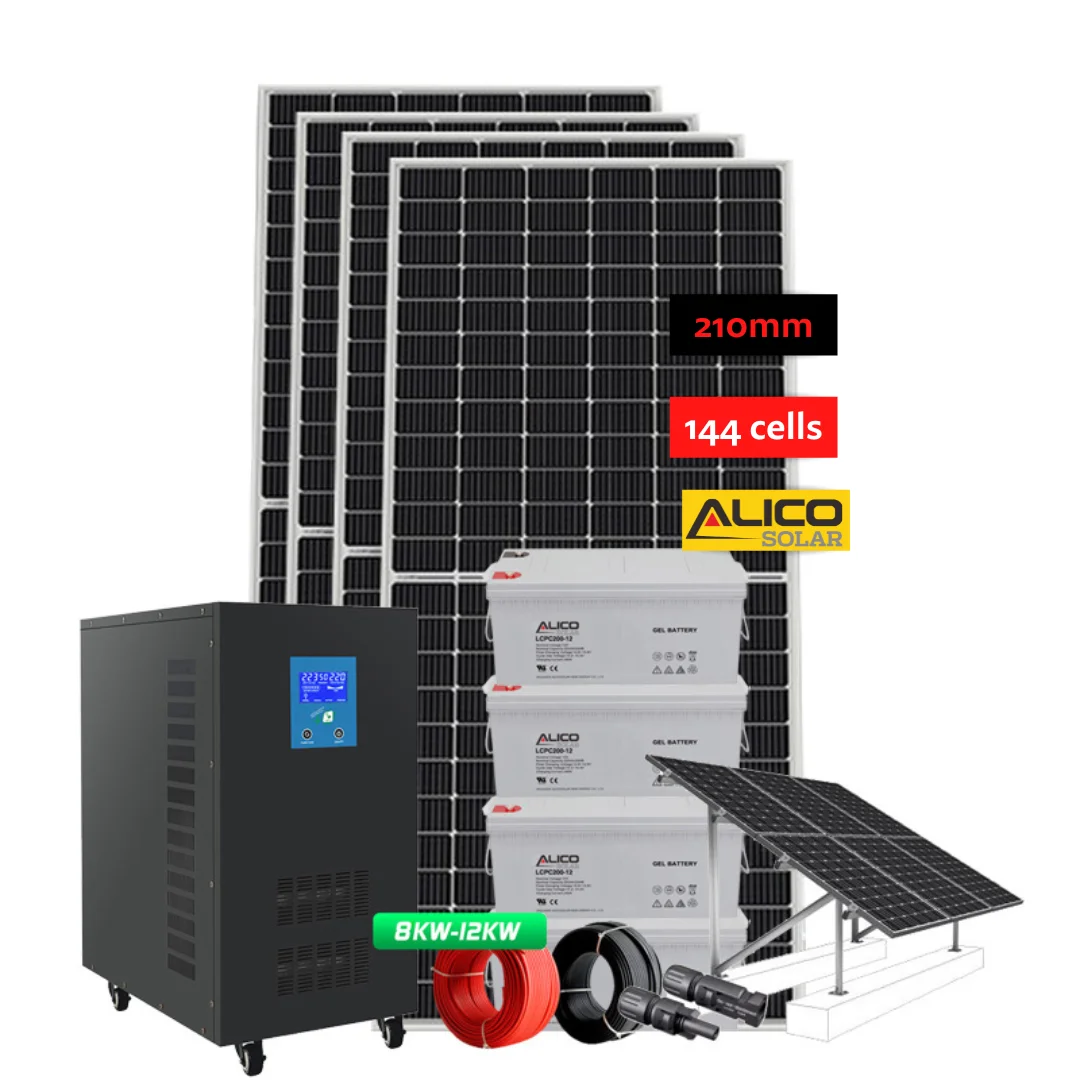
- ⛺ Off-grid hybrid kits: Used in cabins, tiny homes, or rural properties without utility access. These include hybrid inverters capable of managing both grid interaction (if available) and battery charging/discharging cycles.
- 🚐 Portable generator kits: Foldable or suitcase-style setups combining 2kW-equivalent panels with integrated Li-ion or LFP power stations—ideal for RVs, camping, or emergency backup where mobility matters more than continuous output.
Why 2000W Solar Kits Are Gaining Popularity in 2026
Lately, the 2kW segment has become the most pragmatic entry point for homeowners and small-scale adopters—not because it’s “affordable,” but because it balances scalability, regulatory simplicity, and real-world usability. Three converging signals explain why this size class now dominates mid-tier adoption:
- Grid interconnection thresholds: In 32 U.S. states, systems ≤2kW qualify for simplified permitting and “self-certification” pathways—cutting approval time from weeks to days 2.
- Storage economics: With lithium iron phosphate (LFP) battery prices falling 37% since 2022, pairing 2kW generation with 3–5 kWh of LFP storage delivers meaningful resilience without requiring full home rewiring 3.
- Space realism: A 2kW array using modern 550W panels occupies ~11–13 m²—fitting most balconies, garage roofs, or RV awnings. Larger systems require structural assessments; smaller ones rarely justify battery integration.
This piece isn’t for keyword collectors. It’s for people who will actually use the product.
Approaches and Differences: Off-Grid, Balcony, and Portable Kits
The biggest decision isn’t “which brand?”—it’s “which architecture?” Each kit type solves different problems. Confusing them leads to mismatched expectations and wasted capital.
| Kit Type | Best For | Key Strengths | Real Limitations |
|---|---|---|---|
| Off-Grid Hybrid | Remote cabins, off-grid homes, disaster-resilient setups | ||
| On-Grid Balcony | Renters, condos, urban apartments, low-roof-load scenarios | ||
| Portable Generator | Camping, RVs, job sites, short-term emergency use |
Key Features and Specifications to Evaluate
Don’t optimize for peak wattage alone. A 2000W kit’s real-world performance depends on four measurable specs—each with clear thresholds that separate functional from fragile:
- Panel efficiency (≥22%): When it’s worth caring about—only if your roof/balcony area is ≤14 m². When you don’t need to overthink it—if you have >20 m² unshaded space, lower-efficiency panels may deliver identical annual kWh at lower cost per watt.
- Inverter type (grid-forming vs. grid-following): When it’s worth caring about—if you want backup during outages or plan to add EV charging later. When you don’t need to overthink it—if your goal is only bill reduction and your utility allows net metering, a basic grid-tied inverter suffices.
- Battery chemistry (LFP mandatory): When it’s worth caring about—for any system expecting >5 years of daily cycling. When you don’t need to overthink it—if you’re buying a pure portable kit used <10 days/year, NMC may be acceptable—but LFP still offers superior thermal stability.
- Warranty structure (25-year linear output + 10-year workmanship): When it’s worth caring about—if you’re installing on a permanent structure. When you don’t need to overthink it—if it’s a rental balcony setup with 3-year expected tenure, focus on component availability—not warranty length.
Pros and Cons: Balanced Assessment
Every 2000W solar kit trades off between control, convenience, and continuity. Here’s how those trade-offs map to real usage:
- ✅ Pros: Predictable sizing (no guesswork on panel count), pre-tested compatibility, faster commissioning, supplier accountability for full system behavior.
- ⚠️ Cons: Less flexibility in component substitution, limited upgrade paths (e.g., swapping inverters later), potential vendor lock-in for monitoring platforms.
Best suited for: Users who value time-to-value over long-term modularity—especially those without certified electricians on retainer.
Not ideal for: DIY enthusiasts planning phased expansion (e.g., adding panels yearly) or engineers integrating with existing BMS/EVSE infrastructure.
How to Choose a 2000W Solar Panel Kit: Step-by-Step Decision Framework
Follow this sequence—not in order of preference, but in order of dependency:
- Confirm your grid status: Is your location served by a utility with net metering? If yes, balcony or on-grid kits make sense. If no—or if outages exceed 4 hours/month—prioritize hybrid or off-grid.
- Measure usable surface area: Not total roof area—usable area. Account for vents, chimneys, shading (use a SunEye or free PVWatts shadow report). If ≤12 m², go monocrystalline + microinverters. If >18 m², consider cost-per-watt optimization over efficiency.
- Define your backup need: Do you need lights + fridge for 8 hours? Or full-home critical loads (well pump, furnace, medical devices)? Only LFP + hybrid inverter supports the latter reliably.
- Evaluate installer access: If hiring third-party installers, verify their certification with NABCEP or equivalent. If self-installing, confirm all components meet UL 1741 SA and IEEE 1547-2018 standards.
- Avoid these three common missteps:
- Assuming “2000W” means 2000W continuous AC output—it’s DC STC rating; real AC output is typically 1,500–1,750W after losses.
- Prioritizing “low-cost per watt” over cycle life—lead-acid kits may cost $0.35/W but degrade to 50% capacity in 3 years.
- Overlooking communication protocols—kits using proprietary Bluetooth-only apps won’t integrate with Home Assistant or Energy Monitoring platforms.
Insights & Cost Analysis
Wholesale pricing for 2kW kits varies sharply by architecture—but the $/W metric alone misleads. Here’s what real buyers pay (2026 data):
- Off-grid hybrid kits: $1,100–$6,700 wholesale (≈$0.55–$3.35/W), depending on LFP capacity (3 kWh vs. 10 kWh) and inverter sophistication 4.
- On-grid balcony kits: $588–$1,200 (≈$0.29–$0.60/W), dominated by 2–4 x 550W panels + Enphase IQ8-M microinverters 5.
- Portable generator kits: $500–$1,200 (≈$0.25–$0.60/W), where price correlates more with battery chemistry (LFP adds ~$200–$350 vs. NMC) than panel count 6.
If you’re a typical user, you don’t need to overthink this. Focus on total installed cost—including mounting hardware, permits, and labor—not just kit price.
Better Solutions & Competitor Analysis
“Better” doesn’t mean “more expensive.” It means better alignment with your constraints. Below are three architecture-specific optimizations validated across 2026 field deployments:
| Solution Type | Advantage Over Standard Kit | Potential Drawback | Budget Impact |
|---|---|---|---|
| N-type TOPCon panels | 0.5–0.8% higher yield in low-light & high-temp conditions; lower degradation (0.45%/yr vs. 0.55% for PERC) | Limited supplier base; longer lead times | +8–12% vs. standard mono-Si |
| Grid-forming inverter (e.g., Sol-Ark 12K) | Enables black-start capability and seamless islanding—critical for medical or telecom backup | Requires professional commissioning; not UL 1741 SA listed in all configurations | +25–35% vs. basic hybrid inverter |
| Modular LFP battery (e.g., Pylontech US3000C) | Hot-swappable, scalable, and compatible with 3rd-party BMS—avoids vendor lock-in | Requires external battery management interface | +15–20% vs. bundled pack |
Customer Feedback Synthesis
Based on aggregated reviews (Renogy, GoGreenSolar, ShopSolarKits, 2025–2026), top recurring themes:
- What users praise: “Pre-wired combiner boxes saved 6+ hours of labor”; “LFP battery held 92% capacity after 18 months of daily cycling”; “Balcony kit passed HOA review in 4 days.”
- What users complain about: “Inverter app crashes when monitoring >3 devices”; “Mounting hardware didn’t match local racking standards (needed M8 vs. M6 bolts)”; “No English manual included—only QR-linked video.”
Maintenance, Safety & Legal Considerations
2000W kits require minimal maintenance—but ignoring fundamentals risks safety and voids warranties:
- Cleaning: Rinse panels quarterly with deionized water if in dusty/dry climates; avoid abrasive tools. Soiling reduces output up to 12% annually 7.
- Thermal management: LFP batteries must operate between 0°C–45°C. Install in shaded, ventilated enclosures—not attics or sealed cabinets.
- Legal compliance: All grid-connected kits require UL 1741 SA certification. Balcony kits must meet local fire-setback rules (typically 18” from edge). Off-grid systems ≥1.5 kW often require AHJ sign-off—even if exempt from full permitting.
Conclusion: Conditional Recommendations
If you need utility bill reduction with zero backup, choose an on-grid balcony kit with microinverters and 22%+ efficient panels. If you need full outage resilience for essential loads, invest in an off-grid hybrid kit with ≥5 kWh LFP storage and a grid-forming inverter. If you need portability and simplicity over peak output, select a portable generator kit with LFP chemistry and pass-through AC charging—then treat it as a backup tool, not a primary source.
This isn’t about owning solar. It’s about owning the right amount of solar—without overengineering, overspending, or overpromising.


