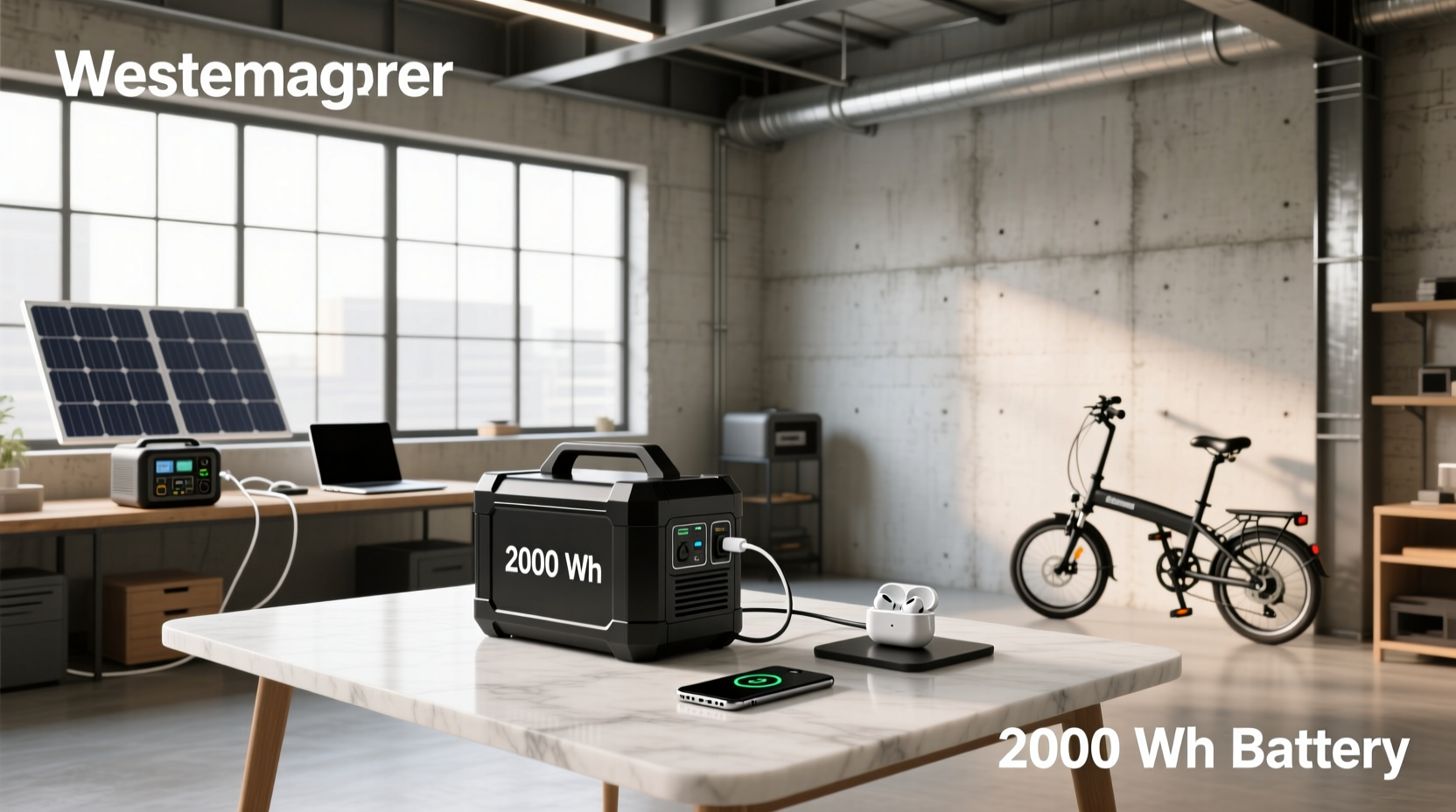
If you’re a typical user, you don’t need to overthink this. For most people needing reliable, portable energy—whether for home backup during blackouts, extended RV trips, or off-grid work—the 2000Wh LiFePO4 battery is the optimal balance of capacity, longevity, and mobility in 2026. Skip older NCM lithium models entirely: LiFePO4 now delivers 3,000–6,000+ cycles, ultra-fast 0–80% AC charging in under 60 minutes, and modular expansion up to 24kWh. Your top priority isn’t brand loyalty—it’s verifying LFP chemistry, ≥2000W continuous output, and an expansion port. If you’re weighing Bluetti vs. Jackery vs. EcoFlow, focus on your use case: home backup? choose expandability (Jackery 2000 Plus); rapid recharging? prioritize speed (EcoFlow Delta 2 Max); long-term value? go for cycle life (Bluetti Elite 200 v2). This piece isn’t for keyword collectors. It’s for people who will actually use the product.
About 2000Wh Batteries: Definition & Typical Use Cases
A 2000Wh battery stores two kilowatt-hours of usable electrical energy—enough to power a standard refrigerator for 14–20 hours, run a CPAP machine for 3+ days, or sustain a small home office (laptop, monitor, router, LED lighting) for over 40 hours1. Unlike smaller units (<1000Wh), it crosses into “whole-appliance” territory. Unlike 3000Wh+ models, it remains physically manageable: most weigh 50–70 lbs and include wheels or ergonomic handles.
Typical users fall into three clear segments:
- 🏠 Home backup users: Power critical loads (fridge, modem, lights, sump pump) during grid outages lasting 12–48 hours.
- 🚐 RV & van lifers: Run air conditioning compressors (inverter-based), microwaves, and induction cooktops without generator noise or fumes.
- 🛠️ Mobile professionals: Field technicians, filmmakers, and remote contractors powering tools, monitors, and audio gear at job sites with no outlet access.
Why 2000Wh Batteries Are Gaining Popularity
Lately, the 2000Wh category has shifted from premium niche gear to essential infrastructure—and that change is backed by measurable technical progress. Over the past year, LiFePO4 (LFP) chemistry has become non-negotiable across all reputable brands, replacing aging NCM lithium-ion cells2. This isn’t just marketing: LFP batteries now deliver 4× the cycle life (3,000–6,000 full cycles vs. ~1,200 for NCM), operate safely across wider temperature ranges (−20°C to 60°C), and eliminate thermal runaway risk3. Simultaneously, consumer expectations have risen: 0–80% AC charging in under 60 minutes is now standard—not optional. And because solar adoption continues climbing, 2000Wh units now routinely accept 800W–1,200W of PV input, making multi-panel daytime replenishment realistic. If you’re a typical user, you don’t need to overthink this: the 2000Wh segment matured precisely because it solved real problems—not because specs inflated.
Approaches and Differences: Core Architectures
There are two primary approaches to delivering 2000Wh capacity today—and they reflect fundamentally different design philosophies:
Integrated All-in-One Units (e.g., Jackery 2000 Plus, Bluetti Elite 200 v2)
These combine battery, inverter, MPPT charge controller, and outlets into a single chassis. They prioritize plug-and-play simplicity and rugged portability.
- ✅ Pros: Zero assembly; pre-tested safety integration; compact footprint; intuitive interface.
- ❌ Cons: Limited upgrade paths beyond manufacturer-approved expansion batteries; less serviceable; higher per-Wh retail cost.
Modular + Expandable Systems (e.g., EcoFlow Delta 2 Max, Anker Solix F2000)
These treat the 2000Wh unit as a “base node” designed to accept external battery packs, dual-input solar, or even parallel stacking with identical units.
- ✅ Pros: Future-proof scalability (e.g., 2kWh → 6kWh → 24kWh); flexible configuration; often faster charging via multiple inputs.
- ❌ Cons: Higher initial learning curve; requires careful cable management; expansion accessories add cost and weight.
When it’s worth caring about: If you anticipate growing your energy needs—especially for whole-home backup or multi-day off-grid trips—modular architecture saves money long-term. When you don’t need to overthink it: If you need a simple, reliable solution for weekend camping or occasional home backup, an integrated unit reduces decision fatigue and setup time.
Key Features and Specifications to Evaluate
Don’t get lost in wattage theater. Focus on four functional metrics that directly impact daily usability:
- 🔋 Battery Chemistry: LiFePO4 only. NCM or generic “lithium-ion” labels are red flags in 2026. LFP ensures safety, longevity, and stable voltage discharge.
- ⚡ Continuous Output (W): Minimum 2000W. This powers sustained loads like refrigerators, microwaves, or power tools. Surge rating (3000W–6000W) matters only for motor startup—not runtime.
- ⏱️ Charging Speed: Look for ≤60 min for 0–80% via AC. Solar input ≥1000W enables meaningful daytime recharge—even under partial cloud cover.
- 🧩 Expandability: A dedicated expansion port (not just USB-C or DC5521) signals true scalability. Verify compatibility with third-party LFP packs if budget-constrained.
Pros and Cons: Balanced Assessment
✅ Where 2000Wh Batteries Excel: They bridge the gap between convenience and capability. You get enough energy for meaningful autonomy—without the weight, cost, or complexity of 3kWh+ systems. Their portability makes them viable for rotating between home, vehicle, and worksite.
❌ Where They Fall Short: They cannot run high-draw HVAC systems continuously (>3500W), nor sustain large well pumps or electric dryers. If your goal is whole-house, 24/7 backup for >72 hours, you’ll need either expansion or supplemental generation (e.g., solar + secondary battery).
How to Choose a 2000Wh Battery: Step-by-Step Decision Guide
- Confirm LiFePO4 chemistry first. If the spec sheet doesn’t explicitly state “LiFePO4”, “LFP”, or “lithium iron phosphate”, walk away. This is non-negotiable in 2026.
- Match output to your highest-load appliance. List your top 3 devices (e.g., fridge: 700W running / 2200W surge; microwave: 1200W). Ensure continuous output ≥ sum of running watts; surge rating ≥ highest single surge.
- Evaluate portability needs. Wheels and telescoping handles matter for RVs and garages; compact dimensions matter for van storage. Weight alone isn’t decisive—distribution and grip design are equally critical.
- Verify expansion path—if relevant. Check whether expansion requires proprietary batteries (costly, vendor-locked) or accepts standard 48V LFP modules (more flexible, lower long-term cost).
- Avoid these common traps:
- Over-prioritizing peak surge wattage while ignoring continuous output.
- Assuming “2000W inverter” means “2000W sustained”—many units derate after 5–10 minutes.
- Ignoring temperature derating: LFP performance drops below −10°C unless heated.
Insights & Cost Analysis
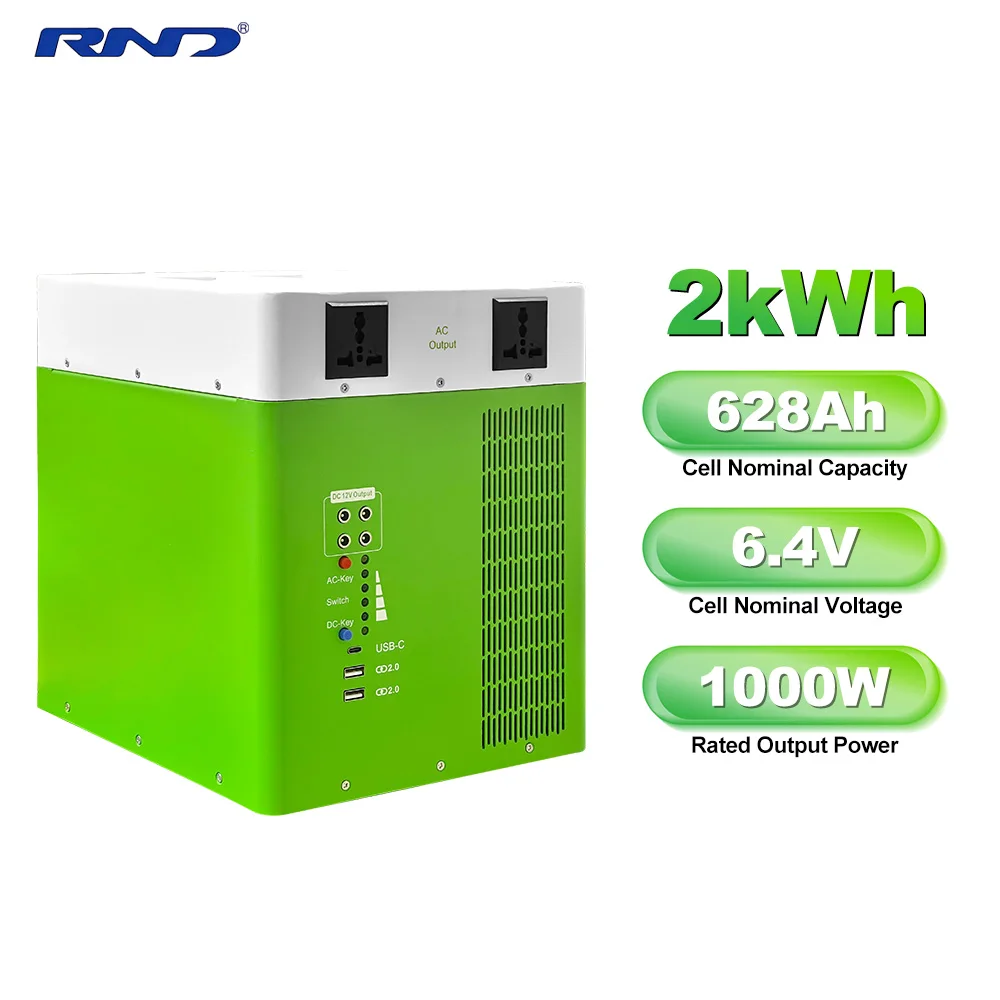
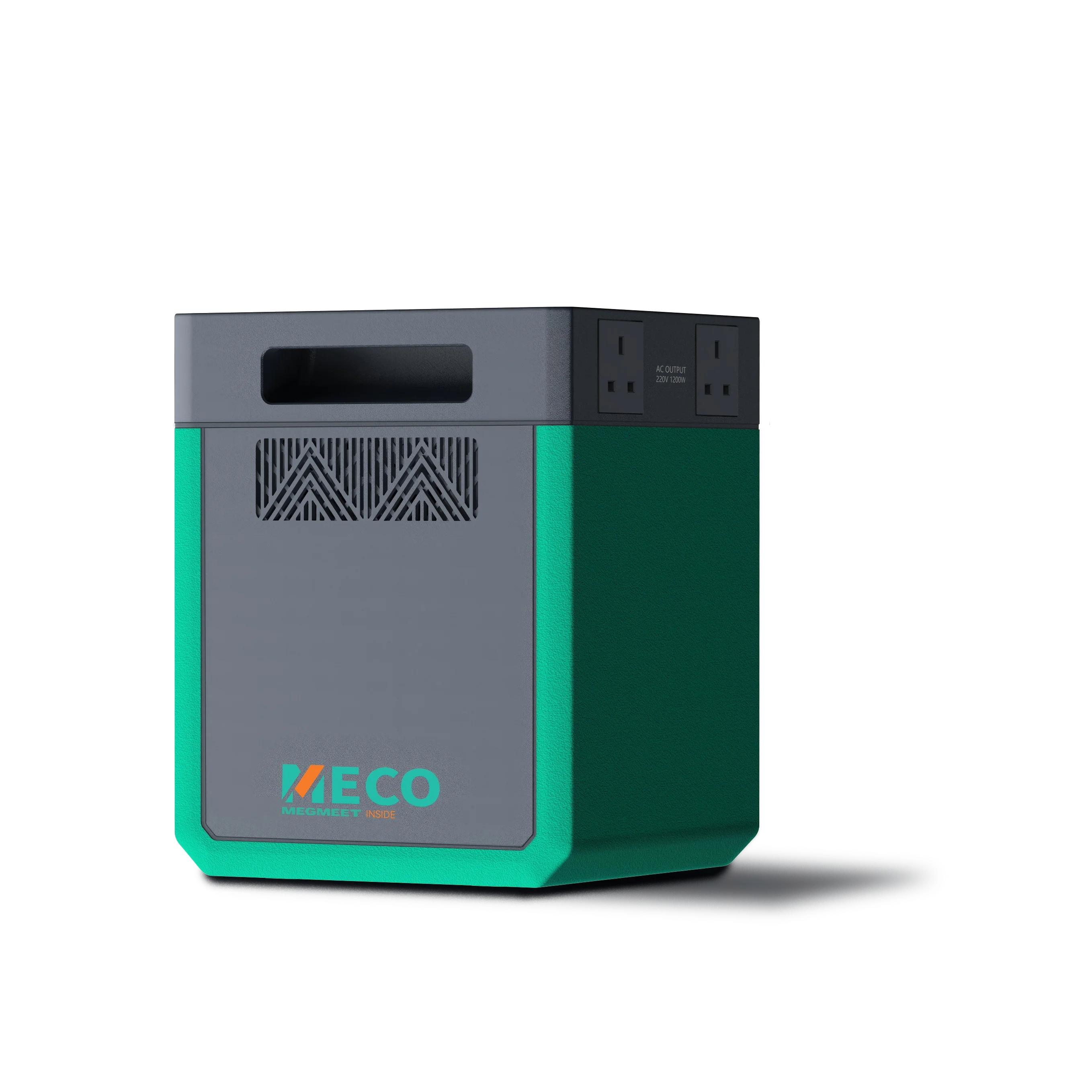
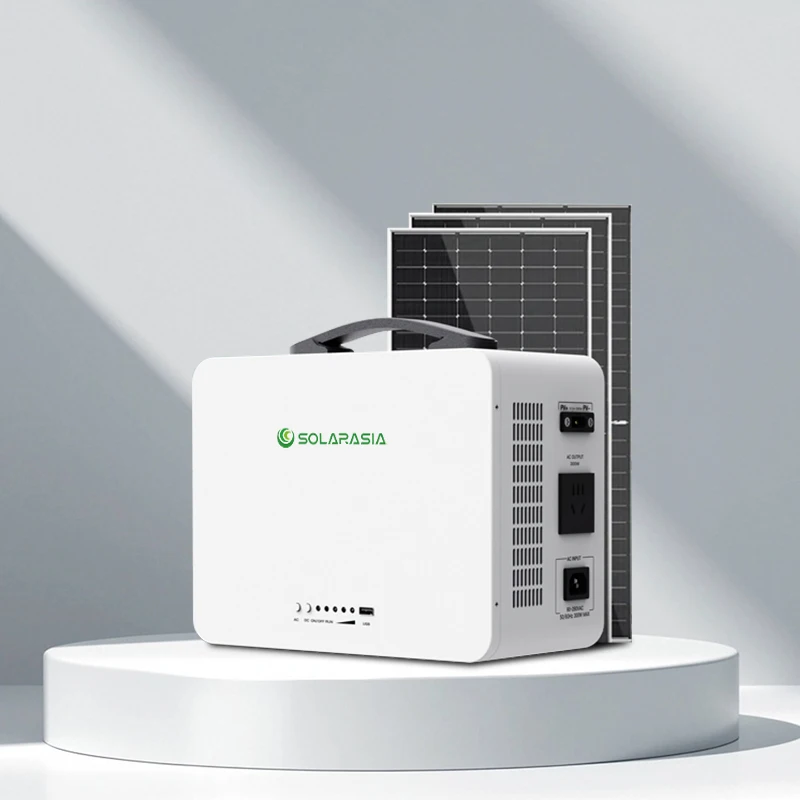
Price variance is stark—and revealing. Retail units from Bluetti, Jackery, and EcoFlow range from $1,599 to $1,999. But wholesale sourcing tells a different story: bulk orders (50+ units) on B2B platforms yield verified 2000Wh LiFePO4 units for $350–$480 each4. That’s not “cheap knockoffs”—it’s OEM-grade cells, basic BMS, and simplified casing. The gap exists because retail pricing includes R&D amortization, brand marketing, UL certification overhead, and consumer support infrastructure.
For individual buyers: pay retail for tested integration and warranty. For installers, fleet operators, or resellers: source wholesale, then invest in certified enclosures and professional commissioning.
Better Solutions & Competitor Analysis
| Model | Best For | Cycle Life (80%) | Key Strength | Real-World Limitation |
|---|---|---|---|---|
| Bluetti Elite 200 v2 | Long-term ownership | 6,000+ | Industry-leading longevity & thermal stability | Heavier than competitors (68 lbs); fewer solar input options |
| Jackery Explorer 2000 Plus | Home backup scaling | 4,000 | 24kWh expandability; intuitive app | Slower AC charging (0–80% in ~65 min) |
| EcoFlow Delta 2 Max | Rapid recharging | 3,000 | 0–80% in ~43 min; X-Stream dual AC input | Lower cycle count; proprietary expansion ecosystem |
| Anker Solix F2000 | RV & mobile use | 3,000 | Native 30A RV plug; integrated wheels & handle | Limited third-party solar compatibility |
Customer Feedback Synthesis
Based on aggregated reviews across OutdoorGearLab, Consumer Reports, and SolarReviews, top recurring themes emerge:
- Highly praised: “Silent operation vs. gas generators,” “reliability during multi-day outages,” “ease of solar integration,” and “app-based monitoring accuracy.”
- Frequently cited frustrations: “Battery management software updates occasionally break custom settings,” “wheels struggle on gravel or grass,” and “manuals omit low-temperature charging warnings.”
Maintenance, Safety & Legal Considerations
LFP batteries require minimal maintenance—but neglecting fundamentals invites failure. Store at 30–50% state of charge if unused >30 days. Avoid full 0% discharges; keep ambient temperature between 0°C–35°C during charging. Never modify BMS wiring or bypass safety cutoffs.
Legally, no federal U.S. certification is mandatory for personal-use portable stations—but UL 1973 or UL 9540A testing (for thermal runaway resistance) strongly correlates with reliability and insurance acceptance. Most reputable brands meet one or both. Always check local fire code requirements before permanent indoor installation.
Conclusion: Conditional Recommendations
If you need whole-home backup scalability, choose Jackery Explorer 2000 Plus. Its 24kWh expansion path and robust app make it ideal for phased investment.
If you prioritize longevity and daily reliability over raw speed, choose Bluetti Elite 200 v2. Its 6,000-cycle LFP cells justify the premium for decade-long ownership.
If you recharge frequently from AC and value speed above all, choose EcoFlow Delta 2 Max. Its sub-hour charging resets expectations for workflow continuity.
If you’re mounting in an RV with frequent movement, choose Anker Solix F2000. Its 30A RV plug and wheel-integrated chassis reduce setup friction.
If you’re a typical user, you don’t need to overthink this: start with LFP, verify 2000W continuous output, and match expandability to your 3-year horizon—not your wishlist.


