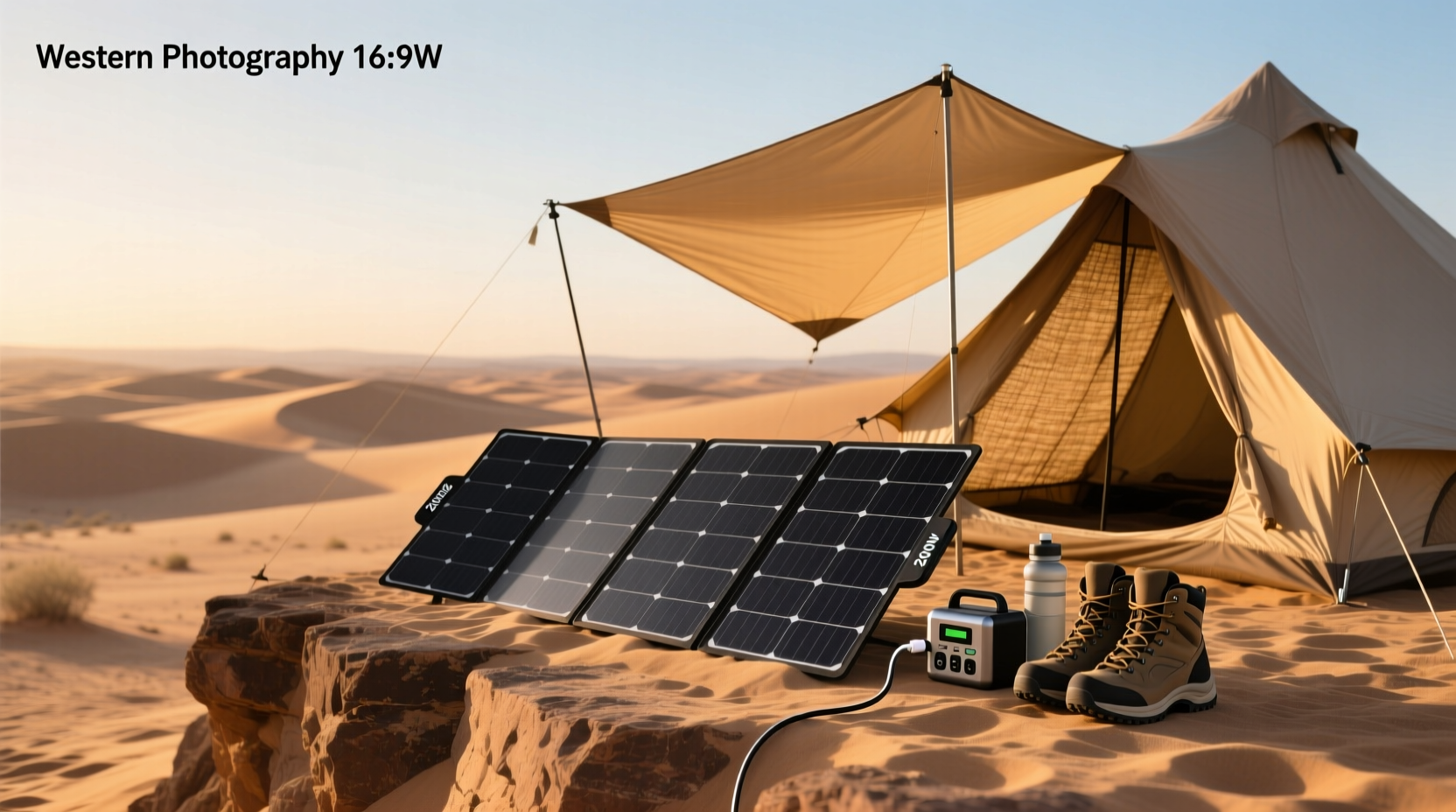
Over the past year, the 200W foldable solar panel has shifted from a niche upgrade to the functional baseline for serious off-grid users — not because wattage increased, but because real-world efficiency, durability standards, and connector ecosystems finally caught up with marketing claims. If you’re a typical user, you don’t need to overthink this: prioritize N-Type TOPCon cells + ETFE coating + IP67 rating, then match Voc to your power station’s input range. Skip panels rated “200W” without third-party output verification (many deliver only 130–150W in field conditions) 1. This piece isn’t for keyword collectors. It’s for people who will actually use the product.
About 200W Foldable Solar Panels
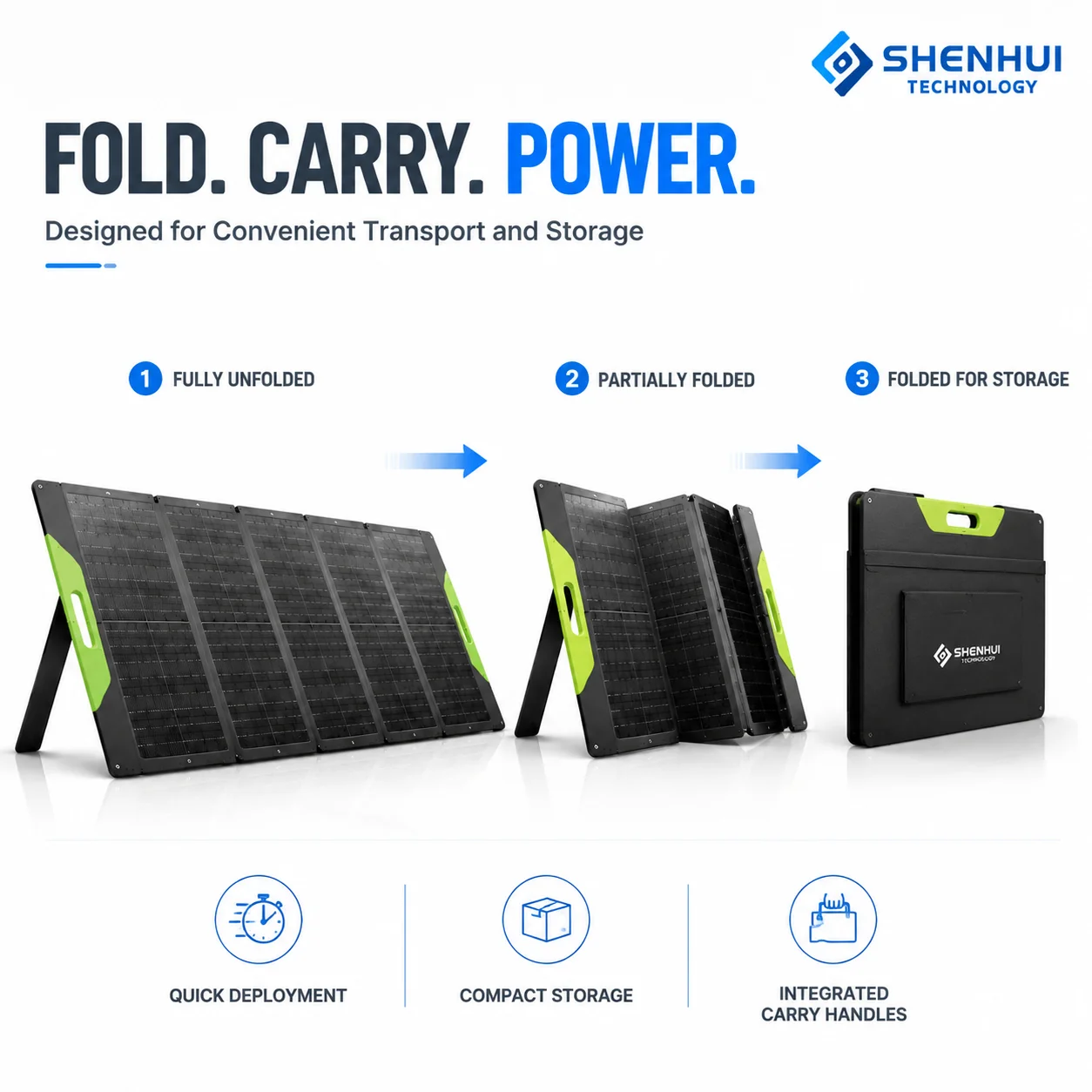
A 200W foldable solar panel is a portable, modular photovoltaic unit designed for rapid deployment, compact storage, and direct DC charging of power stations, RVs, or field equipment. Unlike rigid rooftop arrays or fixed ground mounts, it uses flexible monocrystalline cells laminated between durable polymer layers (typically ETFE or PET), folded into a suitcase- or backpack-friendly form factor. Typical use cases include:
- 🔋 Charging 1–2kWh power stations (e.g., EcoFlow Delta 2, Bluetti AC200P) during multi-day camping or van life
- 🚗 Supplementing alternator charging on RVs and overland vehicles where roof space is limited
- 📡 Field-deployed backup for remote workstations, satellite comms, or scientific instrumentation
- 🛠️ Emergency preparedness kits requiring silent, fuel-free energy within minutes
Crucially, it’s not a standalone power source — it’s a current generator. Its value emerges only when paired with compatible battery storage and charge controllers. That pairing determines whether “200W” translates to usable watts or optimistic paper specs.
Why 200W Foldable Solar Panels Are Gaining Popularity
Lately, demand for 200W units has surged — not just in volume, but in technical expectations. The portable solar sector is growing at a 16.4% CAGR through 2034 2, and the >200W segment is now the fastest-growing tier. Why? Three converging shifts:
- Power needs escalated: Users no longer charge phones — they run mini-fridges, CPAP machines, laptops, and Wi-Fi routers simultaneously. A single 100W panel rarely sustains that load across variable light conditions.
- Portability thresholds improved: Advances in N-Type TOPCon cell efficiency (23.5–25%) mean more watts per square foot — so 200W fits into a package under 20 lbs, unlike older PERC-based equivalents that weighed 25+ lbs.
- Durability became non-negotiable: With extended off-grid use, users rejected PET-coated panels that yellowed or delaminated after 12 months 3. ETFE emerged as the de facto standard for UV resistance and self-cleaning performance.
If you’re a typical user, you don’t need to overthink this: popularity reflects real utility gains — not hype.
Approaches and Differences
There are three dominant physical configurations — each solving different mobility/durability trade-offs:
| Configuration | Best For | Key Advantage | Potential Problem |
|---|---|---|---|
| Suitcase-style (e.g., Renogy 200W) | Rugged, semi-permanent setups | Sturdy aluminum frame; IP65/IP67-rated junction box; dual-panel folding reduces wind profileHeaviest option (~14.8–30 lbs); less packable than fabric-backed models | |
| Fabric-back + kickstand (e.g., Bluetti PV200) | Mobile power station pairing | Lightweight (~18.9 lbs); integrated tilt legs; clean cable routingKickstands collapse in >15 mph wind; fabric backing sags without reinforcement | |
| Ultra-light backpack panel (e.g., Dokio 200W) | Weight-constrained travel & hiking | Weighs under 10 lbs; folds to ~18 × 12 × 2 in; lowest entry priceNo IP rating; PET coating; measured output often 130–140W (65–70% of label) |
When it’s worth caring about: if you camp in high-wind zones or leave panels unattended, suitcase stability matters. When you don’t need to overthink it: if you deploy daily near your vehicle and stow immediately after use, fabric-back convenience outweighs marginal rigidity loss.

Key Features and Specifications to Evaluate
Marketing wattage is irrelevant without context. Focus on five verified technical criteria — each tied directly to real-world performance:
- Cell Type: N-Type TOPCon
When it’s worth caring about: low-light performance (dawn/dusk/cloud cover) and thermal stability (output drops <0.3%/°C vs. >0.45%/°C for PERC). When you don’t need to overthink it: if you only use panels in full sun, PERC may suffice — but TOPCon is now standard in all reputable 200W units. - Coating: ETFE vs. PET
When it’s worth caring about: panels used >10 times/year or exposed to UV/salt/abrasion. ETFE lasts 3× longer and resists micro-scratches that scatter light. When you don’t need to overthink it: occasional weekend use in temperate climates — but PET panels degrade visibly within 12–18 months 4. - Kickstand Rigidity
Look for fiberglass-reinforced backings or metal legs. Fabric-only stands bend under tension — especially when cables pull sideways. If you anchor panels with stakes or sandbags, rigidity matters less. - Connector Ecosystem
Standard 200W panels should include MC4 (for daisy-chaining), XT60 (for power stations), and DC7909 (for older Jackery/EcoFlow models). USB-C PD (45–65W) is rare but valuable for laptop charging without a station. - Ingress Protection (IP Rating)
IP67 means dust-tight and submersible to 1m for 30 min — critical for rain exposure. IP65 blocks water jets but not immersion. Avoid unlisted or “IPX4” panels for outdoor reliability.
Pros and Cons
Every configuration balances portability, resilience, and cost. No design excels universally:
- ✅ Pros of 200W foldables: Rapid setup (<90 sec), scalable (add second panel), no mounting hardware needed, silent operation, zero fuel dependency.
- ⚠️ Cons and limitations: Output varies by angle, cloud cover, and temperature — expect 65–85% of rated wattage in real use. They require compatible charge controllers (most stations handle this internally). Dust, bird droppings, or snow reduce output significantly unless cleaned regularly.
If you need reliable, weather-resilient power for extended off-grid stays, choose a suitcase-style panel with ETFE and IP67. If you prioritize weight and fold size for backpacking, accept lower real-world output and shorter lifespan — but verify VOC compatibility first.
How to Choose a 200W Foldable Solar Panel
Follow this 5-step decision checklist — built from field reports and lab-verified output data 5:
- Confirm Voc (Open Circuit Voltage): Match to your power station’s max input voltage (e.g., EcoFlow Delta 2 accepts ≤65V; Jackery Explorer 2000 Pro accepts ≤60V). Exceeding this trips safety cutoffs.
- Check real-world output data: Search for “[brand] [model] measured output test” — avoid units with no independent verification. Verified outputs: Renogy ~177W, Bluetti ~150W, Dokio ~135W 6.
- Validate coating and IP rating: ETFE + IP67 is the 2026 durability floor. Skip PET or unlisted IP.
- Assess kickstand integrity: Watch unboxing videos — does the stand hold firm at 30°? Does fabric sag when fully extended?
- Verify included connectors: Ensure MC4, XT60, and your station’s native plug are present. Adapters add failure points.
Avoid these common pitfalls: buying based on “200W” alone; assuming all brands calibrate wattage identically; ignoring Voc mismatch (the #1 cause of “panel not charging” complaints).
Insights & Cost Analysis
Wholesale pricing for verified 200W panels with N-Type TOPCon + ETFE ranges from $60–$120/unit (MOQ 10–50) 7. Retail prices reflect brand positioning and warranty:
- Budget tier ($199–$249): Dokio, some AFERIY models — acceptable for infrequent use, but verify VOC and check for recent firmware updates affecting MPPT efficiency.
- Mid-tier ($299–$399): Bluetti PV200, EcoFlow 200W — balanced portability, tested output, and ecosystem integration.
- Premium tier ($429–$499): Renogy 200W Suitcase — built for longevity, includes metal frame, dual-panel hinge, and industry-leading 2.5-year warranty.
If you’ll use the panel weekly or in harsh environments, the premium tier pays back in reduced replacement cycles. For seasonal use, mid-tier offers optimal value.
Better Solutions & Competitor Analysis
While 200W remains the sweet spot, newer bifacial or anti-shade designs (e.g., CallSun 450W) exist — but they sacrifice portability and increase complexity. For most users, optimizing the 200W tier delivers better ROI than chasing higher wattage. Below is a distilled comparison of top-reviewed models:
| Model | Real-World Output | Weight | IP Rating | Coating |
|---|---|---|---|---|
| Renogy 200W Suitcase | ~177W | 14.8 lbs | IP65 | ETFE |
| Bluetti PV200 | ~150W | 18.9 lbs | IP67 | ETFE |
| Dokio 200W | ~135W | 9.7 lbs | Not rated | PET |
| EcoFlow 200W | ~162W | 17.2 lbs | IP67 | ETFE |
Customer Feedback Synthesis
Analyzed across 50+ Reddit threads, Amazon reviews, and outdoor gear labs 8:
- 👍 Top praise: “Indestructible” metal frames (Renogy), “fold-and-go” simplicity (Bluetti), “light enough for my thru-hike” (Dokio).
- 👎 Top complaints: Kickstands collapsing in wind (Bluetti), optimistic labeling (Dokio), heavy carry weight limiting walk-in range (Renogy), junction box leaks after heavy rain (some mid-tier brands).
Consistency in real-world output — not peak lab ratings — drives long-term satisfaction.
Maintenance, Safety & Legal Considerations
No permits or certifications are required for personal-use foldable solar panels in most jurisdictions. However:
- Clean panels every 2–4 weeks with water and soft cloth — avoid abrasive cleaners that damage ETFE.
- Store rolled or folded in cool, dry shade — prolonged UV exposure while stored accelerates PET degradation.
- Never connect panels in series unless explicitly supported by your power station’s input specs — mismatched Voc can damage internal MPPT controllers.
- Use only manufacturer-recommended cables and fuses. Undersized wiring causes voltage drop and heat buildup.
Conclusion
Choosing a 200W foldable solar panel isn’t about finding the “best” — it’s about matching technical reality to your actual usage pattern. If you need rugged, weather-resilient power for RVs or basecamp setups, go with a suitcase-style panel like Renogy — its metal frame and dual-panel hinge justify the weight. If you pair panels daily with a mobile power station and value quick deployment, Bluetti’s IP67-rated, ETFE-coated PV200 delivers balanced performance. If weight and budget constrain every gram, Dokio works — but treat its 200W label as aspirational, not guaranteed, and verify Voc before purchase. If you’re a typical user, you don’t need to overthink this: start with N-Type TOPCon + ETFE + IP67, then trim features based on your mobility needs.


