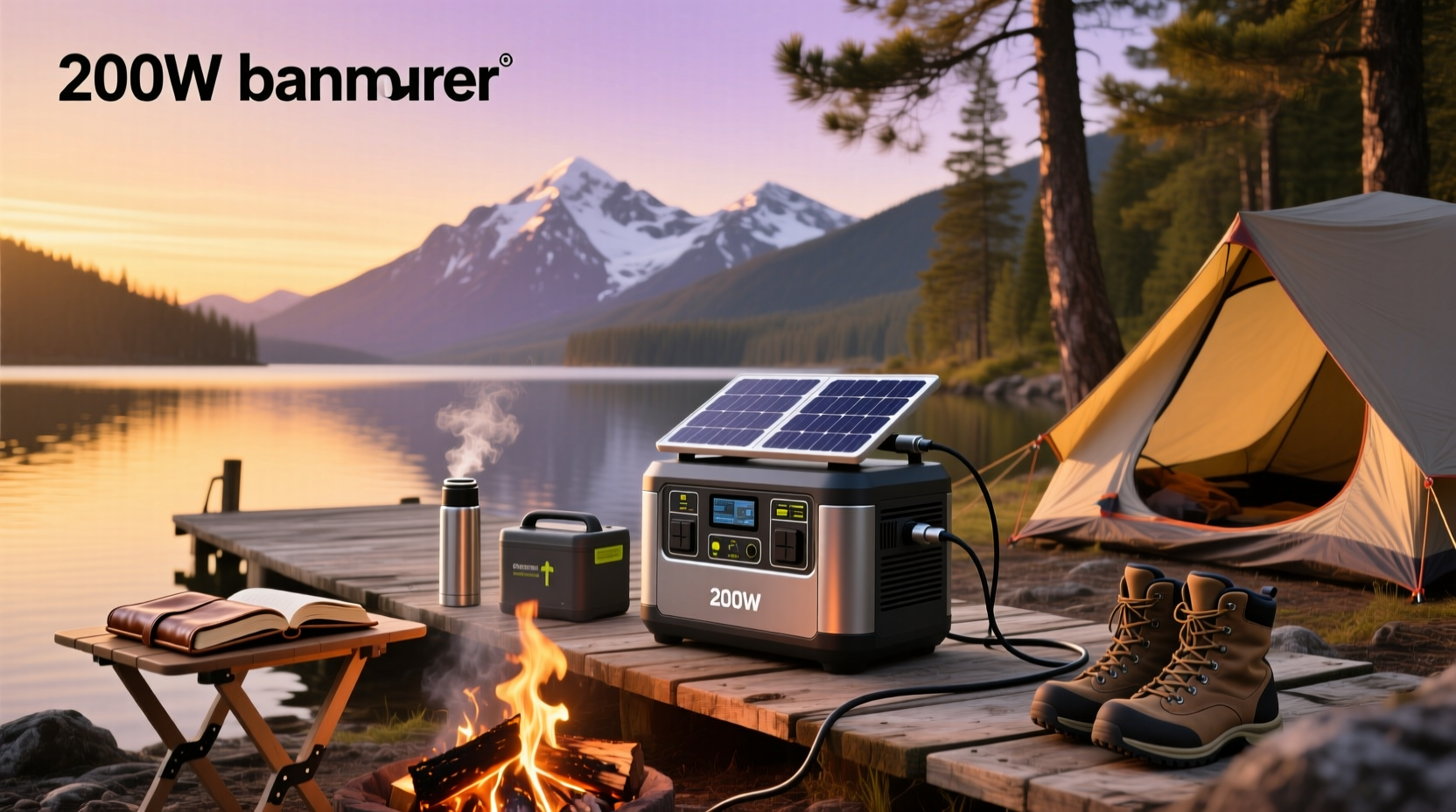
If you need reliable, airline-safe backup for laptops, phones, lights, or Wi-Fi during outages or camping—and you don’t want fuel, noise, or heavy gear—you want a 200W portable power station. Over the past year, the market has shifted decisively: LiFePO4 battery chemistry now dominates new models (replacing older lithium-ion), fast charging to 80% in under 90 minutes is standard, and USB-C Power Delivery up to 100W is no longer optional—it’s essential for digital nomads and remote workers. If you’re a typical user, you don’t need to overthink this: prioritize LiFePO4, verify 400W surge capacity, and confirm USB-C PD support. Skip units with only USB-A or AC-only charging for modern devices. This piece isn’t for keyword collectors. It’s for people who will actually use the product.
About 200W Portable Power Stations
A 200W portable power station is a compact, battery-powered energy hub designed for low-to-moderate power demands—typically with a continuous output of 200W and a capacity between 150Wh and 250Wh. It’s not a replacement for whole-home backup or high-wattage appliances (e.g., microwaves, space heaters, or refrigerators). Instead, it serves users who need clean, silent, and instantly deployable power for:
- 📱 Charging smartphones (15+ full charges from a 200Wh unit)
- 💻 Running laptops (4–6 hours on a 100W laptop, depending on load)
- 📡 Keeping Wi-Fi routers and modems online during grid outages
- 📷 Powering action cameras, drones, LED lights, and portable fans at campsites
- ⌚ Supporting smartwatches, Bluetooth earbuds, and GPS devices on multi-day hikes
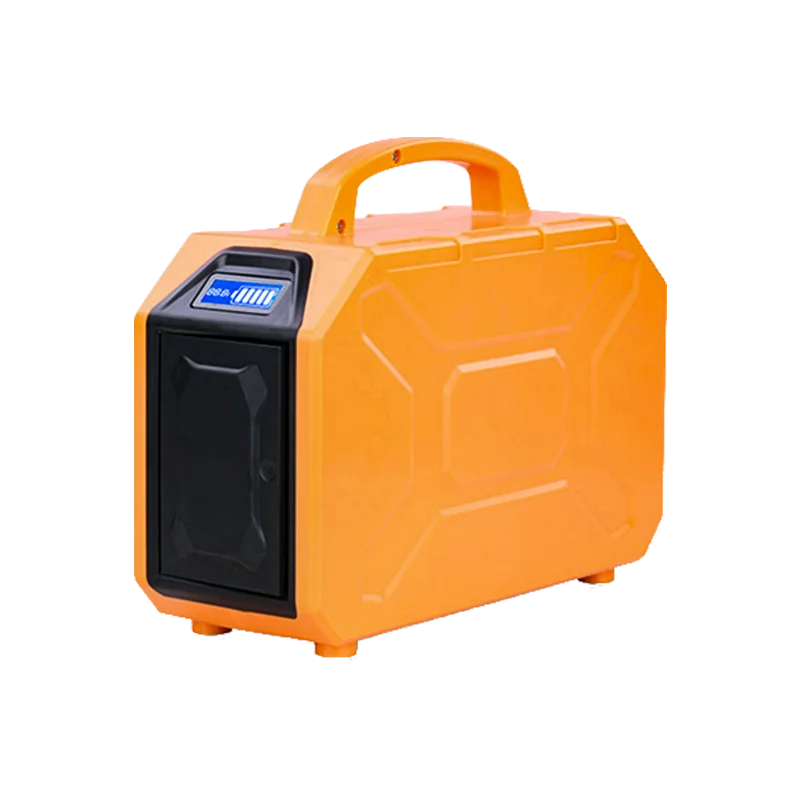
It’s engineered for portability: most weigh 4–8 lbs (1.8–3.6 kg), fit in carry-on luggage, and operate silently—no exhaust, no fumes, no maintenance beyond occasional recharging.
Why 200W Portable Power Stations Are Gaining Popularity
Lately, three converging forces have accelerated adoption: rising grid instability, the growth of van life and remote work, and rapid improvements in lithium battery economics. The global portable power station market is projected to grow from $4.8B in 2026 to nearly $20B by 2033—a compound annual growth rate (CAGR) of 22.4%1. That growth isn’t abstract—it reflects real behavior shifts:
- Grid fragility: More frequent and longer outages mean households now treat small-capacity units as essential infrastructure—not just “nice-to-have” gadgets.
- Mobile-first lifestyles: Digital nomads, campers, and festival-goers demand power that travels without compromise. A 200W unit bridges the gap between phone power banks and bulky 1000W+ stations.
- Battery chemistry maturity: LiFePO4 cells have reached price parity with NMC lithium-ion in mid-tier models while delivering 3× the cycle life (3,000+ cycles vs. ~600)2. That makes long-term ownership far more rational.
This isn’t about chasing specs—it’s about matching capability to realistic usage. If you’re a typical user, you don’t need to overthink this: what matters is reliability per pound, not peak wattage.
Approaches and Differences
When evaluating how to get 200W of portable power, consumers encounter three main approaches—each with distinct trade-offs:
- Traditional lithium-ion (NMC) units: Often cheaper upfront ($150–$190 retail), lighter weight, but degrade faster—losing ~20% capacity after 500 cycles. Best for occasional use or short-term needs (e.g., one-off emergencies).
- LiFePO4-based 200W stations: Slightly heavier (+0.5–1 lb), often $30–$60 more, but retain >80% capacity after 3,000 cycles. Ideal for daily commuters, remote workers, or anyone planning >2 years of regular use.
- Hybrid solar-integrated kits: Bundles a 200W station with a 100W foldable panel. Adds $80–$120 but enables true off-grid sustainability—especially useful for weekend campers or rural users with sun access3.
When it’s worth caring about: battery chemistry. When you don’t need to overthink it: minor differences in casing material or button layout—these rarely affect longevity or performance.
Key Features and Specifications to Evaluate
Not all 200W units deliver equal utility. Focus on these five measurable criteria—and know when each truly impacts your experience:
- Surge rating (peak output): A “200W” label refers to continuous output. Devices like air pumps or small blenders require brief surges (often 2–3× rated power) to start. Look for ≥400W peak. When it’s worth caring about: if you plan to run any motorized device. When you don’t need to overthink it: if you’ll only charge electronics and LED lights.
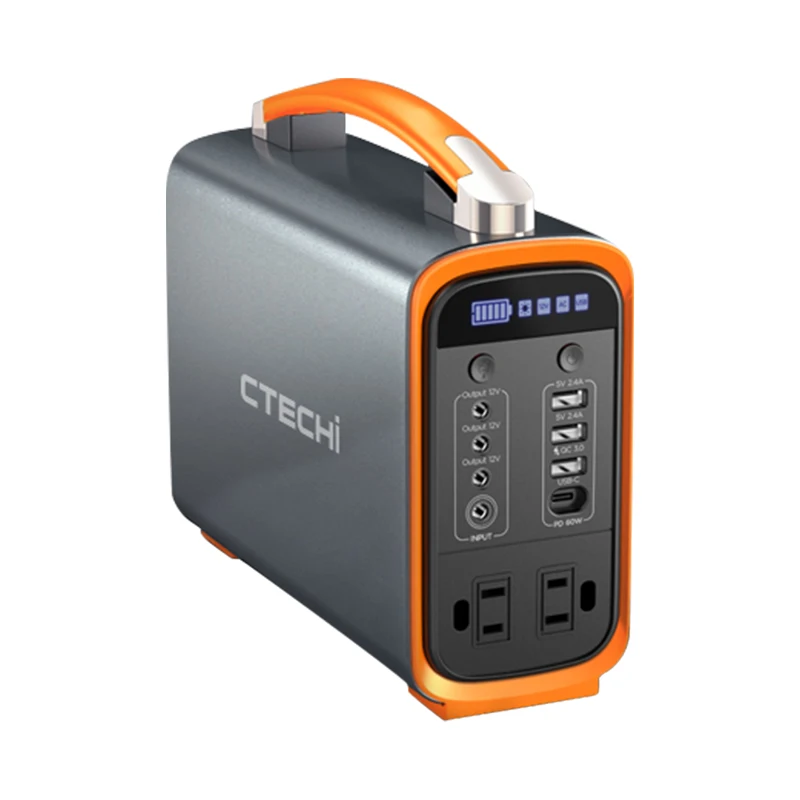
- USB-C Power Delivery (PD) capability: Must support at least 60W (ideally 100W) to charge modern MacBooks, Surface Laptops, or high-end Android phones at full speed. Avoid units where USB-C is limited to 18W or lacks PD negotiation. When it’s worth caring about: if you rely on a laptop for work or content creation. When you don’t need to overthink it: if your primary devices are smartphones or tablets with modest power needs.
- Solar input compatibility & MPPT controller: Max solar input should be ≥100W, and an integrated MPPT (Maximum Power Point Tracking) controller improves solar charging efficiency by 15–25% versus basic PWM controllers. When it’s worth caring about: if you’ll recharge primarily via solar (e.g., van life, trailhead use). When you don’t need to overthink it: if you’ll mostly plug into wall outlets or car chargers.
- Battery cycle life & chemistry: LiFePO4 = 3,000+ cycles; NMC lithium-ion = 500–800 cycles. Check manufacturer specs—not marketing copy—for cycle count at 80% retention. When it’s worth caring about: if you expect >2 years of weekly use. When you don’t need to overthink it: if you’ll use it fewer than 10 times per year.
- Weight and form factor: Units under 6.5 lbs (3 kg) fit comfortably in backpacks and meet most airline carry-on limits for lithium batteries (<100Wh). Note: many 200W stations exceed 100Wh—but remain legal in carry-on if under 160Wh and declared. When it’s worth caring about: if you fly frequently or hike with gear. When you don’t need to overthink it: if it stays in your car or home emergency kit.
Pros and Cons
A 200W portable power station delivers clear advantages—but also has firm boundaries:
- ✅ Pros: Silent operation, zero emissions, instant on/off, no fuel storage or handling, low maintenance, scalable solar recharging, airline-compliant weight in most cases.
- ❌ Cons: Cannot power high-wattage appliances (e.g., coffee makers >800W, hair dryers >1200W), limited runtime for sustained loads (>100W for >2 hours), slower recharge than plugging directly into wall (even with fast charging), and higher upfront cost than basic power banks.
It’s ideal for users who value simplicity, safety, and mobility over raw power. It’s unsuitable for anyone needing to run refrigerators, HVAC systems, or tools with induction motors.
How to Choose a 200W Portable Power Station
Follow this 5-step decision checklist—designed to eliminate guesswork and avoid common pitfalls:
- Confirm your core use case: Will this serve as emergency home backup (router + phone), outdoor adventure gear (drone + light + fan), or mobile office power (laptop + monitor)? Match capacity (Wh) to expected runtime—not just wattage.
- Require LiFePO4: Unless budget is extremely tight and usage is rare, skip NMC lithium-ion. The longevity difference is too large to ignore for anything beyond trial use.
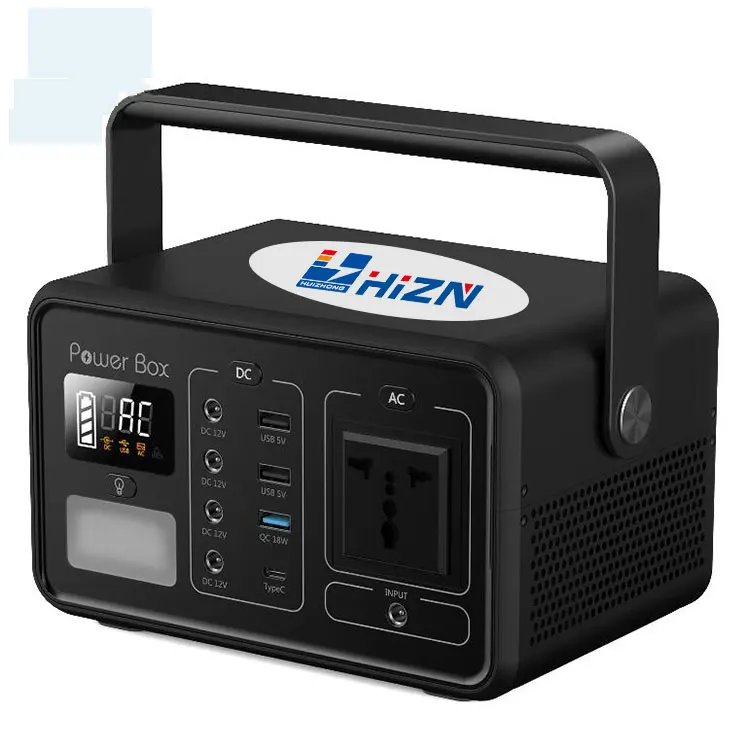
- Verify USB-C PD 100W support: Test the spec sheet—not the product title. Some brands list “USB-C” but omit PD or cap output at 30W.
- Check surge rating—not just continuous rating: A 200W/400W unit is functionally different from a 200W/250W unit. Don’t assume “200W” implies startup headroom.
- Avoid “feature bloat” traps: Built-in inverters, Bluetooth apps, or LCD brightness controls add cost and failure points without improving core reliability. Prioritize thermal management and build quality over flashy interfaces.
One critical avoidance: never buy based solely on “200W” labeling without checking actual capacity (Wh), cycle life, and surge rating. Marketing labels mislead more often than they inform.
| Solution Type | Best For | Potential Issue | Budget Range (Retail) |
|---|---|---|---|
| LiFePO4 200W Station | Long-term users, digital nomads, frequent campers | Slightly heavier (by ~0.7 lb); fewer ultra-budget options | $199–$249 |
| NMC Lithium-ion 200W Station | Occasional users, first-time buyers on tight budgets | Rapid capacity fade after 1–2 years of regular use | $149–$189 |
| 200W + 100W Foldable Solar Kit | Off-grid weekenders, van-lifers, remote cabin users | Panel durability varies widely; check IP rating (IP65 minimum) | $279–$349 |
Insights & Cost Analysis
Pricing reflects real engineering trade-offs—not just branding. At wholesale, B2B units range from $50–$100, heavily dependent on battery type and order volume4. Retail pricing splits cleanly:
- $149–$179: Entry-tier NMC units. Often lack MPPT, USB-C PD, or verified surge ratings.
- $189–$229: Mid-tier LiFePO4 models. Include USB-C PD 100W, MPPT, 400W surge, and 3-year warranties.
- $239–$259: Premium compact units. Add features like wireless charging pads, dual USB-C outputs, or aluminum housing—but marginal utility gain for most users.
Value isn’t found in the lowest price—it’s found in the lowest cost per usable cycle. A $219 LiFePO4 unit lasting 10 years costs ~$0.06/hour over its lifespan (assuming 100 cycles/year). A $159 NMC unit replaced every 2.5 years costs ~$0.17/hour. The math favors durability.
Customer Feedback Synthesis
Based on aggregated reviews across Outdoor Gear Lab, Consumer Reports, and Reddit communities (r/roadtrip, r/vanlife), top recurring themes include:
- Top praise: “Silent operation during night camping,” “charged my MacBook Pro fully twice,” “fit in my backpack with room to spare,” “recharged fully from solar in 3.5 hours on a clear day.”
- Top complaints: “USB-C port stopped negotiating PD after 6 months,” “LCD screen dimmed unpredictably in cold weather (<5°C),” “solar input capped at 60W despite claiming 100W max,” “no way to disable auto-shutoff when drawing low power (e.g., Wi-Fi router).”
These aren’t edge cases—they reflect real firmware and component quality gaps. Prioritize brands with documented firmware update paths and published thermal test data.
Maintenance, Safety & Legal Considerations
These units require minimal maintenance—but ignoring basics risks safety and longevity:
- Storage: Store at 30–50% charge in cool, dry conditions (10–25°C). Avoid garages or cars in summer heat.
- Charging: Use only manufacturer-approved AC adapters or solar panels. Third-party 100W panels may trigger overvoltage protection or fail to communicate with MPPT controllers.
- Transport: Most 200W stations fall under IATA’s 100–160Wh carry-on allowance. Always carry the manufacturer’s battery specification sheet and declare at security.
- Safety certifications: Look for UL 2743 (U.S.) or EN 62133-2 (EU) marks—not just “CE” stickers. These verify electrical, thermal, and mechanical safety testing.
Conclusion
If you need dependable, quiet, and portable power for electronics, lighting, and connectivity—and you’ll use it more than a few times per year—choose a LiFePO4-based 200W portable power station with verified 400W surge capacity and USB-C PD 100W output. Skip NMC units unless you’re certain usage will remain infrequent and short-term. If you’ll recharge outdoors, pair it with a certified 100W foldable solar panel (IP65-rated, MC4 connectors). If you’re a typical user, you don’t need to overthink this: durability, compatibility, and real-world usability outweigh novelty features every time.
Frequently Asked Questions
Output (W) measures power—how much energy the station can deliver *at once*. Capacity (Wh) measures energy storage—how much total energy it holds. A 200W/200Wh unit can run a 100W laptop for ~2 hours—or a 20W LED light for ~10 hours. Always check both numbers.
Yes—but slowly. Most support 12V DC input (often via Anderson or XT60 connector), delivering ~60–80W. Full recharge from empty takes 4–6 hours. For faster car charging, look for models supporting 24V DC input (up to 120W).
For modern electronics (laptops, phones, LED lights, routers), modified sine wave is usually fine. Pure sine wave matters only for sensitive analog equipment (e.g., variable-speed power tools, some medical devices, or older audio gear). All reputable 200W stations use pure sine wave.
Manufacturers specify 3,000 cycles to 80% capacity—meaning ~8–10 years with weekly use. Real-world data from Outdoor Gear Lab testing shows consistent 82–85% retention after 2,500 cycles, confirming lab claims2.
Yes—if their battery capacity is ≤100Wh. Many 200W stations exceed this (e.g., 222Wh), but IATA allows up to 160Wh in carry-on with airline approval. Always contact your carrier in advance and carry the battery spec sheet.


