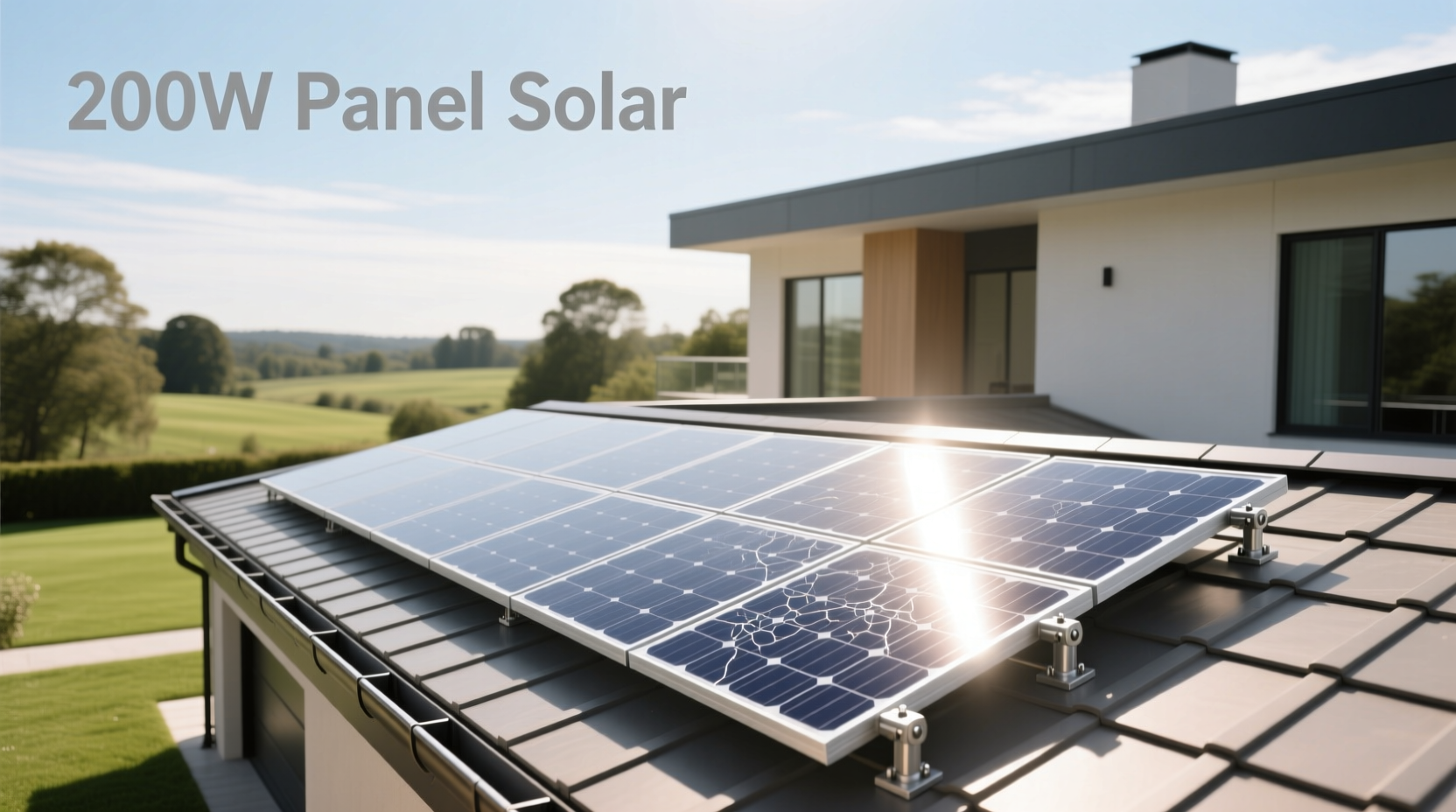
If you’re outfitting an RV, small boat, or weekend cabin—and need reliable, off-grid power without overengineering it—you almost certainly want a portable 200W monocrystalline solar panel. Over the past year, efficiency gains (up to 23.4%), widespread IP67/IP68 waterproofing, and foldable designs have made this wattage class more usable and durable than ever before—especially for mobile users who prioritize setup speed, storage footprint, and real-world yield over raw price-per-watt. If you’re a typical user, you don’t need to overthink this. Skip rigid glass panels unless mounting permanently on a shed roof. Avoid flexible models unless your surface is curved (e.g., fiberglass RV roof or marine deck). And don’t chase “23% efficiency” claims without verifying test conditions—real-world output depends far more on tilt, shading, and ambient temperature than lab-rated peaks. This piece isn’t for keyword collectors. It’s for people who will actually use the product.
About 200W Solar Panels: Definition & Typical Use Cases
A 200W solar panel is a photovoltaic module rated to produce up to 200 watts of direct current (DC) power under Standard Test Conditions (STC: 1000 W/m² irradiance, 25°C cell temperature, AM1.5 spectrum). In practice, it delivers between 800Wh and 1,000Wh per day with 5 peak sun hours—enough to recharge a 1,000Wh portable power station in ~1.5 days, run a 30W laptop for ~10 hours daily, or charge a smartphone ~60 times 12. It sits at a strategic inflection point: powerful enough to meaningfully supplement battery banks, yet light and compact enough for frequent transport.
Typical users include:
- RV and van lifers needing supplemental charging without roof penetrations;
- Boat owners installing on non-flat decks or bimini tops;
- Campers and overlanders using foldable panels with portable power stations;
- Small off-grid cabins where one or two panels meet basic lighting, fridge, and comms needs;
- Emergency preparedness setups requiring rapid-deploy solar capacity.
Why 200W Solar Panels Are Gaining Popularity
Lately, demand for 200W solar panels has surged—not because they’re new, but because their real-world usability improved sharply. Market heat peaked at a score of 60 in June 2026, driven by three converging shifts 2:
- Efficiency became accessible: Monocrystalline cells now routinely hit 23–23.4% conversion—up from ~21% just two years ago—without premium pricing 3.
- Durability became standard: ETFE lamination and IP67/IP68 ratings are no longer “premium features”—they’re baseline for reputable portable and flexible models 34.
- Form factors matured: Foldable designs now reliably deliver full-rated output in half the packed volume; flexible panels maintain >95% of STC output even when bent to 30° radius.
This isn’t about chasing higher wattage—it’s about eliminating friction. A 200W panel fits in a hatchback trunk, deploys in under 90 seconds, and charges most mid-tier power stations (like Jackery 1000 or EcoFlow Delta 2) without requiring MPPT controller upgrades. If you’re a typical user, you don’t need to overthink this.
Approaches and Differences: Portable, Flexible, and Rigid
The three dominant form factors solve different problems—and introduce distinct trade-offs. Choosing wrong means carrying unnecessary weight, sacrificing longevity, or wasting installation effort.
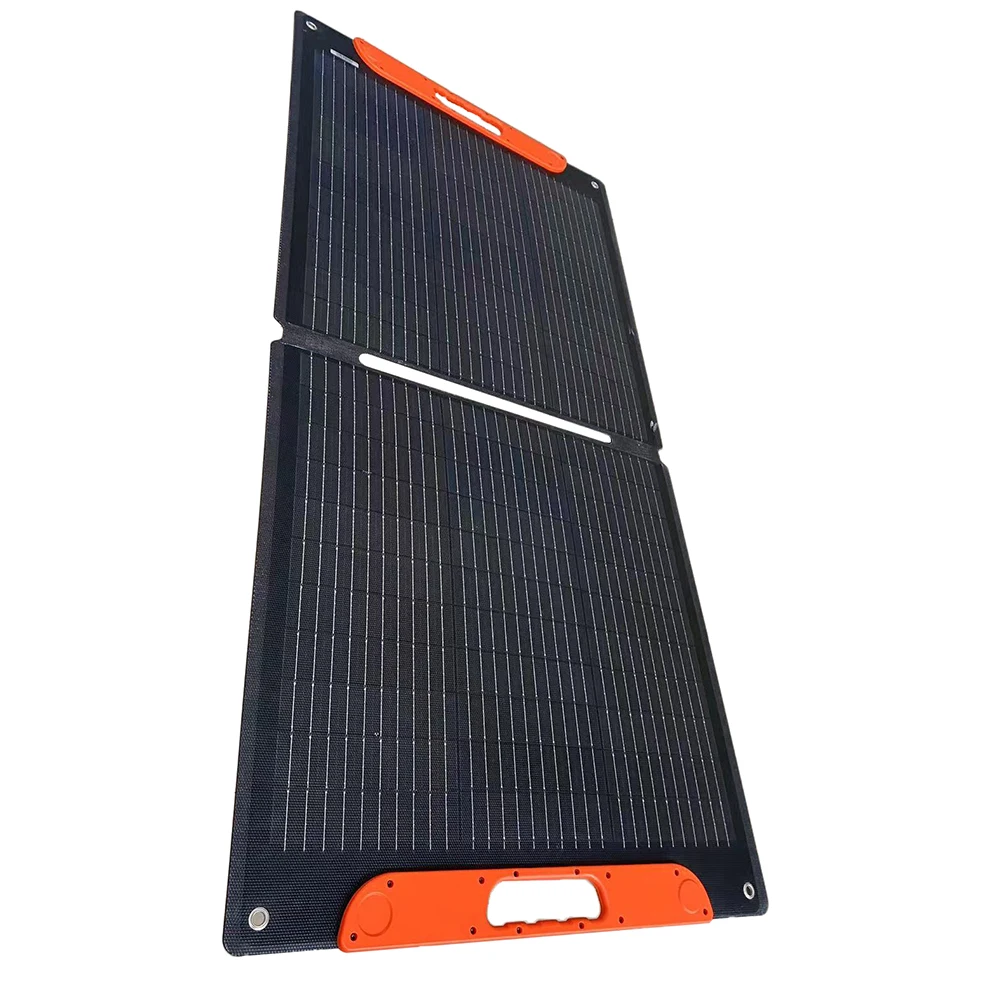
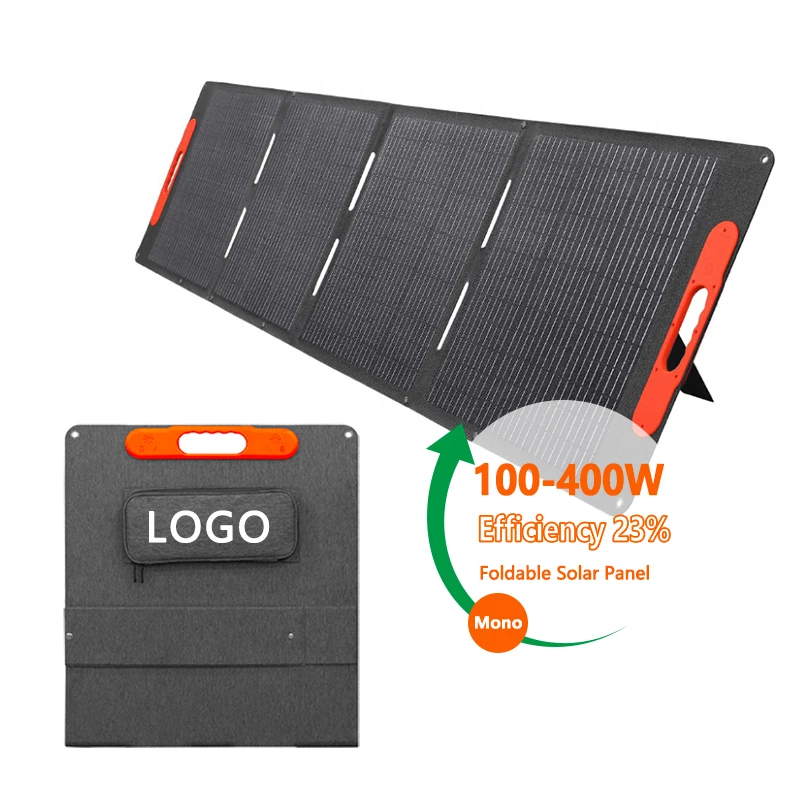
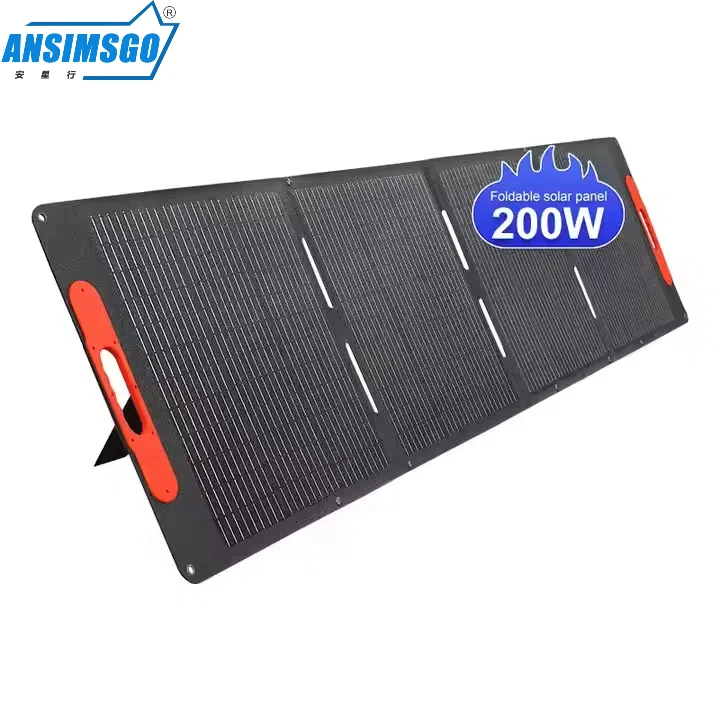
🔹 Portable / Foldable Panels
Best for: Frequent movers, temporary setups, limited storage space.
- Pros: Lightweight (5.5–7.5 kg), integrated kickstands and handles, often include MC4-to-XT60 adapters for direct power station input, easy to angle toward sun.
- Cons: Slightly lower long-term UV resistance than glass; hinge mechanisms may wear after ~2,000 cycles.
- When it’s worth caring about: If you pack and unpack weekly—or need to adjust tilt multiple times per day—foldable design saves real time and physical strain.
- When you don’t need to overthink it: If you’ll mount once and leave for months, portability adds zero value. Save $30–$80.
🔹 Flexible Panels
Best for: Curved surfaces (boat decks, RV roofs), weight-sensitive builds, low-profile integration.
- Pros: Conforms to contours, lightweight (~4–5 kg), no frame or glass = minimal wind load, often adhesive-backed for semi-permanent mounting.
- Cons: Lower heat dissipation → output drops faster above 35°C; harder to clean; lifespan typically 10–12 years vs. 25+ for rigid.
- When it’s worth caring about: If your mounting surface has >5° curvature—or if drilling holes violates warranty or insurance terms—flexible is functionally the only option.
- When you don’t need to overthink it: On flat, uncoated aluminum or plywood roofs? Rigid or foldable will outperform and last longer. Don’t pay a 20–35% premium for flexibility you won’t use.
🔹 Rigid Monocrystalline Panels
Best for: Permanent, cost-optimized installations on sheds, garages, or ground mounts.
- Pros: Lowest $/watt ($22–$77/unit wholesale), highest long-term reliability, best heat tolerance, easiest to clean and inspect.
- Cons: Heavy (12–15 kg), bulky (typically 1.7m × 1m), requires mounting rails and structural assessment.
- When it’s worth caring about: If you’re installing 4+ panels on a fixed structure and budget is primary—rigid delivers measurable ROI over 5+ years.
- When you don’t need to overthink it: For anything under 3 panels, or any application requiring mobility—even occasional repositioning—rigid adds complexity with no operational benefit.
Key Features and Specifications to Evaluate
Don’t default to wattage alone. These five specs determine whether a 200W panel performs as promised—or falls short in real conditions:
- Cell Efficiency (23–23.4%): Higher is better—but only if verified by independent testing (e.g., TÜV Rheinland report). Lab ratings assume perfect conditions; expect ~15–18% real-world average efficiency.
- Temperature Coefficient (e.g., –0.35%/°C): Lower (less negative) = less output loss on hot days. Critical for desert or summer use.
- IP Rating (IP67 or IP68): IP67 = dust-tight + submersible to 1m for 30 min; IP68 adds continuous submersion rating. Essential for marine or rainy climates 3.
- Open-Circuit Voltage (Voc): Must stay below your charge controller’s max input (e.g., EcoFlow Delta 2 accepts ≤ 65V). Most 200W panels run 22–24V nominal / 35–45V Voc—safe for 99% of portable setups.
- Lamination Material (ETFE vs PET): ETFE resists UV degradation and abrasion 3× longer than PET. Non-negotiable for outdoor exposure >6 months/year.
Pros and Cons: Balanced Assessment
✅ Who benefits most: Users with mobile, intermittent, or space-constrained power needs—especially those pairing with 1–2kWh portable power stations. The 200W size hits the sweet spot: enough output to matter, small enough to manage.
❌ Who should skip it: Those needing >1.5kWh/day consistently (go 400W+ arrays), users with zero sun access (deep shade, urban apartments), or anyone unwilling to adjust panel angle seasonally. A single 200W panel won’t offset full household loads.
How to Choose a 200W Solar Panel: Decision Checklist
Follow this sequence—no skipping steps:
- Confirm your use case: Mobile (RV/boat) → prioritize portable or flexible. Fixed (shed/garage) → consider rigid.
- Verify compatibility: Match Voc and Vmp to your power station or charge controller specs. Check connector type (MC4 standard; some brands use proprietary).
- Assess mounting reality: Flat surface? Rigid or foldable. Curved or irregular? Flexible. No mounting hardware allowed? Foldable with suction cups or weighted base.
- Check durability specs: IP67/IP68 required for marine or rain-prone areas. ETFE lamination mandatory for >1-year outdoor use.
- Avoid these traps:
- “200W” labels without STC certification (some Alibaba listings omit full test reports);
- Flexible panels advertised as “IP68” without third-party validation (many fail salt-spray tests);
- Deals priced <$120 without clear warranty terms (reputable brands offer 5–10 years product + 25 years linear power warranty).
Insights & Cost Analysis
Price reflects durability and support—not just wattage. Here’s what $100–$300 actually buys you:
- $100–$150: Entry-tier foldable panels (e.g., Dokio 200W). Often PET lamination, IP65 rating, 2-year warranty. Fine for seasonal camping—but expect 10–15% output loss after 18 months of full sun.
- $180–$250: Mid-tier (e.g., BLUETTI SP200L, ALLPOWERS SF200). ETFE lamination, IP67, 23%+ efficiency, 5-year warranty. Best balance for serious users.
- $260+: Premium or B2B-direct (e.g., Shenzhen OEMs with MOQ ≥50 units). Custom branding, extended warranties, bulk logistics. Not cost-effective for individuals.
Wholesale B2B prices range from $22 to $77 per piece, but minimum order quantities (MOQs) start at 50–100 units 56. For individuals, paying $220 for a tested, warrantied unit saves more than $100 in troubleshooting time and replacement risk.
Better Solutions & Competitor Analysis
| Category | Best For | Potential Issue | Budget Range (USD) |
|---|---|---|---|
| Portable Foldable | RV/van lifers, campers, fast deployment | Hinge fatigue after heavy use; slightly lower UV resistance | $180–$250 |
| Flexible | Boats, curved RV roofs, weight limits | Output drop >35°C; shorter lifespan; cleaning difficulty | $220–$300 |
| Rigid Mono | Permanent sheds, garages, ground mounts | Heavy; requires structural mounting; no mobility | $22–$77 (wholesale, MOQ 50+) |
Customer Feedback Synthesis
Based on aggregated reviews across Reddit, retailer pages, and B2B portals:
- Top 3 praises: “Sets up in under 2 minutes,” “Charges my Delta 2 from 20% to 100% in 5.5 sun hours,” “Survived monsoon season on my sailboat with zero delamination.”
- Top 2 complaints: “MC4 connectors didn’t match my older power station—needed adapter,” “No built-in carrying case included (added $22 separately).”
Note: Complaints rarely involve core performance—most relate to accessories, documentation, or expectation mismatch (e.g., assuming 200W = 200W every hour, regardless of cloud cover).
Maintenance, Safety & Legal Considerations
- Maintenance: Rinse monthly with fresh water if near salt or dust. Avoid abrasive cloths—microfiber + mild soap suffices. Inspect ETFE surface annually for micro-cracks.
- Safety: Never touch terminals while exposed to sunlight (risk of DC arc). Disconnect before cleaning. Store folded panels in shaded, ventilated areas—heat buildup accelerates PET degradation.
- Legal: No federal permitting needed for portable 200W panels in the US. Permanent rooftop installations may require local building department review—check your municipality’s accessory structure rules. Marine use must comply with ABYC E-11 standards for DC wiring (not panel-specific, but relevant to full system design).
Conclusion: Condition-Based Recommendations
If you need mobility, speed, and simplicity → choose a portable foldable 200W panel with ETFE lamination and IP67 rating (e.g., BLUETTI SP200L or equivalent). It delivers the strongest ROI for users who move regularly.
If you need seamless integration on a curved or non-penetrable surface → choose a flexible 200W panel with validated IP68 and 10-year product warranty. Prioritize vendors who publish salt-spray and bend-cycle test reports.
If you’re installing 4+ panels on a fixed structure with budget constraints → source rigid monocrystalline panels via B2B channels—but confirm MOQ, lead time, and warranty transfer terms upfront.
If you’re a typical user, you don’t need to overthink this.


