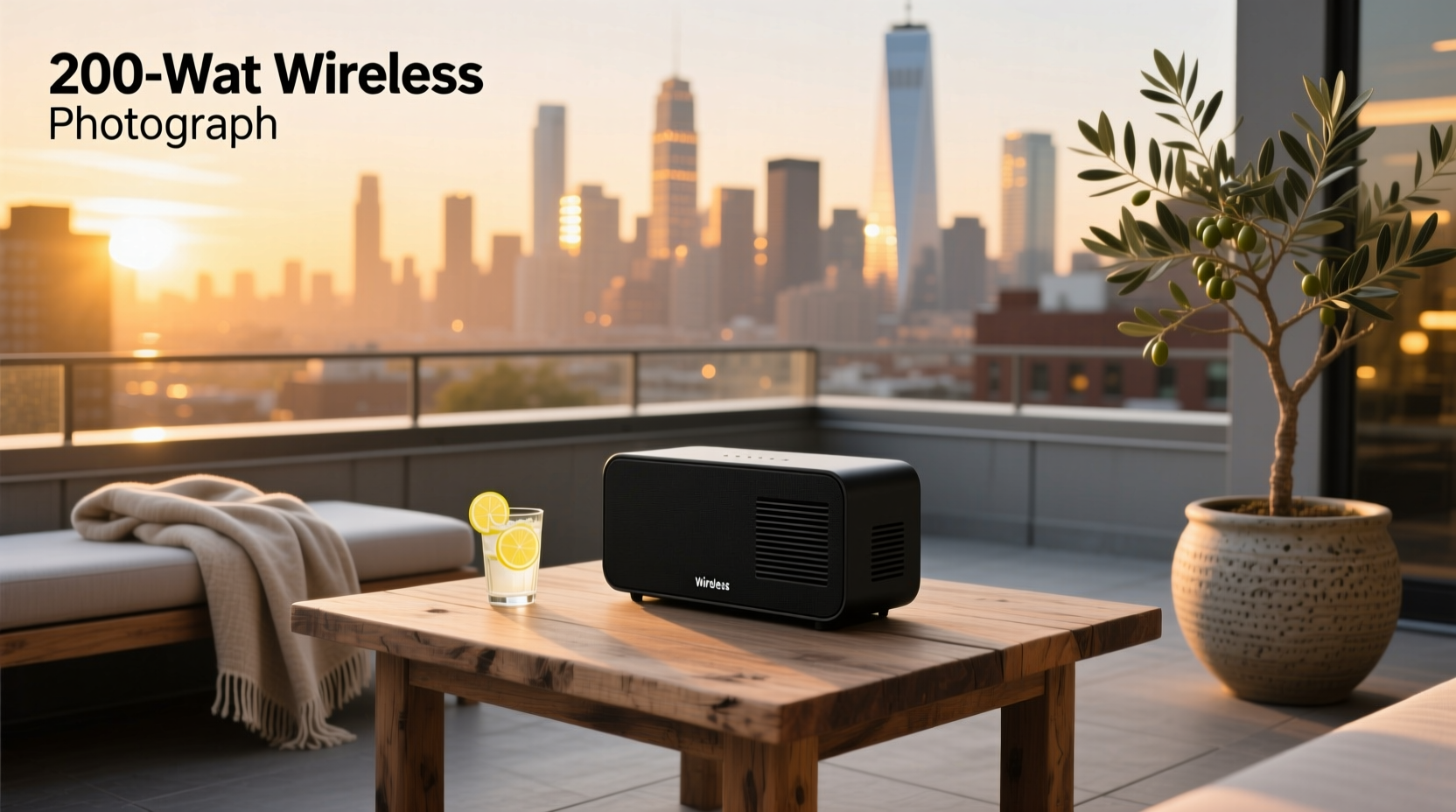
About 200W Wireless Speakers: Definition & Typical Use Cases
A 200W wireless speaker refers to an active (powered) loudspeaker system delivering 200 watts of continuous, RMS-rated output, not peak or PMPO. This power level sits at a functional inflection point: high enough to fill medium-sized indoor spaces (up to 1,200 sq ft) or open-air gatherings (50–100 people), yet still viable for portable, battery-powered designs. Unlike consumer-grade Bluetooth speakers under 50W, 200W systems are engineered for sustained output without thermal compression or distortion.
Typical use cases include:
- 🎤 Mobile PA & Karaoke: Small venues, street performers, school events, and backyard parties where voice reinforcement matters;
- 🌿 Rugged Outdoor Audio: Beach trips, camping, festivals—where dust resistance, water sealing (IPX6/IPX7), and bass extension are prioritized;
- 🎧 Hi-Fi Bookshelf Integration: Active stereo pairs for turntables or streaming hubs—often with phono preamps and balanced inputs;
- 📡 Multizone Audio Distribution: Using Auracast™ to broadcast one audio source to dozens of personal devices simultaneously (e.g., museum tours, fitness classes).
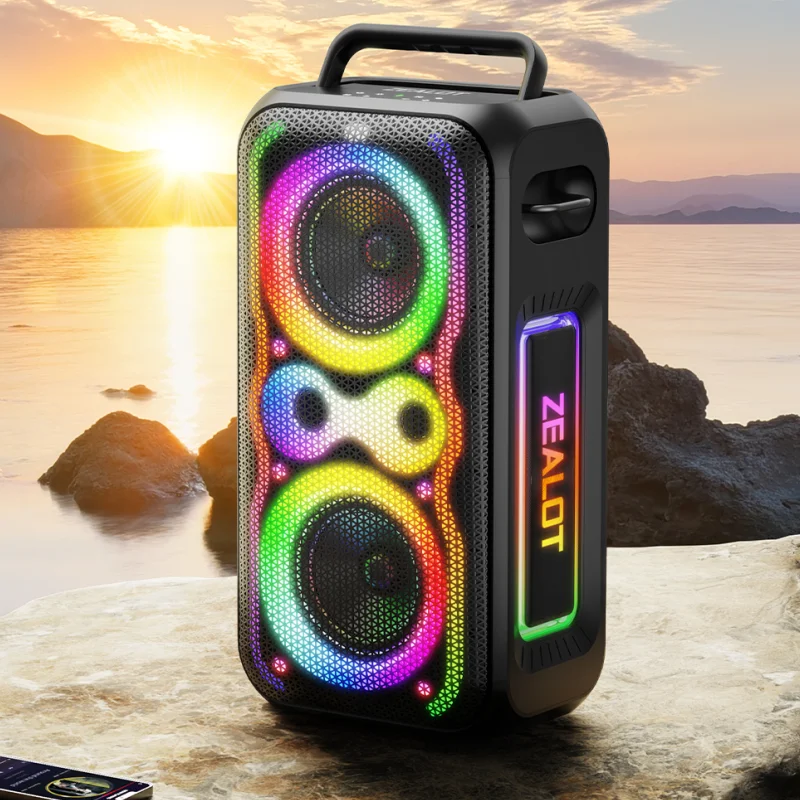
Why 200W Wireless Speakers Are Gaining Popularity
Lately, demand for 200W wireless speakers has accelerated—not because users want louder sound, but because they’re rejecting compromise. The global wireless speaker market is projected to reach $56–$77 billion by 2026, growing at a 7.9% CAGR 1. Within that growth, the 200W segment stands out due to three converging shifts:
- From volume to fidelity: Consumers now cite distortion at high volumes as their top complaint 2. Dual-driver configurations with passive radiators—and true 200W RMS amplification—solve this better than inflated 500W peak claims.
- From single-device to shared audio: Auracast™ broadcasting (standardized in 2024) enables one speaker to stream losslessly to unlimited Bluetooth earbuds or hearing aids—critical for accessibility, education, and public spaces 3.
- From fixed to adaptive: On-device AI now adjusts EQ in real time based on room acoustics or ambient noise—no app required. This eliminates manual tuning fatigue and makes high-power audio genuinely plug-and-play.
If you’re a typical user, you don’t need to overthink this: unless you’re running a 200-person wedding or operating in a concrete warehouse, 200W RMS is the sweet spot between headroom and portability.
Approaches and Differences: Portable PA vs. Hi-Fi Bookshelf vs. Rugged Party
Three distinct approaches dominate the 200W wireless speaker landscape—each solving different problems. Choosing the wrong type leads directly to buyer’s remorse.
| Category | Core Strength | Key Trade-off | Best For |
|---|---|---|---|
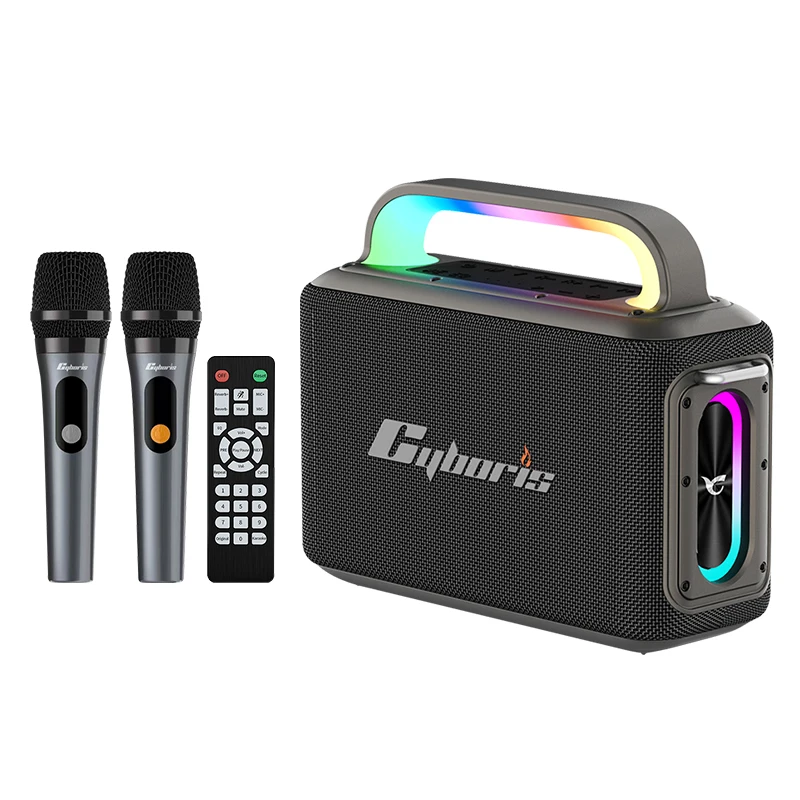
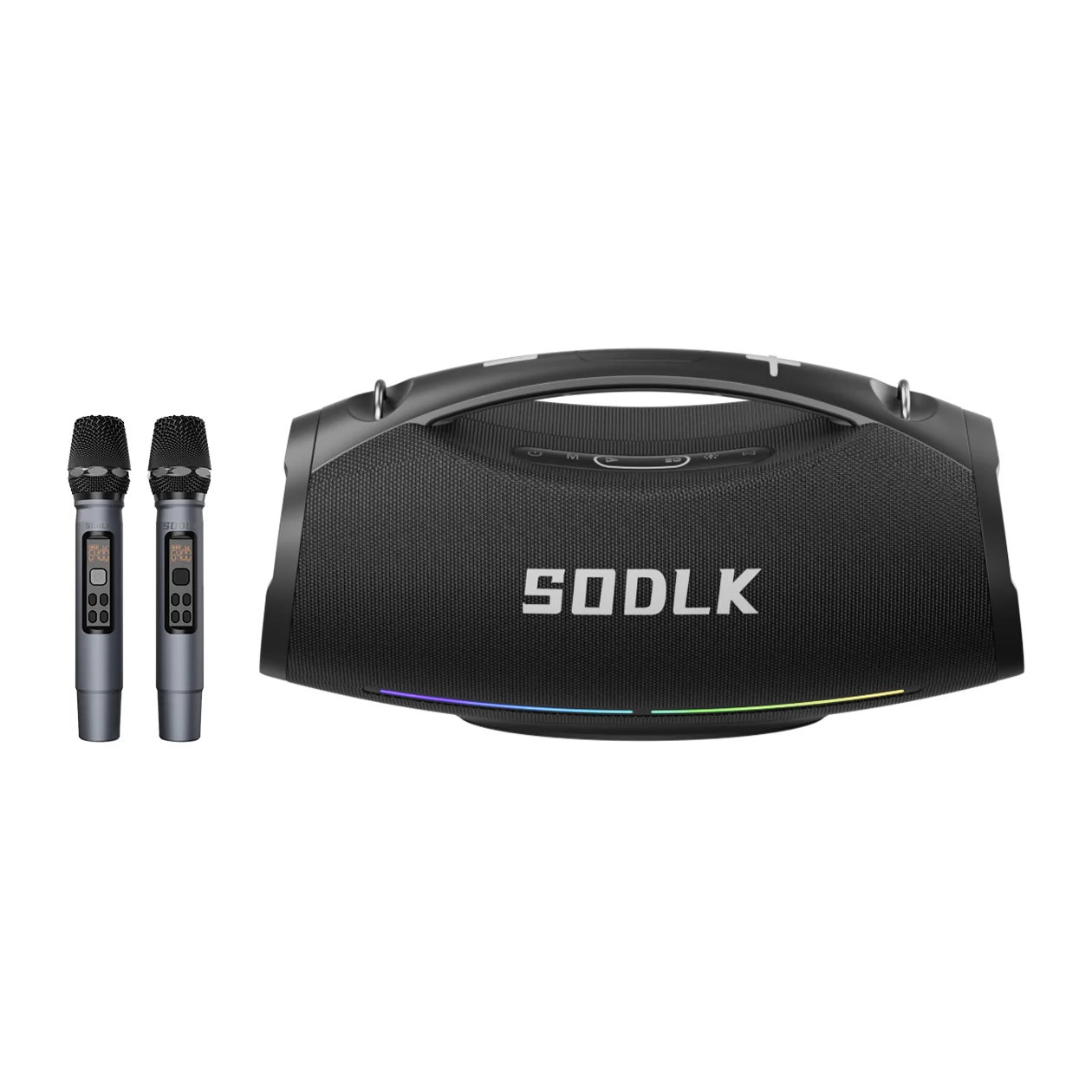
| Portable PA Systems | Integrated mixer, mic inputs, vocal enhancement, 12+ hr battery | Bulkier form factor; less refined treble for music-only use | Presenters, teachers, karaoke hosts, event vendors |
| Active Bookshelf Speakers | Flat frequency response, phono preamp, wood cabinet resonance control | No built-in battery; requires AC power or external pack | Turntable owners, home theater integrators, audiophiles seeking simplicity |
| Rugged Outdoor Speakers | IPX7 rating, solar-assisted charging, bass-heavy tuning, TWS pairing | Less accurate midrange; often lacks fine EQ controls | Campers, beachgoers, tailgaters, festival crews |
Key Features and Specifications to Evaluate
Wattage alone tells you almost nothing. Here’s what actually moves the needle—and when each metric matters:
- RMS vs. Peak Power: When it’s worth caring about — only RMS (Root Mean Square) reflects continuous, thermally sustainable output. A 200W RMS unit can play cleanly at 85dB for hours; a 200W peak unit may clip after 90 seconds. When you don’t need to overthink it — if the spec sheet doesn’t list RMS, walk away. If it does, verify it’s measured at full bandwidth (20Hz–20kHz), not just 1kHz.
- Bluetooth Version & Codecs: When it’s worth caring about — Bluetooth 6.0 enables centimeter-level spatial audio and Auracast™ broadcasting. LC3 codec improves battery life by 30% versus SBC at equivalent quality 4. When you don’t need to overthink it — Bluetooth 5.3 works fine for basic playback—but if you plan to share audio across devices or use voice assistants offline, 6.0 is non-negotiable.
- Battery Life Claims: When it’s worth caring about — test runtime at 60% volume, not ‘max’. Realistic 200W portable units deliver 12–15 hours at moderate levels; anything claiming >25 hours likely uses aggressive power gating or low-power drivers. When you don’t need to overthink it — if runtime isn’t specified at ≥50% volume, assume it’s inflated.
- Durability Rating (IPX): When it’s worth caring about — IPX6 means “powerful water jets from any direction”; IPX7 means “immersion up to 1m for 30 min.” Critical for poolside or rain-prone use. When you don’t need to overthink it — IPX4 (splash resistant) suffices for indoor or dry patio use.
Pros and Cons: Balanced Assessment
Pros:
- ✅ Enough clean headroom for speech intelligibility and dynamic music peaks;
- ✅ Compatible with modern ecosystem features (Auracast™, LC3, on-device AI);
- ✅ Widely available in B2B wholesale tiers ($80–$130/unit depending on configuration) 5;
- ✅ Lower thermal stress than 300W+ systems → longer component lifespan.
Cons:
- ❌ Not ideal for large indoor halls (>150 people) or open-field coverage beyond 100m;
- ❌ Battery-powered variants require careful thermal management—some throttle output after 45 minutes at full volume;
- ❌ Entry-tier models often sacrifice driver quality to hit price points, leading to muddy bass or harsh highs.
How to Choose a 200W Wireless Speaker: Step-by-Step Decision Guide
Follow this checklist before purchasing—or sourcing in bulk:
- Define your primary use case first — Is voice clarity (PA), musical accuracy (Hi-Fi), or environmental resilience (outdoor) the priority? Don’t start with specs.
- Verify RMS power and measurement conditions — Look for “200W RMS @ 20Hz–20kHz, THD <1%” — not “200W MAX” or “200W PMPO.”
- Check Auracast™ and Bluetooth 6.0 compliance — These are now baseline expectations for future-proofing; avoid models certified only to Bluetooth 5.0 or earlier.
- Test battery claims against realistic usage — Does the spec sheet state runtime at 60% volume? If not, halve the advertised number.
- Avoid these red flags: No IP rating listed; no mention of driver size or material; “gaming mode” without latency specs (<40ms); or missing LC3 codec support.
Insights & Cost Analysis
Wholesale pricing for 200W wireless speakers varies predictably by category and feature set:
| Configuration | Typical Unit Price (USD) | Key Value Drivers | Common Pitfalls |
|---|---|---|---|
| Portable PA w/ wireless mic | $80–$100 | 3-channel mixer, USB recording, battery swappable | Thin plastic housing; non-replaceable battery |
| Active bookshelf pair (wooden) | $95–$130/set | Phono preamp, bi-amp topology, analog inputs | No Bluetooth; requires wall power |
| Rugged outdoor (IPX7 + solar) | $80–$120 | Solar charging port, passive radiator, RGB sync | Poor midrange detail; limited EQ options |
For B2B buyers: suppliers with $100,000+ transaction volume consistently offer tighter tolerances on RMS output and faster firmware updates—critical for maintaining Auracast™ compatibility 6.
Better Solutions & Competitor Analysis
Some brands have moved beyond incremental upgrades. Leading models now integrate features previously reserved for studio monitors:
- On-device AI processing: Adjusts soundstage width and bass roll-off based on real-time microphone feedback—no smartphone needed.
- Modular battery packs: Swappable 10,000mAh LiFePO4 units extend runtime without adding weight to the main chassis.
- Multi-role firmware: One hardware platform switches between PA, stereo, and mono-summed modes via software toggle.
Customer Feedback Synthesis
Based on aggregated reviews across CNET, Rtings, Consumer Reports, and Reddit’s r/Bluetooth_Speakers 7:
- Top 3 praised features: Battery life consistency (when verified), seamless Auracast™ pairing, tactile build quality in outdoor models.
- Top 3 complaints: Distortion above 80% volume (in budget-tier units), inconsistent Bluetooth 6.0 implementation across brands, confusing LED status logic.
Maintenance, Safety & Legal Considerations
No special certifications are required for consumer 200W wireless speakers in the US or EU. However:
- Ensure lithium batteries comply with UN38.3 transport testing (mandatory for air freight); reputable suppliers provide documentation.
- Do not operate continuously at maximum volume for >30 minutes—thermal protection circuits may engage, causing intermittent dropouts.
- IPX7-rated units must be fully sealed before submersion; never charge while wet—even if rated waterproof.
Conclusion: Conditional Recommendations
If you need reliable, multi-scenario audio for groups up to 100 people—and value long-term usability over flashy specs—choose a 200W wireless speaker with verified RMS output, Bluetooth 6.0 + Auracast™, and IPX6+ rating. If you’re a typical user, you don’t need to overthink this: skip peak-power gimmicks, ignore unverified battery claims, and invest in build quality over branding.
This piece isn’t for keyword collectors. It’s for people who will actually use the product.


