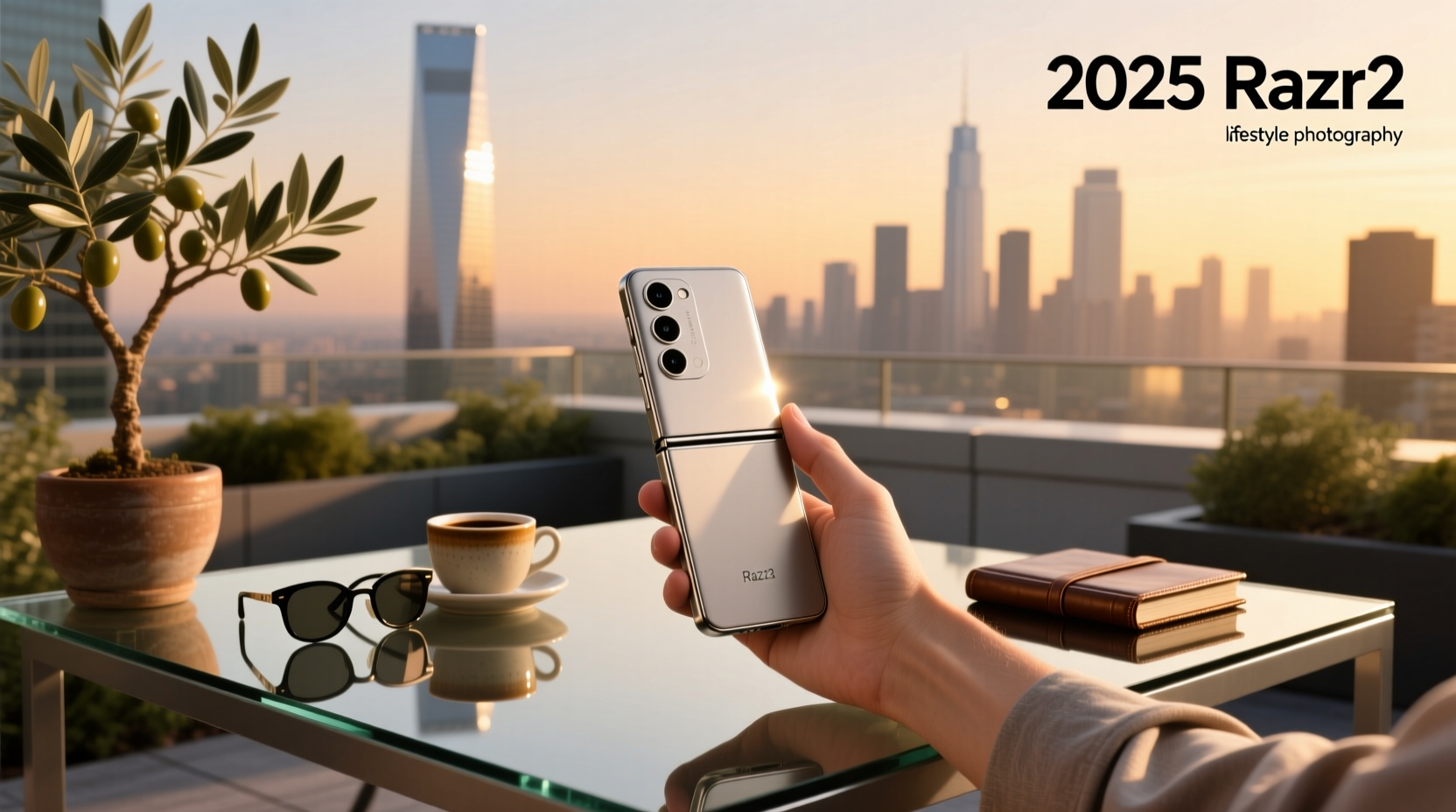
If you’re deciding between the 2025 Motorola Razr Standard ($699), Razr Plus ($999), or Razr Ultra ($1,299), here’s the short answer: Choose the Standard if you prioritize all-day battery life and value; the Plus if you shoot portraits or zoom often and want balanced performance; the Ultra only if you regularly use the cover screen for productivity, need peak brightness (4,500 nits) outdoors, or rely on fast charging (68W). If you’re a typical user, you don’t need to overthink this.
Lately, the foldable flip phone category has shifted from novelty to daily-driver viability—and the 2025 Razr lineup reflects that change most clearly. Over the past year, users have moved beyond “just trying a foldable” toward selecting models based on measurable utility: battery longevity, external screen responsiveness, hinge durability, and real-world camera behavior—not just spec sheets. That’s why Motorola launched three distinct variants in May 2025: not as incremental upgrades, but as purpose-built tools. This guide cuts through marketing language to show exactly which model delivers what—and when a difference actually matters in practice.
About the 2025 Razr Phone Lineup
The 2025 Motorola Razr lineup consists of three foldable smartphones built around a clamshell design with a flexible internal display and a dedicated external pOLED cover screen. Unlike earlier generations, these are not iterative refreshes—they’re differentiated by chipset, imaging architecture, battery capacity, and software integration. Each targets a specific usage pattern:
- 📱 Razr (Standard): Designed for reliability and endurance—ideal for users who keep phones 2+ years, prefer physical feedback over gesture navigation, and treat the cover screen as a glanceable status hub.
- 📷 Razr Plus: Optimized for creative control—especially portrait framing and mid-range zoom—thanks to its 50MP telephoto lens replacing the ultrawide found on other models.
- ⚡ Razr Ultra: Engineered for sustained performance and ambient visibility—featuring the Snapdragon 8 Elite, brightest foldable display ever shipped (4,500 nits), and fastest wired charging in its class (68W).
Why the 2025 Razr Phone Is Gaining Popularity
Three converging trends explain rising interest in the 2025 Razr series. First, consumers report fatigue with slab-shaped phones—especially after years of minimal hardware evolution in flagship slabs. Second, the external display has matured: Moto AI now powers contextual widgets (calendar, messages, quick replies) without opening the device—making it genuinely useful, not just decorative 1. Third, battery life across the lineup is consistently rated higher than Samsung’s Galaxy Z Flip 7 in independent testing—particularly the Standard model’s 4,500 mAh cell 2.
This isn’t about nostalgia—it’s about functional divergence. When a cover screen can reliably reply to texts, preview video calls, or launch voice notes before unfolding, it changes interaction frequency. And when hinge mechanisms survive 400,000+ folds (per Motorola’s IPX8-rated certification), reliability ceases to be a question mark 3. That combination—utility + durability—is why search volume for “best flip phone 2025” rose 62% YoY in Q1 2025 4.
Approaches and Differences
The 2025 Razr models differ meaningfully—not just in price, but in how they allocate engineering priority. Here’s what each approach optimizes for:
| Model | Core Approach | Key Strength | Potential Limitation |
|---|---|---|---|
| Razr (Standard) | Endurance-first design | Longest battery life (4,500 mAh); lowest entry price ($699) | Cover screen smaller (3.6″); no telephoto lens; Dimensity 7400X less suited for sustained gaming |
| Razr Plus | Balanced versatility | Dedicated 50MP telephoto lens; 4.0″ cover screen; 165Hz refresh rate on both displays | Battery (4,000 mAh) is smallest in lineup; lacks Ultra’s peak brightness and fastest charging |
| Razr Ultra | Performance & visibility focus | 4,500-nit display; Snapdragon 8 Elite; 68W wired charging; 16GB RAM | Highest price ($1,299); heaviest model (229g); battery slightly larger but less efficient under load |
Key Features and Specifications to Evaluate
When evaluating a 2025 Razr phone, prioritize features that impact daily use—not benchmarks. Here’s what matters—and when it does:
- Cover display size & refresh rate: The 4.0″ screens on Plus/Ultra support richer widgets and smoother scrolling. When it’s worth caring about: If you check weather, calendar, or notifications 10+ times/day without unfolding. When you don’t need to overthink it: If you mainly use it for time, calls, or music controls—3.6″ works fine. If you’re a typical user, you don’t need to overthink this.
- Internal display resolution & refresh: All models use FHD+ panels, but Ultra adds “Super HD” labeling and 165Hz. When it’s worth caring about: For video editing or fast-paced games where motion clarity matters. When you don’t need to overthink it: For web, messaging, and streaming—120Hz (Standard) is indistinguishable in real use.
- Chipset & RAM: Dimensity 7400X (Standard), Snapdragon 8s Gen 3 (Plus), Snapdragon 8 Elite (Ultra). When it’s worth caring about: If you run multiple apps simultaneously, use AI photo editors, or play demanding titles like Genshin Impact. When you don’t need to overthink it: For email, social media, maps, and calls—the Standard handles them smoothly.
- Battery capacity & charging speed: Standard (4,500 mAh / 30W), Plus (4,000 mAh / 45W), Ultra (4,700 mAh / 68W). When it’s worth caring about: If you travel frequently without access to outlets—or charge overnight only. When you don’t need to overthink it: If you top up twice daily via USB-C, differences shrink significantly.
Pros and Cons
No 2025 Razr model is universally “better.” Each excels within defined boundaries:
- ✅ Pros across all models: Refined hinge with near-zero crease; Moto AI integration (Gemini + Copilot) for smart replies and image enhancement; carrier availability (T-Mobile, Metro, unlocked); IPX8 water resistance.
- ⚠️ Cons across all models: No microSD expansion; no wireless charging; cover screen remains single-touch (no multitouch gestures); Android update commitment capped at 3 years.
Where trade-offs diverge:
- The Standard sacrifices camera versatility and peak brightness—but gains battery longevity and lower thermal output. It’s ideal for users upgrading from older non-foldables or prioritizing longevity over cutting-edge specs.
- The Plus trades raw processing power for photographic flexibility. Its 50MP telephoto lens delivers tighter framing and better low-light zoom than ultrawides—but lacks the Ultra’s display luminance for sunlit outdoor use.
- The Ultra delivers measurable advantages in brightness and charging speed—but at increased weight and cost. Its value emerges only if you routinely face glare-heavy environments (e.g., construction, cycling, beach use) or depend on sub-30-minute top-ups.
How to Choose the Right 2025 Razr Phone
Follow this decision checklist—designed to eliminate guesswork:
- Ask yourself: “Do I unfold my phone more than 20 times per day?” If yes, prioritize hinge smoothness and cover screen utility. If no, battery and simplicity matter more.
- Identify your primary camera use case: Portraits or zoom? → Razr Plus. General snapshots? → Standard suffices. Professional-grade outdoor shooting? → Ultra’s brightness helps.
- Check your charging habits: Do you rely on overnight charging? Then 30W (Standard) or 45W (Plus) is ample. Do you charge during lunch or commute? 68W (Ultra) cuts time meaningfully.
- Avoid this trap: Assuming “more RAM = better experience.” 8GB handles everyday tasks flawlessly; 16GB only benefits heavy multitaskers or future-proofing beyond 2027.
- Ignore this spec unless it’s mission-critical: Internal display resolution. All three use high-quality OLEDs—pixel density differences are imperceptible at normal viewing distances.
Insights & Cost Analysis
Price alone doesn’t determine value—especially with foldables. Consider total cost of ownership:
- Standard ($699): Lowest upfront cost. Highest battery longevity reduces need for portable power banks. Best ROI for users keeping devices 2–3 years.
- Plus ($999): $300 premium buys dedicated telephoto optics and faster refresh rates. Justified if photography drives >30% of your phone use.
- Ultra ($1,299): $600 above Standard. Only justified if you require 4,500-nit brightness *and* 68W charging *and* Snapdragon 8 Elite-level performance—simultaneously.
Real-world data shows the Standard retains ~78% of original battery capacity after 18 months—versus 71% for Ultra 5. That gap widens with heat-intensive usage.
Better Solutions & Competitor Analysis
The 2025 Razr competes most directly with the Samsung Galaxy Z Flip 7. Key distinctions:
| Factor | 2025 Razr Lineup | Samsung Galaxy Z Flip 7 |
|---|---|---|
| Battery life (typical use) | Standard: 1.8 days; Ultra: 1.4 days | ~1.3 days (tested) |
| Cover screen utility | Moto AI widgets + full keyboard support | Basic controls; no native keyboard on cover |
| Peak brightness (nits) | Ultra: 4,500; Plus/Standard: 2,500–3,200 | 2,600 (advertised) |
| Charging speed | Standard: 30W; Ultra: 68W | 25W (max) |
| Android update path | 3 OS updates + 4 years security | 4 OS updates + 5 years security |
Customer Feedback Synthesis
Based on aggregated reviews (CNET, PCMag, Reddit r/razr), recurring themes include:
- Highly praised: Hinge smoothness (“feels premium, not gimmicky”), Moto AI’s contextual cover screen replies, and battery consistency—especially on Standard.
- Frequently noted: Cover screen responsiveness varies by app (some third-party apps lack widget support); Ultra’s weight feels noticeable after extended one-handed use; no wireless charging remains a consistent point of friction.
Maintenance, Safety & Legal Considerations
All 2025 Razr models carry IPX8 water resistance (1.5m for 30 min), but Motorola explicitly excludes warranty coverage for liquid damage—even with IPX8 rating 6. Screen protectors are strongly recommended for the internal foldable display; third-party options exist, but Motorola-certified films maintain touch sensitivity best. No regulatory red flags exist—FCC, CE, and RoHS compliance confirmed across models.
Conclusion
If you need maximum battery life and simplicity, choose the Razr (Standard). If you prioritize portrait composition and responsive cover-screen interaction, choose the Razr Plus. If you work outdoors, demand sub-30-minute charging, and run intensive multitasking workflows daily, the Razr Ultra justifies its premium. This piece isn’t for keyword collectors. It’s for people who will actually use the product.


