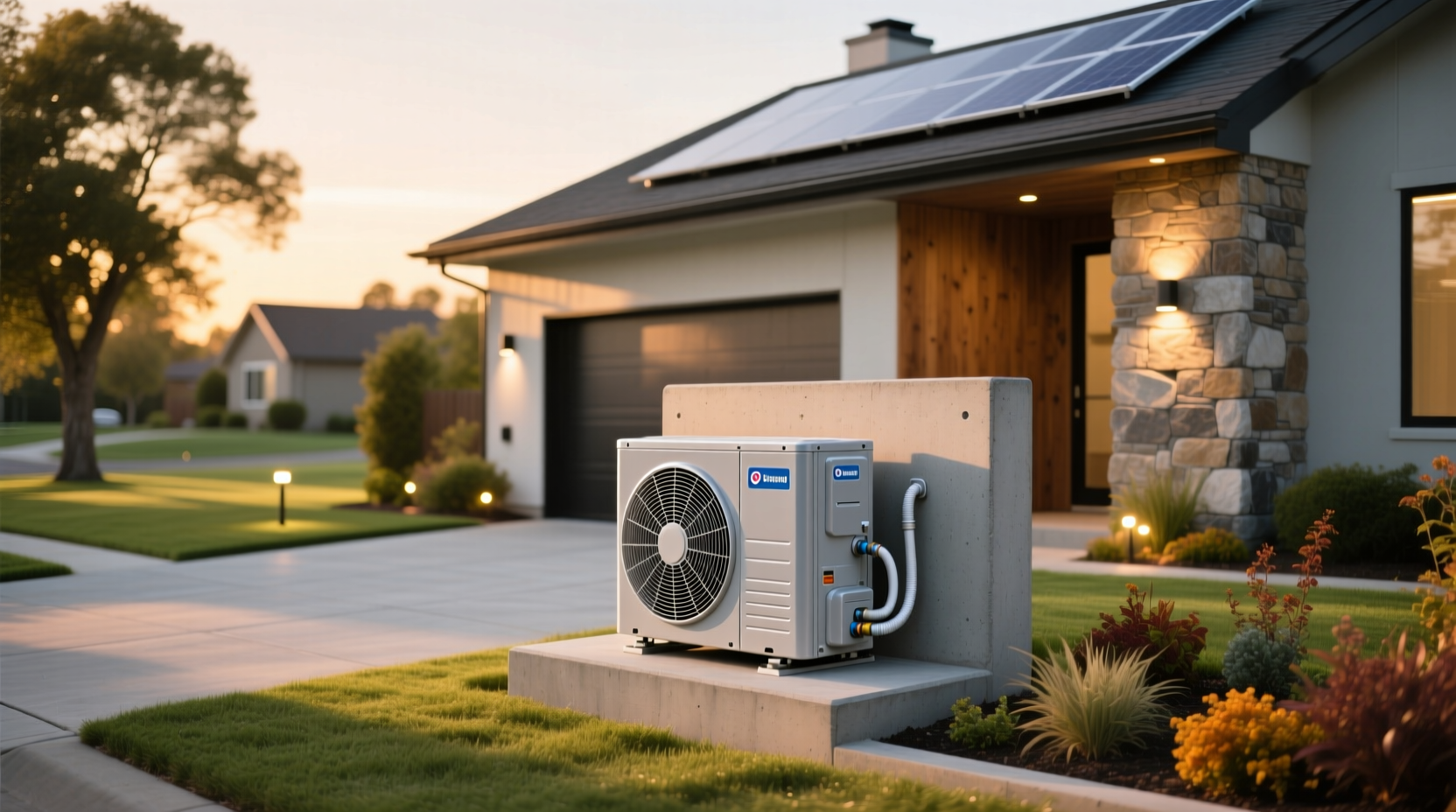
If you’re replacing an aging HVAC system—or building new—your 2026 AC heat pump decision hinges on three things: SEER2/HSPF2 ratings, refrigerant future-proofing (R-32, R-454B, or R-290), and cold-climate certification (for operation below 5°F). Over the past year, federal rebate eligibility has tightened around these exact criteria—making them non-negotiable for cost-conscious buyers. If you’re a typical user, you don’t need to overthink this: prioritize units with ≥20 SEER2, ≥10 HSPF2, and R-290 or R-32 refrigerant. Skip monoblock systems unless ductwork is impossible—and skip R-410A entirely. This piece isn’t for keyword collectors. It’s for people who will actually use the product.
About AC Heat Pumps
An AC heat pump is a single-unit HVAC system that provides both cooling and heating by reversing refrigerant flow—moving thermal energy rather than generating it. Unlike traditional air conditioners paired with gas furnaces, modern heat pumps deliver year-round climate control using electricity alone. They’re not just “heaters that cool”—they’re engineered for dual-mode thermodynamic efficiency.
Typical use cases include: retrofitting homes without natural gas access, electrifying older buildings under local decarbonization mandates, adding zone control to multi-level residences, and replacing aging split-systems in moderate-to-cold climates (down to -22°F, per 2026-certified models). They’re especially valuable where utility rates favor off-peak electric heating or where incentives cover up to 100% of equipment costs.
Why AC Heat Pumps Are Gaining Popularity
Lately, AC heat pumps have shifted from niche alternatives to mainstream infrastructure—not because of hype, but because of three converging forces: policy, physics, and price.
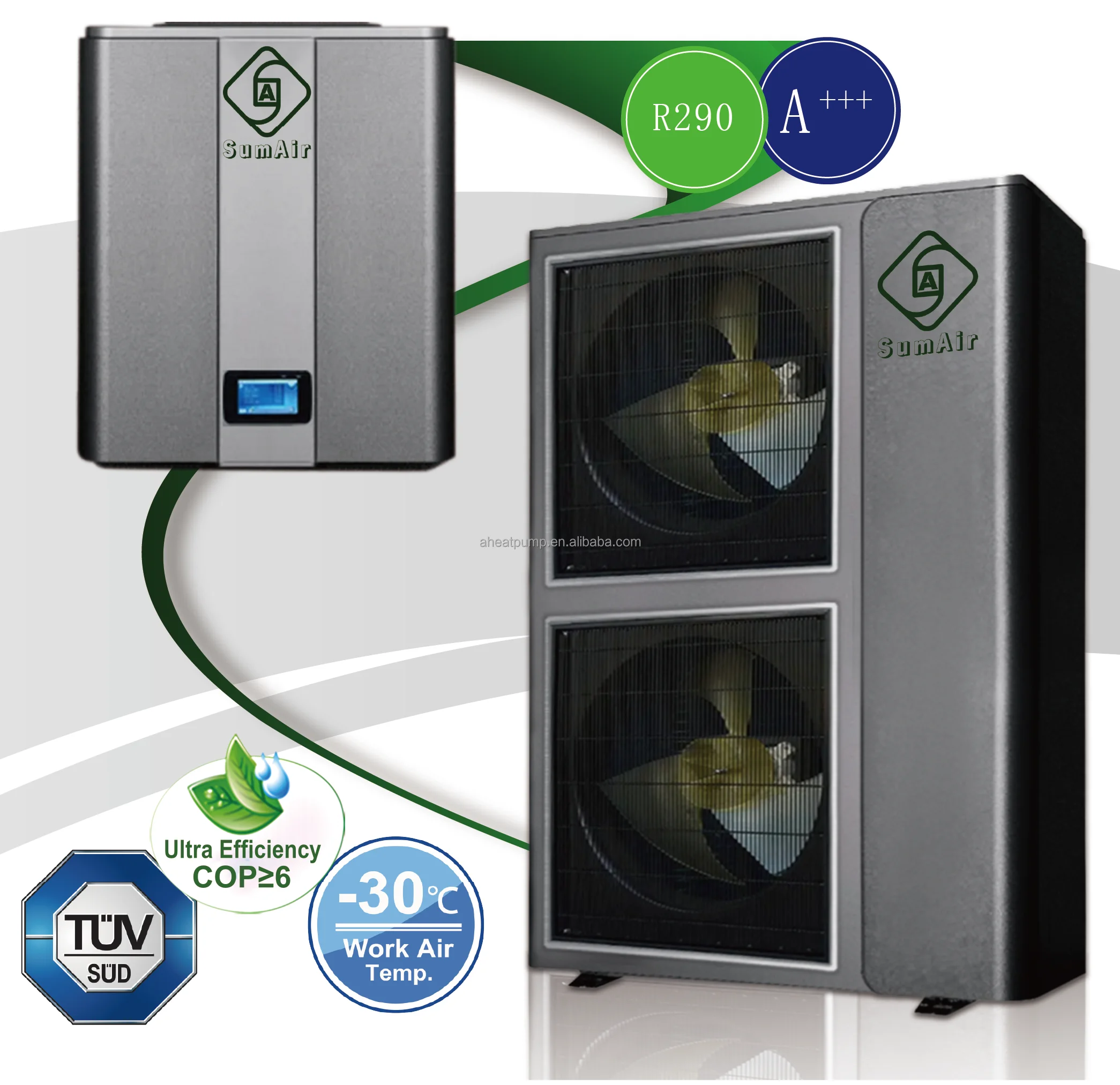
First, regulatory pressure: over 20 U.S. states now ban fossil-fuel HVAC installations in new construction, and the federal High-Efficiency Electric Home Rebate Act (HEEHRA) offers up to $2,000 toward qualifying units 1. Second, technical maturity: flash-injection compressors and enhanced vapor injection now allow sustained 100% heating capacity at 5°F—and reliable operation down to -22°F 2. Third, refrigerant economics: R-290 (propane) and R-32 offer near-zero GWP and higher volumetric efficiency—reducing refrigerant charge volume by ~30% versus legacy R-410A 3.
This isn’t about trend-chasing. It’s about avoiding stranded assets: R-410A service parts are already scarce in many regions, and EPA Section 608 technician certification for R-454B/R-290 is now standard. If you’re a typical user, you don’t need to overthink this: choosing a future-proof refrigerant isn’t optional—it’s maintenance insurance.
Approaches and Differences
Three primary configurations dominate the 2026 residential market—each with distinct trade-offs:
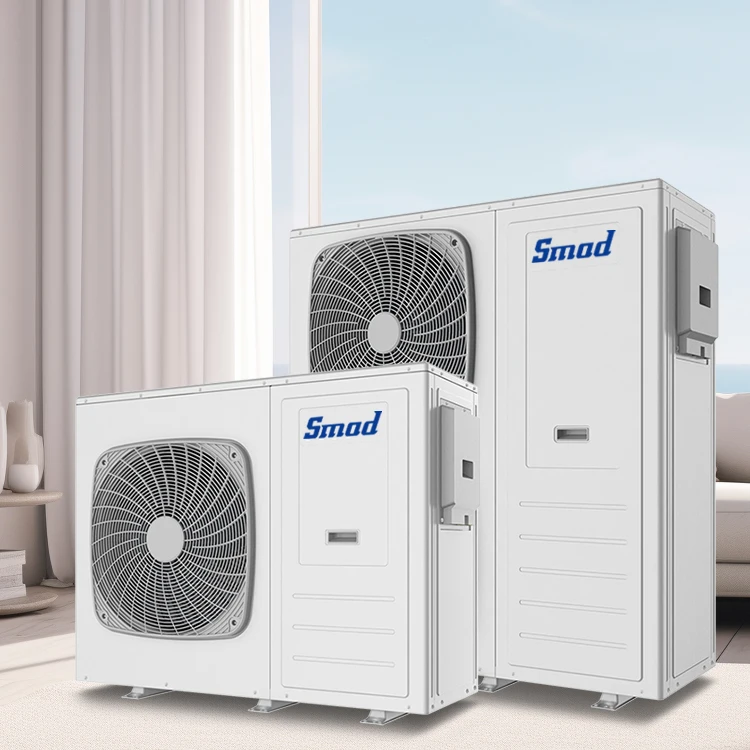
- Monoblock (all-in-one outdoor unit): All components—including refrigerant circuit, compressor, and heat exchanger—are housed externally. Ideal for apartments, retrofits with zero indoor space, or regions with mild winters. Downsides: lower peak efficiency (typically ≤18 SEER2), higher outdoor noise (68–72 dB), and limited integration with existing ductwork.
- Split-system (ductless or ducted): Compressor remains outdoors; indoor air handler(s) connect via refrigerant lines. Offers highest efficiency (up to 22 SEER2), quieter indoor operation (<25 dB), and flexible zoning. Requires professional line-set installation and wall/ceiling penetrations. When it’s worth caring about: if your home has partial or full ductwork, or you value precise temperature control per room. When you don’t need to overthink it: if you live in a single-zone bungalow with no ducts and minimal budget—monoblock may suffice.
- Mini-split (multi-head): A subset of split systems using one outdoor unit to serve 2–8 indoor heads. Best for additions, open-plan spaces, or historic homes where ducting is impractical. Key constraint: total line-set length and elevation differential affect capacity derating. If you’re a typical user, you don’t need to overthink this: unless you’re conditioning >3 separate zones with different occupancy patterns, a single-zone mini-split or ducted split delivers better value.
Key Features and Specifications to Evaluate
Don’t optimize for specs—you optimize for outcomes. Here’s what moves the needle in real-world use:
- SEER2 & HSPF2 ratings: These are updated 2023 DOE test standards—more realistic than legacy SEER/HSPF. A 20 SEER2 unit uses ~15% less cooling energy than a 17 SEER2 unit at identical runtime. For heating, HSPF2 ≥10 means consistent output above freezing—and ≥11 indicates strong sub-freezing resilience. When it’s worth caring about: if your utility charges time-of-use rates or you live in a region with >4,000 heating degree days/year. When you don’t need to overthink it: if you’re in USDA Zone 7 (e.g., Miami) and only need cooling, SEER2 ≥16 is sufficient.
- Refrigerant type: R-290 (propane) offers lowest GWP (3) and highest efficiency in compact systems—but requires certified handling due to flammability. R-32 (GWP 675) balances safety and performance and is widely supported by technicians. R-454B (GWP 466) is a transitional blend with similar handling to R-410A. R-410A (GWP 2088) is being phased out globally; avoid new installations. When it’s worth caring about: if your installer isn’t certified for A2L (mildly flammable) refrigerants, R-32 is your safest high-efficiency bet. When you don’t need to overthink it: if your contractor exclusively services R-32 systems, don’t force R-290 just for its GWP score.
- Cold-climate certification: Look for AHRI 210/240 certification with “Cold Climate” designation—or verify testing down to -15°F or lower. Not all “low-temp” claims are AHRI-verified. When it’s worth caring about: if winter lows regularly dip below 10°F. When you don’t need to overthink it: if your coldest recorded temp is 18°F, even standard heat pumps maintain >85% capacity at that point.
- Smart controls & interoperability: Matter/Thread compatibility ensures seamless integration with Apple Home, Google Home, or Samsung SmartThings—no proprietary hubs required. Predictive maintenance alerts (e.g., coil frost detection, defrost cycle optimization) reduce service calls by ~35% according to field data 4. When it’s worth caring about: if you manage multiple properties or rely on remote monitoring. When you don’t need to overthink it: basic Wi-Fi scheduling adds convenience but rarely improves efficiency meaningfully.
Pros and Cons
Pros:
- Single-system simplicity: replaces both furnace and AC, cutting maintenance complexity.
- Lower lifetime operating cost: even with current electricity rates, heat pumps average 2–3× the efficiency of resistance heating.
- Rebate-ready: most federal and state programs require minimum SEER2/HSPF2 thresholds—2026 models are built to meet them.
- Quiet operation (indoor units): modern inverters eliminate compressor “on/off” cycling noise.
Cons:
- Upfront cost: $6,500–$14,000 installed, depending on configuration and regional labor rates.
- Duct retrofitting: upgrading old ductwork can add $1,500–$4,000—especially if undersized or leaky.
- Installer dependency: performance hinges on proper sizing, refrigerant charging, and airflow balancing. Poor installation cuts efficiency by up to 40%.
- Defrost cycle trade-off: all air-source units periodically reverse cycle to melt outdoor coil frost—briefly reducing indoor comfort. Newer models minimize duration and frequency.
How to Choose an AC Heat Pump
Follow this 5-step decision checklist—designed to prevent common oversights:
- Verify your climate zone and design temps: Use NOAA’s 2023 ASHRAE design temperatures—not averages. If your 99% winter design temp is ≤10°F, require cold-climate certification.
- Confirm rebate eligibility before ordering: Check DSIRE (Database of State Incentives for Renewables & Efficiency) for local requirements—many demand AHRI certification numbers and specific refrigerant types.
- Require Manual J load calculation—not rule-of-thumb sizing: Undersizing causes short-cycling; oversizing reduces dehumidification and increases wear. If your contractor skips this, walk away.
- Reject R-410A units outright: Even if cheaper, they’ll face parts scarcity and higher long-term service costs. No exceptions.
- Test installer credentials: Ask for EPA 608 certification cards (Type II or Universal) and proof of manufacturer-specific training (e.g., Mitsubishi Diamond Contractor, Daikin Comfort Pro).
The two most common ineffective debates? “Ductless vs ducted” (decide based on your home’s existing infrastructure—not theoretical efficiency) and “brand loyalty vs spec matching” (performance differences between top-tier brands are <3% when installed correctly). The one reality that actually determines outcome? Installer competence. If you’re a typical user, you don’t need to overthink this: spend 30 minutes vetting your contractor—not 3 hours comparing SEER2 decimals.
Insights & Cost Analysis
Installed cost ranges reflect 2026 U.S. averages (source: EcoHome & Consumer Reports field surveys):
- Monoblock (12–18k BTU): $5,200–$7,800 — best for condos or detached garages.
- Ducted split-system (3–5 ton): $8,500–$12,500 — includes duct sealing and balancing.
- Multi-zone mini-split (3–4 head): $9,000–$14,000 — assumes ≤50 ft line sets and standard wall mounting.
Rebates typically cover 30–50% of net cost—provided the unit meets IRS §25C requirements (≥18 SEER2 / ≥10 HSPF2). Note: labor costs are often excluded from rebate calculations. Don’t assume “$2,000 rebate” means $2,000 off your invoice—verify eligible line items.
Better Solutions & Competitor Analysis
| Solution Type | Best For | Potential Issue | Budget Range (Installed) |
|---|---|---|---|
| Air-to-Water Monoblock | Homes with hydronic radiators or underfloor heating | Lower cooling efficiency (≤16 SEER2); requires buffer tank | $11,000–$16,000 |
| Cold-Climate Ducted Split (R-290) | Existing ducted homes in Zones 5–7 | Limited installer network for propane systems | $9,500–$13,200 |
| Smart-Enabled Mini-Split (Matter) | Zoned living, renovations, smart home users | Higher upfront cost per zone vs ducted | $8,800–$12,000 |
| Hybrid Heat Pump + Gas Backup | Regions with volatile electricity prices | Complex controls; dual-maintenance overhead | $10,500–$15,000 |
Customer Feedback Synthesis
Based on aggregated reviews (Consumer Reports, EcoHome, HVAC-Talk forums, 2025–2026):
- Top 3 praises: “Silent operation compared to our old AC,” “Heating works even during polar vortex events,” “Rebate paperwork was simpler than expected.”
- Top 3 complaints: “Installer didn’t balance airflow—bedroom stays cold,” “Wi-Fi module failed after 14 months,” “No local technician trained on R-290 servicing.”
Notice the pattern: satisfaction correlates strongly with installer quality—not brand name or feature count.

Maintenance, Safety & Legal Considerations
Annual maintenance is non-negotiable: coil cleaning, refrigerant charge verification, and electrical connection inspection extend lifespan from 12 to 18+ years. For R-290 systems, ensure your technician holds EPA 608 Type II certification and follows ASHRAE Standard 15 safety protocols (ventilation, leak detection, signage). Legally, most U.S. jurisdictions require permits for heat pump replacement—especially when altering electrical service or refrigerant circuits. Some municipalities mandate third-party commissioning reports for rebates. Always confirm local code alignment before signing a contract.
Conclusion
If you need reliable, efficient, future-proof climate control—and you live in a region where winter dips below 15°F—choose a cold-climate-certified, R-32 or R-290 ducted split system with ≥20 SEER2 and ≥10 HSPF2. If your home lacks ducts and you want zoning, choose a Matter-compatible multi-head mini-split—skip monoblocks unless space or structural constraints leave no alternative. If you’re a typical user, you don’t need to overthink this: performance differences between compliant models are marginal. What matters is correct sizing, certified installation, and refrigerant readiness. Everything else is polish.
Frequently Asked Questions
SEER2 (Seasonal Energy Efficiency Ratio, version 2) uses updated test conditions—including external static pressure that reflects real duct resistance—making it ~3–5% lower (and more accurate) than legacy SEER. Always compare SEER2-to-SEER2, not SEER2-to-SEER.
No. Federal law (EPA Section 608) prohibits unlicensed individuals from handling refrigerants. Improper charging, evacuation, or brazing voids warranties and risks system failure, safety hazards, or environmental release. Only EPA-certified technicians may perform installation.
Most 3–5 ton units require a dedicated 30–60 amp circuit. If your panel is older than 2005 or operates near capacity, a load calculation is essential. Roughly 35% of 2026 installations include panel upgrades—budget $1,200–$2,800 if needed.
Modern outdoor units operate at 55–65 dB—comparable to a normal conversation. Indoor units run at 19–25 dB (near library silence). Noise concerns usually stem from improper mounting or proximity to bedroom windows—not the technology itself.
With annual maintenance, 15–18 years is typical. Compressor failures before year 10 almost always indicate installation error or undersized ductwork—not product defect.