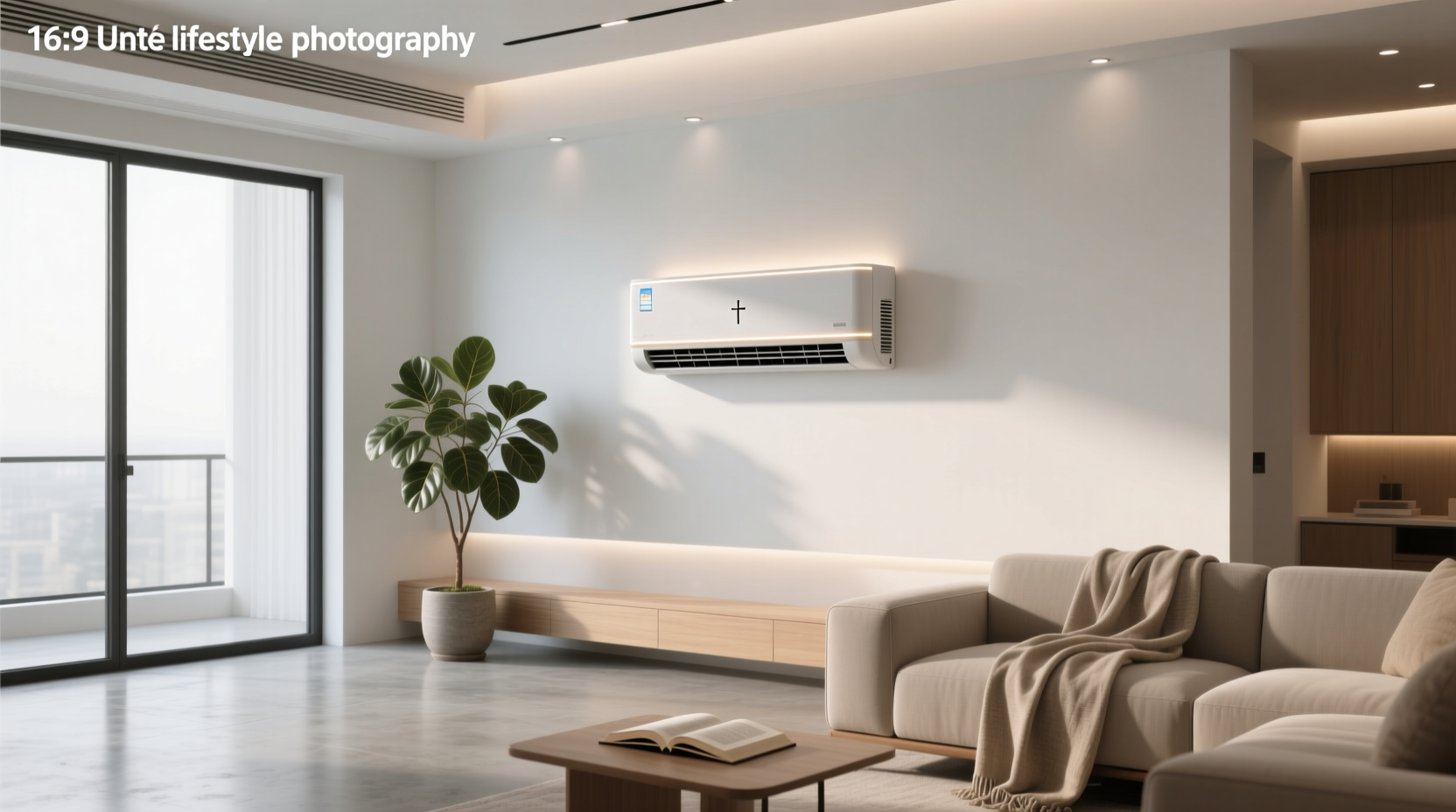
Lately, choosing an air conditioner has stopped being about BTUs and noise levels alone. Over the past year, three structural shifts have redefined what “good” means in the air con market: the mandatory transition to low-GWP refrigerants like R-32, the enforcement of new SEER2/HSPF2 efficiency standards, and the integration of health-focused IAQ features as baseline expectations—not premium add-ons. If you’re a typical user, you don’t need to overthink this: for most homeowners replacing central systems in 2026, a high-SEER2 inverter heat pump using R-32 is the default choice. Portable units with Class A efficiency and smart controls are the only viable option for renters or supplemental cooling. And if your current unit still uses R-410A? Service costs will rise sharply—and full replacement is likely more economical than repeated repairs. This piece isn’t for keyword collectors. It’s for people who will actually use the product.
About Air Con Systems in 2026
“Air con” refers to any mechanical system that cools and dehumidifies indoor air—ranging from window-mounted units and portable ACs to ducted central systems and ductless mini-splits. In 2026, these are no longer just cooling appliances; they’re integrated energy assets. Modern air con systems increasingly function as bidirectional heat pumps (cooling in summer, heating in winter), participate in utility demand-response programs, and interface with home energy management platforms. Typical usage scenarios include whole-home climate control in single-family homes, zone-based cooling in multi-level apartments, temporary relief during heatwaves (especially with portables), and off-grid or solar-hybrid setups where grid dependence must be minimized.
Why Air Con Systems Are Gaining Popularity in 2026
Popularity isn’t driven by novelty—it’s driven by convergence: electrification mandates, tightening environmental regulation, and measurable cost-of-ownership improvements. Over the past year, federal tax credits under the Inflation Reduction Act have made high-efficiency heat pumps up to 30% cheaper upfront 1. Simultaneously, rising electricity prices have amplified ROI on high-SEER2 units—especially those with inverter-driven compressors that modulate output instead of cycling on/off. Health concerns—particularly wildfire smoke and seasonal allergens—have also elevated demand for built-in HEPA or MERV-13 filtration 2. These aren’t fringe preferences anymore. They’re reflected in design specs, certification requirements, and consumer search behavior—making them core decision criteria, not afterthoughts.
Approaches and Differences
Three primary approaches dominate the 2026 air con landscape—each suited to distinct physical, financial, and regulatory constraints:
- Inverter Heat Pumps (Ducted or Ductless): Use variable-speed compressors and R-32 refrigerant. Offer both heating and cooling, highest seasonal efficiency (SEER2 ≥ 18, HSPF2 ≥ 10), and eligibility for federal tax credits. Require professional A2L-certified installation. Best for permanent, whole-home solutions.
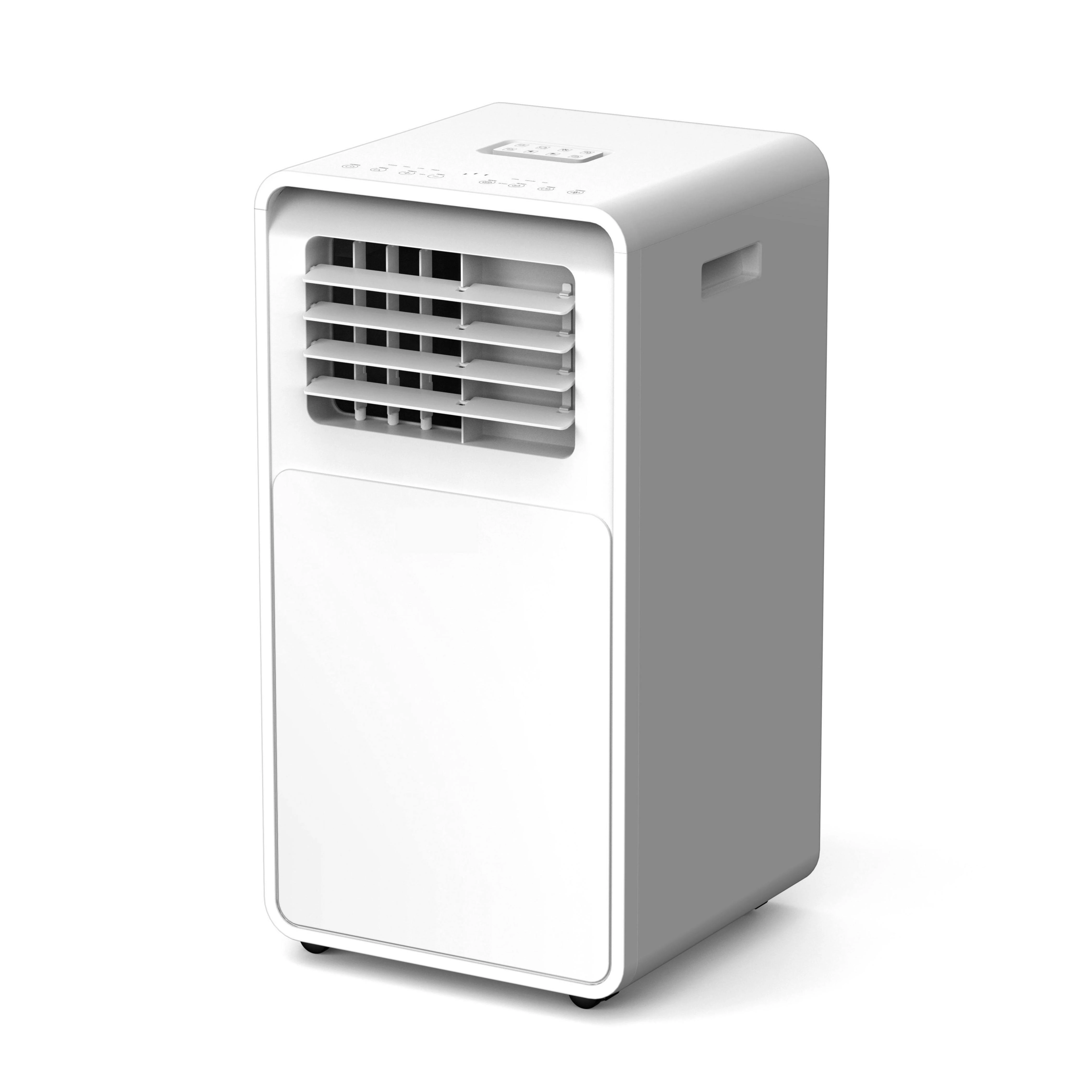
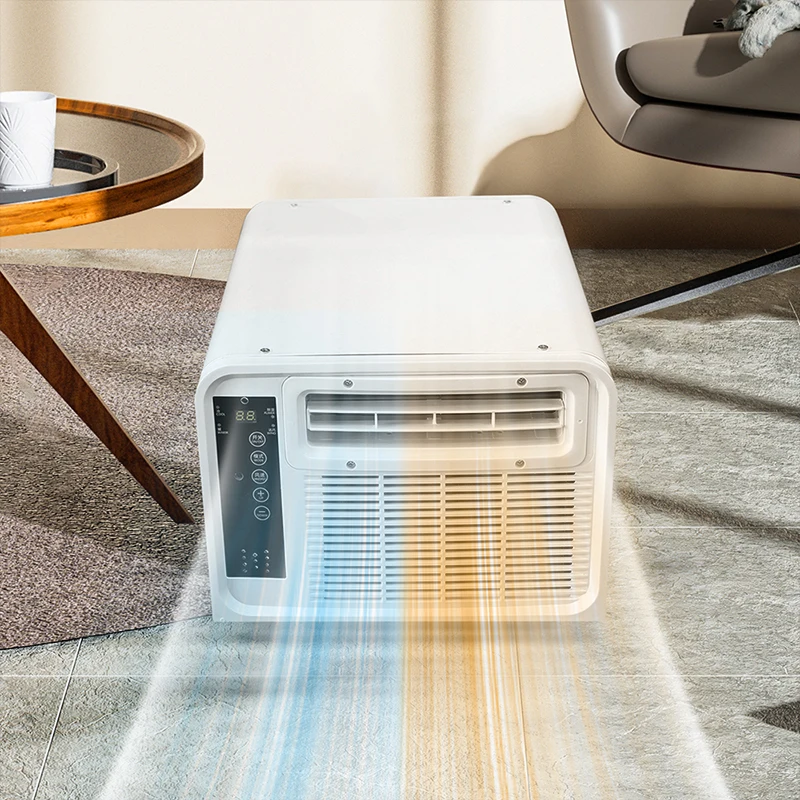
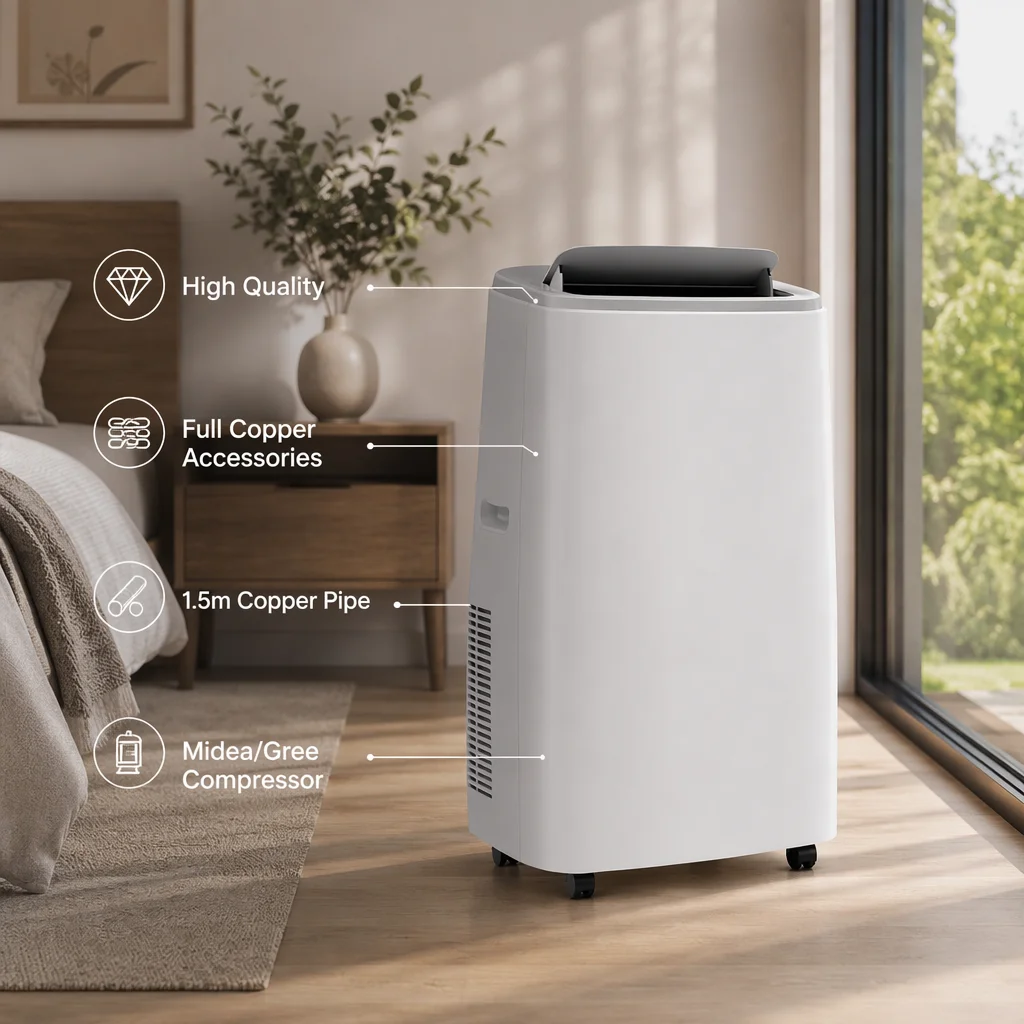
- Smart Portable Air Conditioners: Self-evaporating, Wi-Fi-enabled, rated “Class A” for energy efficiency. No permanent installation needed. Ideal for rentals, studios, or rooms without ductwork. Lower upfront cost ($450–$900), but higher per-BTU operating cost than heat pumps.
- Solar Hybrid Split Systems: Combine grid-tied inverters with DC-coupled solar input. Reduce grid draw by 30–60% during peak sun hours. Require roof space, compatible solar array, and hybrid-capable inverters. Niche—but growing rapidly among energy-conscious homeowners 3.
If you’re a typical user, you don’t need to overthink this: unless you rent, live in a historic building with no duct access, or have solar infrastructure already installed, start with a heat pump. Portables solve specific constraints—not general needs.
Key Features and Specifications to Evaluate
Not all specs carry equal weight. Here’s how to prioritize:
- ✅ SEER2 (Cooling) & HSPF2 (Heating): New DOE testing standards launched in 2023. SEER2 values are ~10% lower than legacy SEER—so a 16 SEER2 unit performs like a 17.6 SEER unit did pre-2023. When it’s worth caring about: If you plan to own the unit >8 years, every point above 16 SEER2 saves ~3–5% annually on cooling costs. When you don’t need to overthink it: Going from 18 to 20 SEER2 adds <5% annual savings—but increases upfront cost by 12–18%. Diminishing returns set in above 20.
- ✅ Refrigerant Type (R-32 vs. R-454B vs. R-410A): R-32 is now the dominant standard—lower GWP (675 vs. 2088 for R-410A), higher efficiency, and widely supported. R-454B is used in some commercial-grade units but less common in residential. When it’s worth caring about: Any new purchase should avoid R-410A entirely—service parts and technician availability will decline rapidly post-2026. When you don’t need to overthink it: Between R-32 and R-454B, performance differences are marginal for residential use. Choose based on installer familiarity—not theoretical specs.
- ✅ Indoor Air Quality (IAQ) Integration: Look for MERV-13 filters as standard (not optional), UV-C light modules, or bipolar ionization—especially if occupants have respiratory sensitivities. When it’s worth caring about: In wildfire-prone or high-pollen regions, filtration is non-negotiable for comfort and health. When you don’t need to overthink it: Basic electrostatic filters or washable mesh screens offer negligible protection. Either commit to true MERV-13+ or skip add-on IAQ modules entirely.
Pros and Cons
Every solution trades off flexibility, cost, longevity, and compatibility:
- Inverter Heat Pumps: Pros—lowest lifetime energy cost, dual heating/cooling, tax credit eligibility, quiet operation. Cons—high upfront cost ($9,000–$16,500 fully installed), requires certified A2L technicians, longer lead times for parts/service.
- Smart Portables: Pros—no installation, renter-friendly, immediate usability, lower entry price. Cons—limited cooling capacity (typically ≤ 14,000 BTU), higher noise, lower efficiency than fixed systems, condensate management still required in humid climates.
- Solar Hybrids: Pros—reduced grid dependency, resilience during outages (with battery), long-term utility bill reduction. Cons—complex quoting process, limited installer expertise, ROI highly dependent on local solar insolation and utility rate structures.
How to Choose an Air Con System in 2026
Follow this 5-step decision checklist—designed to eliminate common pitfalls:
- Rule out R-410A immediately. Even if priced lower, avoid any new unit using this refrigerant. Technician training and service infrastructure are shifting away fast 4.
- Calculate actual load—not room size. Use Manual J calculations (not online BTU calculators) to determine required capacity. Oversizing causes short cycling and humidity issues; undersizing leads to constant runtime and wear.
- Verify installer certification. Ask for proof of EPA Section 608 certification *and* A2L refrigerant handling training. Unqualified installers risk system failure and void warranties.
- Check tax credit eligibility before signing. The 30% federal credit (up to $2,000) applies only to heat pumps meeting specific SEER2/HSPF2 thresholds—and only when installed in your primary residence.
- Reject “smart” claims without open APIs. If the app doesn’t support Matter or HomeKit, or lacks local control (no cloud dependency), expect obsolescence within 3–4 years.
Insights & Cost Analysis
Upfront cost remains the biggest barrier—but lifetime value tells a different story:
| System Type | Avg. Installed Cost (US) | Est. 10-Year Energy Cost* | Tax Credit Eligible? |
|---|---|---|---|
| Inverter Heat Pump (3-ton) | $12,500 | $3,200 | ✅ Yes (up to $2,000) |
| Smart Portable (12,000 BTU) | $680 | $1,950 | ❌ No |
| Solar Hybrid Split (3-ton + 3kW PV) | $21,000 | $1,400 | ✅ Yes (both HVAC + solar credits) |
*Based on U.S. national average electricity rates and 8 hrs/day usage. Does not include maintenance or repair costs.
The math is clear: heat pumps win on total cost of ownership beyond year 7—even before tax credits. Portables win only when mobility, speed, or zero-installation are non-negotiable.
Better Solutions & Competitor Analysis
“Better” depends on context—not specs. Below is a functional comparison of what each category solves best:
| Category | Solves For | Potential Problem | Budget Range (Installed) |
|---|---|---|---|
| Inverter Heat Pump | Whole-home electrification, long-term savings, health-conscious IAQ | Requires ductwork retrofit or wall penetrations; longer payback in mild climates | $9,000–$16,500 |
| Smart Portable AC | Renters, supplemental cooling, tight timelines, no construction | Lower efficiency; limited dehumidification in high-humidity zones | $450–$900 |
| Solar Hybrid | Energy independence, outage resilience, sustainability goals | Complex permitting; ROI highly site-specific; limited qualified integrators | $18,000–$28,000 |
Customer Feedback Synthesis
Aggregated from verified buyer reviews across major retailers and HVAC forums (2025–2026):
✅ Top 3 Reported Benefits: 1) Noticeable drop in summer electric bills (heat pump users), 2) Reliable app control and scheduling (portable users), 3) Dramatically improved air quality during wildfire season (units with MERV-13).
❌ Top 3 Complaints: 1) Installation delays due to A2L-certified technician shortages, 2) Confusing SEER2 labeling causing mismatched expectations, 3) Portable units requiring frequent manual drain-emptying in >60% humidity.
Maintenance, Safety & Legal Considerations
All new air con systems using R-32 or R-454B fall under A2L safety classification—meaning they’re mildly flammable but pose minimal risk when installed per AHRI and UL standards. Key implications:
• Technicians require updated EPA 608 certification with A2L endorsement.
• Indoor units must maintain minimum clearance from ignition sources (per manufacturer spec).
• Refrigerant recovery equipment must be A2L-rated—older R-410A-only gear cannot be used.
• Local building codes may require additional ventilation or leak detection in confined mechanical rooms.
Annual filter changes and coil cleaning remain unchanged—but refrigerant leak checks are now recommended biannually, not just at service events.
Conclusion
If you need whole-home, long-term, efficient, and future-proof climate control: choose a high-SEER2 inverter heat pump using R-32 refrigerant—and confirm your contractor holds A2L certification. If you rent, move frequently, or need cooling for one room only: invest in a Class A smart portable with MERV-13 filtration and self-evaporating tech. If you already have solar infrastructure and prioritize energy resilience: explore solar hybrid options—but verify installer experience first. Everything else is optimization, not fundamentals. If you’re a typical user, you don’t need to overthink this.


