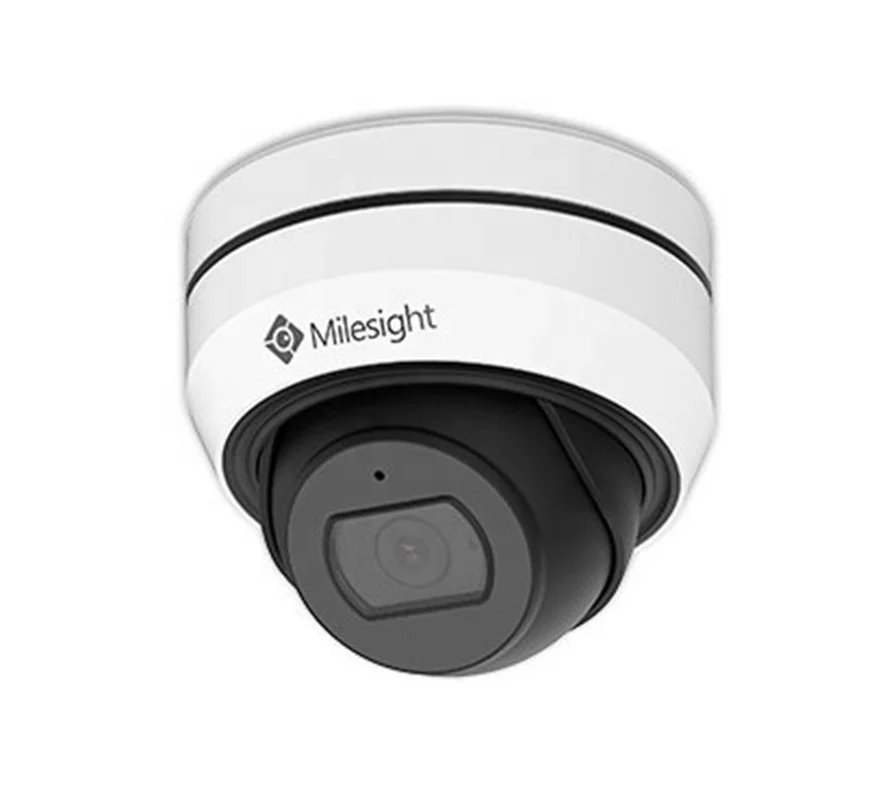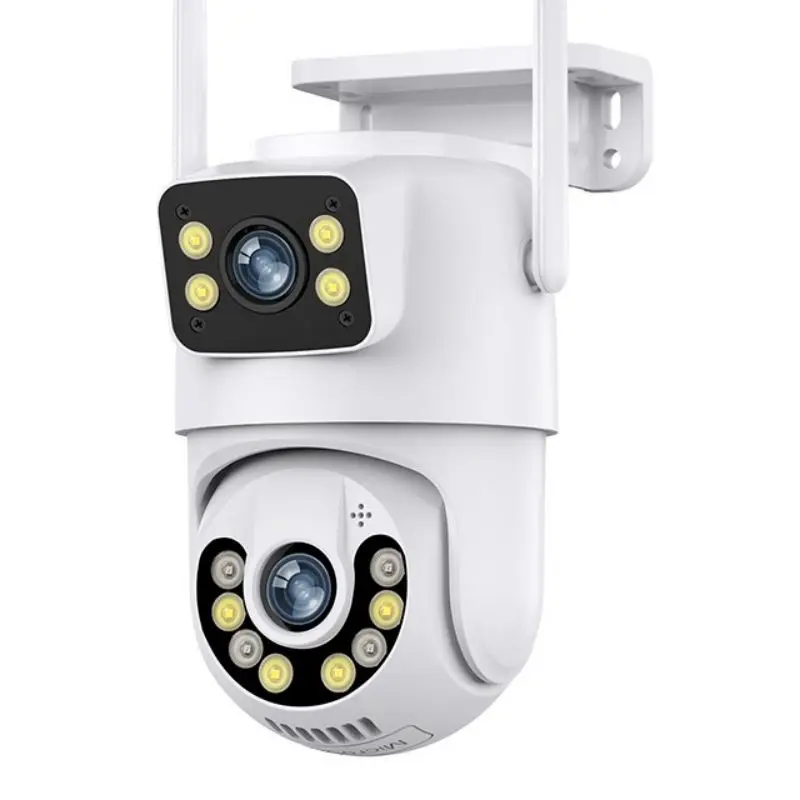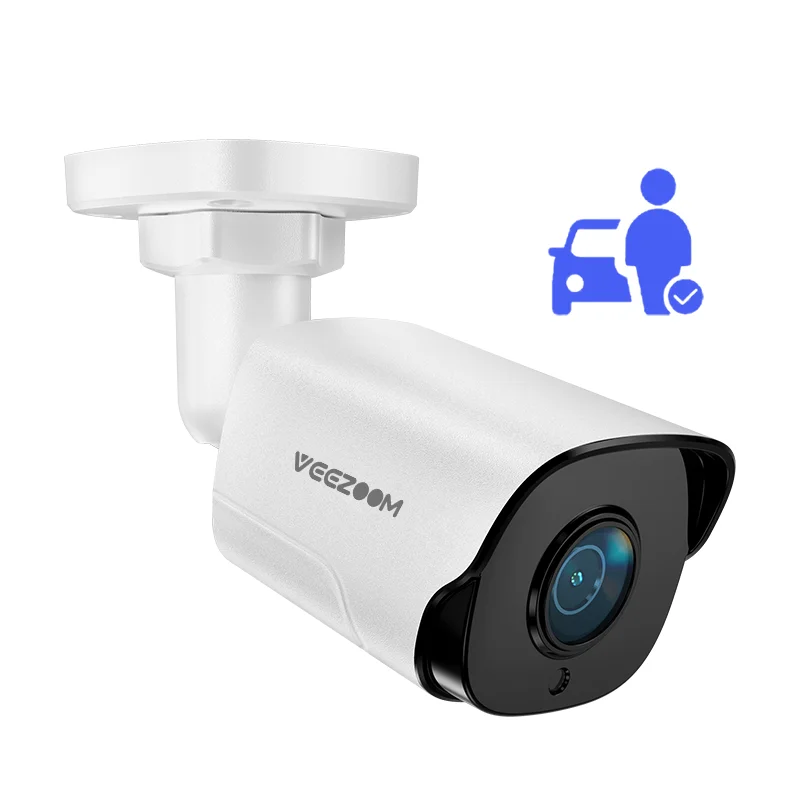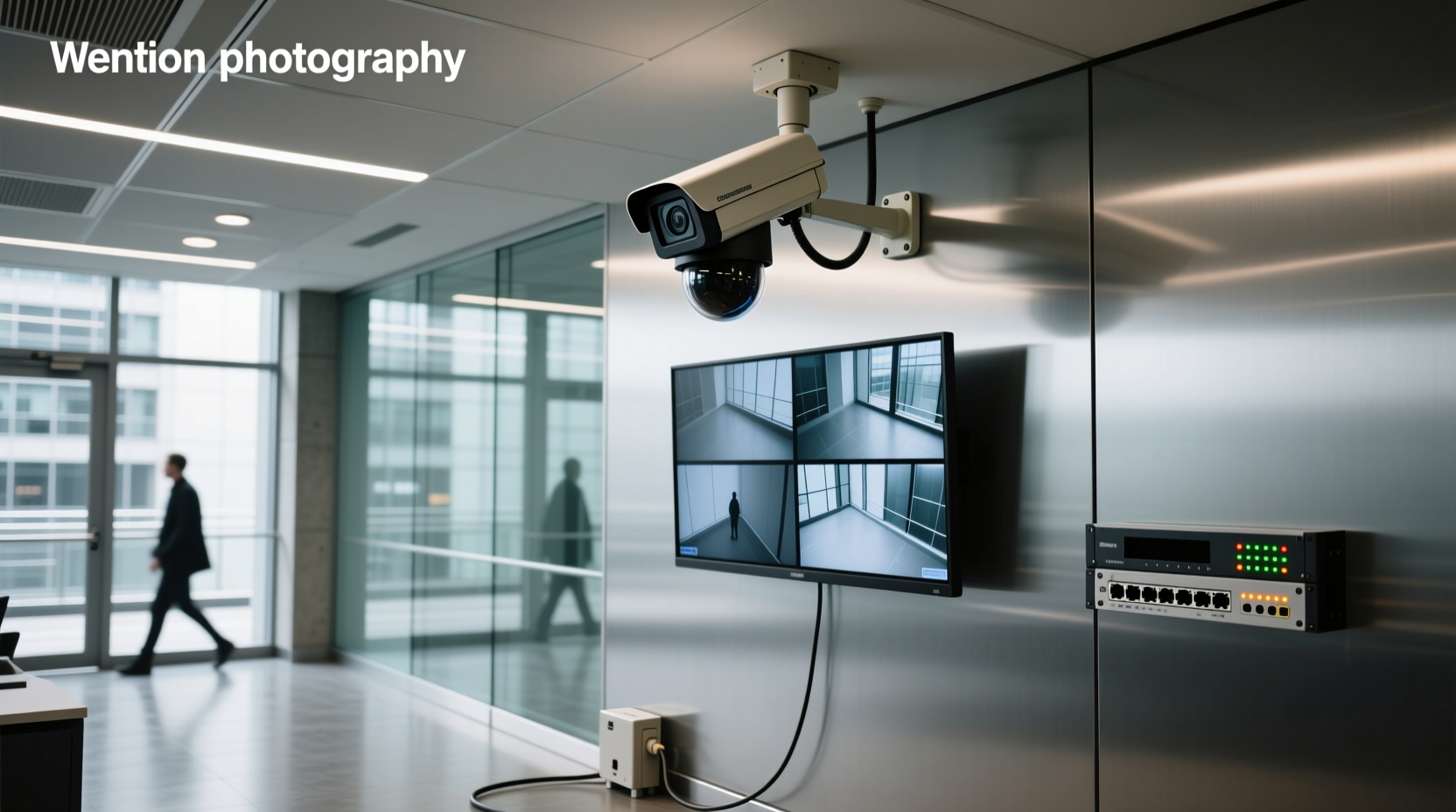
If you’re installing a new security system—or upgrading an aging one—start here: For most residential and small commercial users in 2026, a 4K solar-powered IP camera with local AI-based active deterrence (motion-triggered light + voice warning) delivers the strongest balance of reliability, future-proofing, and low operational cost. Skip cloud-only models unless you already use a unified video management platform—and avoid NDAA-noncompliant hardware if deploying in U.S. federal, state, or education facilities 1. Over the past year, edge AI processing has shifted from optional to essential—not because it’s flashy, but because false alerts dropped by 60–80% across verified deployments 2. This isn’t about more pixels; it’s about fewer distractions and faster response.
About CCTV Surveillance Cameras
CCTV (Closed-Circuit Television) surveillance cameras are dedicated video capture devices designed for continuous monitoring, recording, and analysis of physical spaces. Unlike consumer-grade webcams or smart home cameras, they operate on purpose-built hardware with hardened enclosures, wide dynamic range (WDR), and deterministic latency—critical for forensic review or real-time intervention. Typical use cases include perimeter monitoring of warehouses, retail storefronts, gated communities, construction sites, and remote agricultural assets. They rarely function alone: they integrate into larger systems—NVRs (Network Video Recorders), VMS (Video Management Software), access control platforms, or alarm hubs—making interoperability and protocol support (ONVIF, RTSP, PSIA) non-negotiable in multi-vendor environments.
Why CCTV Surveillance Cameras Are Gaining Popularity in 2026
Lately, adoption isn’t driven by cheaper hardware—but by sharper behavioral outcomes. The market has pivoted from passive observation (“What happened?”) to proactive deterrence (“What stops it before it starts?”). This shift is visible in three converging signals: First, 🔋 solar-powered outdoor units now account for over 37% of new commercial installations in North America and EMEA, per Grand View Research 1. Second, 🧠 on-device AI (not cloud-dependent) handles person/vehicle classification, loitering detection, and line-crossing alerts—with zero monthly fees and sub-200ms response time. Third, regulatory clarity around NDAA Section 889 compliance has made sourcing decisions binary for public-sector buyers: compliant or disqualified. If you’re a typical user, you don’t need to overthink this.
Approaches and Differences
Three primary architectures dominate current deployments:
- Traditional Analog HD (AHD/CVI/TVI): Uses coaxial cabling and DVRs. Pros: Low upfront cost, simple setup, stable signal over long distances. Cons: No native AI, limited resolution (max 8MP), no remote analytics, and obsolescence risk—major vendors have halted R&D on analog chipsets 3.
- IP-Based (PoE + NVR): Ethernet-connected, ONVIF-compliant cameras feeding data to network recorders. Pros: Scalable, supports 4K+, edge AI, cloud sync, and integration with access control. Cons: Requires network configuration, PoE switch budgeting, and bandwidth planning.
- Cloud-Native (Wi-Fi + App): Consumer-focused, app-managed devices (e.g., battery-powered doorbell cams). Pros: Zero infrastructure, fast setup, mobile-first UX. Cons: Monthly subscriptions, upload bottlenecks, privacy trade-offs, and weak forensic utility (no raw stream access).
When it’s worth caring about: Choose IP-based if you need evidence-grade footage, multi-camera sync, or third-party integrations. When you don’t need to overthink it: Avoid analog for new builds unless retrofitting legacy wiring—and skip cloud-native for anything beyond single-point indoor monitoring.
Key Features and Specifications to Evaluate
Don’t optimize for specs—optimize for outcomes. Here’s what moves the needle:
- 📷 Resolution & Low-Light Performance: 4K (3840×2160) is now baseline for outdoor coverage >15m. But resolution alone means little without good WDR (≥120dB) and starlight sensors (0.001 lux or lower). When it’s worth caring about: Large yards, parking lots, or areas with mixed lighting. When you don’t need to overthink it: Indoor hallways or well-lit entryways—1080p suffices.
- 🧠 Edge AI Capabilities: Look for built-in person/vehicle detection—not just “motion.” True edge AI runs inference locally, reducing false alerts from foliage, headlights, or pets. When it’s worth caring about: High-traffic zones where alert fatigue undermines security. When you don’t need to overthink it: Static storage rooms or infrequently accessed sheds.
- 🔋 Power & Connectivity: PoE (IEEE 802.3af/at) remains the gold standard for reliability. Solar + battery hybrids work well for off-grid locations—but verify battery cycle life (≥2,000 cycles) and cold-weather rating (−20°C minimum). When it’s worth caring about: Remote sites, historic buildings without conduit access, or sustainability mandates. When you don’t need to overthink it: Office lobbies with existing Ethernet drops.
- 🔒 Compliance & Cybersecurity: NDAA Section 889 compliance is mandatory for U.S. government contractors. Also check for TLS 1.2+, secure boot, and firmware signing—not just password protection. When it’s worth caring about: Any deployment touching federal, state, or school networks. When you don’t need to overthink it: Private backyard use—though basic hardening (unique passwords, disabled UPnP) is still essential.
Pros and Cons
Every architecture trades off somewhere. Here’s the balanced view:
- IP + Edge AI + Solar: ✅ Long-term TCO savings, no subscription, strong deterrence, scalable. ❌ Higher initial cost, needs technical validation (PoE budget, solar angle, mounting).
- Analog HD + DVR: ✅ Familiar, low learning curve, predictable performance. ❌ No path to AI, limited future support, resolution ceiling.
- Cloud Wi-Fi Cameras: ✅ Fastest setup, intuitive app, low barrier to entry. ❌ Ongoing costs, bandwidth dependency, weaker evidentiary chain, vendor lock-in.
This piece isn’t for keyword collectors. It’s for people who will actually use the product.
How to Choose a CCTV Surveillance Camera: A Step-by-Step Decision Guide
Follow this sequence—skip steps only if context eliminates them:
- Define your primary goal: Deterrence? Evidence collection? Remote monitoring? (Deterrence demands active features—lights, siren, voice. Evidence demands WDR + timestamp integrity.)
- Map your environment: Indoor/outdoor? Wired power available? Sun exposure? Vandal-prone? (Outdoor + no power = solar/battery. Vandal-prone = IK10-rated housing.)
- Check compliance requirements: Is NDAA compliance needed? Do you require GDPR or CCPA-compliant data handling? (If yes, avoid non-certified Chinese OEMs—even if labeled “global edition”.)
- Select core capability tier: Basic motion alerts → Person detection → Behavioral analytics (loitering, object left behind). Don’t pay for Level 3 if Level 2 solves 95% of incidents.
- Avoid these three common traps: (1) Prioritizing megapixels over sensor size—larger 1/1.8″ sensors outperform smaller 1/2.8″ at night, even at lower resolution; (2) Assuming “cloud backup” equals redundancy—local NVR storage is irreplaceable during internet outages; (3) Ignoring mounting hardware—poorly secured brackets cause focus drift and blind spots within 6 months.
If you’re a typical user, you don’t need to overthink this.
Insights & Cost Analysis
Based on verified B2B procurement data (Q1 2026), average landed unit costs are:
- Analog HD (4MP): $45–$75/unit (DVR adds $120–$280)
- Entry IP (2.8MP, no AI): $85–$130/unit
- Mid-tier IP (4K, edge AI, PoE): $160–$260/unit
- Solar + AI Outdoor (4K, 2-year battery warranty): $290–$420/unit
TCO over 5 years tells a different story: Cloud models incur $120–$240/year in subscriptions—adding up to $600–$1,200. Solar+AI units eliminate both electricity and cloud fees, breaking even by Year 3 in most commercial settings 4. For residential users, the tipping point is ~3 cameras—if you’re adding four or more, local AI + PoE becomes financially rational.
Better Solutions & Competitor Analysis
| Category | Best-for Advantage | Potential Issue | Budget Range (per unit) |
|---|---|---|---|
| 📡 NDAA-Compliant IP w/ Edge AI | U.S. public sector, schools, contractors | Supply chain transparency gaps in mid-tier OEMs; verify chip origin (e.g., Ambarella vs. HiSilicon)$220–$380 | |
| ☀️ Solar-Powered 4K w/ Active Deterrence | Rural properties, job sites, eco-conscious SMBs | Requires ≥4 hrs daily sun; battery degradation accelerates above 35°C$310–$440 | |
| 🖥️ Hybrid NVR w/ Local AI Analytics | Existing analog sites upgrading incrementally | AI only applies to new IP channels—not legacy analog feeds$450–$890 (NVR only) |
Customer Feedback Synthesis
Based on aggregated reviews across CNET, Wirecutter, Security.org, and Backstreet Surveillance (2026 Q1–Q2), top recurring themes:
- Highly praised: Solar models with auto-angle adjustment (reduces seasonal repositioning); cameras with customizable AI zones (e.g., ignore sidewalk traffic but flag driveway movement); and NVRs with one-click export of evidentiary clips (hash-verified, tamper-evident).
- Frequent complaints: Overly aggressive PIR sensitivity causing false triggers at dawn/dusk; inconsistent ONVIF Profile S implementation breaking third-party VMS compatibility; and vague “weatherproof” claims failing under sustained rain or salt air exposure.
Maintenance, Safety & Legal Considerations
Proper maintenance extends functional life beyond 5 years: clean lenses quarterly (microfiber + lens solution—not paper towels); inspect solar panel tilt and debris every 6 months; update firmware only via signed packages (avoid “auto-update” on critical systems). Legally, signage is required in most U.S. states and EU jurisdictions when recording non-public areas (e.g., employee break rooms, apartment hallways). Audio recording carries stricter consent rules—many jurisdictions require two-party consent. Always consult local counsel before enabling audio. Safety-wise, avoid mounting cameras near high-voltage lines or lightning-prone rooftops without proper grounding kits.
Conclusion
If you need regulatory compliance and audit-ready footage, choose NDAA-compliant IP cameras with signed firmware and ONVIF Profile S/G support. If you need zero-infrastructure deterrence for remote property, prioritize solar + edge AI units with IP66+ and IK10 ratings. If you need low-friction monitoring for a single garage or porch, a reputable cloud model works—but disable cloud storage if local SD card or NVR backup exists. There’s no universal “best.” There’s only the right tool for your specific threat model, infrastructure, and accountability requirements.
Frequently Asked Questions