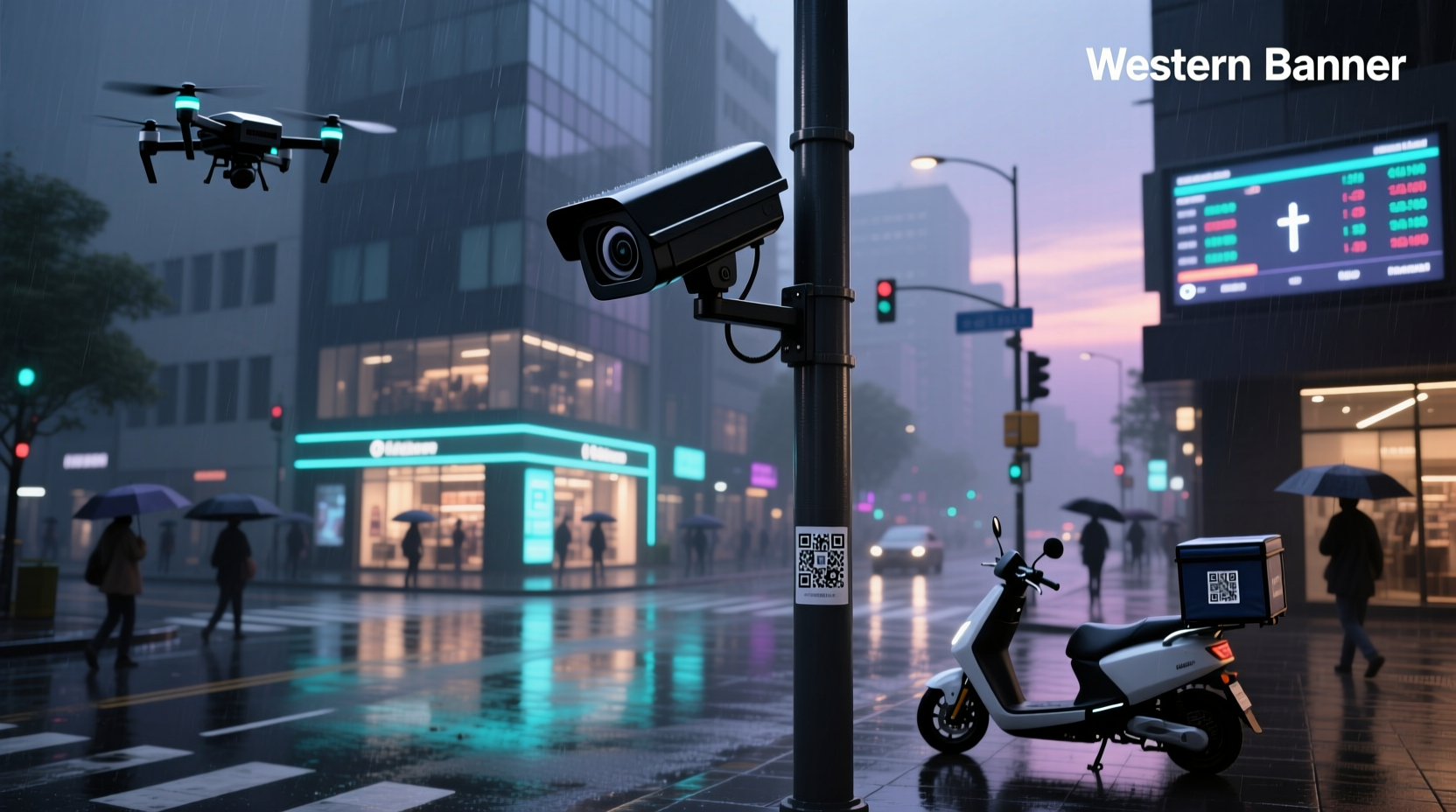
If you’re installing or upgrading a closed circuit security camera system this year, prioritize three things: edge-based AI detection (not cloud-only), hybrid local + cloud storage, and verified NDAA compliance for U.S.-based deployments. Over the past year, the market has shifted decisively toward decentralized intelligence — meaning cameras now process video on-device rather than streaming raw footage to servers 1. This change reduces false alerts, cuts bandwidth costs, and improves privacy. For most homeowners and small businesses, 4K resolution is now standard, not premium — but only matters if your lighting, mounting height, and lens quality support it. If you’re a typical user, you don’t need to overthink this: choose a PoE-powered 4K camera with human/vehicle classification and an SD card slot, and skip the $5/month cloud subscription unless remote access is non-negotiable. Avoid legacy analog systems entirely — they’re functionally obsolete for new installs. This piece isn’t for keyword collectors. It’s for people who will actually use the product.
About Closed Circuit Security Cameras
A closed circuit security camera (CCTV) refers to a dedicated video surveillance system where footage is transmitted to a limited set of monitors or recorders — not broadcast publicly or streamed openly over the internet. Unlike consumer-grade smart cameras marketed as “security,” true CCTV systems emphasize reliability, deterministic latency, and controlled data flow. Typical use cases include commercial storefronts, warehouse perimeters, multi-unit residential entryways, school corridors, and municipal infrastructure monitoring. These systems operate within private networks, often using proprietary or ONVIF-compliant protocols, and are designed for continuous operation under variable environmental conditions — from freezing outdoor temperatures to dusty industrial settings 2. While historically associated with analog coaxial cabling, modern closed circuit security camera systems are overwhelmingly IP-based, supporting Power over Ethernet (PoE), remote management, and integration with access control or alarm panels.
Why Closed Circuit Security Cameras Are Gaining Popularity in 2026
Lately, adoption has accelerated — not because threats have increased, but because capabilities have matured meaningfully. The global surveillance camera market is projected to reach $52.8 billion in 2026, growing at a double-digit CAGR 3. Three converging drivers explain this: First, edge AI has moved from lab demo to field-ready feature — enabling real-time person/vehicle distinction without cloud dependency. Second, sustainability pressure has pushed manufacturers to offer robust solar-powered wireless options, especially for rural properties or temporary sites where trenching and wiring are cost-prohibitive. Third, regulatory clarity — particularly around NDAA Section 889 compliance in the U.S. — has created a clear filter for buyers prioritizing long-term vendor viability and supply chain integrity 4. When it’s worth caring about: if your installation falls under federal, state, or municipal procurement rules — NDAA compliance is non-negotiable. When you don’t need to overthink it: for indoor home use with no government ties, it’s a secondary consideration.
Approaches and Differences
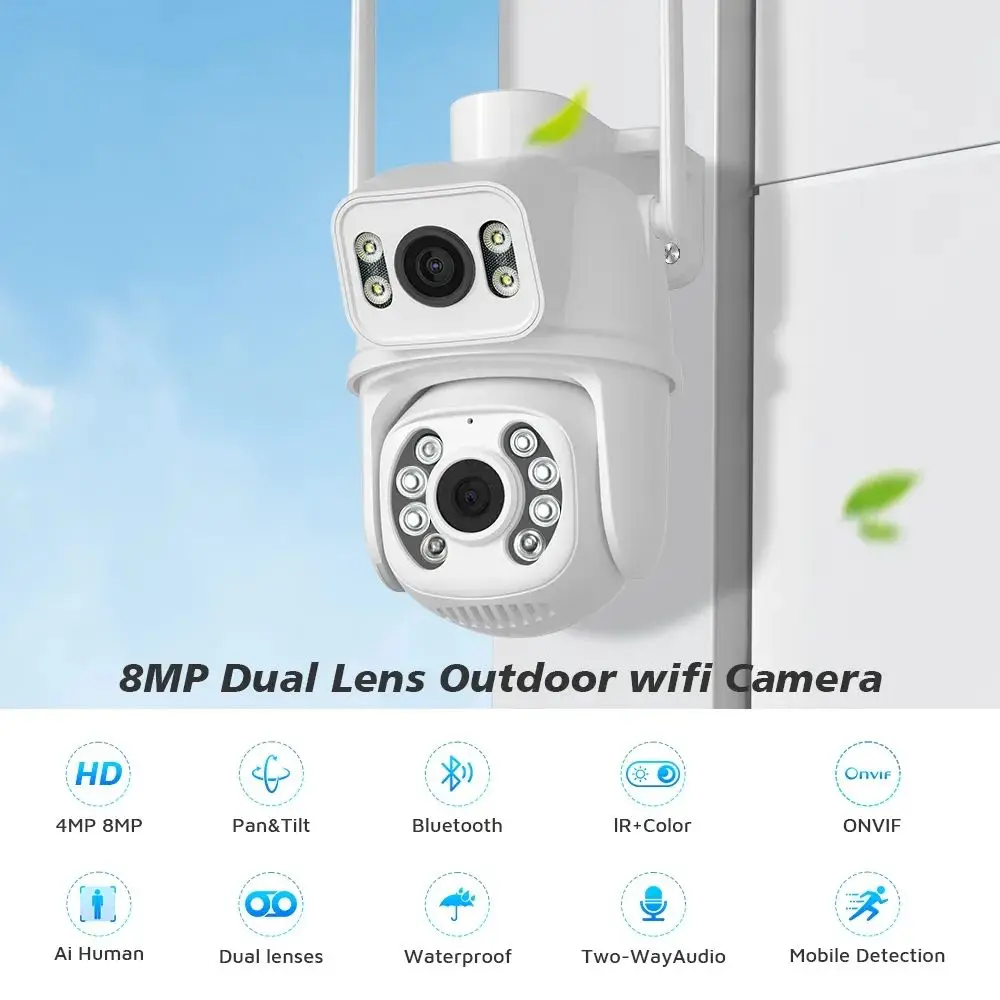
There are three dominant deployment approaches today — each solving different constraints:
- PoE (Power over Ethernet): Delivers both power and data over a single Cat6 cable. Offers stable bandwidth, simplified wiring, and centralized power management. Best for fixed-location, professional-grade installations (offices, retail, schools). Drawback: requires structured cabling infrastructure and switch ports with sufficient power budget (IEEE 802.3at/af).
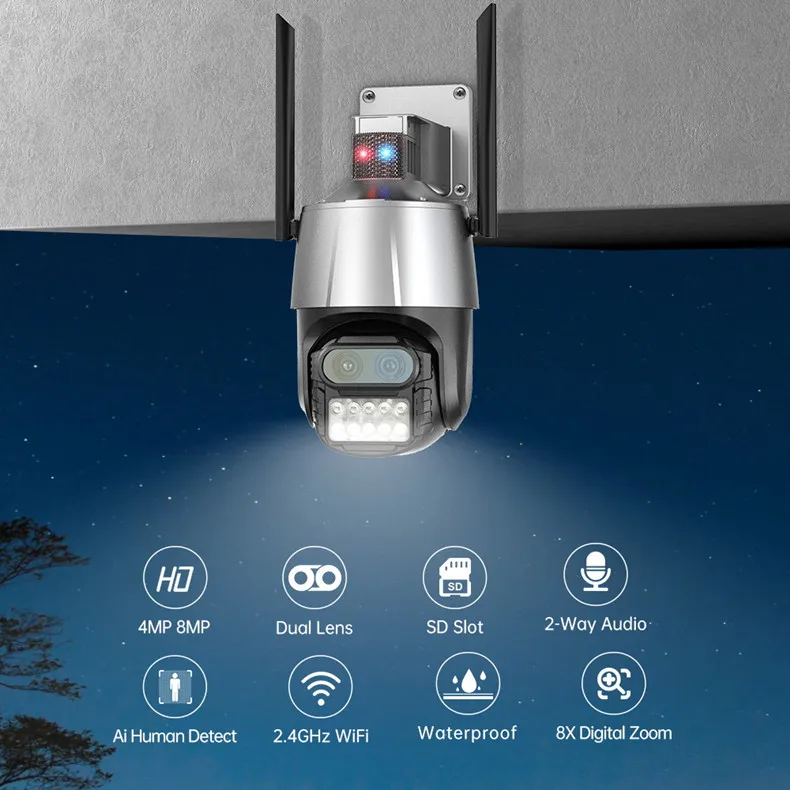
- Solar-powered wireless: Uses photovoltaic panels to charge internal batteries, transmitting via 4G/LTE or Wi-Fi. Ideal for remote barns, construction sites, or historic buildings where drilling is restricted. Drawback: performance degrades in prolonged cloudy weather or heavy foliage; cellular plans add recurring cost.
- Cloud-native IP cameras: Rely on constant internet uptime and third-party cloud services for storage and analytics. Lower upfront hardware cost, easy mobile setup. Drawback: vulnerable to service outages, subscription fatigue, and less control over data residency — making them unsuitable for closed-circuit requirements where data sovereignty matters.
If you’re a typical user, you don’t need to overthink this: PoE remains the default choice for any permanent, wired location. Solar wireless makes sense only when cabling is physically or financially impossible — not just inconvenient.
Key Features and Specifications to Evaluate
Don’t optimize for specs — optimize for outcomes. Here’s what actually moves the needle:
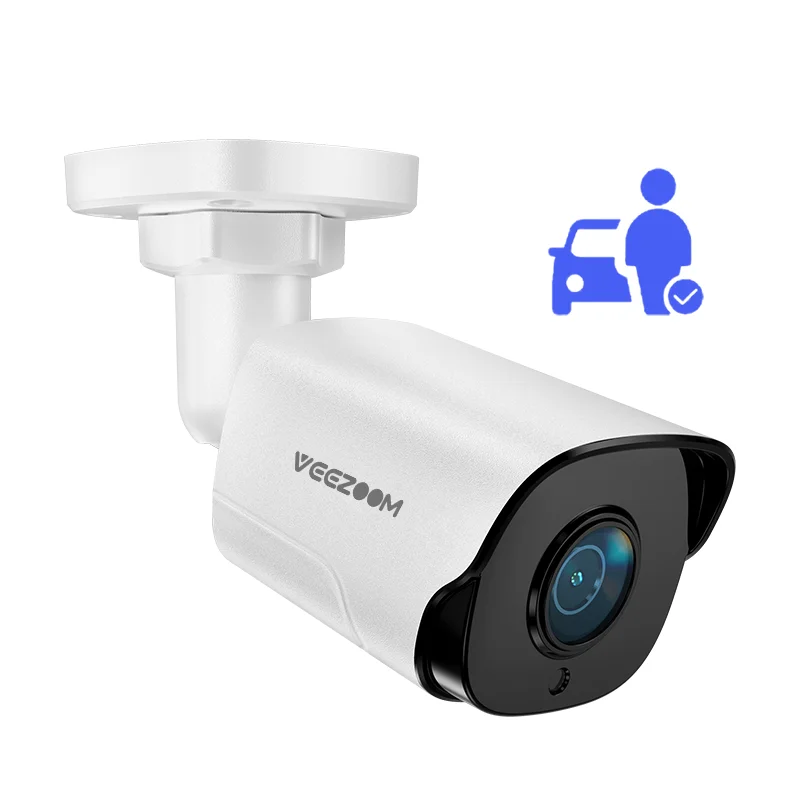
- Resolution: 4K (3840 × 2160) delivers usable facial detail at ~15 ft with proper lens selection. But resolution alone means little without good low-light sensors (e.g., Starlight or Sony STARVIS 2) and wide dynamic range (WDR ≥ 120dB). When it’s worth caring about: forensic review of license plates or entrances. When you don’t need to overthink it: hallway monitoring at 10 ft — 1080p suffices.
- Smart Detection: Look for on-device (not cloud-only) classification: human vs vehicle vs animal. Avoid generic “motion detection” — it triggers on shadows, rain, or swaying branches. GPU-accelerated edge inference (e.g., NVIDIA Jetson Nano-level processing) ensures responsiveness even at 4K.
- Storage Architecture: Hybrid is optimal — local microSD (up to 256GB) for immediate redundancy + optional encrypted cloud backup. Pure cloud models force subscription lock-in and create single points of failure.
- Cybersecurity Hardening: Secure boot, firmware signing, TLS 1.2+, and disabled Telnet/FTP by default. Zero-trust principles now apply: every camera must authenticate before joining the network 5.
Pros and Cons
Pros of modern closed circuit security camera systems: deterministic latency (no buffering delays), full data ownership, interoperability via ONVIF, scalable edge intelligence, and lower lifetime TCO when avoiding cloud subscriptions.
Cons to acknowledge: steeper initial learning curve for network configuration, less intuitive mobile apps than consumer brands, and limited voice assistant integration (Alexa/Google Home support remains spotty and often insecure). When it’s worth caring about: if your team manages other IT infrastructure, the learning curve pays off fast. When you don’t need to overthink it: for plug-and-play simplicity, consider whether a purpose-built CCTV system aligns with your operational maturity — or if a mid-tier smart camera better fits your workflow.
How to Choose a Closed Circuit Security Camera: A Step-by-Step Guide
- Define your primary goal: Deterrence? Forensic evidence? Real-time alerting? Don’t conflate them — a camera optimized for night vision may lack daytime contrast needed for license plate capture.
- Map physical constraints: Is conduit access possible? What’s the nearest power source? Will sunlight reach a solar panel year-round? Measure mounting height and field of view — then calculate required focal length (not just “wide angle”).
- Verify compliance needs: For U.S. federal projects or contractors: confirm NDAA Section 889 compliance 6. For EU deployments: check GDPR-aligned data handling and local retention laws.
- Test detection logic: Request live demos — not spec sheets. Watch how the camera handles backlighting, partial occlusion, and rapid movement. Does it misclassify delivery bikes as cars? Does it ignore pets reliably?
- Avoid these pitfalls: buying based solely on megapixel count; assuming “weatherproof” means -20°C operation; ignoring firmware update frequency (check vendor release notes); skipping VLAN segmentation for camera traffic.
Insights & Cost Analysis
Based on B2B supplier benchmarks (Shenzhen-sourced OEM units), here’s a realistic price-to-capability snapshot:
| Camera Type | Ideal Use Case | Typical Price Range (USD) | Key Trade-off |
|---|---|---|---|
| 4K PoE Dome | Indoor office lobby, retail entrance | $27–$29 | Requires PoE switch; minimal setup flexibility |
| Solar Wireless 4G | Rural property perimeter, job site | $33–$45 | Cellular plan adds $5–$10/month; battery life varies by climate |
| Mini Cloud IP (1080p) | Baby monitor, indoor pet cam | $10–$14 | No NDAA compliance; cloud-dependent; weak cybersecurity |
Total cost of ownership (TCO) includes more than hardware: factor in PoE switch upgrades ($80–$200), microSD cards ($15–$25/year), and optional VMS licensing. For 5+ cameras, a $300 NVR with 2TB HDD often delivers better value than individual cloud subscriptions.
Better Solutions & Competitor Analysis
The strongest value proposition in 2026 isn’t “more features” — it’s architectural coherence. Leading solutions integrate three layers seamlessly: edge AI (on-camera), secure local storage (encrypted SD/NVR), and lightweight orchestration (web-based dashboard, not app-only). Below is a functional comparison of implementation paths:
| Approach | Advantage | Potential Issue | Budget Consideration |
|---|---|---|---|
| PoE + Local NVR | Full offline operation; no recurring fees; ONVIF compatibility | Requires network planning; less mobile-first UX | Moderate (one-time NVR + HDD cost) |
| Solar + 4G + Edge AI | No wiring; works anywhere with cellular coverage; self-sustaining | Signal reliability varies; carrier lock-in risk | Higher (hardware + SIM plan) |
| Hybrid Cloud (Local + Encrypted Cloud) | Redundancy + remote access; audit trail preserved | Cloud encryption keys must be user-controlled, not vendor-managed | Variable (depends on cloud tier) |
Customer Feedback Synthesis
Based on aggregated B2B buyer reviews and forum analysis (2025–2026):
✅ Top 3 praised features: accurate human/vehicle differentiation (reducing false alerts by ~70% vs older models), seamless microSD failover during network outages, and consistent firmware updates every 6–8 weeks.
❌ Top 3 complaints: inconsistent mobile app stability across Android/iOS versions, lack of multilingual OSD (on-screen display) menus, and vague documentation around ONVIF profile support (Profile S vs Profile T).
Maintenance, Safety & Legal Considerations
Maintenance is minimal but non-zero: clean lenses quarterly (especially outdoor domes), verify SD card health monthly, and audit firmware versions biannually. Safety-wise, avoid mounting cameras where cables could pose tripping hazards or where IR illumination might affect nearby wildlife habitats. Legally, signage requirements vary — many jurisdictions mandate visible notice of video recording in public areas. NDAA compliance is mandatory for U.S. federal contracts and increasingly adopted by state agencies; non-compliant devices may be barred from future procurement 7. Always verify compliance status directly with the manufacturer — not just distributor claims.
Conclusion
If you need forensic-grade evidence and operate in a regulated environment, choose a 4K PoE camera with NDAA compliance, on-device AI, and hybrid storage. If you need deployment flexibility where wiring is impossible, select a solar-powered 4G model with LTE-M fallback and verified edge analytics. If you’re managing 5+ locations with IT staff, invest in an ONVIF-compliant NVR platform — not standalone cameras. If you’re a typical user, you don’t need to overthink this: start with one PoE 4K unit, test detection accuracy in your actual lighting conditions, and scale only after validating performance. Avoid chasing “future-proof” specs — focus on what solves your current, documented problem.


