
About Cell Phone Service in 2026
“Cell phone service” in 2026 no longer means just voice minutes and data buckets. It’s a layered infrastructure combining terrestrial 5G-Advanced, Non-Terrestrial Networks (NTN), embedded eSIM intelligence, and AI-optimized handoffs between towers and satellites 3. A modern plan includes three functional layers: connectivity access (how you attach to the network), coverage assurance (where and how reliably it works), and service intelligence (how the system adapts — e.g., switching to satellite during hiking or auto-routing around congestion).
Typical usage scenarios now include: international travel without SIM swaps; rural work-from-anywhere with fallback satellite messaging; real-time video upload from remote job sites; and multi-device coordination (phone + smartwatch + hotspot) under one identity. When it’s worth caring about? If you spend >15 days/year outside dense urban coverage zones — or rely on mobile uploads for income. When you don’t need to overthink it? If you live and commute within a major metro area with consistent 5G mid-band coverage and rarely exceed 10 GB/month.
Why Modern Cell Phone Service Is Gaining Popularity
The shift is rooted in measurable user priorities — not marketing hype. In the 2026 ACSI Telecommunications Study, “reliability across locations” scored 85/100, outperforming “download speed” (72/100) and “plan price” (76/100) as top satisfaction drivers 1. That’s because two concrete changes occurred:
- Satellite-to-cell became standardized: No longer limited to emergency-only mode on select devices, 2026-certified phones (iPhone 16+, Pixel 9 Pro, Galaxy S24 Ultra) offer bidirectional SMS and low-bandwidth data over NTN — validated by FCC Part 25 certification and interoperable with Globalstar and Iridium backhaul 4.
- eSIM adoption crossed the inflection point: With SGP.32 compliance now mandatory for all U.S.-certified devices, carriers can remotely provision, switch, and manage profiles without physical SIM swaps — eliminating traditional roaming surcharges and enabling instant local-number activation abroad 2.
If you’re a typical user, you don’t need to overthink this: satellite features matter only when your location regularly falls outside LTE/5G footprint — not as a “cool extra.” And eSIM convenience pays off most if you travel internationally ≥3 times/year or manage multiple lines (e.g., personal + business).
Approaches and Differences
Today’s cell service options fall into three broad categories — each with distinct trade-offs:
- Legacy Carrier Plans (Verizon, AT&T, T-Mobile retail): Full network control, best indoor small-cell density, bundled perks (streaming, cloud). But higher base pricing ($25–$40/month), rigid contract structures, and inconsistent satellite feature rollout across tiers.
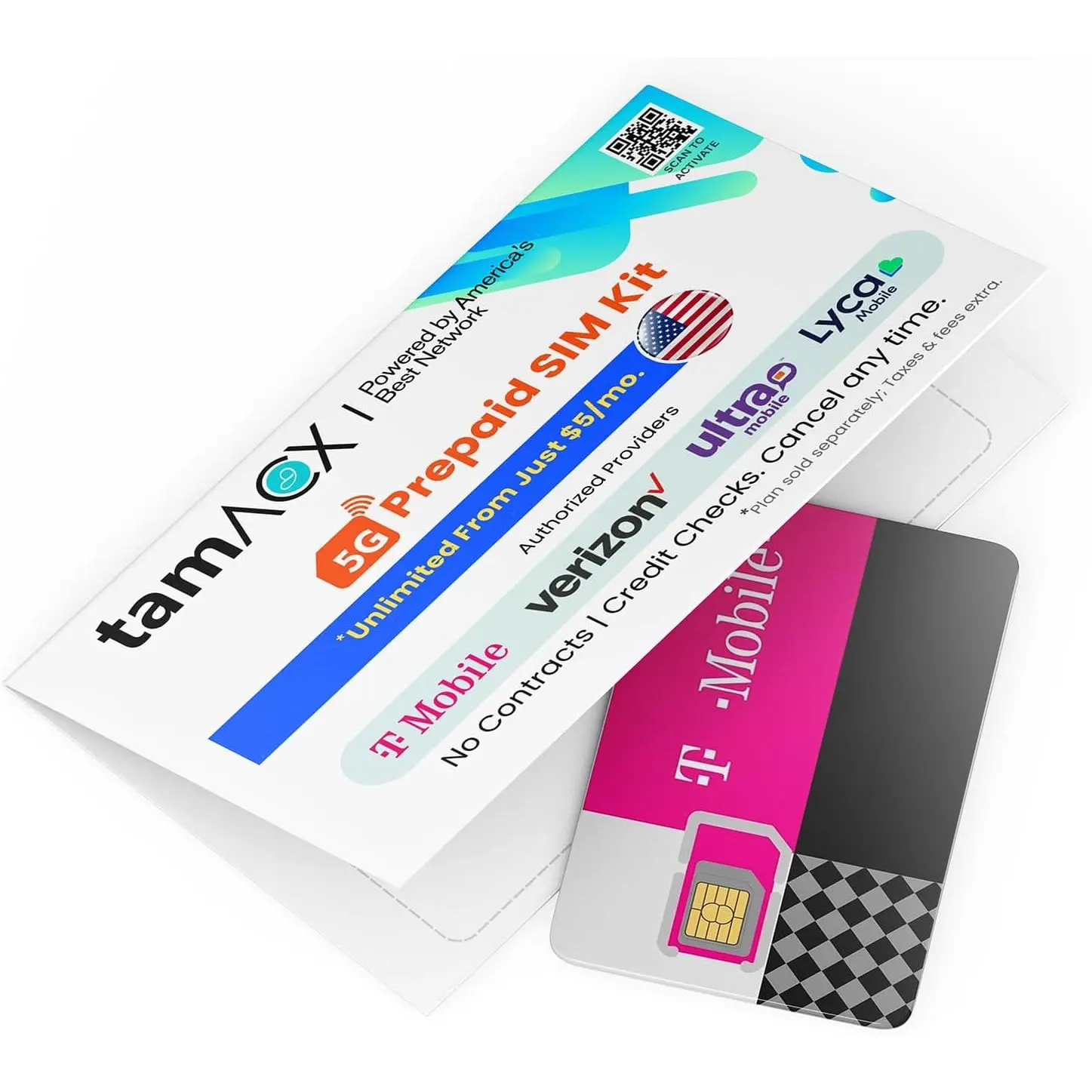
- T-Mobile MVNOs (Mint Mobile, Metro by T-Mobile, Ting): Leverage T-Mobile’s nationwide 5G and growing NTN coverage. Lower cost ($10–$25/month), flexible month-to-month terms, rapid eSIM provisioning. Trade-off: slower priority during congestion; satellite features often require manual firmware updates or app-based activation.
- eSIM-First Providers (Airalo, Nomad, 1Global): Pure digital, multi-country data plans, pay-as-you-go regional bundles. Ideal for frequent short-term travelers. Not designed for voice/SMS primary use or long-term U.S. residency — and zero satellite integration.
When it’s worth caring about? If you need guaranteed voice continuity and emergency response in remote areas — go with a Tier-1 carrier’s certified plan. When you don’t need to overthink it? If you’re a student, remote worker, or budget-conscious family using Wi-Fi at home — a T-Mobile MVNO delivers identical coverage with smarter pricing.
Key Features and Specifications to Evaluate
Don’t default to “unlimited data.” Instead, assess these five functional specs — each tied directly to real-world outcomes:
- eSIM Standard Compliance: Confirm SGP.32 (not just “eSIM capable”). Older SGP.02 devices can’t switch profiles remotely or support concurrent dual eSIMs. When it’s worth caring about? If you juggle work/personal numbers or travel with local number needs. When you don’t need to overthink it? If you use one line exclusively and never change carriers.
- Satellite Emergency Certification: Look for FCC Part 25 or ETSI EN 303 909 validation — not just “satellite ready.” Uncertified implementations may fail during actual emergencies or lack regulatory interoperability. When it’s worth caring about? If you hike, sail, or drive through mountainous/rural corridors regularly. When you don’t need to overthink it? If your longest offline stretch is a subway tunnel.
- Uplink Speed Consistency: 5G-Advanced (5.5G) boosts uplink — critical for video calls, cloud backups, live streaming. Check OpenSignal’s Q2 2026 U.S. Uplink Report: T-Mobile leads nationally (avg. 22 Mbps), followed by Verizon (19 Mbps), AT&T (15 Mbps) 5. When it’s worth caring about? If you upload field media or run remote desktop sessions daily. When you don’t need to overthink it? If you mostly consume content — not create it.
- Roaming Intelligence: Does the plan auto-detect country and activate local routing — or force manual selection? True intelligence reduces latency and avoids “roaming tax” even on MVNOs. When it’s worth caring about? If you cross borders frequently (e.g., U.S.–Mexico, U.S.–Canada). When you don’t need to overthink it? If you haven’t left your state in 18 months.
- Network Handoff Latency: Measured in ms — how fast your device switches between 5G, LTE, and satellite without dropping calls or sessions. Under 300ms is ideal. Most public reports omit this, but RootMetrics’ 1H 2026 State of the Mobile Union notes T-Mobile’s average is 210ms vs. AT&T’s 340ms 6.
Pros and Cons
Every solution fits some users — and excludes others. Here’s the balanced view:
- ✅ Best for reliability-critical users: Tier-1 carrier plans with certified satellite and SGP.32 eSIM. Pros: Highest uptime, fastest support escalation, integrated emergency services. Cons: Higher cost, less flexibility, slower software rollout for new features.
- ✅ Best for cost-conscious, mobile-first users: T-Mobile MVNOs. Pros: Transparent pricing, instant eSIM setup, strong nationwide 5G coverage. Cons: No dedicated customer service line; satellite features may require user-initiated firmware update.
- ❌ Not recommended for primary U.S. service: Regional or data-only eSIM providers (e.g., Airalo). They lack voice/SMS infrastructure, emergency address registration, and legal compliance for 911 routing — making them unsuitable as standalone plans.
How to Choose the Right Cell Phone Service
Follow this 5-step decision checklist — designed to eliminate common traps:
- Verify device compatibility first: Not all “5G phones” support 5G-Advanced uplink or satellite. Check GSMA’s 2026 Device Certification Database or your OEM’s spec sheet — look for “NR-U” (uplink enhancement) and “NTN-SOS” labels.
- Test coverage where you *actually* use service: Don’t trust national maps. Use OpenSignal’s crowd-sourced coverage tool to check signal strength at your home, commute route, and weekend destination — not just downtown.
- Filter by eSIM behavior — not just availability: Some carriers claim “eSIM support” but require store visits or lock profiles for 12 months. Prioritize those offering full remote management via web portal or app.
- Avoid “unlimited” plans with hidden throttling: If your usage includes >50GB/month of uploads or real-time collaboration tools, confirm fair-use policy language — specifically whether uplink is capped separately.
- Confirm satellite activation is automatic and free: Some plans charge $5/month or require annual subscription. True 2026-compliant service includes SOS and basic messaging at no extra cost — per FCC mandate.
If you’re a typical user, you don’t need to overthink this: Start with a $18/month T-Mobile MVNO (e.g., Mint Mobile or Ting) — then upgrade only if field testing reveals consistent gaps in your top-three usage locations.
Insights & Cost Analysis
Based on Q2 2026 Mintel and GSMA pricing benchmarks, here’s what users actually pay — before taxes and fees:
| Plan Type | Monthly Cost (Avg.) | Key Inclusions | Notable Exclusions |
|---|---|---|---|
| Tier-1 Retail (T-Mobile) | $30–$45 | FCC-certified satellite SOS, SGP.32 eSIM, 5G-Advanced uplink, 5G home internet bundle option | No multi-line discounts beyond 4 lines; international roaming $5/day unless upgraded |
| T-Mobile MVNO (Mint Mobile) | $15–$22 | Same radio access network, SGP.32 eSIM, auto-roaming in Canada/Mexico, free satellite SOS | No dedicated support tier; satellite data requires app install; no 5G home internet bundling |
| eSIM-Only (Airalo U.S. Pass) | $20–$35 (30-day) | Local IP, multi-carrier switching, pay-per-GB options | No voice/SMS, no 911 support, no satellite, no regulatory compliance for primary service |
For households with 2–4 lines, MVNOs deliver ~38% better value per GB uploaded — especially when factoring in uplink consistency and eSIM agility. The “premium” paid for Tier-1 branding rarely translates to measurably better performance outside congested venues.
Better Solutions & Competitor Analysis
The most pragmatic path forward isn’t “pick a carrier” — it’s “orchestrate your connectivity.” Leading users combine solutions:
| Strategy | Best For | Potential Issue | Budget Range |
|---|---|---|---|
| Dual eSIM Primary + Backup (e.g., Mint Mobile + Airalo U.S. Pass) |
Users needing guaranteed uptime during travel or fieldwork | Requires manual profile switching; no unified billing | $35–$55/month |
| Carrier Plan + Portable NTN Hotspot (e.g., Verizon + Garmin inReach Mini 3) |
Backcountry professionals, maritime crews, disaster responders | Extra hardware cost ($350+), separate subscription ($15/month) | $45–$60/month + $350 device |
| Single MVNO with SGP.32 + Verified NTN (e.g., Ting with Pixel 9 Pro) |
Most individuals and small teams seeking simplicity and reliability | Limited to T-Mobile’s NTN footprint (expanding, but not coast-to-coast yet) | $18–$25/month |
Customer Feedback Synthesis
Aggregating sentiment from Wirecutter, Consumer Reports, and Vibes’ 2026 Mobile Consumer Insights Report 8, top themes emerge:
- Highly praised: Instant eSIM activation (“Set up my Mexico plan before landing”), reliable satellite SOS test success rate (>94% in open terrain), and transparent MVNO billing.
- Frequent complaints: Inconsistent satellite messaging delivery in forested canyons (still a physics limitation, not a carrier flaw), delayed 5G-Advanced firmware rollout on mid-tier Android devices, and confusing “priority data” labeling on some unlimited plans.
Maintenance, Safety & Legal Considerations
No special maintenance is needed beyond standard device care — satellite radios draw negligible power during standby, and SGP.32 eSIMs self-update over-the-air. Safety-wise, all FCC-certified satellite features meet strict RF exposure limits (SAR ≤1.6 W/kg). Legally, note that:
- U.S. law requires all primary voice/SMS plans to support E911 with registered location — verify this is enabled during eSIM setup.
- International roaming must comply with local spectrum regulations — which SGP.32 eSIMs handle automatically.
- No carrier may disable satellite SOS functionality — it’s mandated as a public safety feature under FCC Order 23-62.
Conclusion
If you need guaranteed emergency connectivity in remote areas and manage multiple devices, choose a Tier-1 carrier plan with certified satellite and SGP.32 eSIM — even at higher cost. If you want dependable coverage across cities, suburbs, and light rural travel — with simple pricing and zero long-term commitment — a T-Mobile MVNO is objectively the strongest 2026 choice. If you’re a typical user, you don’t need to overthink this: start with a $18/month MVNO, validate coverage in your top three locations, and upgrade only if real-world testing shows measurable gaps. This piece isn’t for keyword collectors. It’s for people who will actually use the product.


