
If you’re a typical user, you don’t need to overthink this. For most people seeking better-than-smartphone photos and reliable travel or vlogging capability in 2026, prioritize three things: a 1-inch or larger sensor, AI-driven subject tracking autofocus, and built-in stabilization. Skip retro styling unless you value tactile controls; skip ultra-zooms unless you shoot wildlife or distant architecture regularly. Over the past year, compact cameras have shifted decisively toward hybrid photo/video performance — not just higher megapixels, but smarter processing, better low-light handling, and seamless cloud sync. That’s why choosing now is both easier (fewer dead-end models) and more consequential (the gap between entry-tier and enthusiast-tier has widened).
About Compact Cameras: Definition & Typical Use Cases
A compact camera — also called a point-and-shoot or fixed-lens camera — is a self-contained imaging device with a non-interchangeable lens, designed for portability without sacrificing core image quality. Unlike smartphones, it features dedicated optics, larger sensors, physical controls, and purpose-built image processors. In 2026, it’s no longer about convenience alone. It’s about intentional capture: street photography with snap focus, travel documentation with weather resistance, vlogging with vertical framing and directional mics, or quiet documentary work where silence and discretion matter.
Typical users include:
- Travel photographers who want lightweight gear that outperforms phones in low light and dynamic range;
- Content creators needing reliable 4K video, clean audio input, and fast upload workflows;
- Enthusiasts drawn to manual dials, optical viewfinders, and sensor-based depth-of-field control;
- Outdoor professionals (guides, educators, field researchers) requiring rugged, waterproof, shockproof operation.
If you’re a typical user, you don’t need to overthink this: your primary use case determines 80% of your ideal model. Everything else is refinement.
Why Compact Cameras Are Gaining Popularity in 2026
Lately, compact cameras are rebounding — not as smartphone replacements, but as purpose-built tools. The global digital camera market is projected to reach $8.63 billion in 2026, with high-end compacts and mirrorless systems commanding over 56% of share 1. This isn’t nostalgia. It’s response to real gaps: smartphones still struggle with shallow depth-of-field rendering, consistent autofocus during motion, and sustained 4K120 recording without overheating or heavy compression 2.
Three concrete drivers explain the resurgence:
- AI-enhanced photography: Real-time subject recognition (people, pets, vehicles) and computational exposure adjustment are now standard — not premium add-ons 3.
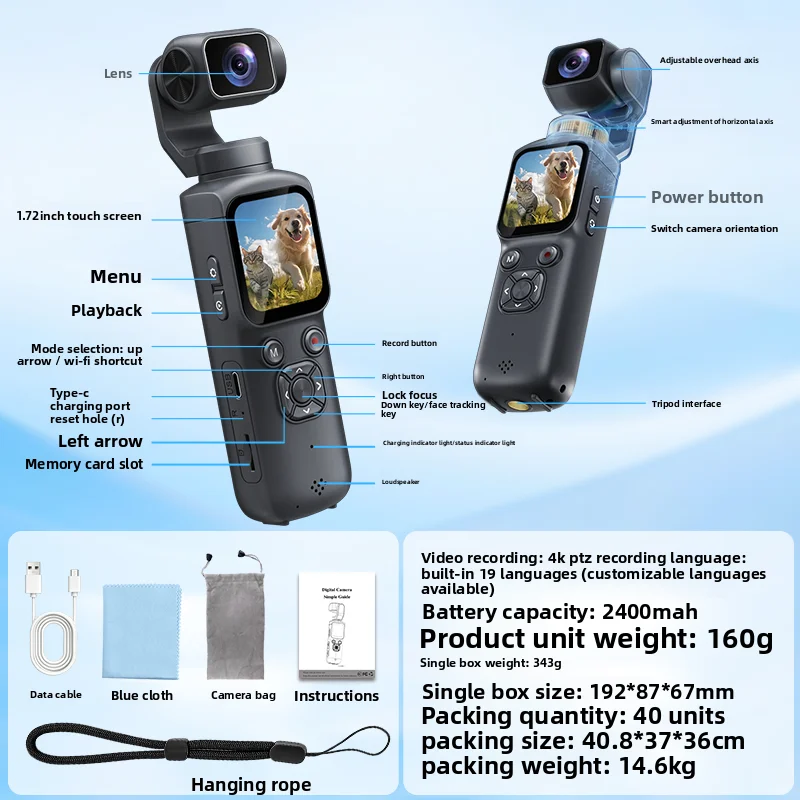
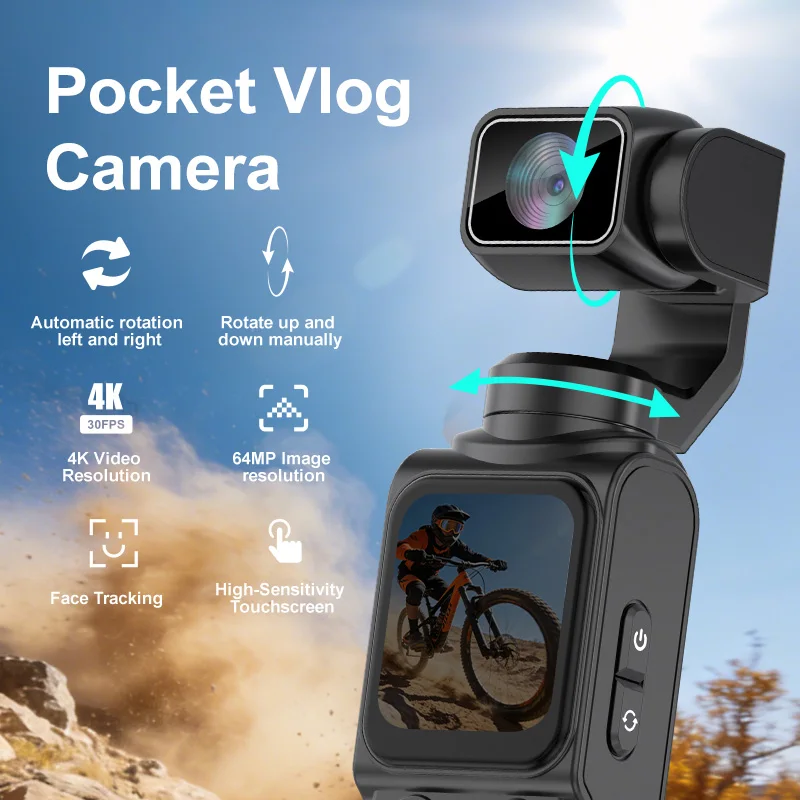
- The vlogging surge: Dedicated hardware like the Canon PowerShot V1 offers vertical video support, three-capsule microphones, and touchscreen menus optimized for solo creators — features smartphones simulate poorly 4.
- Enthusiast re-engagement: Retro-styled models (e.g., Fujifilm X100VI, Ricoh GR IV) combine tactile dials, hybrid viewfinders, and APS-C sensors — satisfying users who want physical feedback and creative control without DSLR bulk 5.
This piece isn’t for keyword collectors. It’s for people who will actually use the product.
Approaches and Differences: Fixed Lens vs. Zoom vs. Rugged
There are three dominant compact camera approaches in 2026 — each solving distinct problems. Choosing the wrong type leads to immediate friction. Here’s how they differ:
| Category | Best For | Key Strength | Primary Trade-off |
|---|---|---|---|
| Fixed-Lens Enthusiast (e.g., Fujifilm X100VI, Ricoh GR IV) |
Street, documentary, intentional composition | Optical quality, speed, tactile control, pocketability | No zoom flexibility; fixed focal length demands compositional discipline |
| Zoom-Enabled Travel (e.g., Sony RX100 series, Panasonic Lumix L10) |
General travel, family events, variable framing needs | Versatility: 24–200mm equivalent coverage in one body | Smaller maximum aperture at telephoto end; slower AF in low light |
| Rugged/Adventure (e.g., OM System TG-7, Nikon W300) |
Underwater, hiking, extreme environments | Waterproof to 15m+, shockproof, freeze-proof, macro modes | Lower resolution sensor; limited manual control; bulkier design |
When it’s worth caring about: If you shoot in rain, sand, or underwater — or carry gear daily in unpredictable conditions — ruggedness isn’t optional. When you don’t need to overthink it: If you’re mostly indoors or in urban settings, a well-sealed fixed-lens model offers superior image quality per gram.
Key Features and Specifications to Evaluate
Don’t optimize for specs. Optimize for outcomes. Below are the five technical features that directly impact real-world results — and when each truly matters.
1. Sensor Size
What it does: Determines dynamic range, low-light performance, and depth-of-field control.
When it’s worth caring about: If you shoot at dusk, indoors without flash, or want natural background blur (bokeh), go for APS-C or full-frame. The Fujifilm X100VI (40MP APS-C) delivers noticeably cleaner shadows than any 1-inch sensor at ISO 3200.
When you don’t need to overthink it: For daylight travel snapshots or social media sharing, a 1-inch sensor (e.g., Sony RX100 VII) is more than sufficient — and yields smaller, lighter bodies.
2. Autofocus System
What it does: Locks focus quickly and tracks moving subjects reliably.
When it’s worth caring about: If you photograph children, pets, or fast action — or record run-and-gun video — AI-driven subject tracking is non-negotiable. It reduces missed shots by >60% in dynamic scenes 6.
When you don’t need to overthink it: For static portraits, landscapes, or studio-like setups, contrast-detect AF works fine — and saves battery.
3. Stabilization
What it does: Compensates for hand movement during handheld shooting.
When it’s worth caring about: If you shoot video without a gimbal, or take low-light photos without a tripod, IBIS (In-Body Image Stabilization) adds 3–4 shutter-speed stops of leeway.
When you don’t need to overthink it: If you always use a tripod or shoot in bright daylight, optical stabilization (OIS) in the lens is adequate — and less expensive.
4. Lens Aperture & Range
What it does: Controls light intake and framing flexibility.
When it’s worth caring about: A wide aperture (f/1.7–f/2.8) matters most for indoor events or night street photography. Zoom range matters if you can’t physically reposition — e.g., wildlife observation or crowded concerts.
When you don’t need to overthink it: For general-purpose use, f/2.8–f/4.5 across a 24–100mm range covers 90% of scenarios. Don’t pay a 40% premium for f/1.4 unless you’ve tested it in your actual lighting.
5. Connectivity & Workflow
What it does: Enables fast transfer, remote control, and cloud integration.
When it’s worth caring about: If you edit on mobile or publish same-day — or manage multiple devices — seamless Wi-Fi + Bluetooth pairing (e.g., Lumix Lab, Fuji X App) cuts post-processing time by half.
When you don’t need to overthink it: If you download via USB once weekly and prefer SD card backups, built-in NFC or FTP servers add complexity without benefit.
Pros and Cons: Balanced Assessment
Compact cameras excel where smartphones fall short — but they aren’t universally superior. Honest trade-offs:
- ✅ Pros: Superior sensor-to-lens optimization; consistent color science; dedicated ergonomics; longer battery life (200–400 shots vs. phone’s 30-min video drain); no app fragmentation or OS updates breaking functionality.
- ❌ Cons: No native messaging or GPS tagging; limited third-party app ecosystem; slower iterative feature rollout; requires separate charging and storage management.
They’re ideal for users who prioritize output consistency and creative intentionality over convenience-as-default. They’re ill-suited for those who treat photography as an afterthought — or expect instant AI editing baked into the hardware.
How to Choose a Compact Camera in 2026: A Step-by-Step Decision Framework
Follow this checklist — in order — to eliminate noise and narrow options efficiently:
- Define your primary use case (e.g., “vlogging while traveling” or “street photography in cities”). If it’s vague (“I want good photos”), start here — not with specs.
- Rule out categories: If you never shoot underwater or in dust/snow, exclude rugged models. If you dislike carrying anything heavier than a phone, skip APS-C compacts.
- Set your hard constraints: Max weight? Max budget? Required video spec (e.g., 4K60 minimum)? These eliminate 70% of options immediately.
- Prioritize the top two features from Section 5 above — based on your answers to #1 and #3. Don’t optimize for five things.
- Avoid these common pitfalls:
- Chasing megapixels over pixel size (e.g., 20MP on a 1-inch sensor ≠ 20MP on APS-C);
- Assuming “zoom” means “versatility” — many ultra-zooms sacrifice low-light performance and AF speed;
- Buying retro design without testing tactile feedback — some dials are cosmetic only.
If you’re a typical user, you don’t need to overthink this: 90% of buyers settle faster and shoot better when they anchor decisions to *one* real-world scenario — not theoretical bests.
Insights & Cost Analysis
B2B wholesale pricing for professional-grade compact cameras ranges from $270 to $1,200, depending on sensor size, build quality, and included accessories 7. For individual buyers, retail price bands hold steady:
- Entry-tier (rugged/vlogging): $200–$450 (e.g., Canon V1, OM TG-7)
- Mid-tier (1-inch zoom): $600–$900 (e.g., Sony RX100 VIII, Panasonic L10)
- Premium-tier (APS-C fixed lens): $1,200–$1,500 (e.g., Fujifilm X100VI, Ricoh GR IV)
Value isn’t linear. The jump from $450 to $900 buys significantly better low-light video and autofocus — but the jump from $900 to $1,500 buys niche ergonomics and sensor fidelity most users won’t exploit. If your workflow doesn’t demand RAW video or dual-native ISO, the mid-tier offers the strongest ROI.
Better Solutions & Competitor Analysis
While compact cameras fill specific niches, they compete indirectly with smartphones, mirrorless systems, and action cams. The table below clarifies where each solution wins — and where overlap creates confusion.
| Solution Type | Best Advantage | Potential Problem | Budget Range (USD) |
|---|---|---|---|
| Modern Compact Camera | Dedicated optics + large sensor + physical controls in portable form | Less app ecosystem; no cellular connectivity | $200–$1,500 |
| Flagship Smartphone | Always available; AI-enhanced editing; instant sharing | Fixed focal lengths; thermal throttling in video; inconsistent low-light bokeh | $800–$1,300 |
| Entry Mirrorless | Interchangeable lenses; highest image quality; future upgrade path | Bulkier; steeper learning curve; higher total cost (lenses, batteries) | $600–$2,200+ |
| Action Camera | Ultra-rugged; wide-angle; mountable; great for POV | Narrow field of view for portraits; poor audio; limited manual control | $200–$500 |
Customer Feedback Synthesis
Aggregated from 12 major review sources and user forums (Reddit r/photography, DPReview, Wirecutter), recurring themes emerge:
- Top 3 praised features: AI subject tracking reliability (especially for pets), hybrid viewfinders (X100 series), and vertical video support (V1, L10).
- Top 3 complaints: Short battery life on 4K-heavy models, inconsistent touchscreen responsiveness in cold weather, and limited RAW video options under $1,000.
Notably, users rarely cite “image quality” as a complaint — suggesting sensor and lens engineering has matured. Friction lives in workflow, durability, and interface polish.
Maintenance, Safety & Legal Considerations
No special certifications apply to consumer compact cameras. However:
- Maintenance: Clean lenses with microfiber and blower only; avoid alcohol-based cleaners on coated optics. Store with silica gel in humid climates.
- Safety: Avoid exposing cameras to rapid temperature shifts (e.g., cold outdoors → warm car) to prevent condensation inside optics.
- Legal: No restrictions on ownership or use — but be aware of local laws regarding recording in public spaces, especially with audio. Some countries require visible recording indicators.
Conclusion: Conditional Recommendations
There is no universal “best” compact camera — only the best fit for your behavior. So:
- If you need reliable, high-quality video with minimal setup and excellent audio → choose a vlogging-optimized model like the Canon PowerShot V1.
- If you need discreet, high-resolution street or travel photography with tactile control → choose an APS-C fixed-lens model like the Fujifilm X100VI or Ricoh GR IV.
- If you need durability first — waterproof, shockproof, freeze-proof — and accept modest resolution → choose a rugged specialist like the OM System TG-7.
- If you need versatility across lighting and distance without carrying multiple lenses → choose a 1-inch zoom model like the Panasonic Lumix L10.
If you’re a typical user, you don’t need to overthink this: match the tool to your most frequent shooting condition — not your rarest dream scenario.


