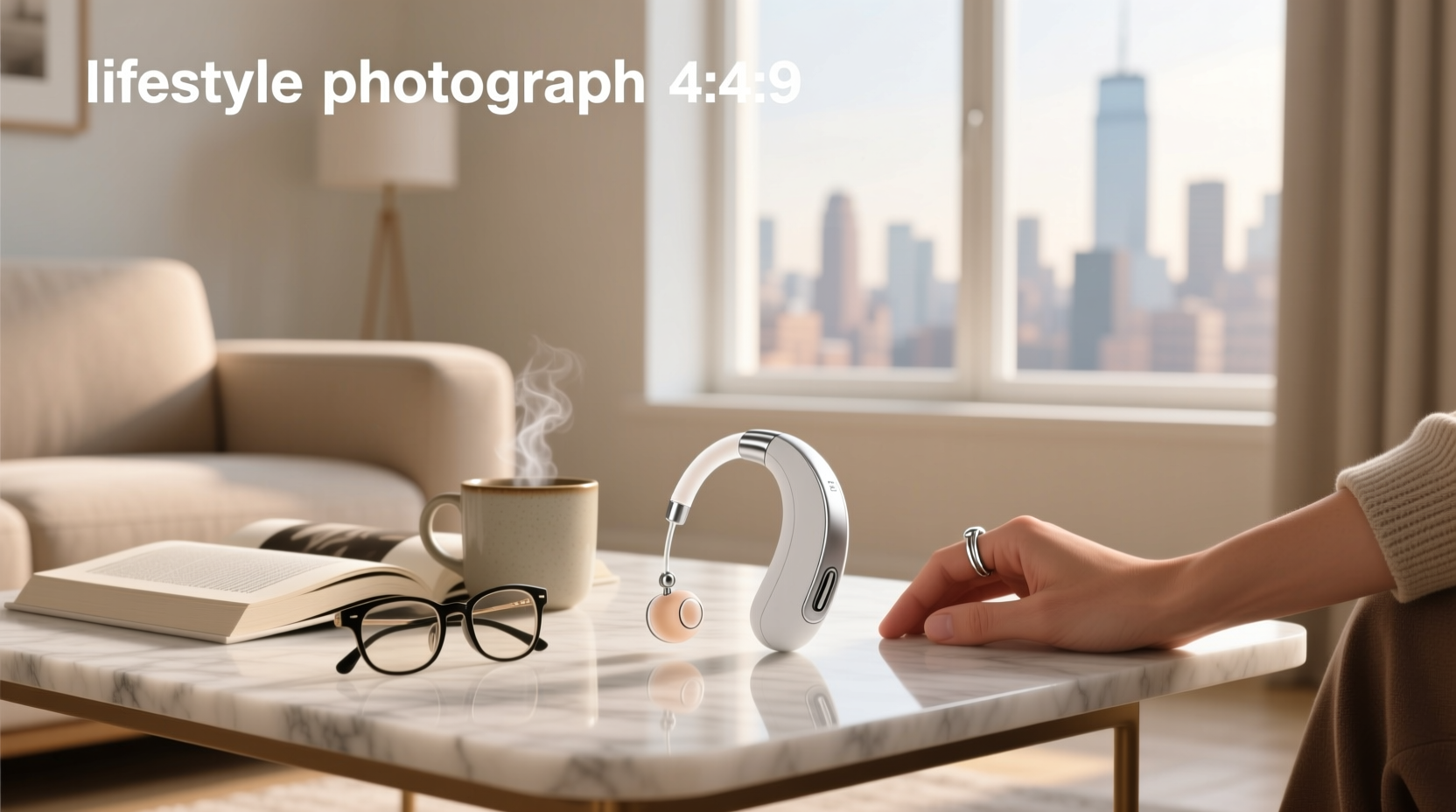
If you’re a typical user, you don’t need to overthink this. For mild-to-moderate hearing needs in 2026, prioritize rechargeable, invisible-in-canal (CIC) or RIC-style ear hearing aids with 12+ noise-reduction channels, 40+ hours of battery life, and Bluetooth LE Audio (Auracast-ready). Skip premium prescription models unless your audiogram confirms severe loss — and avoid non-rechargeable units if daily charging is inconvenient. Over the past year, FDA’s expanded OTC category and DNN-powered speech isolation have made self-sourced devices meaningfully more capable — especially in restaurants, calls, and group settings 123.
About Ear Hearing Aids
“Ear hearing aid” refers to compact, wearable audio amplification devices designed for direct placement in or behind the ear — distinct from bone-conduction headsets or desktop sound systems. They’re used primarily to enhance speech clarity and environmental awareness in everyday listening environments: conversations at home or cafés, phone and video calls, TV audio, and public spaces like airports or lecture halls. Unlike assistive listening systems (ALS) or personal sound amplification products (PSAPs), modern ear hearing aids integrate adaptive signal processing, wireless streaming, and health-aware firmware — all packed into sub-20g housings. Their core function remains consistent: amplify specific frequency bands while suppressing irrelevant noise — but how they do it has changed significantly since 2023.
Why Ear Hearing Aids Are Gaining Popularity
Lately, ear hearing aids have moved beyond clinical necessity into mainstream personal tech. Three converging shifts explain this: First, the FDA’s 2022 OTC rule took full effect in 2025–2026, enabling direct purchase for mild-to-moderate hearing needs — cutting average time-to-access from months to days 4. Second, Deep Neural Network (DNN) chips — trained on millions of real-world sound samples — now isolate speech in noisy rooms with measurable gains over older directional mics 5. Third, Bluetooth LE Audio and Auracast support mean users can stream audio from TVs, conference rooms, or airport PA systems directly to their ears — no dongles, no latency, no pairing friction 6. This isn’t just incremental improvement — it’s a shift toward hearing aids as interoperable audio endpoints, not isolated medical devices.
Approaches and Differences
Today’s ear hearing aids fall into three main structural categories — each with clear functional trade-offs:
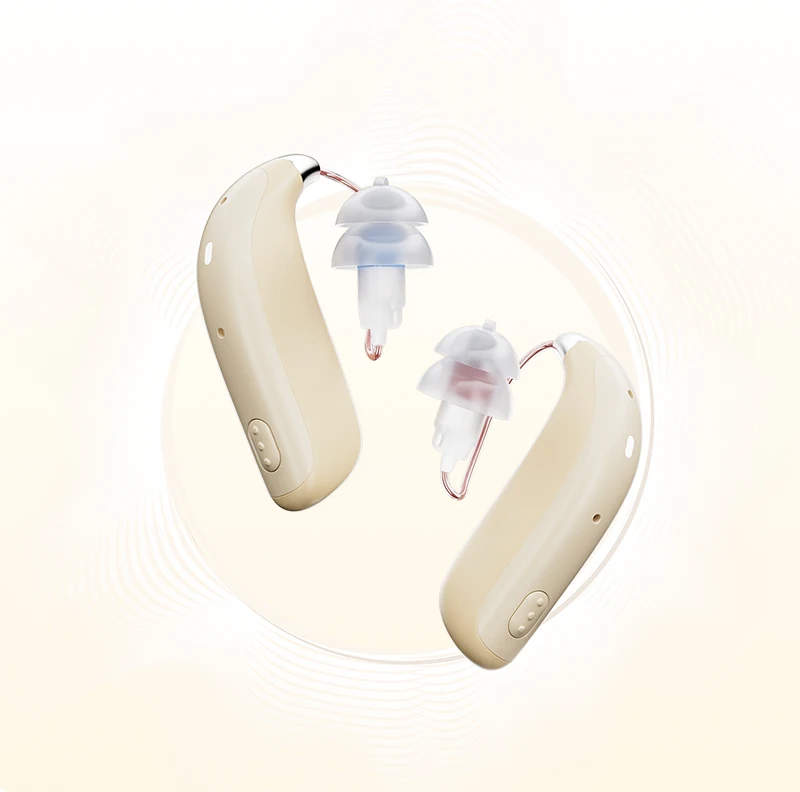
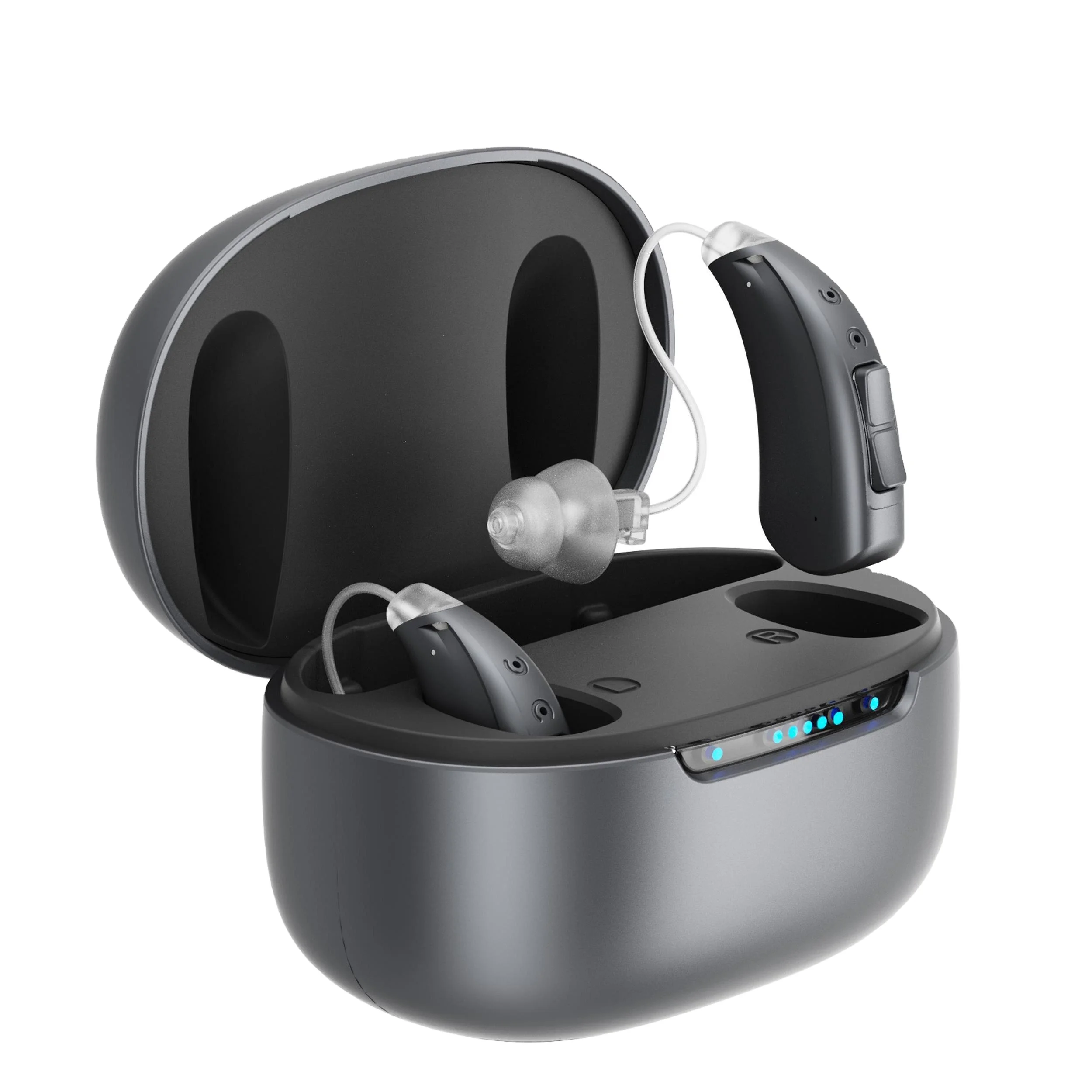
- RIC (Receiver-in-Canal): A slim tube connects a behind-the-ear processor to a speaker placed deep in the ear canal. Offers best balance of power, battery life, and app-based fine-tuning. Ideal for moderate loss and users who value Bluetooth streaming and tinnitus masking.
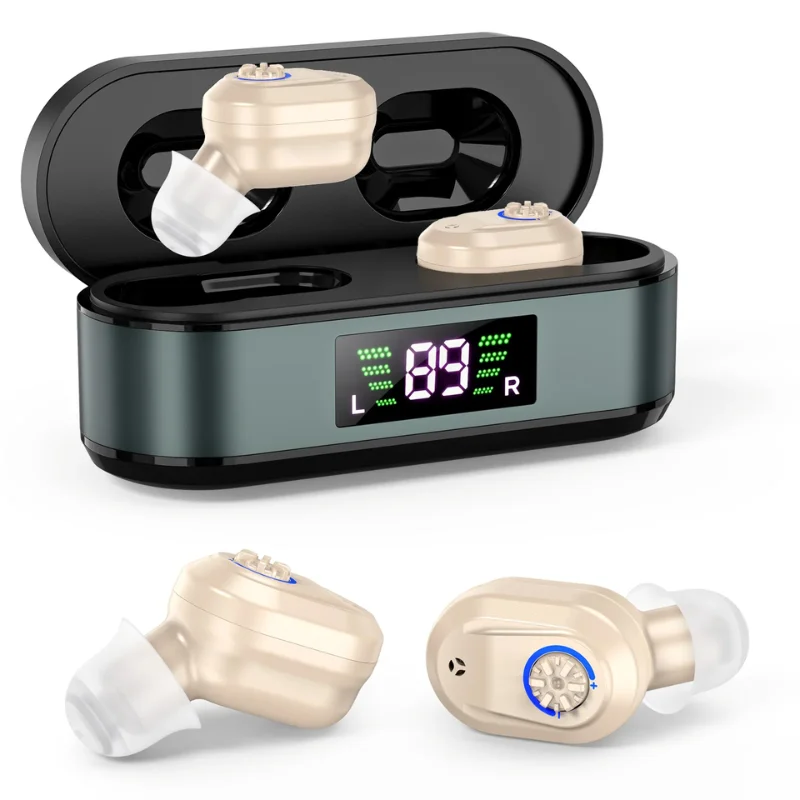
- CIC (Completely-in-Canal): Fits entirely within the ear canal — nearly invisible. Limited physical controls and smaller batteries, but preferred by users who prioritize discretion over multi-feature control. Less suitable for dexterity-limited users.
- BTE (Behind-the-Ear): Processor sits behind the ear, connected via tubing or wire to an earpiece. Most durable, longest battery life, easiest to handle — but visually prominent. Commonly chosen for active lifestyles or higher-power needs.
If you’re a typical user, you don’t need to overthink this. For most adults aged 50–75 seeking discreet, daily-use amplification, RIC offers the strongest blend of performance and usability. CIC suits those who’ve used hearing aids before and value invisibility above all — but only if manual dexterity and ear anatomy allow safe insertion.
Key Features and Specifications to Evaluate
Not all specs matter equally — and some are heavily marketed but rarely decisive in real use. Here’s what actually moves the needle:
- Noise Reduction Channels (12–16): When it’s worth caring about: If you regularly attend meetings, restaurants, or family gatherings where multiple voices overlap. When you don’t need to overthink it: For quiet home use or one-on-one calls — even 8-channel processing suffices.
- Battery Life (Rechargeable, ≥40 hrs): When it’s worth caring about: If you travel frequently, dislike daily charging, or rely on all-day streaming. When you don’t need to overthink it: If you charge nightly and use the device ≤6 hours/day — 24-hour capacity is often enough.
- DNN Processing: When it’s worth caring about: When background noise is your top complaint — especially reverberant or unpredictable environments (e.g., open-plan offices). When you don’t need to overthink it: For predictable, low-dynamic-range settings like watching TV solo — traditional adaptive noise suppression still performs well.
- Auracast / LE Audio Support: When it’s worth caring about: If you frequent airports, theaters, museums, or corporate meeting rooms equipped with public broadcast transmitters. When you don’t need to overthink it: For home-only use or streaming solely from personal devices — standard Bluetooth 5.2 works reliably.
Pros and Cons
This piece isn’t for keyword collectors. It’s for people who will actually use the product.
Pros of modern ear hearing aids:
- ✅ Seamless integration with smartphones and public audio infrastructure (via Auracast)
- ✅ Rechargeable batteries eliminate battery waste and daily replacement hassle
- ✅ Smaller, lighter builds reduce ear fatigue during extended wear
- ✅ Real-time app adjustments let users fine-tune settings without clinic visits
Cons to acknowledge honestly:
- ❌ Higher initial cost than legacy analog models — though OTC options now start under $700
- ❌ DNN processing increases power draw — meaning longer charging time or shorter standby if not optimized
- ❌ CIC models require precise ear impressions — ill-fitting units cause feedback or discomfort
- ❌ Not all Bluetooth features work cross-platform (e.g., Android call streaming may lag vs. iOS)
How to Choose Ear Hearing Aids — A Step-by-Step Guide
- Confirm your hearing profile: Use a validated online screener or professional audiogram. Mild-to-moderate loss qualifies for OTC; severe loss requires prescription-grade devices and clinical fitting.
- Prioritize rechargeability: Avoid disposable batteries unless you have reliable access to replacements and prefer tactile simplicity over convenience.
- Match form factor to lifestyle: RIC for versatility; CIC for discretion (if anatomy permits); BTE for ruggedness or high-gain needs.
- Verify trial period: Insist on ≥45 days — auditory adaptation takes weeks, not days. Skip vendors offering only 14-day returns.
- Test real-world noise handling: Don’t rely on lab SNR scores. Ask for a demo in a café or busy hallway — that’s where speech-in-noise performance is truly tested.
Avoid these common missteps:
- Buying based solely on “number of channels” — a 24-channel chip with poor algorithm tuning underperforms a well-tuned 16-channel one.
- Assuming “FDA-cleared OTC” means zero oversight — it does mean the device meets baseline safety and efficacy thresholds, not that it replaces professional evaluation.
Insights & Cost Analysis
Price ranges reflect 2026 market realities — not list prices, but realistic landed costs after promotions and bundle discounts:
- OTC Entry Tier ($499–$699): Devices like Elehear Beyond Pro or Audien Atom — offer DNN noise reduction, 30–40 hr battery, basic app control. Best for first-time users or budget-conscious buyers.
- Mid-Tier ($799–$1,499): Includes Phonak Audéo Infinio Ultra Sphere or Starkey Omega — adds Auracast, tinnitus masking, biometric monitoring, and extended trial periods (up to 100 days).
- Premium Prescription ($2,000–$7,000/pair): Clinically fitted, custom-molded units with highest gain, remote programming, and integrated health dashboards. Justified only when OTC fails to meet audibility targets.
The biggest ROI isn’t in price — it’s in trial duration and return logistics. A $699 unit with 90-day trial and free return shipping delivers more confidence than a $1,200 model with 14-day policy and restocking fees.
| Category | Suitable For | Potential Problem | Budget Range (USD) |
|---|---|---|---|
| OTC CIC | Discretion-first users with mild loss and stable ear anatomy | Fits poorly if ear canal changes seasonally or with age | $499–$699 |
| OTC RIC | Most common use case: balance of features, fit, and future-proofing | May require occasional dome replacement; slightly more visible than CIC | $699–$1,299 |
| Prescription BTE | Severe loss, active lifestyles, or users needing >80dB gain | Requires audiologist involvement; limited direct-purchase options | $2,000–$7,000 |
Customer Feedback Synthesis
Based on aggregated reviews across HearingTracker, ZipHearing, and Consumer Reports (2025–2026):
✅ Top 3 praised features: 1) “No more asking ‘What did you say?’ in restaurants”, 2) “Charges fully overnight — lasts all weekend”, 3) “App lets me boost bass for music without affecting voice clarity.”
❌ Top 3 recurring complaints: 1) “Feedback squeal when wearing hats or headphones”, 2) “App crashes on Android 14”, 3) “Battery drops below 80% after 14 months — no user-replaceable cell.”
Maintenance, Safety & Legal Considerations
All FDA-cleared OTC ear hearing aids must carry labeling indicating intended use, battery safety instructions, and cleaning guidance. No device should be worn while sleeping or submerged — moisture and earwax buildup remain primary causes of early failure. Daily cleaning with a dry brush and weekly disinfection using alcohol-free wipes extend lifespan. Auracast-enabled models must comply with Bluetooth SIG v5.4 certification — verify this in product documentation. Importantly: OTC status does not imply “no regulation.” These remain Class II medical devices — subject to post-market surveillance, adverse event reporting, and mandatory software update disclosures.
Conclusion
If you need reliable, daily amplification for mild-to-moderate hearing needs — choose a rechargeable RIC or CIC OTC model with ≥12 noise channels, ≥40-hour battery life, and verified Auracast readiness. If your environment is consistently quiet and your usage is infrequent, a simpler, lower-cost OTC unit will serve you well — and if you’re a typical user, you don’t need to overthink this. If you experience rapid decline in clarity, inconsistent performance, or discomfort after two weeks of consistent wear, pause and consult an audiologist — not because something is medically wrong, but because fit or configuration may need adjustment. The 2026 market rewards intentionality over impulse: match the tool to your routine, not the headline spec.


