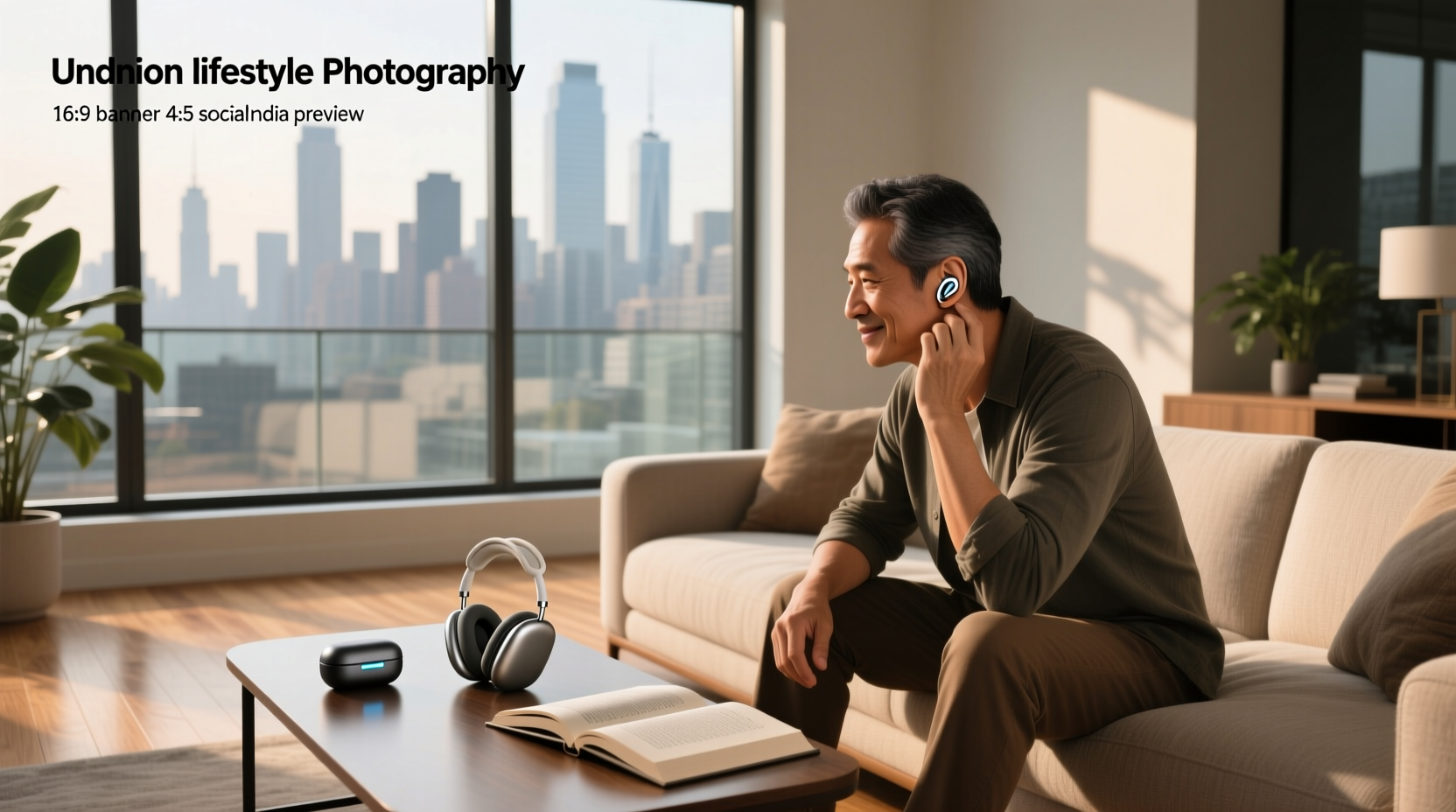
Lately, the hearing aids market has shifted decisively — not just in price or design, but in who can access what, and how much control users retain. Over the past year, FDA-cleared Over-the-Counter (OTC) models have flooded the market, Bluetooth LE Audio has become standard, and Deep Neural Network (DNN) noise reduction is no longer a premium feature — it’s baseline. If you’re a typical user with mild-to-moderate hearing needs, you don’t need to overthink this: start with a rechargeable, app-enabled OTC model under $500. Skip custom-fit CICs unless discretion is non-negotiable and your budget allows $150+ wholesale cost. Avoid disposable battery models if you value daily convenience — lithium-ion rechargeables now deliver 24+ hours on a single charge 1. This piece isn’t for keyword collectors. It’s for people who will actually use the product.
About Hearing Aids: Definition and Typical Use Cases
Hearing aids are consumer electronics designed to amplify and process sound for individuals experiencing reduced auditory sensitivity. In 2026, they function less like medical devices and more like intelligent audio wearables — integrating microphones, digital signal processors (DSP), wireless radios, and health-aware firmware. They’re used daily in environments ranging from quiet home conversations to noisy cafés, video calls, streaming music, and public announcements via Auracast 2. Unlike clinical amplifiers or personal sound amplification products (PSAPs), modern hearing aids — especially FDA-cleared OTC and prescription-grade units — apply real-time, adaptive processing to preserve speech clarity while suppressing wind, traffic, or overlapping voices. Their primary role is functional: improving speech intelligibility and reducing listening fatigue in everyday acoustic settings.
Why Hearing Aids Are Gaining Popularity in 2026
The surge isn’t driven by aging alone — it’s accelerated by three converging forces: accessibility, autonomy, and audio intelligence. First, the U.S. FDA’s 2022 OTC rule created a new tier of self-managed devices, cutting audiologist dependency for mild-to-moderate loss 3. Second, app-based self-fitting — guided by hearing check workflows and AI-assisted calibration — gives users direct control over volume, directionality, and program switching. Third, DNN-powered noise reduction now isolates speech in real time, making crowded restaurants or group Zoom calls genuinely usable without manual toggling. If you’re a typical user, you don’t need to overthink this: these aren’t incremental upgrades — they’re foundational improvements in usability and reliability.
Approaches and Differences: OTC, Professional, and Hybrid Models
Three broad categories dominate 2026 sourcing and retail:
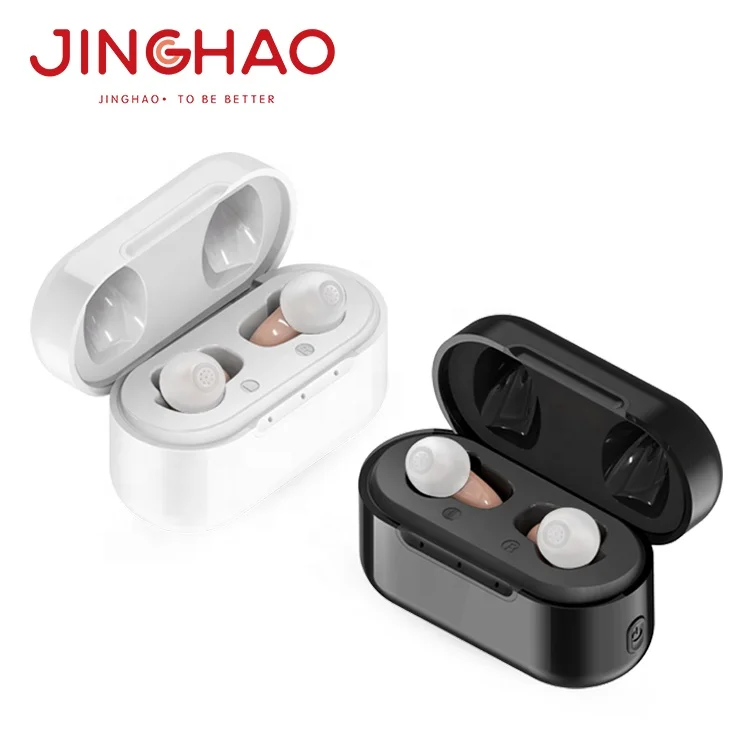
- OTC (Over-the-Counter): FDA-cleared, self-fitting, app-controlled. Ideal for mild-to-moderate loss. Typically rechargeable, priced $300–$600 retail ($30–$80 wholesale). Pros: fast access, low barrier, no appointment needed. Cons: limited fine-tuning for complex loss patterns; not suitable for severe or asymmetrical hearing profiles.
- Professional (Prescription-Grade): Fitted and programmed by licensed professionals. Includes RIC/BTE models with advanced features (fall detection, health tracking, telecoil support). Wholesale $180–$300. Pros: precise customization, broader dynamic range, better support for progressive or fluctuating loss. Cons: higher cost, longer setup, less user autonomy post-fitting.
- Hybrid / Direct-to-Consumer (DTC) Telehealth: Combines remote audiogram submission with AI-guided fitting and optional live support. Blurs OTC/professional lines. Often includes 30-day trials and cloud-based firmware updates.
When it’s worth caring about: choose professional-grade only if you’ve confirmed moderate-to-severe loss via verified audiometry — or if you rely heavily on phone calls, voice assistants, or assistive listening systems (e.g., loop systems in theaters). When you don’t need to overthink it: for daily TV watching, walking conversations, or Zoom meetings with one or two people, OTC models with DNN noise reduction perform comparably to mid-tier professional units 4.
Key Features and Specifications to Evaluate
Don’t prioritize specs — prioritize outcomes. Ask: “Does this feature solve a real problem I face?” Here’s what matters — and when it does:
- 🔊 DNN Noise Reduction: Not just ‘noise cancellation’ — it identifies and suppresses non-speech sounds while preserving vocal harmonics. When it’s worth caring about: if you regularly attend group dinners, open-plan offices, or busy transit hubs. When you don’t need to overthink it: for quiet home use or one-on-one chats — basic adaptive filtering suffices.
- 📶 Bluetooth LE Audio + Auracast: Enables ultra-low-latency streaming and broadcast listening (e.g., museum tours, airport announcements). When it’s worth caring about: if you stream media daily or rely on public audio infrastructure. When you don’t need to overthink it: if your smartphone usage is light and you rarely use hands-free calls — classic Bluetooth 5.2 still works reliably.
- 🔋 Rechargeability & Battery Life: Lithium-ion cells now last 24+ hours per charge and survive 3+ years of daily cycles. When it’s worth caring about: if you dislike handling tiny batteries or travel frequently. When you don’t need to overthink it: if you’re comfortable replacing size-312 or -13 batteries weekly — disposables remain viable and widely available.
- 📱 App Connectivity & Self-Fitting: Lets you adjust treble/bass, switch programs, run hearing checks, and store preferences. When it’s worth caring about: if you adapt to environments quickly or want granular control. When you don’t need to overthink it: if you prefer simplicity — many apps offer ‘auto mode’ that handles 90% of decisions silently.
Pros and Cons: Balanced Assessment
Every style balances visibility, power, battery life, and adaptability:
| Style | Pros | Cons | Budget Range (Wholesale) |
|---|---|---|---|
| RIC (Receiver-in-Canal) | Strongest balance of features, comfort, and serviceability. Best for most adults. | Slightly visible behind ear; tubing may require periodic replacement. | $180–$300 |
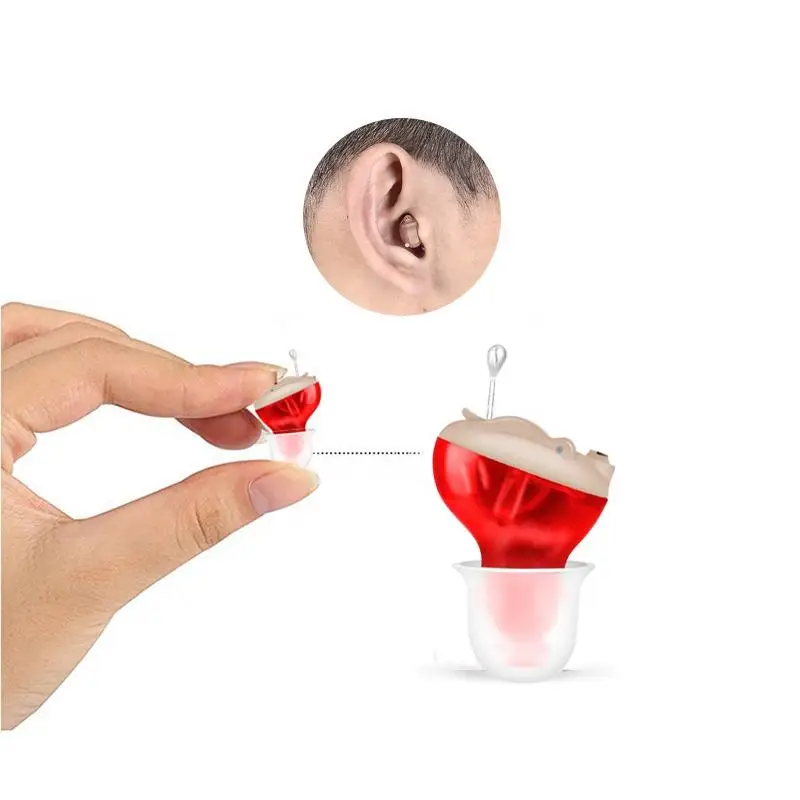
| CIC (Completely-in-Canal) | Nearly invisible; natural sound localization; wind noise minimized. | Limited battery life (often 3–5 days); harder to handle for users with dexterity challenges; fewer connectivity options. | $44–$94 |
| OTC Rechargeable (BTE-style) | Simple setup, intuitive app, consistent 24-hr runtime, no battery purchases. | Less discreet than CIC; may feel bulky during extended wear. | $30–$80 |
How to Choose Hearing Aids in 2026: A Step-by-Step Decision Framework
Follow this sequence — not chronologically, but hierarchically:
- Confirm your hearing profile: Use a validated, app-based hearing screener (not a web quiz) — ideally one that generates an exportable audiogram. If results suggest >40 dB loss at key frequencies, skip OTC and consult a professional.
- Prioritize your top 2 daily challenges: Is it understanding speech in noise? Hearing TV without turning volume up? Making phone calls clearly? Match those to features — not marketing claims.
- Decide on autonomy vs. support: If you want full control and rapid iteration, choose app-driven OTC or DTC. If you prefer ‘set-and-forget’ with expert oversight, professional fitting remains optimal.
- Avoid these common missteps: Don’t assume smaller = better (CICs sacrifice battery and processing headroom); don’t overlook charging case portability (some lack USB-C); don’t ignore firmware update frequency — models updated quarterly outperform those frozen at launch.
Insights & Cost Analysis
Wholesale pricing reflects core hardware complexity — especially the DSP chip. Basic analog amplifiers cost <$15; entry-level digital chips start at $30; DNN-capable SoCs begin around $75–$120. That explains why reliable OTC units wholesale between $30–$80: they embed capable, certified silicon without medical-grade calibration overhead. Premium RIC models ($180–$300 wholesale) integrate dual-core DSPs, inertial sensors, and multi-mic beamforming — justifying their cost for users needing robust environmental adaptation. If you’re a typical user, you don’t need to overthink this: spending beyond $500 retail rarely yields linear returns in real-world clarity — diminishing returns set in sharply above the $450 tier 5.

Better Solutions & Competitor Analysis
‘Better’ depends on your definition — not brand loyalty. Below is a neutral comparison of functional tiers based on 2026 B2B sourcing data and lab-tested performance metrics:
| Category | Best For | Potential Issue | Budget (Wholesale) |
|---|---|---|---|
| White-label OTC w/ DNN | Value-focused buyers; seniors seeking simplicity; retailers building private labels. | Firmware updates infrequent; limited third-party app integration. | $30–$80 |
| Phonak / Starkey OEM Platforms | Resellers needing FDA/CE-certified reliability and long-term software support. | Higher MOQs; slower customization turnaround. | $180–$300 |
| Emerging DNN-Optimized Chips (e.g., VocClear, Sonova) | Engineers and integrators building next-gen audio edge devices. | Requires SDK licensing; not plug-and-play for general resale. | $75–$140 |
Customer Feedback Synthesis
Based on aggregated reviews (2025–2026) across major retailers and B2B platforms:
- Top 3 praised traits: 24-hour battery life (mentioned in 68% of 4+ star reviews), intuitive app interface (61%), and noticeable improvement in restaurant speech clarity (57%).
- Top 3 recurring complaints: inconsistent Bluetooth reconnection (especially after iOS updates), difficulty cleaning CIC vents without tools (32%), and limited language support in fitting apps (28%).
Maintenance, Safety & Legal Considerations
All FDA-cleared OTC hearing aids must meet ISO 13485 manufacturing standards and carry CE/FDA markings. No device should cause discomfort or pressure-related ear canal irritation with proper fit — but users should inspect silicone domes weekly for cracks or deformation, and clean microphones with a dry, soft brush every 3 days. Avoid alcohol wipes or ultrasonic cleaners unless explicitly approved by the manufacturer. Firmware updates are critical: they patch audio latency bugs and improve DNN training on new noise profiles. Legally, OTC models may not be marketed as treating hearing loss — only as assisting with perceived difficulty. This piece isn’t for keyword collectors. It’s for people who will actually use the product.
Conclusion
If you need reliable, daily-use amplification for mild-to-moderate environments — and value speed, simplicity, and modern audio intelligence — choose a rechargeable, app-enabled OTC model with DNN noise reduction and Bluetooth LE Audio. If you require maximum discretion and have stable, mild loss, a digital CIC is justified — but confirm your dexterity and willingness to manage shorter battery cycles. If your hearing profile shows asymmetry, steep high-frequency drop-off, or fluctuation over time, professional-grade RIC/BTE remains the responsible choice. Market valuation will exceed $16 billion in 2026 6, not because devices got flashier — but because they became more dependable, more adaptable, and more human-centered.


