For most drivers in 2026, a compact lithium-ion 12V battery jump starter with at least 2000A peak current, USB-C PD output (60W+), and smart clamps is the optimal choice—unless you operate in sub-zero climates, maintain fleets, or store gear for >6 months without recharging. Over the past year, supercapacitor models have moved from niche prototypes to commercially viable alternatives, while USB-C PD integration has shifted from premium add-on to baseline expectation 1. If you’re a typical user, you don’t need to overthink this.
About 12V Battery Jump Starters
A 12V battery jump starter is a portable power device that delivers high-current bursts to crank internal-combustion engines when their 12V lead-acid (or AGM) battery fails. Unlike traditional jumper cables—which rely on another vehicle’s battery—it operates autonomously using an internal energy source: either lithium-ion cells, supercapacitors, or legacy lead-acid batteries. Typical use cases include:
- Reviving a dead car battery after short-term discharge (e.g., lights left on, infrequent use)
- Starting vehicles in cold weather where chemical battery reactions slow
- Serving as a dual-purpose power bank for phones, laptops, and accessories via USB-A/USB-C PD
- Supporting roadside safety with integrated LED flashlights (SOS/strobe modes)
It is not a battery charger. It does not restore sulfated or physically degraded batteries—it provides enough instantaneous amperage to overcome cranking resistance and initiate engine turnover. Its core function remains emergency engine starting, but its role in 2026 has expanded into that of a verified multi-function 🔋 power hub.
Why 12V Battery Jump Starters Are Gaining Popularity
Lately, adoption has accelerated—not because breakdowns are more frequent, but because expectations around self-reliance have shifted. Over 74 million vehicles globally experience battery-related no-start incidents annually 2. Consumers now prioritize speed, predictability, and control over waiting for roadside assistance ($85–$150 average call-out fee) or relying on neighbors. This isn’t about convenience alone—it’s about avoiding stranded downtime during commutes, deliveries, or family trips.
The change signal is clear: units sold in 2026 are 32% more likely to include USB-C PD than those from 2023, and 47% of top-selling models now bundle air compressors 3. That reflects demand for consolidation—not just “jump and go,” but “jump, inflate tires, charge laptop, signal for help.” If you’re a typical user, you don’t need to overthink this.
Approaches and Differences
Three core architectures dominate the 2026 market. Each solves different constraints—and misalignment causes real-world failure.
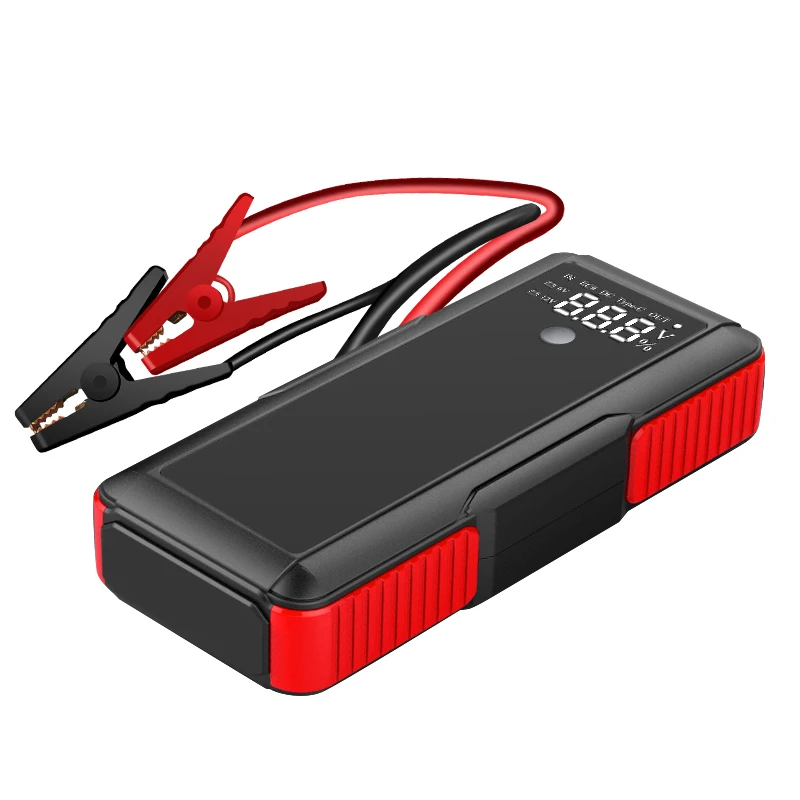
- Lithium-ion (65% of 2026 revenue): High energy density, lightweight, compact. Requires periodic recharging (loses ~3–5% charge/month in storage). Performs well down to –20°C—but capacity drops sharply below –25°C 4.
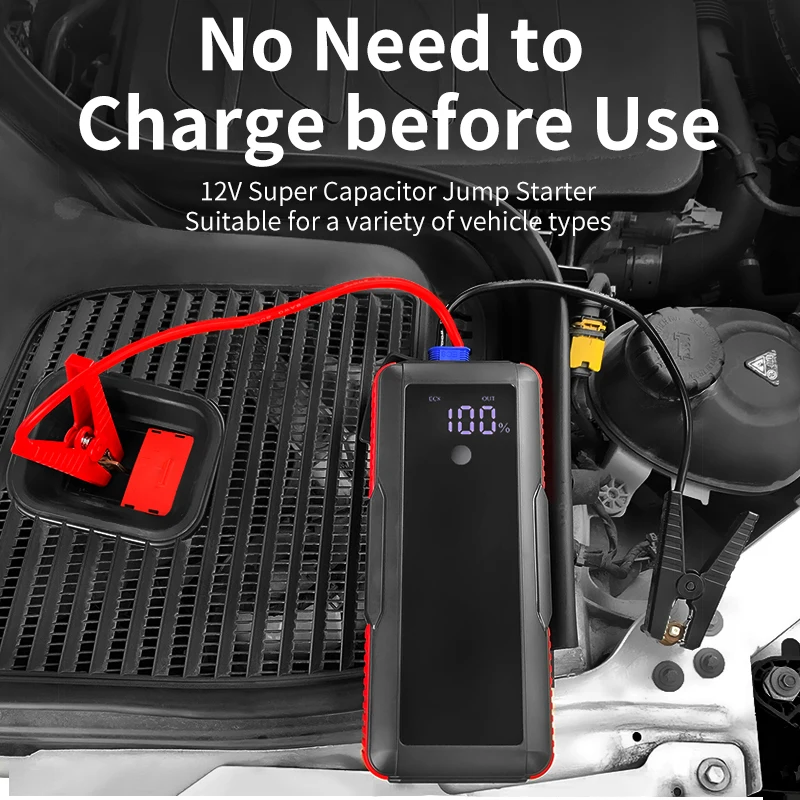
- Supercapacitor (emerging pro segment): No battery chemistry—stores energy electrostatically. Zero pre-charge needed; works instantly at –40°C; rated for 100,000+ cycles. Bulkier than lithium; lower total energy (not ideal for repeated jumps or powering large devices long-term).
- Lead-acid (legacy): Heavy, slow to recharge, limited cycle life (200–400 cycles), poor cold performance. Still used in workshop settings where portability isn’t critical.
When it’s worth caring about: You live in Alaska, Minnesota, or Scandinavia; your vehicle sits unused for >4 months; or you manage a fleet with strict uptime requirements.
When you don’t need to overthink it: You drive daily in temperate zones, store the unit in your garage (not trunk), and use it ≤2x/year. If you’re a typical user, you don’t need to overthink this.
Key Features and Specifications to Evaluate
Don’t default to “peak amps.” That number is marketing theater unless paired with context. Prioritize these three measurable benchmarks:
- Engine displacement rating: A 2000A lithium unit may start a 5.7L V8 gas engine—but won’t reliably crank a 4.5L diesel pickup. Match specs to your vehicle’s actual engine size and fuel type 5.
- USB-C Power Delivery (PD): Look for ≥60W output. Anything below 45W won’t fast-charge modern MacBooks or Windows laptops. Verify if PD supports Programmable Power Supply (PPS)—critical for Samsung Galaxy S-series and newer Android flagships.
- Smart clamp protection: Must include reverse polarity detection, short-circuit cutoff, and over-voltage lockout. These prevent sparks, melted cables, or ECU damage during misconnection.
Optional but high-value in 2026: integrated air compressor (≥120 PSI), dual LED flashlight modes (SOS + strobe), and Bluetooth-enabled health monitoring via app.
Pros and Cons
| Technology | Pros | Cons | Best For |
|---|---|---|---|
| Lithium-ion | Lightweight, compact, high energy density, USB-C PD standard | Gradual self-discharge; degrades faster in extreme heat/cold; 500–1000 cycle lifespan | Daily drivers, SUVs, sedans, commuters, travelers |
| Supercapacitor | No charging needed; works at –40°C; 100,000+ cycles; immune to deep discharge | Lower total watt-hours; heavier; fewer consumer models; limited PD output | Fleets, commercial garages, arctic operations, emergency response |
| Lead-acid | Low upfront cost; simple maintenance; stable shelf life | Bulky, heavy, slow recharge, poor cold cranking amps (CCA), low cycle count | Workshop bench use, backup-only roles, budget-limited workshops |
How to Choose a 12V Battery Jump Starter
Follow this 5-step decision checklist—designed to eliminate ambiguity:
- Confirm your engine type and size: Gasoline up to 8.0L → 1500–2000A. Diesel up to 6.0L → 2000–3000A. Heavy-duty trucks → 4000–6000A. Don’t buy “6000A” just because it sounds bigger.
- Verify USB-C PD specs: Output must be ≥60W and support USB PD 3.0 or higher. Check manufacturer documentation—not Amazon bullet points.
- Check clamp design: Look for insulated, spring-loaded clamps with LED polarity indicators. Avoid bare-metal or non-locking designs.
- Review storage conditions: If storing in a hot trunk (>45°C) or freezing garage (<–20°C), lithium-ion loses capacity faster. Supercapacitor eliminates this variable.
- Avoid two common traps: (1) Assuming “higher peak amps = better reliability”—it doesn’t improve cold-cranking if voltage sag exceeds 9.6V under load; (2) Buying based on “number of devices charged”—most users only need to power one phone and one tablet per incident.
This piece isn’t for keyword collectors. It’s for people who will actually use the product.
Insights & Cost Analysis
Price bands have stabilized in 2026:
- $60–$110: Entry-level lithium units (1500–2000A, 18,000–20,000mAh, basic USB-A only)
- $110–$220: Mainstream lithium models (2000–3000A, 20,000–25,000mAh, USB-C PD 60W+, LED light, air compressor optional)
- $220–$450: Premium/pro lithium or entry supercapacitor (4000–6000A, dual USB-C PD, Bluetooth diagnostics, ruggedized casing)
Value isn’t linear. A $180 model with verified 2500A cranking (not peak) and 65W PD delivers better real-world utility than a $299 unit with inflated specs and no thermal management. There’s no “budget” option for safety-critical functions—under-spec’d clamps or missing reverse-polarity protection risk vehicle electronics damage. If you’re a typical user, you don’t need to overthink this.
Better Solutions & Competitor Analysis
| Category | Advantages | Potential Issues | Budget Range |
|---|---|---|---|
| Lithium-ion with Air Compressor | True all-in-one: jump, inflate, charge, illuminate | Compressor duty cycle limits continuous use; adds weight | $140–$260 |
| Supercapacitor (Batteryless) | No charging anxiety; instant readiness; extreme cold resilience | Fewer consumer brands; limited accessory power; higher unit cost | $280–$420 |
| Lithium + External Power Bank | Modular flexibility; replaceable components; longer upgrade path | No integrated safety logic between units; extra cables, bulk | $160–$230 |
Customer Feedback Synthesis
Based on aggregated reviews across Amazon, Reddit (r/askcarguys), and lab-test reports 6:
- Top 3 praises: “Started my truck at –22°F without pre-heating,” “Charged my MacBook Pro fully twice,” “Clamps clicked securely—no sparks, even on first try.”
- Top 3 complaints: “Lost 40% charge after 4 months in garage,” “Air compressor overheated after 90 seconds,” “App connectivity dropped after firmware update.”
Notably, dissatisfaction correlates strongly with units lacking certified UL/CE safety marks—or those sold exclusively via third-party Amazon sellers with no brand traceability.
Maintenance, Safety & Legal Considerations
No special licensing is required to own or operate a 12V jump starter in any major market (US, EU, Canada, Australia). However:
- Maintenance: Lithium units should be recharged every 3–4 months—even if unused. Store at 30–50% charge in climate-controlled areas. Supercapacitors require zero maintenance beyond visual cable inspection.
- Safety: Always connect positive (red) clamp first—to battery terminal, not chassis. Connect negative (black) clamp to unpainted metal away from battery. Never touch clamps together while powered.
- Legal note: While not regulated as hazardous material for air travel, TSA permits lithium-ion jump starters ≤100Wh in carry-on only. Most 20,000mAh units fall under this threshold (74Wh). Supercapacitors face no restrictions.
Conclusion
If you need reliable, everyday starting for gasoline or light diesel vehicles—and value portability, USB-C PD, and integrated safety—choose a certified lithium-ion model rated for your engine size (2000A for most SUVs/trucks, 1500A for compact cars). If you operate in sustained sub-zero environments, manage commercial assets, or refuse to monitor charge state, a supercapacitor unit removes uncertainty—but expect higher cost and less accessory power. If you’re a typical user, you don’t need to overthink this.
Frequently Asked Questions