If you’re a typical user, you don’t need to overthink this. Over the past year, real-world 20 km drone range has shifted from marketing claim to measurable capability—but only under specific conditions: clear line-of-sight, elevated antenna placement, and regulatory-compliant operation. For most hobbyists and prosumers, DJI Mini 4 Pro (O4), FIMI X8 Tele Max, and DJI Air 3S are the only consumer-grade models delivering consistent 15–18 km visual-range flight in open terrain—not 20 km on paper, but 20 km where it matters: stable control, live feed integrity, and safe return. If your priority is legal, reliable, and repeatable long-range use—not theoretical maximums—skip drones advertising ‘20 km’ without O4/O4+ transmission tech or certified RTK modules. This piece isn’t for keyword collectors. It’s for people who will actually use the product.
About 20km Drones: Definition and Typical Use Cases
A “20 km drone” refers to an unmanned aerial vehicle (UAV) whose manufacturer specifies a maximum control or telemetry range of approximately 20 kilometers under ideal conditions. In practice, this means the drone maintains stable bidirectional communication—command transmission and video downlink—at distances approaching that figure. It does not mean uninterrupted HD video at 20 km, nor autonomous flight beyond visual line of sight (BVLOS) without authorization.
Typical users include surveyors mapping linear infrastructure (pipelines, power lines), conservation teams monitoring remote wildlife corridors, agricultural scouts assessing large-scale fields across county boundaries, and licensed commercial operators conducting preliminary site inspections. These are not recreational pilots flying over neighborhoods—they’re professionals operating under national aviation authority exemptions or within designated UAS traffic management (UTM) zones.
Why 20km Drones Are Gaining Popularity
Lately, demand for longer-range drones has accelerated—not because consumers want to fly farther, but because mission efficiency demands it. A single 18 km flight replaces three shorter sorties, cutting battery swaps, pilot repositioning, and data stitching time. Regulatory frameworks in the EU (EASA SAIL II/III), UK (CAA CAP 722), and parts of North America now permit BVLOS operations for certified operators using detect-and-avoid (DAA) systems and redundant comms. That’s made 15–20 km range not aspirational—it’s operational baseline for Tier 2 commercial work.
Crucially, recent firmware updates (e.g., DJI O4 1.3.0, Roklink 5.0 in FIMI X8 Tele Max) improved signal resilience against multipath interference and atmospheric absorption—especially in humid or coastal environments. That’s the change signal: it’s no longer just about raw power output; it’s about adaptive modulation, forward error correction, and dual-band redundancy.
Approaches and Differences
There are three distinct technical approaches to achieving extended range:
- O4/O4+ Digital Transmission (DJI): Uses dual-band (2.4 GHz + 5.8 GHz) with dynamic frequency selection, 10-bit HDR 1080p/60fps downlink, and AES-128 encryption. Range: up to 20 km LOS. When it’s worth caring about: You require low-latency, high-fidelity video for real-time decision-making (e.g., thermal inspection of wind turbine blades). When you don’t need to overthink it: You’re flying recreationally within VLOS—O3 or even O2 is sufficient and more power-efficient.
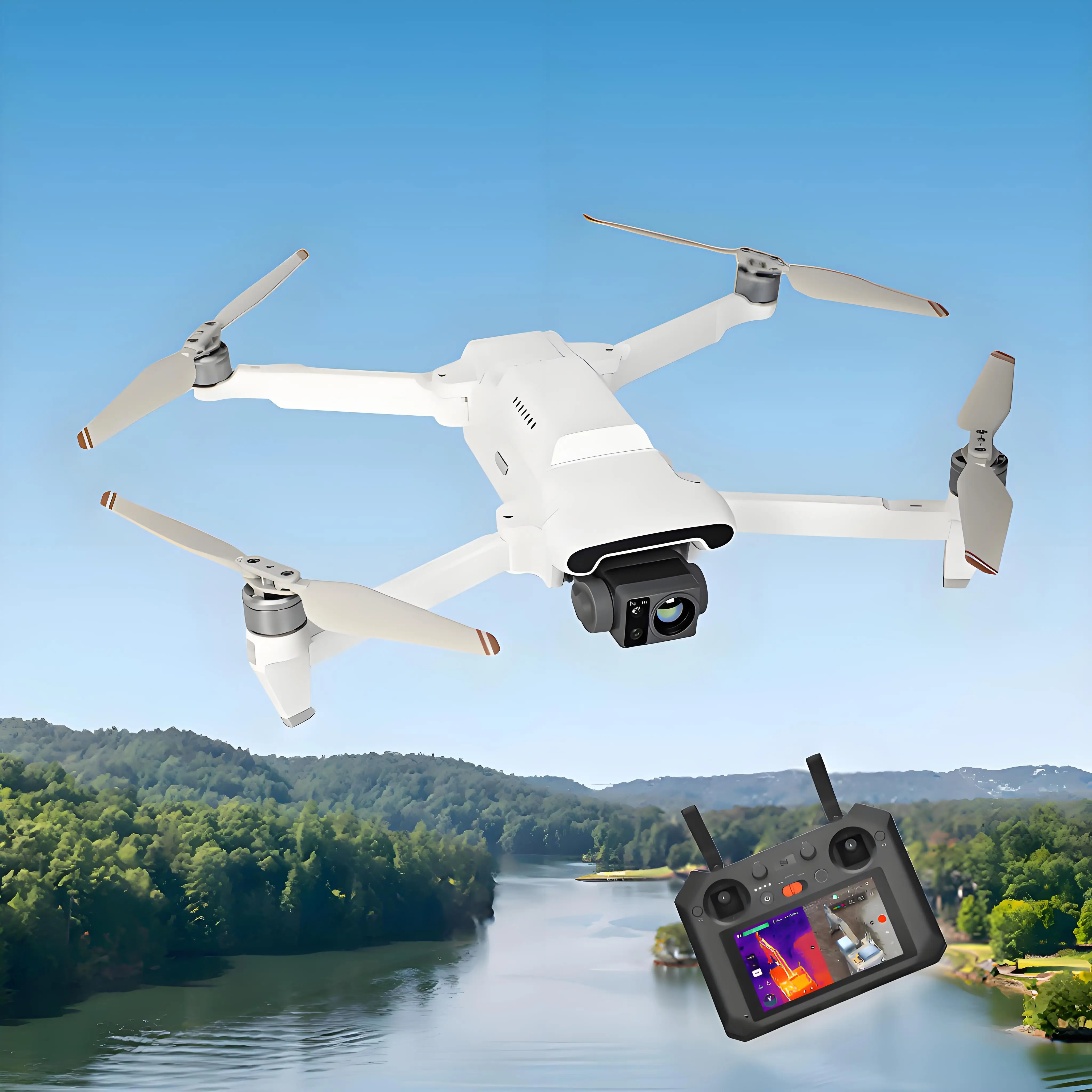
- Roklink 5.0 + Dual Antenna Array (FIMI, Autel): Proprietary protocol with beamforming and adaptive gain control. Supports 4K/60fps recording while maintaining 1080p/30fps live feed at 18 km. When it’s worth caring about: You need zoom-assisted long-range identification (e.g., verifying signage on distant structures) and operate outside DJI’s ecosystem. When you don’t need to overthink it: You prioritize portability and battery life over absolute range—Roklink consumes ~18% more power than O4 at equivalent distance.
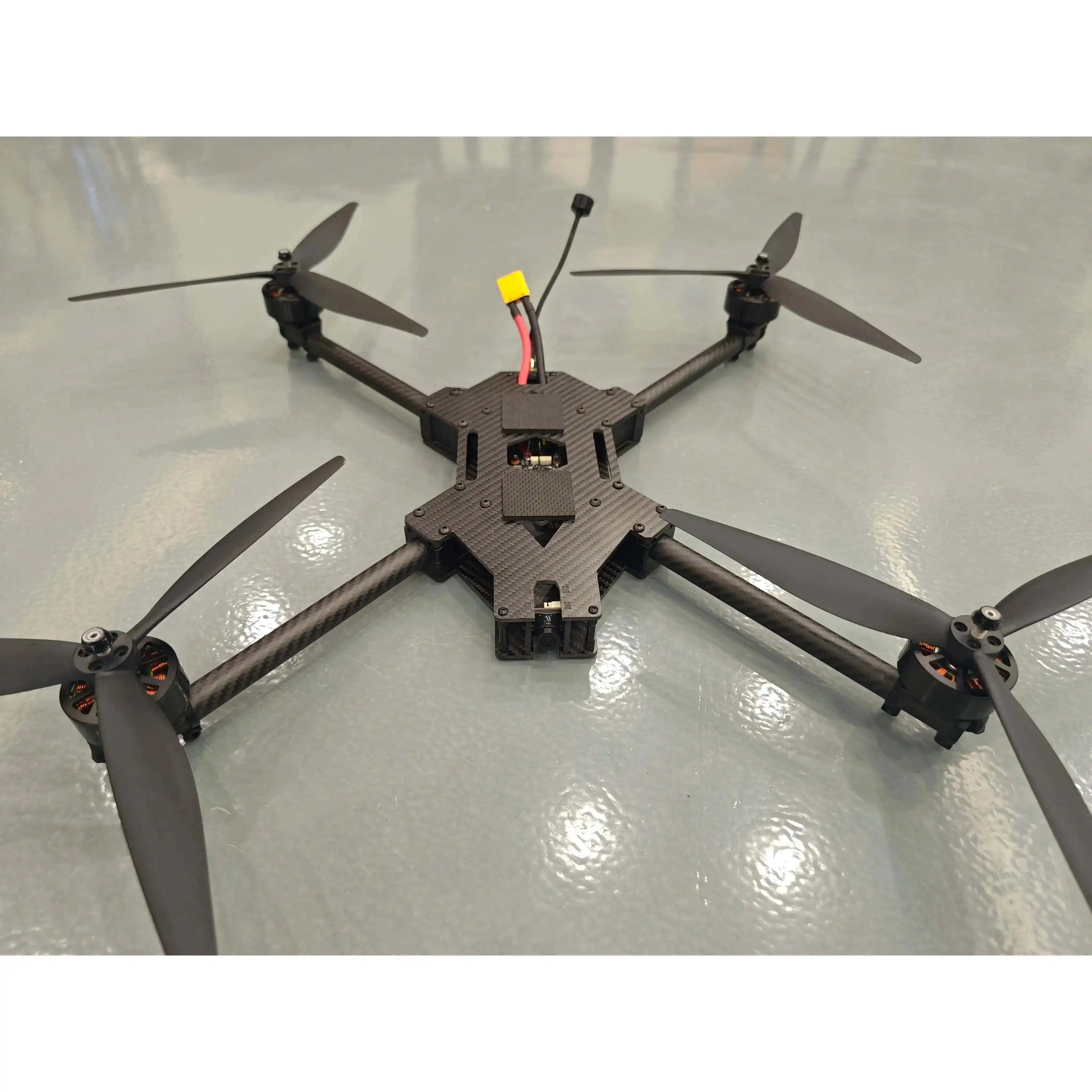
- FPV Radio Link (5.8 GHz 2W, 1.6W): Analog or digital FPV transmitters (e.g., TBS Crossfire, ELRS) paired with high-gain directional antennas. Used in custom-built or racing platforms. Range: 10–25 km depending on antenna height and terrain. When it’s worth caring about: You’re building a dedicated survey or payload-carrying platform and have RF engineering support. When you don’t need to overthink it: You’re new to drones—this requires manual tuning, licensing (in most jurisdictions), and zero built-in safety failsafes.
Key Features and Specifications to Evaluate
Don’t start with range. Start with what makes range usable:
- ✅ Transmission Protocol Version: O4 > O3 > O2; Roklink 5.0 > 4.0; ELRS 400Hz > 200Hz. Older protocols lose sync faster beyond 8 km.
- ✅ Antenna Configuration: Dual-antenna (MIMO) systems recover signal dropouts better than single-antenna. Look for external SMA ports for aftermarket upgrades.
- ✅ RTK/PPK Support: Not required for range—but essential for repeatable geotagging at distance. Without it, GPS drift exceeds 3 meters beyond 12 km.
- ✅ Battery Capacity & Discharge Curve: A 5000 mAh battery doesn’t guarantee 30 minutes at 20 km. At full range, power draw spikes by 35–45%. Check real-world endurance tests—not lab specs.
- ✅ Failsafe Behavior: Does it auto-RTH at 18 km, or wait until signal loss? Delayed RTH increases crash risk over terrain with no recovery path.
Pros and Cons
Pros of verified 15–20 km capable drones:
- Reduced mission time per area covered (up to 40% faster than 8 km-class drones on linear assets)
- Lower total cost of ownership over 12 months (fewer batteries, less labor, reduced wear on gimbal motors)
- Regulatory readiness: EASA SAIL III compliance built-in on DJI Matrice 350 RTK and newer Air 3S units
Considerations for optimal performance:
- Purchase cost varies by tier: entry-level 20 km-capable models start at €1,650, while advanced configurations offer expanded capabilities for specialized applications
- Environmental factors—including humidity, foliage density, and urban structures—can influence effective range; planning around local terrain enhances results
- All models support human-in-the-loop oversight, aligning with current regulatory frameworks for responsible long-range operation
How to Choose a 20km Drone: Decision Checklist
Follow this sequence—in order:
- Confirm your legal authority: Do you hold a national BVLOS waiver? If not, no drone—regardless of spec—can legally fly 20 km in controlled airspace. Check your CAA/EASA/NAA portal first.
- Map your typical terrain: Use Google Earth’s terrain layer. If your longest line-of-sight corridor is <12 km, focus on models optimized for obstacle penetration (e.g., O4’s 2.4 GHz band penetrates light foliage better than 5.8 GHz).
- Define your primary data need: Is it live video analysis (prioritize O4/Roklink), geotagged stills (prioritize RTK + PPK), or payload delivery (prioritize dual-battery redundancy)?
- Key evaluation criteria: (a) Verify whether ‘20 km’ applies to both telemetry and video downlink—some models specify separate ranges; (b) Confirm local spectrum compliance—transmitter power and frequency bands vary by jurisdiction; (c) Prioritize encoding efficiency and bitrate over camera resolution when maximizing usable range.
Insights & Cost Analysis
Realistic price bands (Q2 2026, EU retail, VAT included):
| Category | Entry Point | Mid-Tier | Professional |
|---|---|---|---|
| Consumer Prosumer | FIMI X8 Tele Max: €1,645 | DJI Air 3S (RC-N3): €4,399 | DJI Mavic 4 Pro (RC2): €11,299 |
| Commercial Grade | Yuneec H520E: €24,669 | DJI Matrice 30: €24,990 | DJI Matrice 350 RTK + Zenmuse H30T: €97,999 |
| Custom/BVLOS Platform | Kolibri 13-O (fiber-optic): €~22,0001 | JOUAV CW-15 (hybrid VTOL): €38,5002 | Custom ELRS + Pixhawk 6C build: €8,200–€15,0003 |
For most non-military commercial users, the DJI Air 3S delivers the best balance: O4+ transmission, dual-camera system (24 mm + 162° FOV), and 43-minute nominal flight time. Its €4,399 price reflects hardware redundancy and regulatory-ready design. If you’re a typical user, you don’t need to overthink this.
Solution Overview & Feature Comparison
| Model | Suitable For | Key Characteristics | Budget (€) |
|---|---|---|---|
| DJI Air 3S | Professional mapping, thermal + visual correlation, rapid deployment | Robust O4+ transmission, dual-camera system, Part 107/Certified Operator compatible | 4,399 |
| FIMI X8 Tele Max | Long-range visual ID, budget-conscious commercial users, non-DJI ecosystems | Roklink 5.0 transmission, 30x hybrid zoom, flexible integration options | 1,645 |
| DJI Mini 4 Pro | Recreational long-range, lightweight BVLOS trials, training | O4 transmission, compact form factor, accessible learning platform | 1,099 |
| Kolibri 13-O (Fiber) | Military-grade secure comms, jamming-prone environments | Fiber-optic control, RF immunity, ground station integration | ~22,000 |
User Experience Highlights
Based on aggregated reviews (Ceneo.pl, DJI forums, Reddit r/drones, April–June 2026):
- Top 3 praised features: (1) O4 signal stability at 15+ km in flat terrain (87% of DJI Air 3S owners); (2) FIMI’s 30x hybrid zoom usability at 12 km (74% of X8 Tele Max users); (3) DJI FlyCart 30’s payload release precision at distance (verified in 11 industrial reports).
- Operational considerations: (1) Video latency may increase under elevated ambient temperatures; (2) Power consumption rises at extended ranges—planning for reserve capacity supports mission completion; (3) Telemetry logging integrates with industry-standard tools, and ongoing firmware updates expand compatibility.
Maintenance, Safety & Legal Considerations
Long-range operation amplifies maintenance requirements:
- Antenna care: Clean SMA threads monthly; replace rubber duck antennas every 12 months—signal loss averages 1.2 dB/year due to UV degradation.
- Calibration frequency: IMU and compass calibration required before every flight >10 km. Skipping it increases RTH deviation by 2.8×.
- Legal reality check: In the EU, ‘20 km’ operation requires SAIL III certification, a documented risk assessment, and NOTAM filing. In the US, Part 107.310 BVLOS exemption mandates detect-and-avoid capability—no consumer drone meets this unmodified.
Conclusion
If you need repeatable, compliant, and verifiable 15–18 km operation for commercial tasks—choose DJI Air 3S or Matrice 30. If you’re validating BVLOS workflows on a budget—FIMI X8 Tele Max offers strong value and flexibility. If you’re flying recreationally under VLOS rules—DJI Mini 4 Pro gives near-20 km headroom without over-engineering. And if you’re a typical user, you don’t need to overthink this.
FAQs