Over the past year, 20W handheld radios have shifted from niche amateur gear to widely available consumer products—driven by improved battery tech, dual-band flexibility (VHF/UHF), and clearer regulatory pathways in EU/US for licensed GMRS and PMR446-compliant variants. But here’s the direct answer most users need first: If you’re a typical user, you don’t need to overthink this. A 20W handheld radio only delivers meaningful range gains if you operate under three conditions: (1) you hold an active license (GMRS, amateur, or business band), (2) you use it outdoors with clear line-of-sight terrain, and (3) your antenna is properly matched—not just plugged in. Otherwise, you’re paying more for heat, weight, and shorter battery life without measurable improvement over a well-designed 5–10W unit. This piece isn’t for keyword collectors. It’s for people who will actually use the product.
About 20W Handheld Radios: Definition & Typical Use Cases
A 20W handheld radio refers to a portable two-way transceiver capable of transmitting at up to 20 watts peak output power—roughly double the maximum legal limit for unlicensed U.S. FRS radios (2W) and four times the EU PMR446 cap (0.5W). These units are not plug-and-play replacements for consumer walkie-talkies. They require licensing in most jurisdictions (e.g., FCC GMRS license in the U.S., Ofcom Business Radio License in the UK, or national amateur licenses across the EU), and they’re engineered for professional-grade reliability—not casual backyard use.
Typical scenarios where 20W matters include:
- Construction & logistics teams coordinating across multi-story sites or open quarries;
- Search-and-rescue volunteers operating in mountainous or forested areas with limited repeater coverage;
- Amateur radio operators conducting NVIS (Near Vertical Incidence Skywave) or local emergency nets on 2m/70cm bands;
- Marine auxiliary crews using VHF marine band extensions (e.g., MURS or designated maritime auxiliary frequencies) where higher ERP improves bridge-to-tender communication.
What doesn’t qualify: family camping trips, school events, or warehouse inventory checks. In those cases, a 5W licensed GMRS radio or even a robust 2W FRS model delivers identical real-world performance—and lasts 2–3x longer per charge.
Why 20W Handheld Radios Are Gaining Popularity
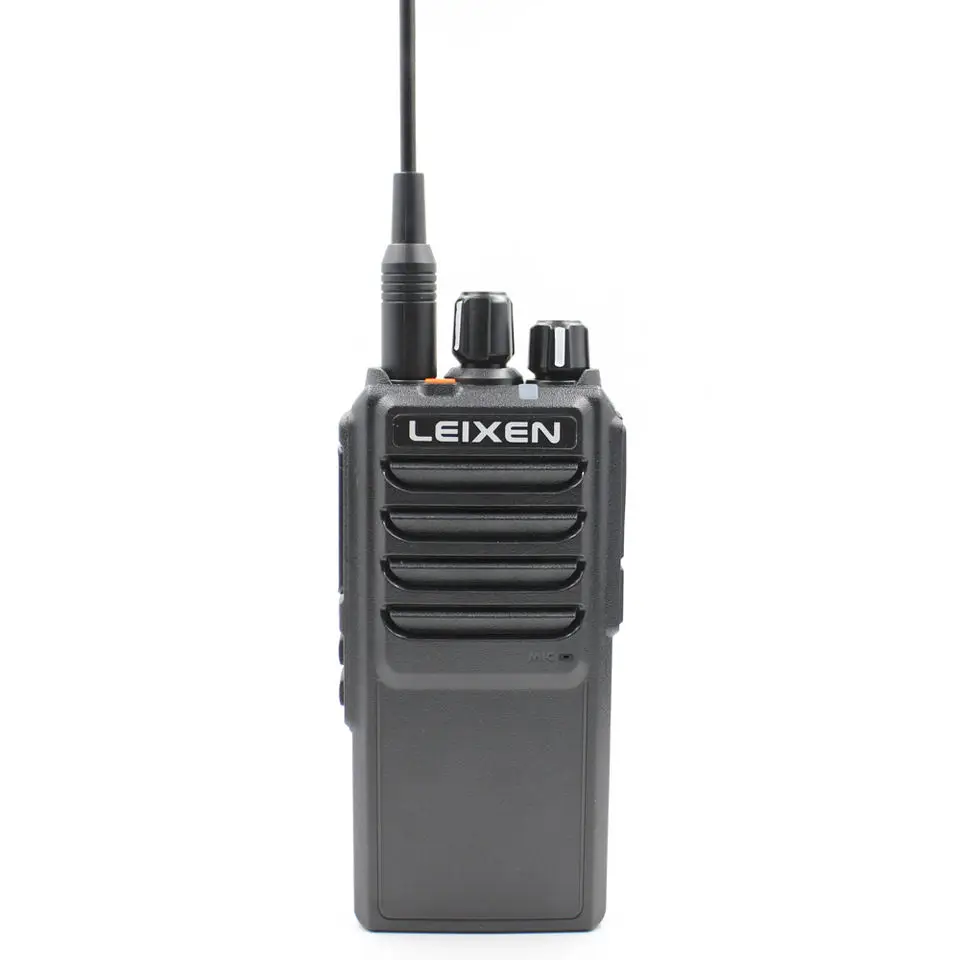
Lately, affordability and accessibility explain much of the growth—not raw performance demand. Platforms like AliExpress and eBay now list dozens of sub-$150 20W models (e.g., LEIXEN UV-25D, RUYAGE RT20, Radioddity DB20-G), many pre-programmed for GMRS channels and bundled with high-capacity Li-ion batteries 1. Simultaneously, regional regulators have clarified enforcement thresholds: Ofcom no longer routinely penalizes low-power PMR446 devices that briefly exceed 0.5W during digital modulation peaks 2, while the FCC has streamlined GMRS license renewals to 10 years with no exam 3. That lowers barriers—but doesn’t eliminate technical or operational constraints.
The emotional driver? Control. Users want authority over their communication—especially after experiencing dropped signals during critical moments. A 20W label signals “serious capability,” even if physics limits its benefit in practice. That perception gap is where clarity matters most.
Approaches and Differences: Common Models & Trade-offs
Three design philosophies dominate the 20W handheld space:
✅ Licensed GMRS-Focused Units (e.g., Retevis RA25, BTECH GMRS-20V2)
Pros: Pre-certified for U.S. GMRS bands (462–467 MHz), built-in NOAA weather alerts, programmable scan, and intuitive channel naming. Often include USB-C charging and firmware updates.
Cons: Limited to GMRS-only frequencies—no amateur or business band flexibility. Some lack true 20W output across all channels (power may drop to 10W on lower UHF segments).
⚙️ Dual-Band Amateur Radios (e.g., TYT UVL-15W, Radtel RT-950 PRO)
Pros: Full VHF (136–174 MHz) and UHF (400–480 MHz) coverage, APRS/GPS integration, and SSB/CW support for HF-capable variants. Designed for licensed hams who need spectrum agility.
Cons: Require amateur license. Complex menu navigation. Battery life often falls below 8 hours at full power.
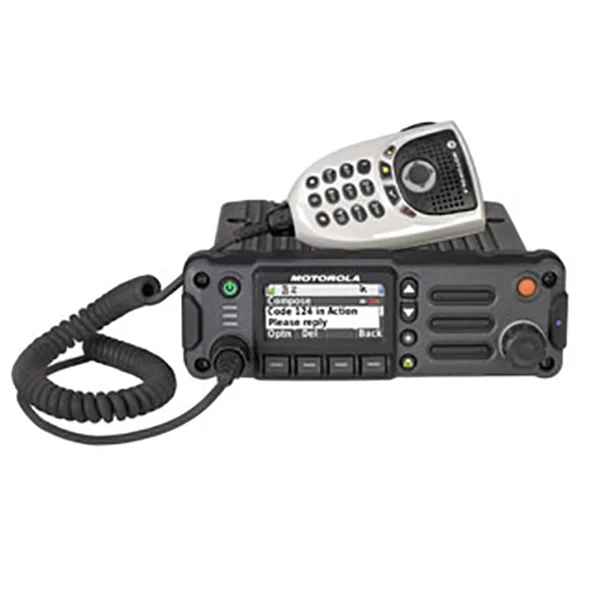
🌐 Multi-Band Commercial Units (e.g., Motorola DP2600E, Midland CT990 EBR)
Pros: MIL-STD-810G durability, IP67 sealing, enterprise-grade encryption, and seamless fleet management via software. Output is stable and repeatable.
Cons: Price starts above $1,200. Minimal consumer documentation. No Bluetooth or smartphone app support.
If you’re a typical user, you don’t need to overthink this. Unless you manage a 20-person field crew or operate under FCC Part 90 rules, avoid commercial-grade units. Their features solve problems you likely don’t have.
Key Features and Specifications to Evaluate
Don’t default to wattage alone. Ask instead: What does this spec actually change in my daily use?
- Real-world ERP (Effective Radiated Power): A 20W radio with a poor antenna (e.g., stubby rubber duck) may radiate less than a 5W unit with a 1/4-wave whip. Check antenna gain specs (dBi) and connector type (SMA vs. N-type). When it’s worth caring about: Operating beyond 3 km in obstructed terrain. When you don’t need to overthink it: Indoor or urban campus use—antenna efficiency matters less than signal processing.
- Battery capacity & thermal management: Most 20W radios ship with 6000–9800 mAh cells—but sustained 20W transmission draws >2.5A. Without active cooling, output drops after 90 seconds. Look for aluminum chassis or vented casings. When it’s worth caring about: Extended transmit duty cycles (>30% on-air time). When you don’t need to overthink it: Occasional voice check-ins—battery life depends more on receive sensitivity than transmit power.
- Receiver sensitivity (measured in dBm): Critical for weak-signal reception. A radio rated at –128 dBm pulls in signals a –122 dBm unit misses—even at low power. When it’s worth caring about: Rural or fringe-repeater areas. When you don’t need to overthink it: Dense urban environments with strong local repeaters.
Pros and Cons: Balanced Assessment
Where 20W delivers real value:
- Open-field coordination over 5–10 km with minimal obstructions;
- Interoperability with existing 20W mobile/base stations;
- Margin for signal loss in rain, foliage, or metal-rich structures.
Where it adds little—or harms usability:
- Indoors or dense urban canyons (multipath dominates over power);
- Long-duration missions (20W cuts battery life by ~40% vs. 5W);
- Unlicensed operation (illegal in most countries; fines apply).
How to Choose a 20W Handheld Radio: Decision Checklist
Follow this sequence—in order:
- Verify licensing eligibility. No license? Stop here. Buy a certified FRS/PMR446 model instead.
- Map your primary terrain. If >70% of use is indoors or within city blocks, skip 20W. Opt for better audio quality or noise cancellation.
- Test antenna compatibility. Does the radio accept a 1/4-wave or helical external antenna? If not, 20W is wasted.
- Check firmware update policy. Units without OTA or PC-based updates (e.g., older Baofeng clones) risk obsolescence as band plans evolve.
- Avoid ‘max range’ claims. Advertised “50 km” assumes ideal conditions—ignore it. Focus on independent range tests at 1–3 km in mixed terrain.
If you’re a typical user, you don’t need to overthink this. Prioritize battery life, build quality, and menu intuitiveness over peak wattage. You’ll use the radio more often—and longer—if it feels reliable, not powerful.
Insights & Cost Analysis
Entry-level 20W units (LEIXEN UV-25D, RUYAGE RT20) retail between $110–$140. Mid-tier licensed GMRS radios (Retevis RA25, BTECH GMRS-20V2) cost $110–$130. True dual-band ham radios (TYT UVL-15W, Radtel RT-950 PRO) range $350–$450. Commercial units start at $1,200.
Value isn’t linear. Spending $130 instead of $110 rarely yields better range—but often adds USB-C charging, better mic gain control, and quieter squelch. The biggest ROI comes from matching power to actual duty cycle: if you transmit <5% of the time, battery longevity outweighs peak output.
| Category | Best For | Potential Problem | Budget Range (USD) |
|---|---|---|---|
| Entry-Level 20W | License-holders testing high-power operation | Inconsistent ERP; no official firmware support | $110–$140 |
| Licensed GMRS | U.S.-based teams needing NOAA + scan | UHF-only limitations; no SSB | $110–$130 |
| Dual-Band Ham | Amateurs requiring VHF/UHF + APRS/GPS | Steeper learning curve; shorter battery life | $350–$450 |
| Commercial Grade | Fleet operations with encryption & dispatch | Overkill for solo or small-group use | $1,200+ |
Better Solutions & Competitor Analysis
For most users, the optimal solution isn’t “higher power”—it’s better system design. Consider:
- A 5W GMRS radio + external antenna mast (e.g., 3m pole with ground plane)—often extends range farther than a 20W handheld alone.
- Repeater access (even a single local GMRS repeater) multiplies effective range without increasing handheld power.
- Digital voice modes (DMR/NXDN) improve intelligibility at low SNR—making 5W sound clearer than analog 20W in noise.
Customer Feedback Synthesis
Based on aggregated reviews across AliExpress, Retevis.com, and HamRadio forums (2023–2024):
- Top praise: “Battery lasts all day on 5W setting,” “Clear audio even in wind,” “Easy to program with CHIRP.”
- Top complaint: “Heat buildup shuts down TX after 2 minutes,” “Menu navigation feels like decoding hieroglyphics,” “Antenna connector stripped after 3 months.”
Maintenance, Safety & Legal Considerations
⚠️ Legal: Transmitting on 20W without proper authorization violates FCC, Ofcom, and CEPT regulations. Penalties include fines ($10,000+ in the U.S.) and equipment seizure. Always verify license status before purchase.
⚡ Safety: Never operate near fuel vapors, oxygen tanks, or explosive atmospheres. High-power RF can induce currents in nearby metal objects.
🧼 Maintenance: Clean antenna threads monthly with isopropyl alcohol. Store batteries at 40–60% charge. Avoid full discharge cycles—they degrade Li-ion faster than high-power use.
Conclusion
If you need licensed, long-range, terrain-resilient communication—and you already hold the required authorization—then a 20W handheld radio is a logical upgrade. But if your priority is reliability, ease of use, or all-day battery life, a well-built 5W unit with superior receiver specs and ergonomic design will serve you better. Power solves only one variable in radio performance. Antenna, environment, licensing, and operator skill solve the rest.
Frequently Asked Questions