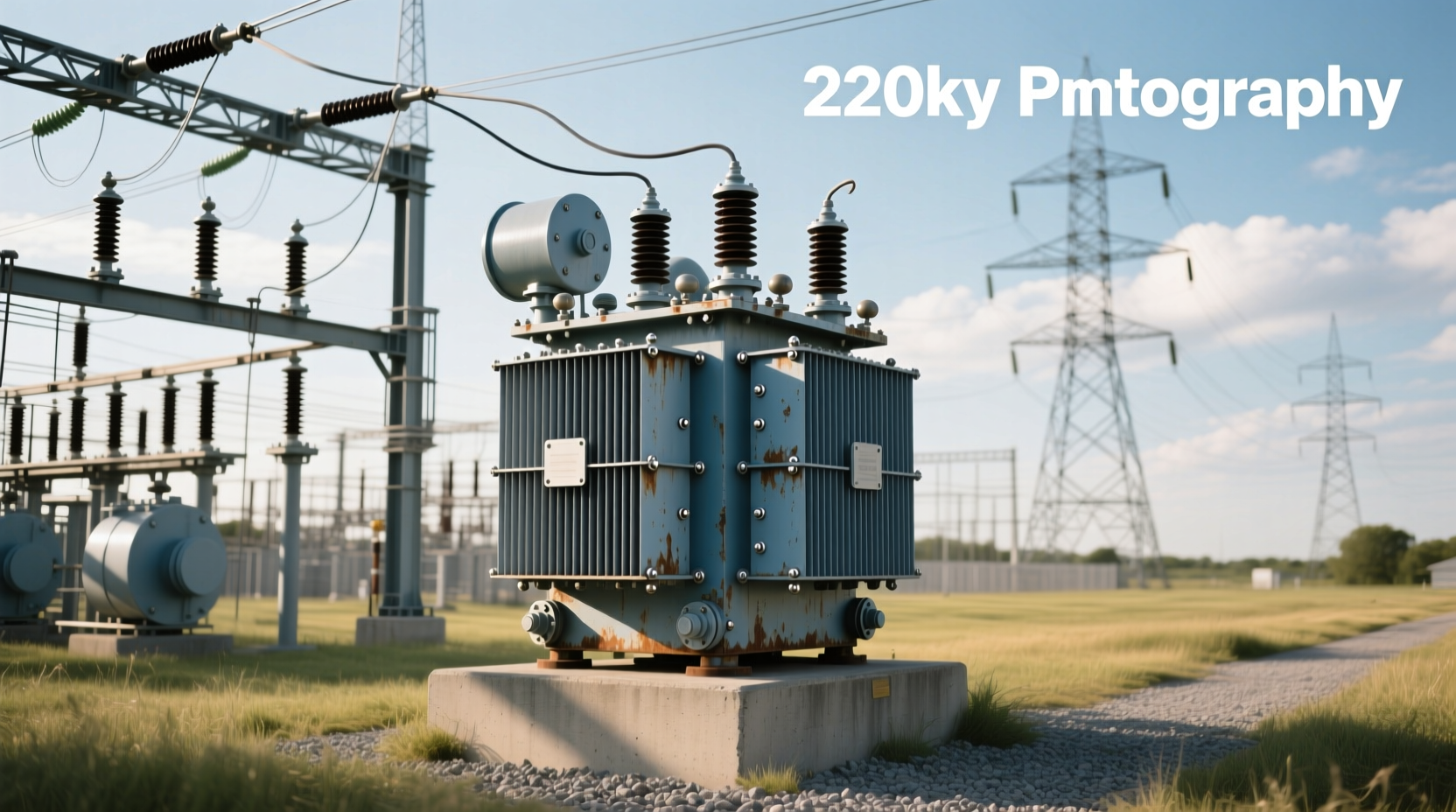
Over the past year, procurement teams and substation design engineers have faced tighter delivery windows, stricter grid compliance audits, and rising scrutiny on insulation integrity—especially for 220kV current transformers (CTs). If you’re specifying or sourcing a 220kV CT today, prioritize three things first: rated voltage (Um = 245 kV), insulation type (oil vs. polymer), and accuracy class for protection (5P20 or higher). For most utility-scale metering and relay protection applications, an outdoor oil-immersed live-tank CT with dual cores (0.2S + 5P20) meets IEC 61869-2 and IEEE C57.13 requirements—and avoids over-engineering. If you’re a typical user, you don’t need to overthink this. This piece isn’t for keyword collectors. It’s for people who will actually use the product.
About 220kV Current Transformers: Definition & Typical Use Cases
A 220kV current transformer is a high-voltage instrument transformer designed to step down primary current (typically 400–6000 A) to standardized secondary values (1 A or 5 A) for safe measurement, energy metering, and protective relay operation in transmission-level power systems. The “220kV” designation refers to the system’s nominal voltage—not the CT’s test voltage. Its maximum system voltage (Um) is standardized at 245 kV, and its power-frequency withstand voltage (Ud) is typically 460 kV (peak) for one minute 1. These devices operate exclusively in outdoor substations, switchyards, and GIS bays where continuous exposure to rain, UV, and temperature swings (−40°C to +50°C) is expected.
Primary applications include:
- ⚡ Relay protection: Feeding signals to differential, overcurrent, and distance relays;
- 📊 Revenue metering: High-accuracy core (0.2S or 0.5S class) feeding kWh meters;
- 🛡️ Monitoring & SCADA: Providing real-time current data to control centers.
They are not used in distribution networks, industrial plants below 33 kV, or residential settings. If you’re a typical user, you don’t need to overthink this.
Why 220kV CTs Are Gaining Popularity — Not in Consumer Markets, But Where It Matters
“Popularity” here doesn’t mean trending on social media—it means increased deployment volume driven by tangible infrastructure needs. Over the past year, national grid expansion plans across India, Southeast Asia, and parts of Africa have accelerated orders for 220kV-class equipment. New 220kV switchyards now routinely include dual-purpose CTs (metering + protection), and regulatory updates—like India’s Central Electricity Authority (CEA) guidelines on CT saturation margins—have tightened specification thresholds 2. Simultaneously, manufacturers have scaled production of polymer-housed alternatives, lowering lead times versus traditional oil-filled units. This shift reflects demand for faster commissioning—not consumer preference.

Approaches and Differences: Oil-Filled vs. Polymer-Housed vs. GIS-Integrated
Three main configurations dominate the 220kV CT market. Each serves distinct operational priorities:
✅ Oil-Immersed Live-Tank CTs
Pros: Proven thermal stability, high short-circuit withstand (up to 63 kA), excellent partial discharge performance under sustained load. Widely accepted in legacy utilities and critical protection schemes.
Cons: Requires periodic oil sampling and DGA (dissolved gas analysis); heavier (1,200–1,800 kg); longer lead time (16–22 weeks); fire risk classification applies in some jurisdictions.
When it’s worth caring about: When your site has existing oil-handling infrastructure, long service life (>30 years) is mandatory, or fault current exceeds 50 kA.
When you don’t need to overthink it: If your project timeline is tight, space is constrained, or environmental regulations restrict oil use onsite.
✅ Polymer-Housed (Dry-Type) CTs
Pros: Lighter weight (~600–900 kg), no oil handling or spill containment needed, faster installation, lower maintenance footprint, better seismic performance.
Cons: Slightly reduced thermal margin under continuous overload; fewer long-term field reliability datasets beyond 15 years; sensitivity to UV degradation if non-UV-stabilized housing is used.
When it’s worth caring about: For greenfield substations, rooftop GIS installations, or locations with strict environmental compliance (e.g., near waterways or protected zones).
When you don’t need to overthink it: If your application involves standard duty cycles and ambient temperatures remain within −25°C to +45°C.
✅ GIS-Integrated CTs (Embedded in Gas-Insulated Switchgear)
Pros: Compact footprint, immunity to pollution and weather, consistent dielectric performance inside SF6/N₂ mixtures.
Cons: Not field-serviceable; replacement requires GIS bay de-energization; limited ratio flexibility post-installation; higher unit cost.
When it’s worth caring about: In urban substations with severe space constraints or high-pollution environments (e.g., coastal or industrial zones).
When you don’t need to overthink it: For rural or greenfield outdoor yards where conventional CT mounting is straightforward.
Key Features and Specifications to Evaluate
Don’t default to datasheet page count. Focus on these five non-negotiable parameters—and know when each truly moves the needle:
- Rated voltage (Um): Must be ≥245 kV. Anything lower fails basic IEC 61869-2 compliance. When it’s worth caring about: Always. When you don’t need to overthink it: Never—this is binary.
- Accuracy class: Metering cores require 0.2S (for revenue-grade billing); protection cores need at least 5P20 (20× rated current, ≤5% composite error). When it’s worth caring about: If feeding tariff meters or Class X relays. When you don’t need to overthink it: For auxiliary monitoring only—0.5 or 10P30 suffices.
- Burden rating (VA): Match secondary burden (wiring + relay/meter impedance) to CT VA rating. Oversizing causes unnecessary cost; undersizing risks saturation. When it’s worth caring about: When cable runs exceed 15 m or relays draw >2 VA. When you don’t need to overthink it: For short, direct connections to modern digital relays (≤0.5 VA draw).
- Thermal short-circuit current (Ith): Typically 31.5 kA or 50 kA for 1 s. Verify against your network’s calculated asymmetrical fault current. When it’s worth caring about: Near generation sources or bus couplers. When you don’t need to overthink it: On radial feeders with low upstream fault contribution.
- Insulation coordination (LI/WV): Lightning impulse level (LI) ≥1050 kV peak; switching surge (WV) ≥460 kV. Required for 220kV systems per IEC 60071-1. When it’s worth caring about: Always—non-compliant units risk flashover during surges. When you don’t need to overthink it: None. This is mandatory.
Pros and Cons: Balanced Assessment
220kV CTs deliver precision and safety—but only when matched to context. They are neither “plug-and-play” nor “one-size-fits-all.”
Best suited for:
- Transmission substations with defined fault levels and stable loading profiles;
- Projects requiring third-party certification (KEMA, CESI, or CPRI) for grid interconnection;
- Applications where secondary signal fidelity directly impacts protection speed or billing accuracy.
Not suited for:
- Temporary or mobile substations (weight and mounting complexity hinder rapid relocation);
- Low-budget retrofits without updated relay compatibility checks;
- Situations where secondary wiring cannot be shielded or kept short—CTs amplify noise and ground loops.
How to Choose a 220kV Current Transformer: Decision Checklist
Follow this sequence before reviewing quotes or datasheets:
- Confirm system parameters: Nominal voltage (220 kV), Um (245 kV), max symmetrical fault current, and duration (e.g., 1 s or 3 s).
- Define functional purpose: Is this for revenue metering, backup protection, or both? That dictates core count and accuracy class.
- Assess environmental constraints: Ambient temperature range, seismic zone, pollution severity (IEC 60815), and oil-handling capability.
- Verify interface compatibility: Secondary output (1 A or 5 A), burden of connected devices, and physical mounting interface (flange type, center distance).
- Avoid these common missteps:
- Specifying 5 A secondaries for long cable runs (>10 m) without recalculating burden—causes ratio error;
- Assuming polymer CTs tolerate the same continuous overload as oil units—check manufacturer’s thermal curves;
- Overlooking creepage distance: minimum 6300 mm for 220kV outdoor units in heavy pollution (IEC 60815 Class III).
Insights & Cost Analysis
Unit pricing varies significantly by configuration and certification scope—not just brand. Based on recent tender data from government e-Marketplace (GEM) and TradeIndia listings (Q3 2024), landed costs (ex-works + logistics + customs) fall within these bands:
| Configuration | Typical Range (USD) | Lead Time | Notes |
|---|---|---|---|
| Oil-immersed, 2-core (0.2S + 5P20) | $18,500–$24,000 | 18–22 weeks | Includes oil testing, partial discharge, and routine tests |
| Polymer-housed, 2-core | $15,200–$19,800 | 12–16 weeks | Faster delivery; excludes oil handling but adds UV/weatherproofing validation |
| GIS-integrated (per phase) | $22,000–$28,500 | 20–26 weeks | Requires full GIS vendor coordination; no field adjustment possible |
Cost isn’t linear with performance. A $2,000 premium for 0.1S over 0.2S adds negligible value unless feeding statutory metering points. Likewise, paying extra for 63 kA Ith makes sense only if your fault study confirms >55 kA. If you’re a typical user, you don’t need to overthink this.
Better Solutions & Competitor Analysis
No single vendor dominates across all criteria. What matters is alignment with your technical gatekeepers—not marketing claims. Below is a neutral comparison of widely sourced configurations:
| Category | Suitable Advantage | Potential Problem | Budget Implication |
|---|---|---|---|
| Oil-immersed (Huayi / Sandian) | Proven field longevity; seamless integration with legacy relay panels | Longer lead time; oil management adds OPEX | Moderate–High |
| Polymer (Tianjin Carrel / Daelim) | Lower total installed cost; easier civil works | Limited track record above 20 years; UV aging requires spec review | Low–Moderate |
| GIS-integrated (Siemens / GE legacy designs) | Space-saving; minimal external exposure | Vendor lock-in; no field repair options | High |

Customer Feedback Synthesis
Based on aggregated procurement reviews (TradeIndia, GEM, and industry forums), users consistently praise:
- ✅ Timely documentation: Complete test reports (type test + routine), especially partial discharge and lightning impulse results;
- ✅ Mounting clarity: Precise flange drilling templates and torque specs—reducing on-site rework;
- ✅ Core labeling: Unambiguous marking of metering vs. protection windings (prevents relay misconnection).
Top complaints involve:
- ❌ Mismatched secondary terminal orientation (requiring field rewiring);
- ❌ Incomplete burden calculation sheets—forcing engineering teams to reverse-engineer VA ratings;
- ❌ Packaging damage to porcelain bushings during transit (oil units) or UV film peeling (polymer units shipped without protective wrap).
Maintenance, Safety & Legal Considerations
220kV CTs operate at lethal potentials. Safety isn’t optional—it’s procedural:
- Maintenance: Oil units require annual DGA and moisture testing; polymer units need visual inspection of housing cracks and hydrophobicity every 2 years 3.
- Safety: Always short-circuit secondary terminals before isolation. Never open-circuit a live CT—risk of fatal arc flash and winding insulation failure.
- Legal: Compliance with IEC 61869-2 (instrument transformers), IEC 60071 (insulation coordination), and local grid codes (e.g., CEA Regulations in India, NERSA in South Africa) is mandatory for grid connection approval.

Conclusion: Conditional Recommendations
If you need maximum field-proven reliability and multi-decade service life, choose an oil-immersed 220kV CT with dual cores (0.2S + 5P20), Um = 245 kV, and Ith ≥50 kA. If you need faster deployment, lower civil work complexity, and oil-free operation, select a certified polymer-housed unit meeting IEC 61869-2 Annex B for outdoor use. If you need minimal footprint and immunity to environmental stressors, integrate into GIS—but only if your entire switchgear stack is from a single qualified vendor. Everything else is optimization, not necessity.