If you’re a typical user choosing a 29.4V lithium battery charger for an e-bike, scooter, wheelchair, or robotic lawn mower: prioritize UL/CE certification first, then match amperage (5A–10A) to your battery’s capacity (e.g., 10Ah → 1A–2A; 30Ah → 5A–10A), and skip waterproofing unless used outdoors. If you’re a typical user, you don’t need to overthink this.
This isn’t for keyword collectors. It’s for people who will actually use the product.
About 29.4V Lithium Battery Chargers
A 29.4V lithium battery charger is a fixed-output DC power supply designed specifically for charging 7-series (7S) lithium-ion battery packs. These packs have a nominal voltage of ~24V–25.9V and a full charge voltage of exactly 29.4V (4.2V × 7 cells). Unlike generic “24V” chargers—which may output 27.6V or 28.8V—true 29.4V units deliver the precise top-off voltage required for safe, complete, and balanced charging of Li-ion chemistry 1. Using an under-voltage or over-voltage charger risks incomplete charging, accelerated cell degradation, or BMS-triggered shutdowns.
Typical applications include:
- 🛴 Micromobility: E-bikes, electric scooters, and hoverboards with 7S battery packs;
- 🤖 Robotics & automation: AGVs, pool cleaners, and robotic mowers requiring stable 24V system operation;
- ⚙️ Industrial tools: Portable welding equipment, cordless compressors, and mobile lighting systems.
Note: This guide excludes LiFePO₄ (which uses 28.0V–29.2V depending on cell count) and lead-acid (which requires different absorption/float profiles). Confusing these chemistries is one of the two most common ineffective decisions—and it’s avoidable by checking your battery label for “Li-ion,” “NMC,” or “LCO.”
Why 29.4V Lithium Battery Chargers Are Gaining Popularity
Lately, demand for 29.4V chargers has grown not because of novelty—but because of system-level convergence. As 24V lithium battery packs dominate micromobility and light industrial platforms 2, OEMs and end users now treat the charger as part of the power ecosystem—not just an accessory. Three concrete drivers explain the shift:
- GaN miniaturization: Gallium Nitride transistors enable 30% smaller footprints and 92–95% peak efficiency, reducing heat and enabling wall-mount or integrated designs 3. If you’re upgrading from a bulky 2020-era charger, size and weight matter more than specs alone.
- Safety harmonization: The global transition to IEC 62368-1 means UL, CE, and RCM certifications now share test criteria—so a single certified unit serves multiple markets. Older chargers labeled only “CE” without IEC 62368-1 are increasingly non-compliant in EU retail channels.
- Waterproof specialization: IP67-rated units (dust-tight + submersible up to 1m for 30 min) are no longer niche—they’re standard for pool robots, garden tools, and delivery scooters operating in rain or wash-down environments 4.
If you’re a typical user, you don’t need to overthink this. Certification and basic IP rating are binary checks—not optimization variables.
Approaches and Differences
There are three mainstream approaches to 29.4V lithium charging—each solving distinct problems. None is universally superior; each trades off cost, size, intelligence, and durability.
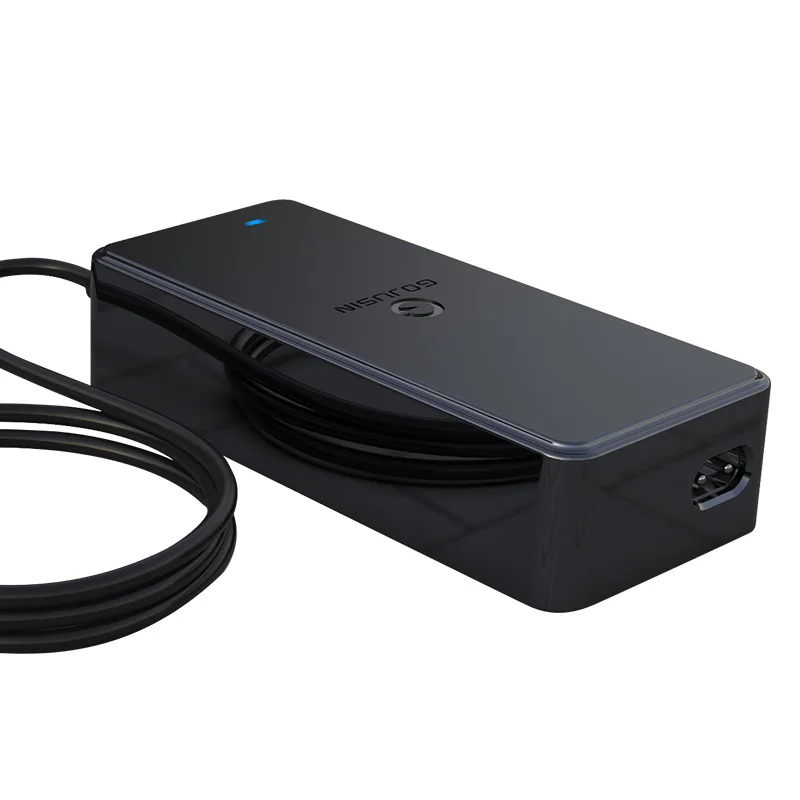
- Standard Switch-Mode (SMPS) Chargers: Most affordable ($8–$18), widely available in 1A–5A variants. Use silicon MOSFETs; larger, run warmer, and typically lack smart BMS communication. When it’s worth caring about: Budget builds or low-duty-cycle devices (e.g., backup mobility aids). When you don’t need to overthink it: If your battery is under 15Ah and used indoors, a UL-certified 3A SMPS unit suffices.
- GaN-Based Chargers: Higher initial cost ($22–$45), but 30–40% smaller and 5–8°C cooler at full load. Often support multi-stage CC/CV algorithms and lower no-load draw (<1.5W). When it’s worth caring about: Space-constrained installations (e.g., mounted inside scooter frames) or frequent daily charging. When you don’t need to overthink it: If your usage is occasional and ambient temperature stays below 30°C, GaN offers diminishing returns.
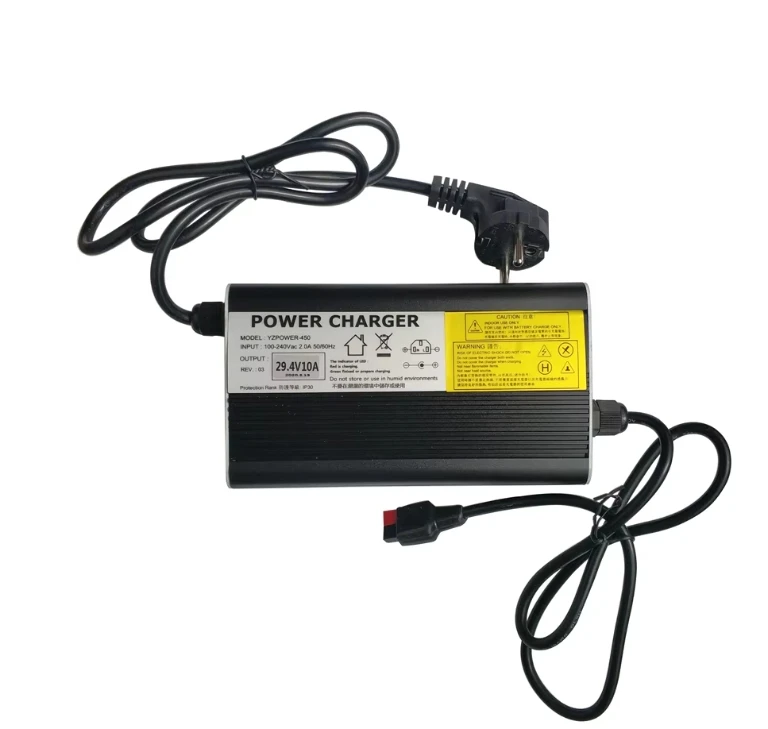
- IP67-Rated Smart Chargers: Built for harsh environments; include BMS handshake protocols (e.g., SMBus, CAN bus), thermal monitoring, and field-replaceable cables. Priced $40–$120+. When it’s worth caring about: Commercial fleets, marine robotics, or rental e-scooter operations. When you don’t need to overthink it: For personal e-bike use in temperate climates, IP65 is adequate—and IP67 adds cost without measurable longevity gains.
Key Features and Specifications to Evaluate
Don’t scan for “fast” or “smart.” Focus on four verifiable, outcome-linked metrics:
- Output Voltage Tolerance: Must be 29.4V ±0.1V. Deviations >±0.3V risk undercharging (reduced range) or overvoltage stress (cell swelling). Check datasheets—not marketing copy.
- Charging Current Range: Match to battery capacity. Rule of thumb: C/2 (half the Ah rating) is optimal for cycle life; C/1 is acceptable for rapid turnaround. A 20Ah pack charges best at 10A—not 15A.
- Certification Validity: Look for “UL 62368-1” or “IEC 62368-1” printed on the unit or label—not just “CE” or “RoHS.” UL 62368-1 certification includes fire, shock, and energy hazard testing 5.
- Connector Type & Polarity: XT60, Anderson SB50, and 5.5×2.1mm DC jacks dominate. Verify pinout—reverse polarity protection is mandatory, but not all units implement it robustly.
Pros and Cons
A 29.4V lithium battery charger delivers precision and safety—but only when aligned with real-world constraints.
- ✅ Pros: Enables full 7S Li-ion capacity utilization; reduces long-term BMS intervention; supports higher discharge rates post-charge; compatible with modern 24V system architectures.
- ❌ Cons: Not backward-compatible with legacy 24V lead-acid chargers; requires exact voltage matching (no “close enough”); higher upfront cost vs. generic 24V supplies.
Best suited for: Users replacing aging chargers, integrating new 7S battery packs, or managing multi-unit deployments where consistency matters.
Not suited for: Experimental prototyping with mixed chemistries, hobbyist projects using salvaged cells, or temporary setups where plug-and-play flexibility outweighs precision.
How to Choose a 29.4V Lithium Battery Charger
Follow this 5-step decision checklist—designed to eliminate guesswork and prevent costly missteps:
- Confirm battery chemistry and configuration: Check label: “7S Li-ion”, “NMC”, or “LCO”. Avoid if it says “LiFePO₄” or “3.2V/cell”.
- Verify certification: Require UL/IEC 62368-1 mark—not just CE or FCC. Cross-check against manufacturer’s website or UL Online Certifications Directory.
- Calculate required current: Divide battery Ah rating by 2 (e.g., 24Ah ÷ 2 = 12A max). Round down to nearest standard rating (e.g., choose 10A, not 12A).
- Select enclosure rating: Indoor use → IP20. Outdoor/garage use → IP54 minimum. Wet/dusty environments → IP67. Skip IP68 unless submersion >1m is routine.
- Avoid these traps: Proprietary connectors without adapter availability; chargers lacking reverse-polarity or short-circuit protection; units sold without published efficiency curves or thermal derating data.
Insights & Cost Analysis
Price has dropped steadily: average 29.4V 5A chargers fell from $28.50 (2023) to $21.30 (2025), while 10A GaN units dropped from $52 to $39.90 3. This reflects falling GaN transistor costs and scale-driven manufacturing efficiencies—not feature reduction.
Value tiers (2025 mid-year):
- Budget tier ($12–$18): UL-certified 3A–5A SMPS units. Ideal for low-use personal devices. Expect 87–89% efficiency.
- Balanced tier ($24–$36): GaN-based 5A–10A with IEC 62368-1, IP54, and CC/CV algorithm. Best for daily riders and small robotics.
- Professional tier ($45–$95): IP67, CAN/SMBus BMS sync, thermal foldback, and modular cabling. Justified for commercial fleets or mission-critical automation.
Better Solutions & Competitor Analysis
| Solution Type | Best For | Potential Issue | Budget Range (USD) |
|---|---|---|---|
| Shenzhen Hagors 10A GaN | EU/US e-bike OEMs needing fast, compact charging | Limited waterproofing (IP54); XT60-only output | $34–$39 |
| Foshan Liyun Yuxiang 12A IP67 | Pool robots, marine tools, outdoor AGVs | Heavier (780g); no USB monitoring port | $68–$79 |
| Zhichuanghui Medical-Grade 5A | Wheelchairs and mobility aids requiring low-noise operation | No GaN; slightly larger footprint | $29–$33 |
Customer Feedback Synthesis
Based on aggregated reviews across Alibaba, Made-in-China, and independent forums (2024–2025), users consistently praise:
- Reliability after 500+ cycles (especially UL-certified units);
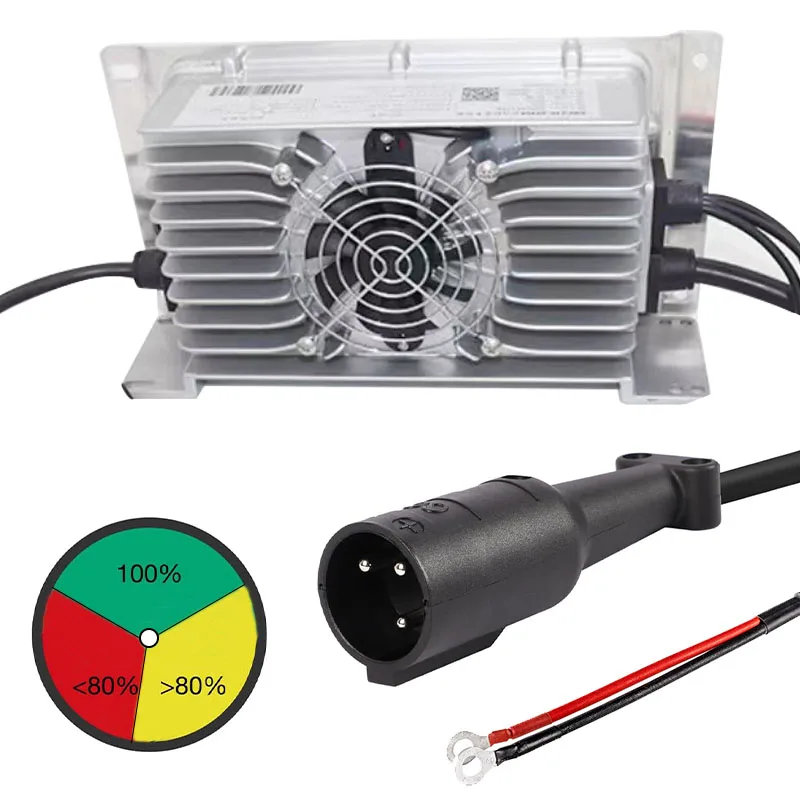
- Clear LED status feedback (red/green/yellow for fault/charging/ready);
- Secure locking connectors (XT60 and Anderson SB50) preventing accidental disconnect during vibration.
Top complaints involve:
- Missing or inconsistent documentation (e.g., no spec sheet, unclear pinouts);
- Non-standard barrel jack sizes causing fit issues with aftermarket mounts;
- “Quick charge” claims unsupported by actual current delivery above 35°C ambient.
Maintenance, Safety & Legal Considerations
These chargers require minimal maintenance—but neglecting basic practices invites failure:
- Never cover vents or operate in enclosed cabinets. Thermal throttling begins at ~60°C internal temp; sustained >75°C degrades electrolytic capacitors.
- Inspect cables quarterly: Look for cracked insulation near strain reliefs—especially on frequently coiled units.
- Legal note: In the EU, non-IEC 62368-1 units may not be placed on market after Dec 2025 6. In the US, UL 62368-1 is already mandatory for new listings.
Conclusion
If you need consistent, safe, and long-life charging for a 7S lithium-ion battery—whether in an e-bike, warehouse robot, or portable tool system—a purpose-built 29.4V charger is non-negotiable. But specification obsession rarely pays off. Prioritize certification first, current second, and environmental rating third. Skip GaN unless space or thermal limits constrain you. Skip IP67 unless water exposure is routine. And always verify connector compatibility before ordering.
For most users: a UL/IEC 62368-1 certified 5A GaN charger strikes the strongest balance of performance, safety, and future-proofing. If you’re a typical user, you don’t need to overthink this.


