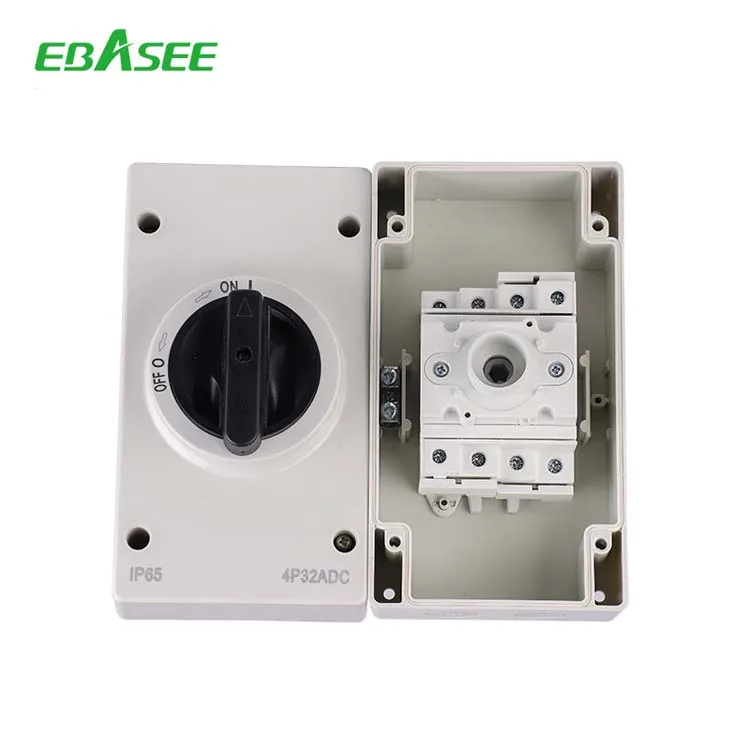
If you’re installing or replacing a 3-phase isolator switch rated at 45A — especially for commercial kitchen equipment, HVAC units, or workshop machinery — go with an IP65-rated, non-fused, 3-pole isolator from a recognized industrial brand (e.g., ABB, Eaton, or Proteus). Fused variants are appropriate only when local code or load type explicitly requires them; they provide integrated short-circuit protection and may simplify coordination in specific installations. Over the past year, demand for outdoor-rated, face-mount 3-phase isolators has risen sharply — driven by increased retrofitting of older single-phase setups and stricter site safety audits in Australia, the UK, and North America.
If you’re a typical user, you don’t need to overthink this. This piece isn’t for keyword collectors. It’s for people who will actually use the product.
About 3-Phase 45A Isolator Switches: Definition & Typical Use Cases
A 3-phase 45A isolator switch is a manually operated, load-break–rated (or more commonly, no-load only) disconnector designed to simultaneously isolate all three live conductors (L1, L2, L3) in a three-phase AC circuit. Unlike circuit breakers, it provides no automatic overcurrent protection — its sole purpose is safe, visible, and lockable isolation for maintenance, commissioning, or emergency shutdown.
It’s not a replacement for a breaker or contactor. It’s a safety interface — a physical “off” point that meets regulatory requirements (e.g., IEC 60947-3, AS/NZS 60947.3, UL 98). Common applications include:
- 🔧 Cooktops and induction hobs in commercial kitchens (where local codes require dedicated isolation)
- 🏭 Industrial motors (e.g., 5.5–7.5 kW pumps or compressors)
- 🌬️ Three-phase HVAC fan coil units or rooftop units
- ⚡ Workshop distribution boards feeding CNC machines or welders
Note: Residential domestic installations rarely require a 3-phase isolator unless feeding high-power loads like EV chargers or heat pumps — and even then, many jurisdictions accept appropriately rated double-pole or 3-pole switches without full isolator certification. If you’re a typical user, you don’t need to overthink this.
Why 3-Phase 45A Isolators Are Gaining Popularity
Lately, two converging trends have elevated the profile of the 45A 3-pole isolator:
- Code-driven retrofits: Older sites built with fused spurs or unmarked disconnects are being upgraded to meet current arc-flash and lockout/tagout (LOTO) standards — particularly in Australia (AS/NZS 3000:2018 Clause 2.9.3) and the UK (BS 7671 Regulation 462.1.1). A visible, labeled, key-lockable isolator satisfies both.
- Modular equipment integration: Modern commercial appliances (e.g., combi ovens, steam generators) ship with factory-installed 3-phase terminals but no internal isolation — leaving the final isolation point to the installer. The 45A rating sits squarely between common motor nameplate currents (32–50A range) and avoids over-spec’ing 63A units unnecessarily.
This isn’t about “new tech.” It’s about reliability, audit readiness, and reducing liability — not performance upgrades.
Approaches and Differences: Fused vs. Non-Fused, Enclosed vs. Surface-Mount
Three main configurations dominate the market — each serving distinct needs:
| Configuration | Key Advantages | Considerations | Budget Range (USD) |
|---|---|---|---|
| Non-fused, surface-mount (e.g., Proteus 3P45, ATO 3-pole) |
Simple installation; low failure rate; easy terminal access; widely compatible with DIN rail or direct panel mounting | Requires upstream breaker coordination for overcurrent protection | $55–$120 |
| Fused isolator (3-pole + fuse carrier) (e.g., RS Components ABB EOT45U3P3) |
Combines isolation + basic short-circuit protection; useful where upstream protection is absent or poorly coordinated | Fuses require periodic inspection and replacement; interrupting capacity varies by design | $255–$370 |
| Enclosed motor disconnect (NEMA/IP65) (e.g., Square D VC3GUN, Larson Electronics) |
Weatherproof (IP65), lockable, often includes auxiliary contacts; ideal for outdoor or dusty environments | Higher footprint and cost; best suited for demanding environmental conditions | $365–$789 |
When it’s worth caring about: Choose fused only if your site lacks reliable upstream overcurrent protection *and* you lack engineering oversight to verify coordination. When you don’t need to overthink it: For standard indoor commercial installs with a properly sized upstream breaker, non-fused is simpler, safer, and more maintainable.
Key Features and Specifications to Evaluate
Not all 45A 3-pole isolators perform equally — even within the same rating. Focus on these five criteria:
- Rated operational voltage (Ue): Must match system voltage — e.g., 400V AC (IEC) or 600V AC (UL). Don’t assume 400V-rated units work safely on 480V systems — check datasheets.
- Terminal capacity: Look for ≥50 mm² conductor support (per pole). Many $55 units only accept up to 25 mm² — insufficient for 45A continuous loads per IEC 60204-1.
- IP rating: IP65 is the practical minimum for any non-indoor-dry application. IP2X suffices only inside sealed panels — but most field installs need weather resistance.
- Mounting style: Face-mount (with screws through front) simplifies retrofitting. DIN-rail versions save space but require compatible enclosures.
- Interlocking & locking provision: Look for integrated padlock points (≥2 shackle holes) and mechanical interlocks preventing operation with cover open.
When it’s worth caring about: Terminal size and IP rating directly affect long-term reliability and compliance. When you don’t need to overthink it: Brand aesthetics, handle color (blue vs. black), or minor cosmetic differences — none impact function or safety.
Pros and Cons: Who Should (and Shouldn’t) Use a 45A 3-Phase Isolator?
✅ Suitable for:
- Electricians installing commercial kitchen equipment requiring visible isolation
- Facility managers maintaining HVAC or pump systems under LOTO protocols
- Industrial contractors upgrading legacy circuits to meet modern inspection standards
❌ Not suitable for:
- Replacing a circuit breaker in overload-prone circuits (e.g., motors with high inrush)
- Single-phase applications — yes, you *can* wire one pole, but it wastes cost and violates best practice; use a 1P or 2P unit instead
- Environments with explosive atmospheres (requires ATEX/IECEx certification — standard isolators aren’t rated)
How to Choose a 3-Phase 45A Isolator Switch: Step-by-Step Decision Checklist
Follow this sequence — in order — to avoid common missteps:
- Verify load requirements: Confirm actual full-load current (FLA) from equipment nameplate — not just “45A” labeling. If FLA ≤ 38A, a 40A unit may suffice; if ≥48A, step up to 63A.
- Check upstream protection: Ensure the circuit is already protected by a correctly rated breaker (e.g., 50A Type B/C MCB). If not, fused isolator or breaker upgrade is mandatory — but isolator alone won’t fix protection gaps.
- Assess environment: Indoor dry? IP2X may be acceptable. Outdoor, washdown, or dusty? IP65 + UV-resistant housing is recommended for durability and compliance.
- Evaluate mounting constraints: Measure available panel space. Surface-mount fits tight retrofits; enclosed units need ≥120mm depth clearance.
- Consider these implementation factors:
- Terminal sizing aligned with conductor gauge and thermal cycling requirements
- Compatibility of fused variants with existing fuse types and replacement logistics
- Alignment with jurisdictional requirements — e.g., some Australian states require isolators within 2m of appliance; UK requires isolation within line-of-sight
If you’re a typical user, you don’t need to overthink this.
Insights & Cost Analysis
Price varies significantly — but not linearly with capability. Here’s what real-world pricing reveals:
- $55–$95 range: Entry-level non-fused units (e.g., ATO, UKF brands). Designed for basic indoor use with verified terminal specifications. Well-suited for stable, low-cycle environments.
- $250–$370 range: Mid-tier fused or IP65 non-fused (e.g., ABB EOT series, Proteus). Offers broad certification coverage, robust construction, and serviceability across diverse installations.
- $365–$789 range: NEMA-enclosed motor disconnects (e.g., Square D, Larson). Optimized for harsh environmental conditions and applications requiring auxiliary signaling or enhanced sealing.
Selecting enclosure features aligned with actual site conditions supports long-term value. Ask: “Will this unit ever get rained on or hosed down?” If no, standard indoor-rated models may offer optimal balance.
Better Solutions & Competitor Analysis
For most users, the optimal solution lies between economy and over-engineering. Below is how top-performing models compare on field-relevant criteria:
| Model / Brand | Suitable Advantage | Design Consideration | Budget (USD) |
|---|---|---|---|
| Proteus 3P45 (3-pole, IP65) | 50 mm² terminals; compact face-mount; certified to IEC 60947-3 | Global distribution network continues to expand; regional availability may vary | $149 |
| ABB EOT45U3P3-S | Global support; wide accessory range; UL/CSA listed | Fused configuration offers integrated protection options for specific coordination needs | $369 |
| ATO 3-Pole 45A (non-fused) | Lowest entry cost; fast shipping; simple DIN/rail mount | IP44 rating suits indoor dry locations; terminal specification supports standard conductor sizing | $55.76 |
| Square D VC3GUN | NEMA 12/IP65; padlockable; UL 98 listed | Depth-optimized for outdoor or exposed mounting; modular accessories available | $365.96 |
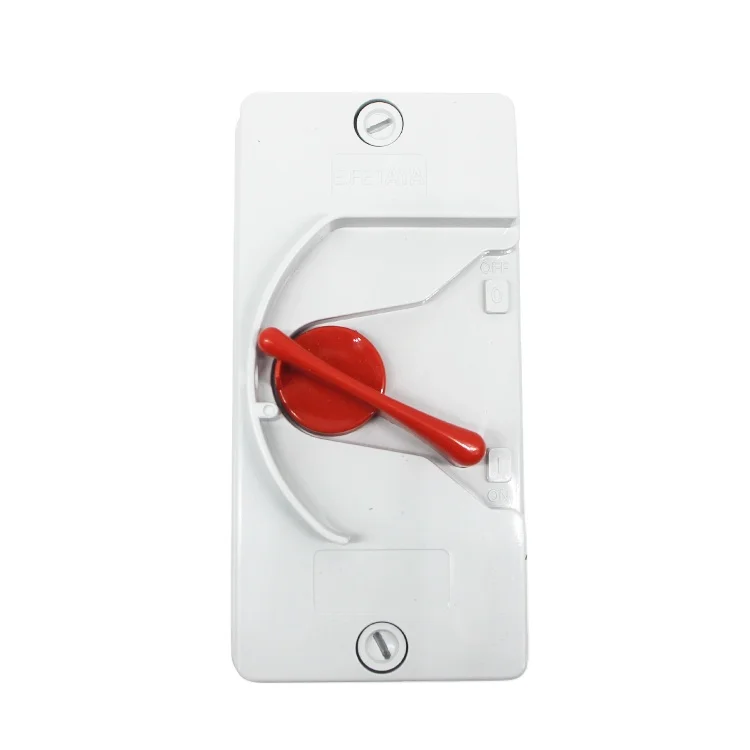
Customer Feedback Synthesis
Based on aggregated reviews (Zoro, RS Components, ATO, Amazon), users consistently praise:
- Reliability: “No failures after 18 months on a bakery oven” (Zoro, verified buyer)
- Clarity of labeling: “Clear ‘ON/OFF’ indicators and phase markings prevented miswiring” (RS Hong Kong)
- Easy torque access: “Hex-head terminals tightened evenly without stripping” (ATO review)
Common observations include:
- IP rating performance varies with installation method and environmental exposure 1
- Terminal screw design differs across product tiers; higher-spec models feature reinforced threading for repeated maintenance cycles 2
- Fused variants offer convenient access solutions depending on carrier design and panel layout 3
Maintenance, Safety & Legal Considerations
Isolators require minimal maintenance — but skipping checks invites risk:
- Annual visual inspection: Check for discoloration, arcing marks, or loose terminals. Retorque to manufacturer spec (typically 2.0–2.5 N·m).
- Never operate under load unless rated for load-break duty: Most 45A isolators are isolators only (IEC 60947-3 Category “AC-23A”), not load-break switches. Verify category before use.
- Legal compliance: In the EU, CE marking + Declaration of Conformity is mandatory. In the US, UL 98 or CSA C22.2 No. 4 is required for safety listing. Unlisted units may void insurance coverage.
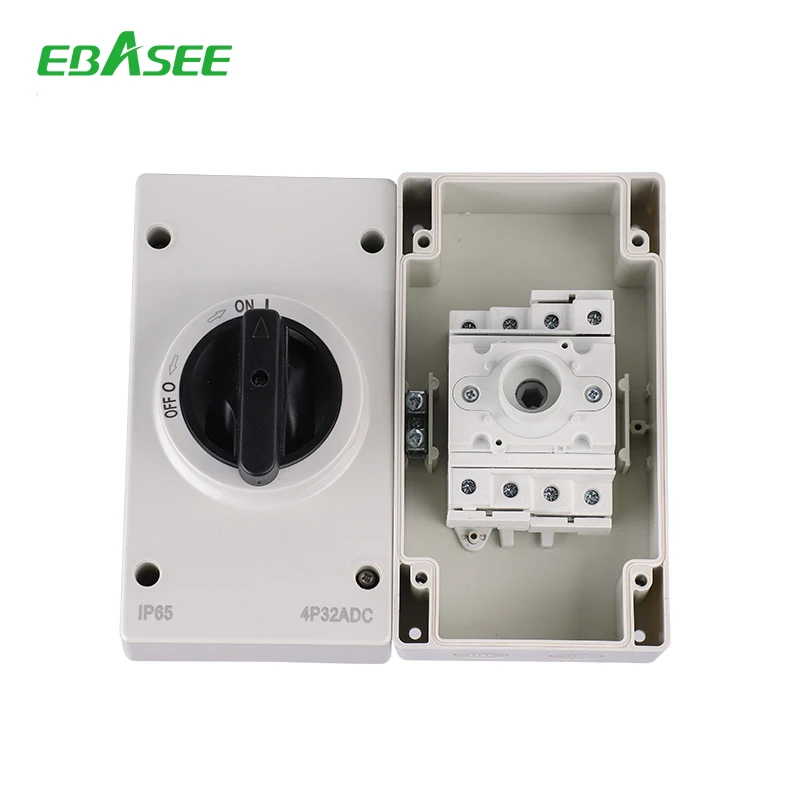
Conclusion: Conditional Recommendations
If you need visible, lockable, code-compliant isolation for a 3-phase 40–50A load in a commercial or industrial setting — choose a non-fused, IP65-rated, 3-pole isolator with ≥50 mm² terminals from a major industrial brand (e.g., Proteus or ABB EOT series).
If your application is indoor-only, low-cycle, and budget-constrained — a well-specified $55–$95 non-fused unit works reliably — but verify terminal capacity and IP rating before ordering.
If you’re replacing an old fused spur and lack upstream protection — consult a licensed electrician to evaluate coordination requirements and select the appropriate protection strategy.
Frequently Asked Questions