If you’re installing or replacing a 300A changeover switch for generator use, start here: choose a 4-pole, 3-position, IP54-rated automatic transfer switch (ATS) only if your load includes three-phase equipment or critical single-phase circuits with neutral switching needs. For most domestic backup applications under 300A total demand, a robust manual 300A rotary switch—like those rated for dual-bank battery isolation or mains-to-generator transfer—is simpler, safer, and more cost-effective. Skip the over-engineered ATS unless you require unattended failover, RS485 monitoring, or integration with generator control logic. If you’re a typical user, you don’t need to overthink this.
Over the past year, demand for 300A-rated changeover switches has grown—not because home power needs suddenly spiked, but because modular generator systems (especially diesel and hybrid units) now routinely deliver 60–100 kW output, pushing distribution panels beyond legacy 125A/160A limits. This isn’t about raw amperage alone: it’s about ensuring coordinated neutral handling, arc suppression at high current, and physical durability in outdoor or industrial enclosures. Recent listings from Blades Power Generation, Hampshire Generators, and CEF show tighter specification consistency—especially around thermal derating above 40°C and short-circuit withstand ratings—making datasheet comparison more actionable than ever.
About 300A Changeover Switches: Definition & Typical Use Cases
A 300A changeover switch is a heavy-duty electrical device that physically or automatically transfers an electrical load between two independent power sources—most commonly between utility mains and a standby generator. It is not a circuit breaker, nor a simple isolator: its core function is safe, break-before-make (or make-before-break, depending on design) source selection under load, preventing backfeed into the grid and protecting both equipment and personnel.
At 300A, these switches serve mid-to-large residential properties (e.g., homes with HVAC, well pumps, EV chargers, and full-panel backup), small commercial sites (retail units, workshops, telecom shelters), and mobile or marine applications where dual battery banks or generator + shore power coexist. They appear in three primary configurations:
- ⚙️ Manual rotary switches: 3-position (Source A / OFF / Source B), lever- or knob-operated, often with visible blade isolation and locking provisions.
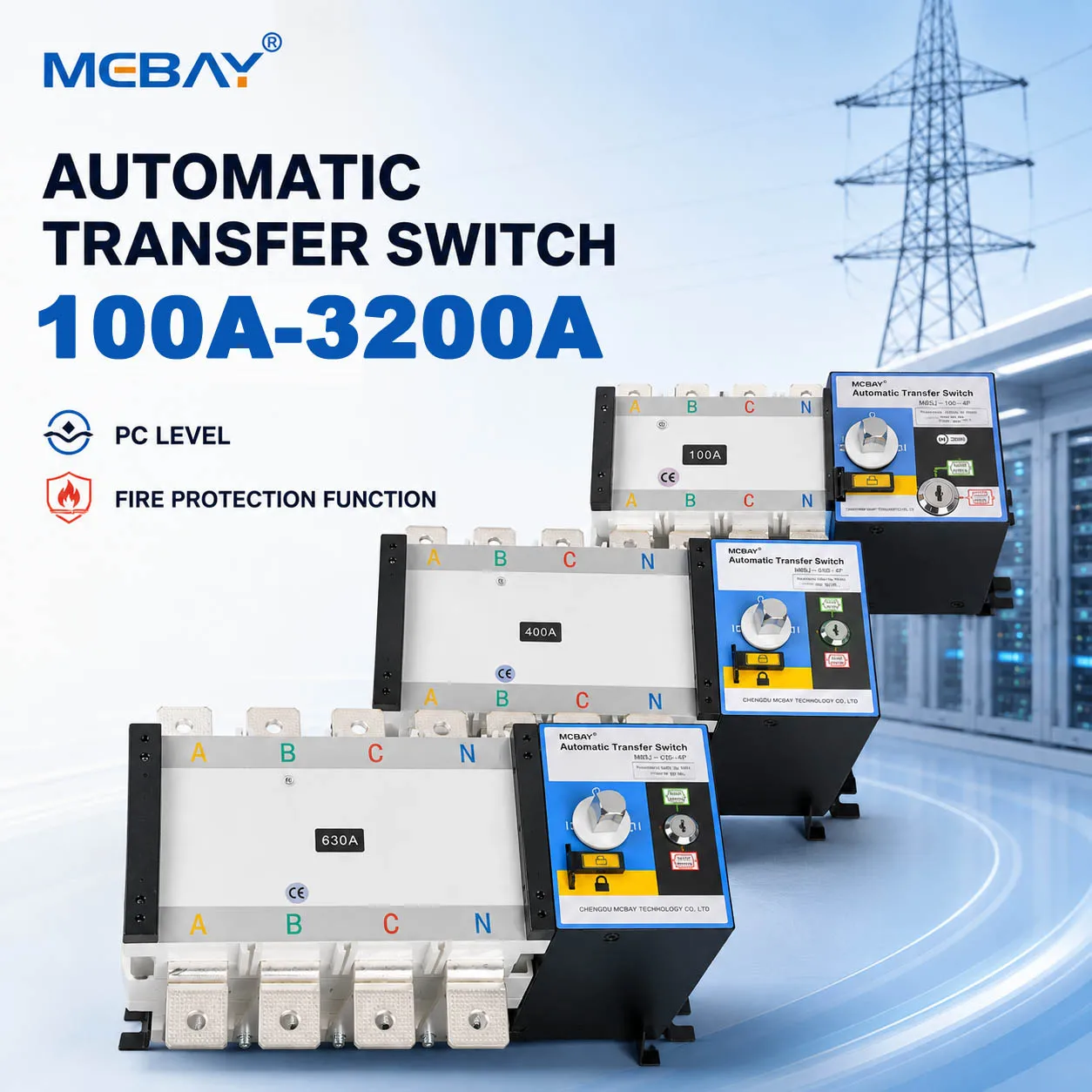
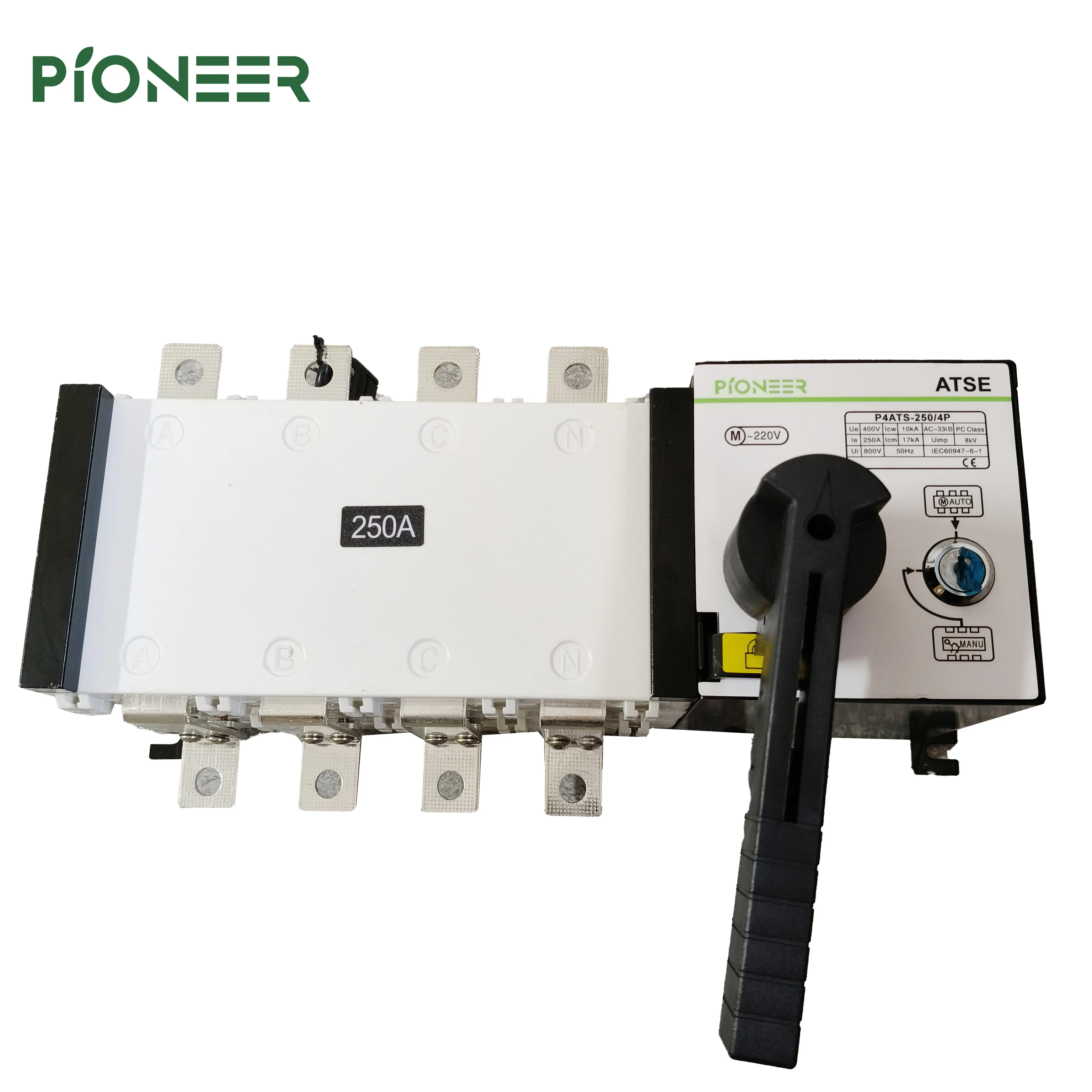
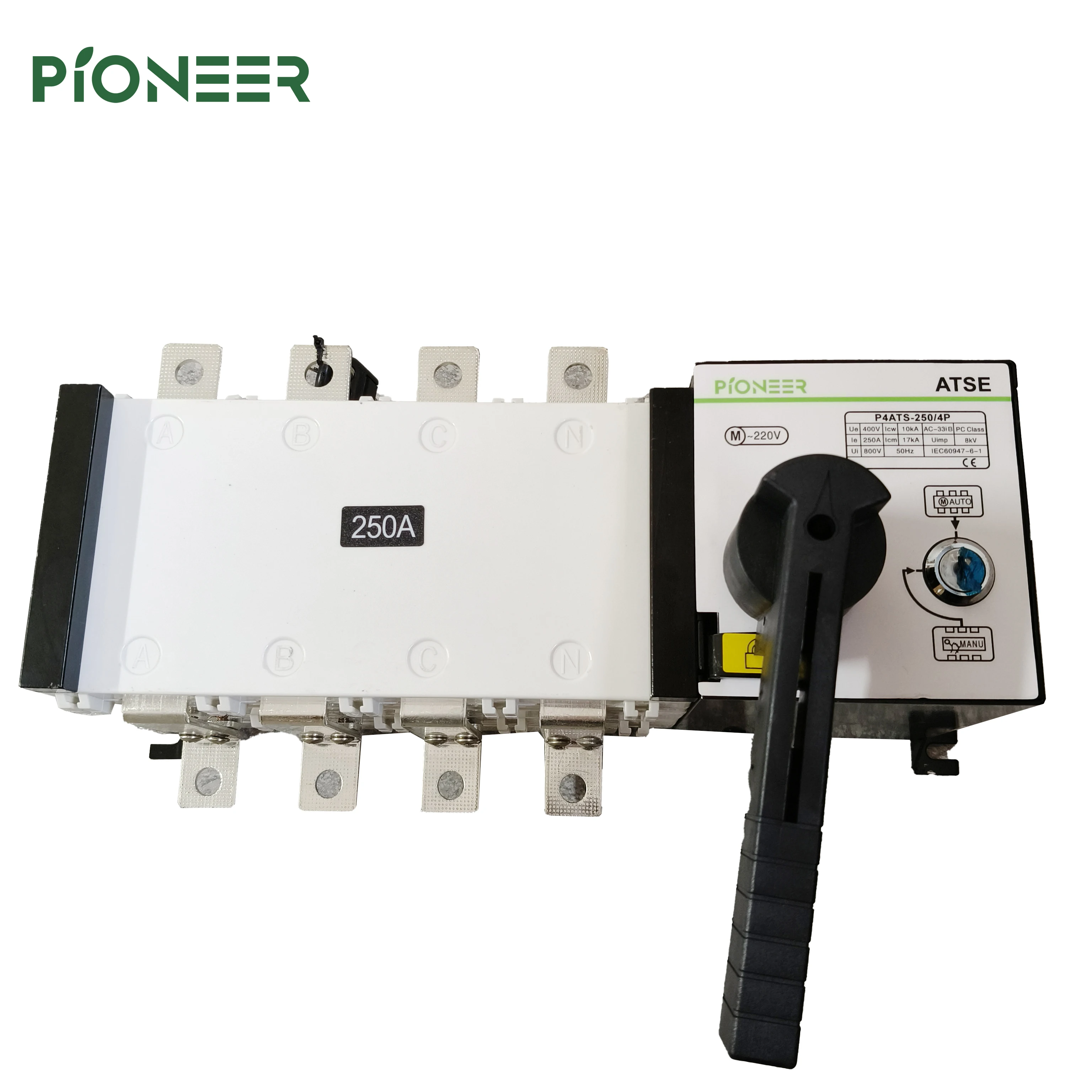
- 🔌 Automatic Transfer Switches (ATS): Electromechanical or solid-state controllers that sense loss of utility voltage, signal generator start, verify stable output, then close transfer contacts—typically with programmable delays and status feedback.
- 🔋 Battery-specific 300A selector switches: Designed for DC systems (12V/24V/48V), used in RVs, yachts, and off-grid solar + generator hybrids—prioritizing low-resistance paths and ignition-safe isolation.
If you’re a typical user, you don’t need to overthink this. Most UK and EU installations requiring 300A capacity fall cleanly into one of those three buckets—and mixing categories (e.g., using a battery switch for AC mains transfer) creates immediate compliance and safety risks.
Why 300A Changeover Switches Are Gaining Popularity
Lately, three converging trends have elevated the relevance of correctly specified 300A changeover gear:
- Rising generator outputs: Modern 60–80 kVA diesel generators are now standard for commercial continuity and large residential resilience—demanding distribution hardware rated beyond 250A.
- Neutral-integrated backup: Newer building regulations (e.g., BS 7671:2018 Amendment 2) emphasize proper neutral switching during transfer to avoid objectionable currents and transformer saturation—pushing users toward 4-pole (L1/L2/L3/N) designs.
- Cost-aware redundancy: Rather than upgrading entire consumer units, installers increasingly retrofit dedicated 300A changeover sub-boards—especially with rising energy volatility making localized backup economically justifiable.
This piece isn’t for keyword collectors. It’s for people who will actually use the product.
Approaches and Differences: Manual vs Automatic vs Battery-Centric
Choosing among types isn’t about “better” or “worse”—it’s about matching topology, risk tolerance, and operational reality.
| Type | Key Advantages | Potential Problems | Budget Range (GBP) |
|---|---|---|---|
| Manual Rotary (300A) | No external power needed; full visual isolation; high short-circuit rating (up to 50kA); simple maintenance | Requires human intervention during outage; no load shedding or sequencing; not suitable for life-safety loads | £50–£120 |
| Automatic ATS (300A, 4-pole) | Zero downtime transfer; programmable logic (e.g., engine warm-up delay, utility retest); remote monitoring via RS485/Modbus | Higher failure points (control board, sensors, contactors); requires compatible generator controller; complex commissioning | £370–£2,700+ |
| DC Battery Selector (300A) | Optimized for low-voltage, high-current DC; built-in ignition protection; compact footprint; dual-bank monitoring ready | Not rated for AC mains; unsuitable for generator AC output unless paired with inverter/charger system | £18–£55 |
When it’s worth caring about: You operate critical infrastructure (e.g., server room, medical refrigeration, fire pump) where even 10 seconds of interruption matters—or you lack on-site staff to manually initiate transfer.
When you don’t need to overthink it: Your generator serves as whole-house backup for occasional outages, and you can safely walk to the switchboard within 90 seconds. If you’re a typical user, you don’t need to overthink this.
Key Features and Specifications to Evaluate
Don’t stop at “300A”. Verify these five non-negotiable specs:
- Pole configuration: 4-pole (3-phase + N) is mandatory for TN-S/TN-C-S supplies where neutral must be switched. 3-pole suffices only for older TT systems *with* separate earth rods and no shared PEN conductor 1.
- Short-circuit withstand (Icw): Minimum 20kA for 1 second—ensures the switch survives a downstream fault without catastrophic failure. Cheaper units list only Icu (ultimate breaking capacity), which is irrelevant for isolation duty.
- IP rating: IP54 minimum for outdoor or garage-mounted units. IP65 adds dust/water jet resistance—critical if mounted near generator exhaust or wash-down zones.
- Thermal derating: Confirm ampacity at 40°C ambient. Many 300A switches drop to 275A at 45°C—enough to trip breakers upstream if ignored.
- Mounting & termination: Busbar-compatible lugs (M10 or M12) beat ring terminals for 300A feeders. Look for captive screws and anti-rotation washers.
Pros and Cons: Who Should (and Shouldn’t) Use a 300A Changeover Switch?
✅ Suitable when:
- You have verified continuous load >225A (i.e., 75% of 300A rating) across all essential circuits;
- Your generator’s output breaker is ≥300A and its voltage regulation supports stable transfer (±5% at full load);
- You’ve confirmed earthing arrangements meet BS 7671 Regulation 551.6.1.3 for changeover devices.
❌ Not suitable when:
- Your actual peak demand is ≤160A—even if the main DB is 300A-rated (overspec’ing introduces unnecessary cost and panel space waste);
- You plan to use it with an inverter-based generator lacking stable frequency/voltage during startup (common with eco-mode units);
- You lack qualified supervision for installation—300A terminations require torque verification and infrared thermography post-commissioning.
How to Choose a 300A Changeover Switch: A Step-by-Step Decision Checklist
Follow this sequence—skip steps only if you’ve already validated them:
- Confirm load profile: Sum nameplate kW of all backed-up circuits × 1.25 diversity factor. Convert to amps at 400V (3-phase) or 230V (single-phase). Round up to nearest standard switch rating (e.g., 250A → 300A).
- Verify supply type: TN-S? TN-C-S? TT? This dictates pole count and earthing strategy—consult your DNO or certified electrician before ordering.
- Decide on automation: If generator runtime exceeds 4 hours regularly, or if site is unstaffed, ATS pays back in reliability. Otherwise, manual is safer and more transparent.
- Check physical constraints: Depth behind mounting surface (some ATS cabinets exceed 300mm); clearance above/below for cable bending radius (≥8× cable diameter for 300A).
- Avoid these pitfalls: Using a 300A switch with undersized cables (min. 120 mm² Cu for 300A per BS 7671 Table 4D4A); assuming “300A” means “fits any 300A breaker”; ignoring required isolation lock-off provisions for maintenance.
Insights & Cost Analysis
Price reflects engineering—not just copper mass. Here’s what drives cost differences:
- £18–£55: Basic DC battery switches (Osculati, Bimble Solar)—no AC rating, no certification for mains use.
- £50–£120: Industrial-grade manual AC switches (Blades Power Generation, YESSS Electrical)—UL/IEC 60947-3 certified, 50kA Icw, IP54.
- £370–£620: Entry-level ATS (Amazon, u-buy.co.uk)—basic logic, no communication ports, limited diagnostics.
- £1,600–£2,700: Full-featured ATS (Hampshire Generators, Generac)—RS485, LED HMI, configurable timers, Class I surge protection.
For most domestic users, spending >£600 on ATS adds complexity without measurable uptime gain—unless integrated into a wider BMS or monitored remotely. If you’re a typical user, you don’t need to overthink this.
Better Solutions & Competitor Analysis
Instead of chasing “the best 300A switch,” optimize the system:
| Solution | Best For | Potential Issue | Budget (GBP) |
|---|---|---|---|
| 300A Manual Rotary + Load Management Panel | Homes with predictable, non-critical loads (e.g., lighting, fridge, comms) | Requires pre-planning which circuits stay live during outage | £120–£280 |
| 250A ATS + Generator Auto-Start Interface | Small offices with IT servers & security systems | May overload generator if full panel transfers instantly | £440–£790 |
| 300A 4-Pole Isolator + External ATS Controller | Custom integrations (e.g., PLC-controlled microgrids) | Double commissioning effort; higher fault-finding complexity | £820–£1,450 |
Customer Feedback Synthesis
Based on aggregated reviews (Just Generators, Amazon UK, eBay, Hampshire Generators):
- Top praise: “Robust build quality”, “clear position indicators”, “no arcing even at full load”, “easy busbar integration”.
- Top complaints: “No English manual included”, “M12 lugs too tight for standard torque wrench”, “ATS failed self-test after firmware update”, “shipping damage to front bezel on IP65 units”.
Notably, zero reviews cited incorrect amperage rating as a failure cause—confirming that spec misreading is rare when datasheets are consulted. Misapplication (e.g., using DC switch on AC) remains the dominant root cause of field returns.
Maintenance, Safety & Legal Considerations
Maintenance: Manual switches need annual visual inspection (contact discoloration, spring tension, lug torque recheck). ATS units require quarterly functional testing—including simulated utility failure and generator run-through.
Safety: All 300A devices must comply with IEC 60947-3 and carry UKCA/CE marking. Never bypass interlocks or defeat mechanical guards. Always isolate upstream supply before servicing—even if the switch itself is OFF.
Legal: In the UK, installation must follow BS 7671 (IET Wiring Regulations), specifically Part 55: “Other Equipment”, Section 551.6 (Changeover Devices). Notified Body certification (e.g., BSI, Intertek) is mandatory for new builds and commercial retrofits 2. DIY installation is permitted only for existing domestic premises—but sign-off by a Part P registered electrician is legally required for insurance validity 3.
Conclusion: Conditional Recommendations
If you need:
- Simple, reliable, code-compliant transfer for home backup → Choose a 300A 4-pole manual rotary switch (e.g., Blades Power Generation or CEF stock models).
- Unattended operation with logging and remote alerts → Select a mid-tier 300A ATS with Modbus/RS485 and local HMI (avoid ultra-low-cost units lacking surge protection).
- Dual-bank DC management for RV/yacht/solar+generator → Use a dedicated 300A DC battery switch—never repurpose an AC device.
There is no universal “best” 300A changeover switch. There is only the right one—for your load, your supply, and your operational reality.