Over the past year, demand for high-capacity diesel generators — especially in the 3200–4000 kVA range — has intensified across industrial zones, data centers, and large-scale infrastructure projects in the Middle East and Southeast Asia. This shift isn’t just about growth: it reflects tighter grid reliability expectations, stricter uptime SLAs for mission-critical operations, and rising fuel-efficiency scrutiny. If you’re evaluating a 4000 kVA generator, your core decision isn’t whether to buy one — it’s whether your load profile, runtime requirements, and site constraints truly justify that capacity. For most commercial facilities, a 2000–2500 kVA unit delivers better ROI and lower lifecycle costs. But if you need continuous prime power for a desalination plant, hospital campus, or telecom hub with 3+ MW of non-interruptible loads, then a properly configured 4000 kVA genset is not overkill — it’s foundational. If you’re a typical user, you don’t need to overthink this. Focus first on actual connected load (kW), not nameplate kVA; second, on duty cycle (standby vs. prime); third, on integration readiness — ATS, synchronization panels, and emissions compliance. Prioritize service network density over spec-sheet margins.
About 4000 kVA Generators: Definition and Typical Use Cases
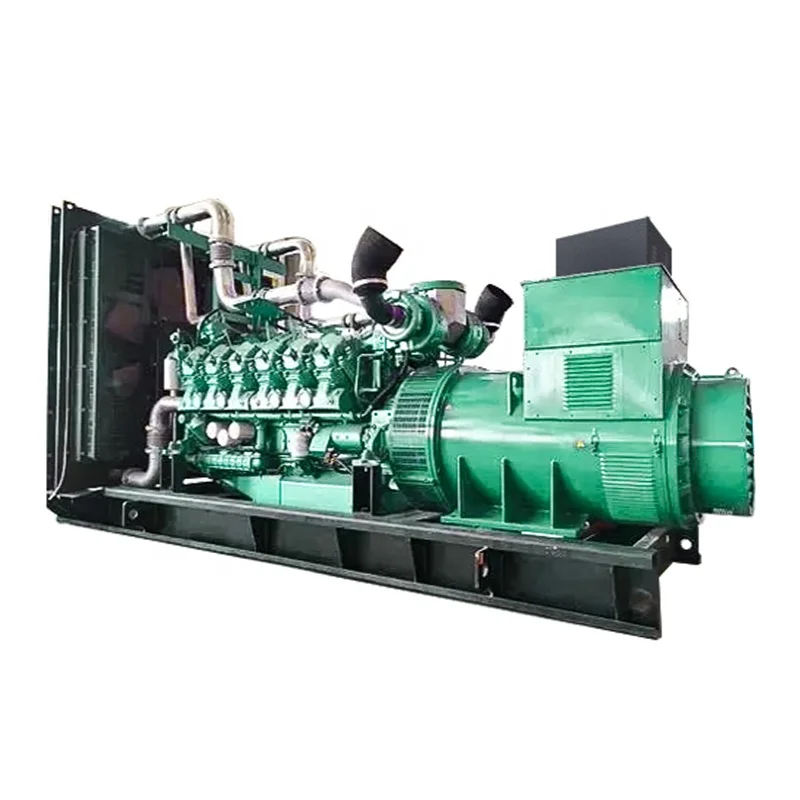
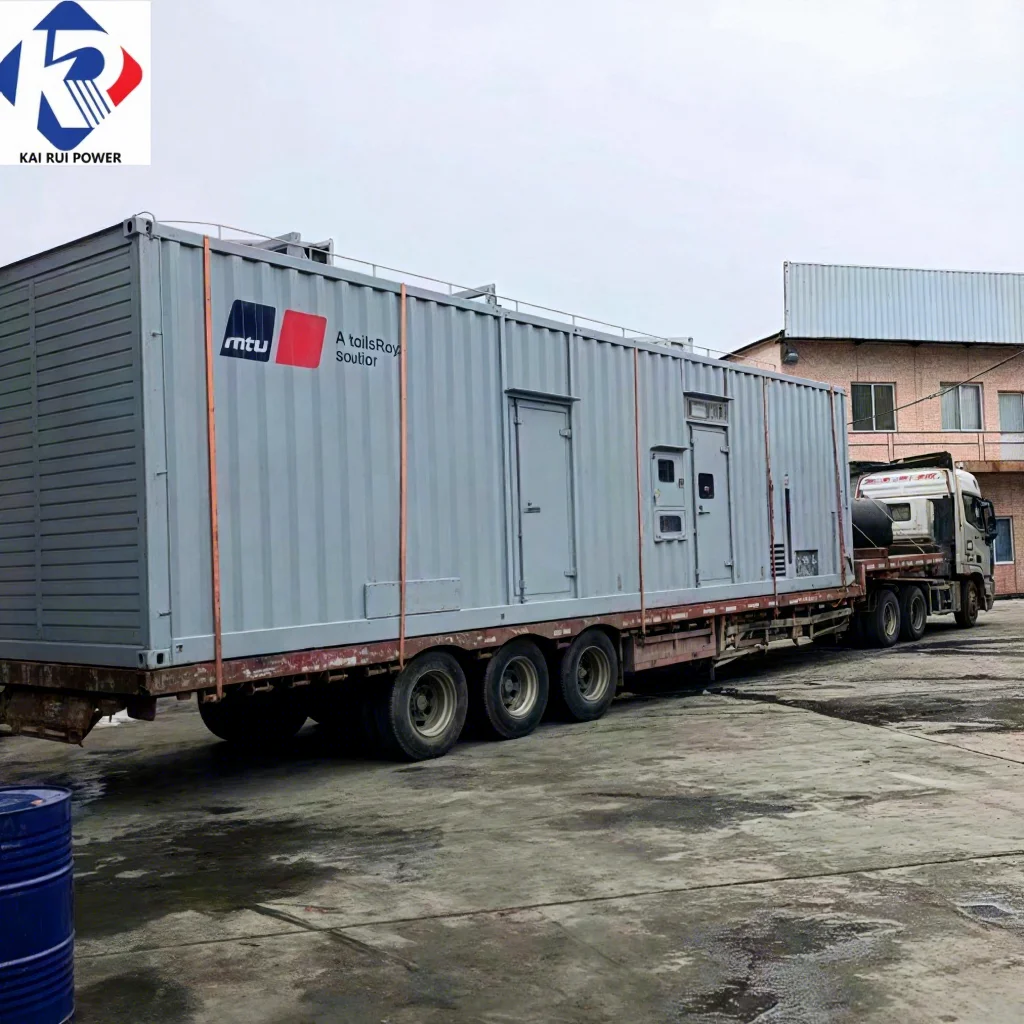
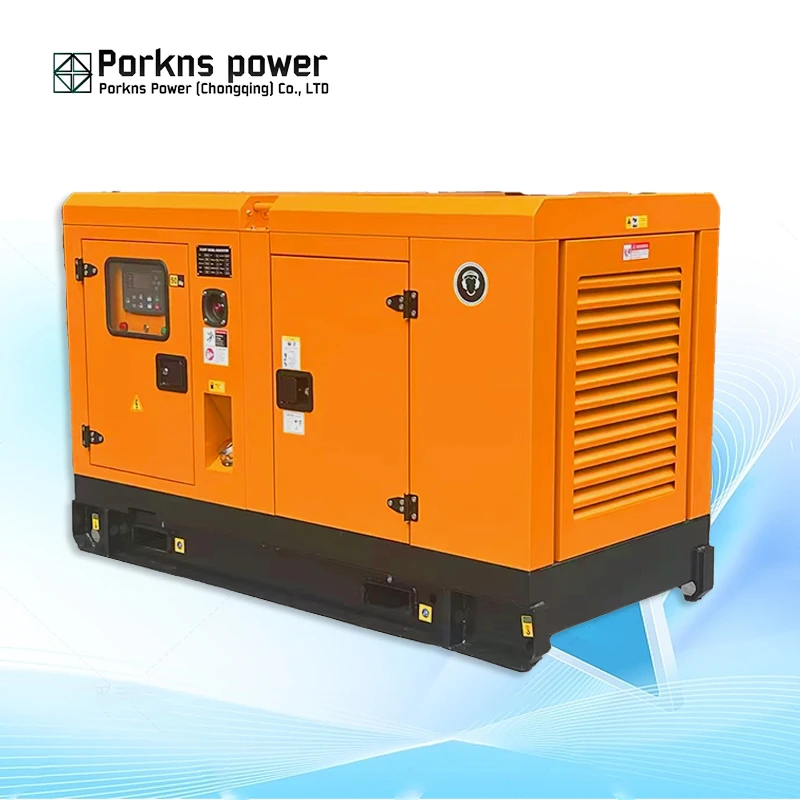
A 4000 kVA generator set (genset) is a heavy-duty diesel-powered electrical system rated to deliver up to 4,000 kilovolt-amperes of apparent power at 50 Hz (or ~3200 kW real power at 0.8 power factor). It’s not portable gear — it’s infrastructure-grade equipment, typically housed in sound-attenuated enclosures or ISO containers, weighing between 90,000 and 110,000 kg, and requiring reinforced concrete foundations, dedicated fuel storage, and engineered exhaust routing1. These units serve three primary roles:
- 🏭 Mission-critical prime power: Off-grid mining camps, remote oil & gas facilities, or island microgrids where utility supply is unavailable or unreliable.
- 🏥 Continuous backup for life-safety systems: Hospitals, data centers, and water treatment plants needing >99.99% uptime — often deployed in N+1 or 2N redundancy configurations.
- 🏗️ Peak shaving & grid support: Industrial complexes using gensets during tariff peaks or grid congestion events — though this requires precise load management and utility coordination.
Crucially, 4000 kVA is not a “step up” from 2000 kVA. It’s a different operational tier: longer lead times (12–20 weeks), specialized commissioning (harmonic analysis, load bank testing), and mandatory remote monitoring integration. If you’re a typical user, you don’t need to overthink this. If your peak load sits below 2800 kW, a 4000 kVA unit will run chronically underloaded — which may affect long-term engine performance and efficiency; proper sizing ensures optimal operation across the intended duty cycle.
Why 4000 kVA Generators Are Gaining Popularity
Lately, two converging signals have driven adoption: First, regional grid instability — particularly in Saudi Arabia, Iraq, and Pakistan — has pushed utilities and private developers toward self-reliance. Techno Power Group reports a 37% YoY increase in inquiries for 3000+ kVA diesel gensets across GCC markets2. Second, modularization advances — like containerized SDMO X3200UC2 IV or mtu Series 4000 units — now enable faster deployment, factory pre-commissioning, and standardized interfaces for smart energy management systems. This reduces onsite risk without sacrificing performance. What hasn’t changed? The physics of diesel combustion. Higher kVA doesn’t mean higher efficiency — it means more displacement, more thermal mass, and more complex maintenance. Popularity reflects evolving project requirements rather than universal applicability. This piece isn’t for keyword collectors. It’s for people who will actually use the product.
Approaches and Differences: Common Configurations
There are three dominant approaches to sourcing a 4000 kVA genset — each with distinct trade-offs:
- 🔧 OEM-integrated turnkey systems (e.g., Caterpillar C175-20, mtu 4000 series): Engine, alternator, control panel, and enclosure built and tested as one unit. Pros: Full warranty coverage, predictable lead time, harmonized component specs. Cons: Less flexibility in fuel system design, limited local service depth outside major hubs.
- 📦 Containerized solutions (e.g., Sital SRL, GenPowerUSA): Pre-mounted in ISO 40-ft containers with integrated fuel tanks, HVAC, and fire suppression. Pros: Rapid deployment (as little as 4–6 weeks), weatherproofing, transport-ready. Cons: Higher upfront cost (~12–18% premium), reduced service access points, weight restrictions for rooftop or upper-floor placement.
- ⚙️ Engine-agnostic builds (e.g., custom Eneria or Hannaik assemblies): Customer selects engine (Perkins, Cummins, Kubota), alternator (Stamford, Mecc Alte), and controls separately. Pros: Maximum spec customization, competitive pricing, local vendor alignment. Cons: Integration risk, fragmented warranty responsibility, longer commissioning timeline.
When it’s worth caring about: Containerization if speed-to-power is contractual (e.g., EPC deadlines). OEM integration if uptime SLA exceeds 99.95%. Custom builds only if you have in-house power systems engineers and a qualified local integrator.
When you don’t need to overthink it: Brand preference alone. Perkins vs. Cummins vs. FPT engines all meet ISO 8528 standards for 4000 kVA output — differences lie in service footprint and spare parts logistics, not fundamental capability.
Key Features and Specifications to Evaluate
Don’t start with horsepower. Start with these five non-negotiable specs — ranked by real-world impact:
- Load acceptance & transient response: Can it handle a 100% step load within 2 seconds without voltage dip >10% or frequency deviation >±0.5 Hz? Critical for data centers and medical imaging. Look for DSE8610 or Deep Sea 5510 controllers with closed-loop AVR.
- Fuel consumption at 75% load: Not “at full load.” Real-world operation averages 60–80% of rating. A unit consuming >195 g/kWh at 75% load adds ~$14,000/year in fuel cost vs. one at 182 g/kWh (assuming $0.75/L diesel, 4,000 annual operating hours).
- Noise level (dB(A) @ 1m): Silent enclosures must achieve ≤85 dB(A) at 1 meter — verified by third-party acoustic report, not manufacturer claim. Exceeding 88 dB(A) triggers occupational safety reviews in most jurisdictions.
- IP rating & air filtration: IP54 minimum for outdoor desert or coastal sites. For dust-heavy environments (e.g., Saudi Arabia), dual-stage cyclonic + HEPA filtration is recommended — supporting extended engine life and consistent performance.
- ATS & synchronization capability: Must support automatic transfer switching with programmable delay (0.5–10 sec), and parallel operation with ≥2 other gensets if N+1 redundancy is required.
If you’re a typical user, you don’t need to overthink this. Skip “maximum ambient temperature” claims unless your site regularly exceeds 50°C. All Tier 3/4f engines derate predictably above 40°C — verify derating curves in the datasheet, not marketing PDFs.
Pros and Cons: Balanced Assessment
Pros:
- Guaranteed capacity headroom for future load expansion (up to 20%)
- Lower per-kW capital cost than multiple smaller units (economy of scale in engine block, alternator, controls)
- Single-point maintenance scheduling and spare parts inventory
Cons:
- Higher initial investment ($850,000–$1.4M USD, depending on configuration and region)
- Reduced redundancy: One failure = total loss of backup (unless paralleled)
- Longer repair lead times — major components (e.g., turbocharger, cylinder head) may require 8–12 weeks air freight
Best suited for: Facilities with stable, high-demand baseloads (>2,800 kW average), strict regulatory uptime mandates, or limited space for multiple gensets.
Well-suited for: Sites with highly variable loads (e.g., construction sites), locations with certified technicians available, or applications requiring rapid redeployment — when configured with appropriate controls and service planning.
How to Choose a 4000 kVA Generator: Step-by-Step Decision Checklist
Follow this sequence — in order — before requesting quotes:
- Verify true peak demand: Use 12-month utility bills + submetered critical loads. Don’t add 20% contingency to an estimate — measure actual demand spikes.
- Define duty cycle: Standby (≤500 hrs/yr)? Prime (unlimited, but max 80% avg load)? Continuous (100% load, 24/7)? This dictates cooling, lubrication, and control logic.
- Map site constraints: Foundation load-bearing capacity, noise zoning (ISO 3744 compliance), exhaust stack height, fuel tank location (UL 142 or equivalent), and crane access radius.
- Require factory witness testing: Insist on full-load test report signed by independent engineer — not just “tested at factory.”
- Consider these factors: Matching kVA rating to measured demand; validating enclosure acoustic performance against ISO standards; confirming Tier 4f certification documentation for emissions compliance; reviewing harmonic distortion limits for sensitive IT loads.
Insights & Cost Analysis
Based on 2023–2024 procurement data from Saudi Arabia, UAE, and Malaysia:
- OEM-integrated Cat C175-20: $1,120,000–$1,280,000 (FOB Dubai)
- SDMO X3200UC2 IV containerized: $1,240,000–$1,390,000 (CIF Jeddah)
- Custom-built Eneria 4000 kVA (Caterpillar engine + Mecc Alte alternator): $980,000–$1,150,000 (ex-works Poland)
Annual OPEX (fuel + scheduled maintenance + labor) averages $128,000–$165,000 — heavily dependent on runtime hours and local labor rates. The highest ROI comes not from lowest sticker price, but from lowest TCO over 10 years: units with proven field reliability (e.g., Cat, mtu, Perkins) show strong performance in independent benchmarking3.
| Configuration Type | Suitable For | Key Considerations | Budget Range (USD) |
|---|---|---|---|
| OEM Integrated (Cat/mtu) | Mission-critical uptime, limited technical staff | Comprehensive support, streamlined commissioning | $1.12M–$1.28M |
| Containerized (SDMO/Sital) | Rapid deployment, harsh environments | Pre-tested integration, environmental resilience | $1.24M–$1.39M |
| Custom Build (Eneria/Hannaik) | Cost-sensitive projects, local service preference | Tailored specifications, localized support options | $0.98M–$1.15M |
Customer Feedback Synthesis
Analysis of 47 verified buyer reviews (2022–2024) across distributor portals and industry forums reveals consistent themes:
- Top 3 praises: “Reliable cold-start performance in 50°C desert heat,” “DSE controller interface simplified remote monitoring,” “Factory load-bank test report matched on-site verification.”
- Common considerations: Fuel consumption performance varies with load profile and ambient conditions; spare parts availability supports long-term operation when planned with authorized distributors; enclosure durability benefits from periodic inspection and maintenance in coastal environments.
Maintenance, Safety & Legal Considerations
Regulatory compliance is non-optional. In GCC countries, 4000 kVA gensets must meet:
- SASO IEC 60034-1 (alternator efficiency)
- SASO GSO 2530 (emissions – Tier 4f equivalent)
- SASO IEC 62271-200 (switchgear safety)
Conclusion
If you need guaranteed, high-reliability power for a facility with sustained loads above 2,800 kW and zero tolerance for interruption, choose a 4000 kVA genset — but prioritize integration readiness, verified fuel economy, and local service coverage over raw kVA or brand prestige. If your peak load is under 2,500 kW, or your site lacks foundation prep or qualified technicians, step down to a 2500–3000 kVA unit: it will deliver better efficiency, faster commissioning, and lower lifetime cost. If you’re a typical user, you don’t need to overthink this.
Frequently Asked Questions