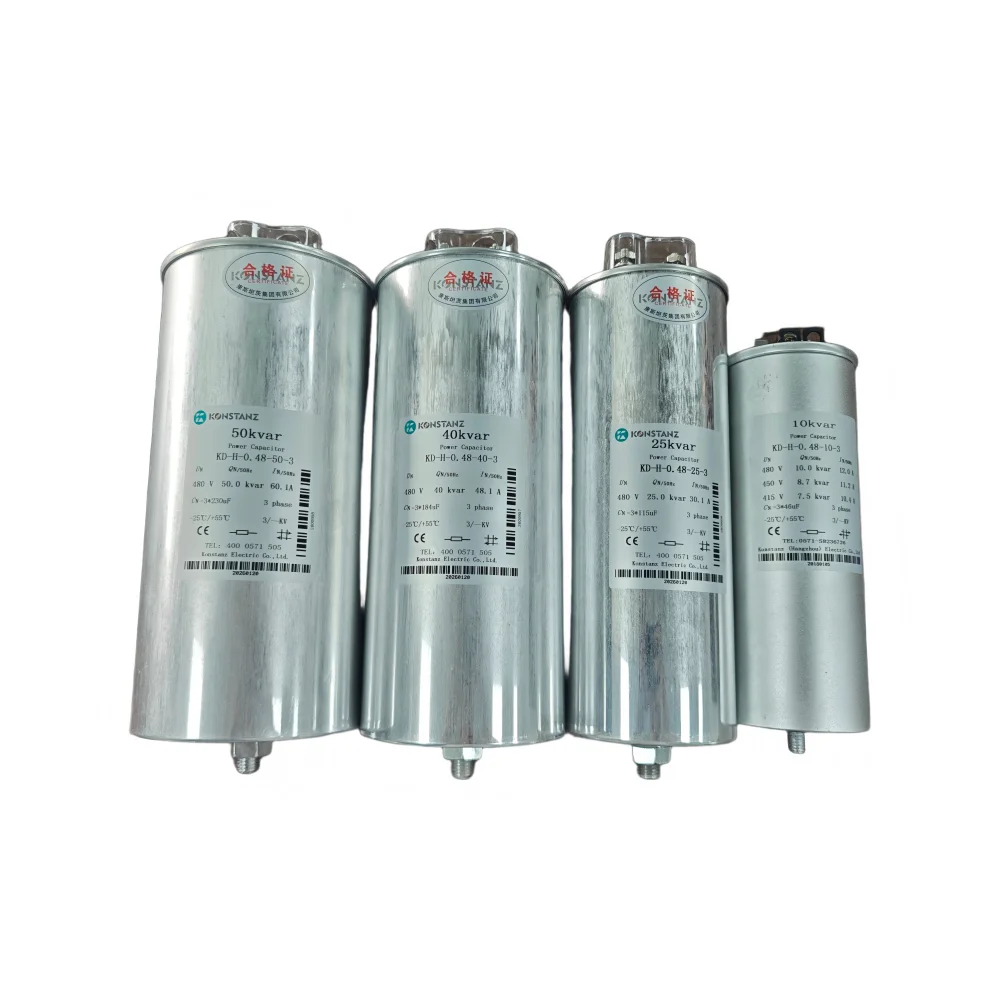
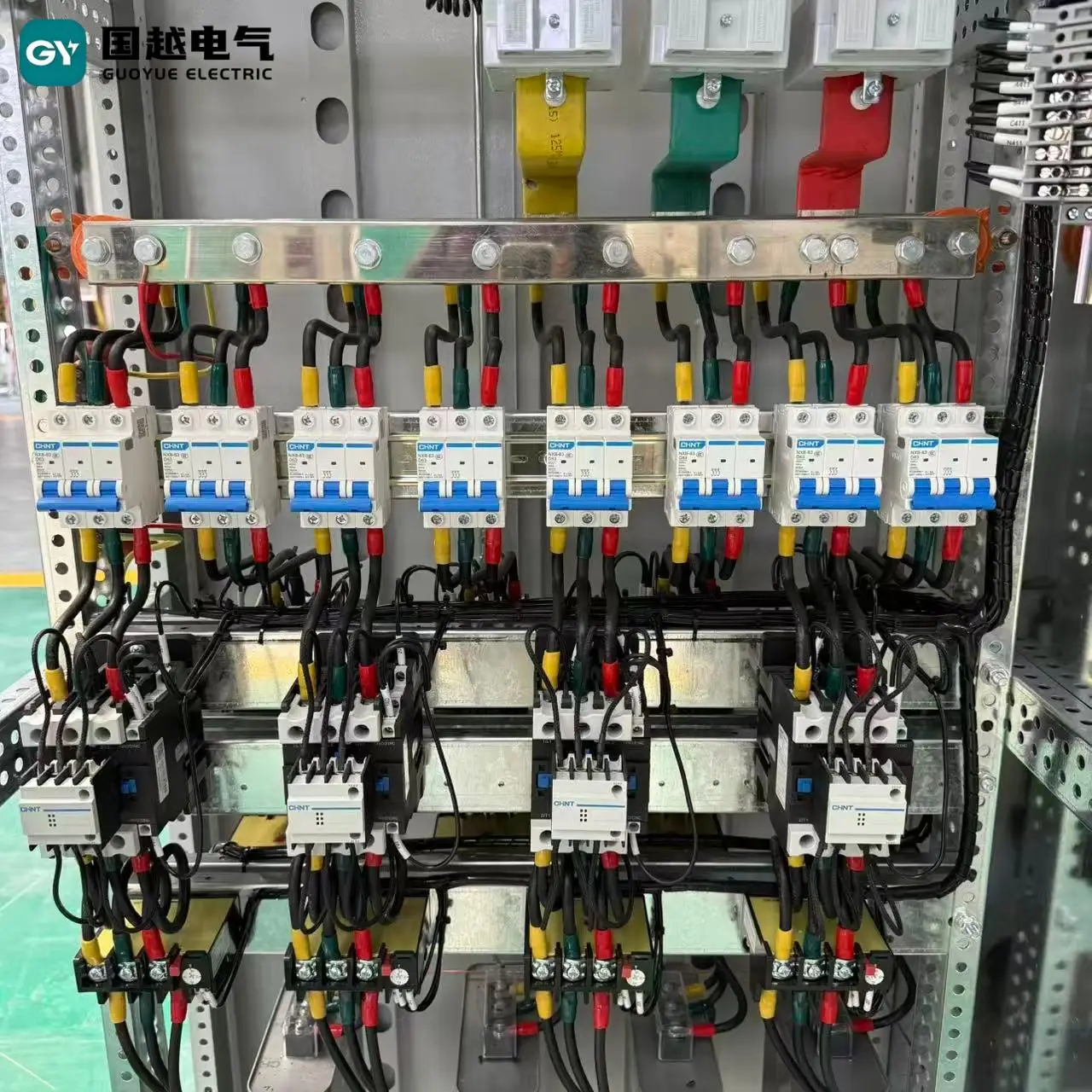
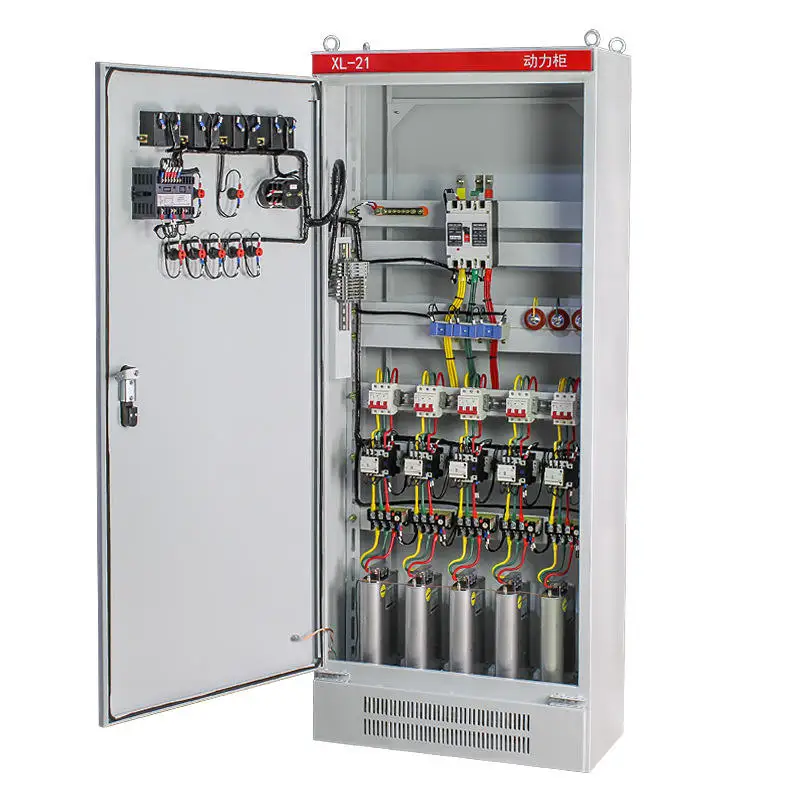
Over the past year, more industrial and commercial users in the UK and EU have upgraded or replaced aging low-voltage PFC equipment — especially units rated for 400V systems — due to tighter utility penalties, rising energy costs, and increased sensitivity to harmonic distortion in modern switch-mode loads. If you’re a typical user, you don’t need to overthink this: for most small-to-midsize installations (under 100 kvar), a 400V-rated automatic capacitor bank with 6-step control and detuned reactors offers the best balance of reliability, compliance, and ROI. Avoid single-phase 400V units unless your load is truly unbalanced — and never assume 400V capacitors are interchangeable with 415V supply systems without verifying derating curves and voltage tolerance specs. This piece isn’t for keyword collectors. It’s for people who will actually use the product.
About 400V Power Factor Correction
Power factor correction (PFC) at 400V refers to the use of passive (capacitor-based) or active devices designed for three-phase low-voltage AC distribution networks operating at nominal 400V (±10%) and 50Hz — the standard across the UK, EU, and many Commonwealth countries. These systems correct lagging power factor caused by inductive loads like motors, transformers, welding equipment, HVAC compressors, and older lighting ballasts. A 400V PFC unit doesn’t ‘generate’ power — it reduces reactive current drawn from the grid, lowering apparent power (kVA), stabilizing voltage, and cutting losses in cables and transformers.
Typical applications include: small manufacturing workshops (e.g., CNC machine clusters), car repair garages with hydraulic lifts and compressors, food processing cold rooms, data cabinet cooling systems, and commercial buildings with legacy HVAC. You’ll rarely see 400V PFC deployed in residential settings — not because it’s unsuitable, but because household loads rarely drop below 0.92 PF, and utilities seldom charge penalties below that threshold.
Why 400V Power Factor Correction Is Gaining Popularity
Lately, adoption has accelerated—not because the technology changed, but because the cost-benefit calculus did. Over the past year, electricity suppliers have enforced stricter PF clauses in commercial tariffs: many now apply surcharges if average monthly PF falls below 0.95 (lagging), and some impose daily peak-demand penalties tied directly to kVA draw. At the same time, component pricing stabilized after pandemic volatility, and modular 400V capacitor banks became easier to retrofit into existing switchgear panels. Users aren’t chasing theoretical efficiency — they’re avoiding £200–£1,200/year in avoidable charges, extending transformer life, and meeting sustainability reporting targets.
Another quiet driver: harmonics. Modern variable-speed drives (VSDs), LED drivers, and SMPS-based equipment inject 5th, 7th, and 11th harmonics. Standard 400V capacitors can resonate dangerously with those frequencies — so newer installations increasingly specify *detuned* 400V PFC units (e.g., 189Hz or 210Hz tuning) instead of basic tuned banks. That shift explains why products like PQIS’s “400kvar De-Tuned PFC Unit” (£13,845.91) appear alongside entry-level 6-step controllers priced under £100 1.
Approaches and Differences
Three main approaches exist for 400V PFC — each with clear trade-offs:
- Fixed Capacitor Banks: Single-stage, manually switched. Low cost (<£50–£200), simple, no electronics. But inflexible: only effective if load is stable. Oversizing causes leading PF; undersizing leaves penalties untouched. When it’s worth caring about: Only for constant loads like a single large motor running 24/7. When you don’t need to overthink it: If your load varies more than ±15% during operation — skip it.
- Automatic Stepped Banks (6- or 12-step): Controller + contactor-switched capacitor modules. Adjusts in real time (e.g., PFR-6 or JKW-16 models). Handles fluctuating loads well. Requires proper CT placement and controller calibration. When it’s worth caring about: Any site with multiple motors, batch processes, or shifting operational schedules. When you don’t need to overthink it: If your facility runs one 3.5kW lift motor 4 hrs/day — fixed may suffice.
- Active Harmonic Filters (AHF) with PFC: Solid-state inverters that inject counter-harmonics *and* correct PF. Higher upfront cost (£3,000–£15,000+), but solves both PF and THD simultaneously. When it’s worth caring about: Sites with >15% THD, sensitive instrumentation, or where resonance risk rules out passive caps. When you don’t need to overthink it: If your THD stays below 5% and PF stays above 0.88 — AHFs are over-engineered.
Key Features and Specifications to Evaluate
Don’t default to kvar rating alone. Prioritize these five specs — in order:
- Voltage rating & tolerance: Must be ≥400V AC, but verify if rated for continuous 415V (UK nominal). Schneider’s BLRCH025A030B40 is rated 400V, but RS Components notes its max operating voltage is 440V — critical for longevity 2.
- Tuning frequency: Standard 50Hz banks risk resonance with VSD harmonics. Detuned units (e.g., 189Hz = p=7%) add reactor impedance — safer but slightly less efficient per kvar.
- Step resolution & response time: 6-step controllers (e.g., PFR-6) react in ~20–40 sec; 12-step units cut that to ~10 sec. Faster isn’t always better — excessive switching wears contactors.
- Protection class: Look for built-in overload, overvoltage, and temperature cutouts. Enerlux PRT units include self-healing metallized film — extends service life vs. older oil-filled types.
- Standards compliance: EN 61000-3-2 (harmonics), EN 61000-3-12 (equipment limits), and IEC 60831-1 (capacitor safety) are non-negotiable for CE-marked gear.
Pros and Cons
Pros: Reduces kVA demand (lowers demand charges), cuts cable losses (up to 5–8% energy saving), improves voltage stability, extends motor insulation life, avoids utility PF penalties.
Cons: Adds panel space and weight (e.g., 400kvar VarSet banks weigh 450kg 3); introduces resonance risk if mismatched with harmonics; requires qualified commissioning (CT polarity, controller wiring); minimal ROI for loads already >0.95 PF.
If you’re a typical user, you don’t need to overthink this. Most UK commercial sites operate between 0.78–0.89 PF — that’s the sweet spot where PFC delivers measurable savings without complex engineering.
How to Choose 400V Power Factor Correction Equipment
Follow this 5-step decision checklist — and avoid two common traps:
- Avoid Trap #1: “I’ll just buy the highest kvar I can fit.” Oversizing creates leading PF, which utilities penalize just as harshly as lagging PF — and can destabilize generators.
- Avoid Trap #2: “This cheap eBay controller looks identical.” Unbranded PFR units often lack proper EMC filtering, causing interference with PLCs or comms — verified brands (Schneider, Circutor, Ortea) include certified noise suppression.
- Measure first: Use a clamp meter with PF logging (e.g., Fluke 435 II) for ≥1 week. Note min/max PF, kvar demand, and harmonic spectrum (THD-I).
- Calculate required kvar: Use formula: kvar = kW × (tanφ₁ − tanφ₂), where φ₁ = current PF angle, φ₂ = target (usually 0.95–0.98). Don’t guess — inaccurate measurement is the #1 cause of underperformance.
- Select tuning type: If THD-I > 8%, choose detuned (p=7% or 14%). If clean load, standard 50Hz is fine.
- Pick step count: 6-step suits loads varying ≤3x per hour; 12-step for high-cycle environments (e.g., packaging lines).
- Verify physical fit: Check panel depth — many 400V banks require ≥600mm depth. Don’t assume “it fits where the old one sat.”
Insights & Cost Analysis
Based on live UK retail data (RS Components, PQIS, eBay, Amazon), here’s what 400V PFC actually costs today:
| Category | Typical Use Case | Entry Price (2024) | Mid-Tier (Reliable) | Notes |
|---|---|---|---|---|
| Capacitor only (per kvar) | Small workshop upgrade | £7.41/kvar (Scatts) | £22–£35/kvar (Schneider BLRCH series) | Lowest cost, but requires separate controller & protection |
| 6-step controller + contactors | General-purpose auto bank | £78.57 (Amazon PFR-6) | £118–£139 (JKW-16, ISKRA PFCMAX6) | Ensure CT input range matches your busbar size |
| Pre-assembled 400V bank (25–100 kvar) | Retrofit-ready solution | £405.99 (United Automation PFC2-30kVAR) | £1,884–£7,133 (Schneider VarSet, Enerlux PRT) | Includes enclosure, busbars, fusing — fastest install |
| Detuned 400V bank (400 kvar) | Industrial plant with VSDs | Not available under £10k | £13,845 (PQIS) | Reactor adds ~25% cost but prevents resonance failure |
Better Solutions & Competitor Analysis
For most users, modular pre-engineered banks beat DIY assembly — especially when safety and warranty matter. Below is a neutral comparison of three widely stocked 400V solutions:
| Product Type | Suitable For | Potential Issue | Budget Range |
|---|---|---|---|
| Schneider Electric VLVAF2P03508AE (200 kvar) | Medium plants needing high reliability & full support | High price (£1,884–£17,900), long lead times for custom configs | £1,884–£17,900 |
| Enerlux PRT.4025/SEW6498MG (25 kvar) | Workshops prioritizing compact size & self-healing film | Limited UK distributor network — longer shipping than RS stock | £104.70 |
| United Automation PFC2-100kVar | Budget-conscious retrofits with standard specs | Fewer certifications listed — verify EN 61000-3-12 compliance before spec’ing | £713.39 |
Customer Feedback Synthesis
Across RS Components, eBay, and forum discussions (MIG Welding, IET EngX), recurring themes emerge:
- Top praise: “Cut our monthly bill by £180”, “Installed in one afternoon”, “No more nuisance trips on the main breaker”.
- Top complaint: “Controller displayed wrong PF after CT reversal”, “Capacitors failed within 18 months — no thermal cutoff”, “No English manual included”.
The strongest signal? Users who measured baseline PF *before* buying report 92% satisfaction. Those who guessed or relied on utility bills alone report 40% dissatisfaction — usually due to undersizing.
Maintenance, Safety & Legal Considerations
400V PFC gear carries real risks: stored charge (even when off), arc-flash potential during fault, and resonance-induced capacitor explosions. Key requirements:
- Maintenance: Inspect terminals annually; test capacitance decay (>10% loss = replace); clean dust from reactors.
- Safety: Always discharge capacitors using rated bleed resistors before handling. Never bypass internal fuses.
- Legal: In the UK, Part P of Building Regulations applies to fixed installations. Work must be notified to Local Authority Building Control if new circuits exceed 100A — and must comply with BS 7671:2018 Amendment 2.
Conclusion
If you need to reduce kVA demand, avoid utility penalties, and stabilize voltage on a 400V system — choose an automatic 6-step detuned bank (e.g., 30–100 kvar) from a certified manufacturer. If your PF is already ≥0.93 and THD-I < 5%, skip PFC entirely — invest in load scheduling or VSD optimization instead. If you’re a typical user, you don’t need to overthink this. Focus on accurate measurement, correct tuning, and professional commissioning — not brand hype or maximum kvar.
FAQs