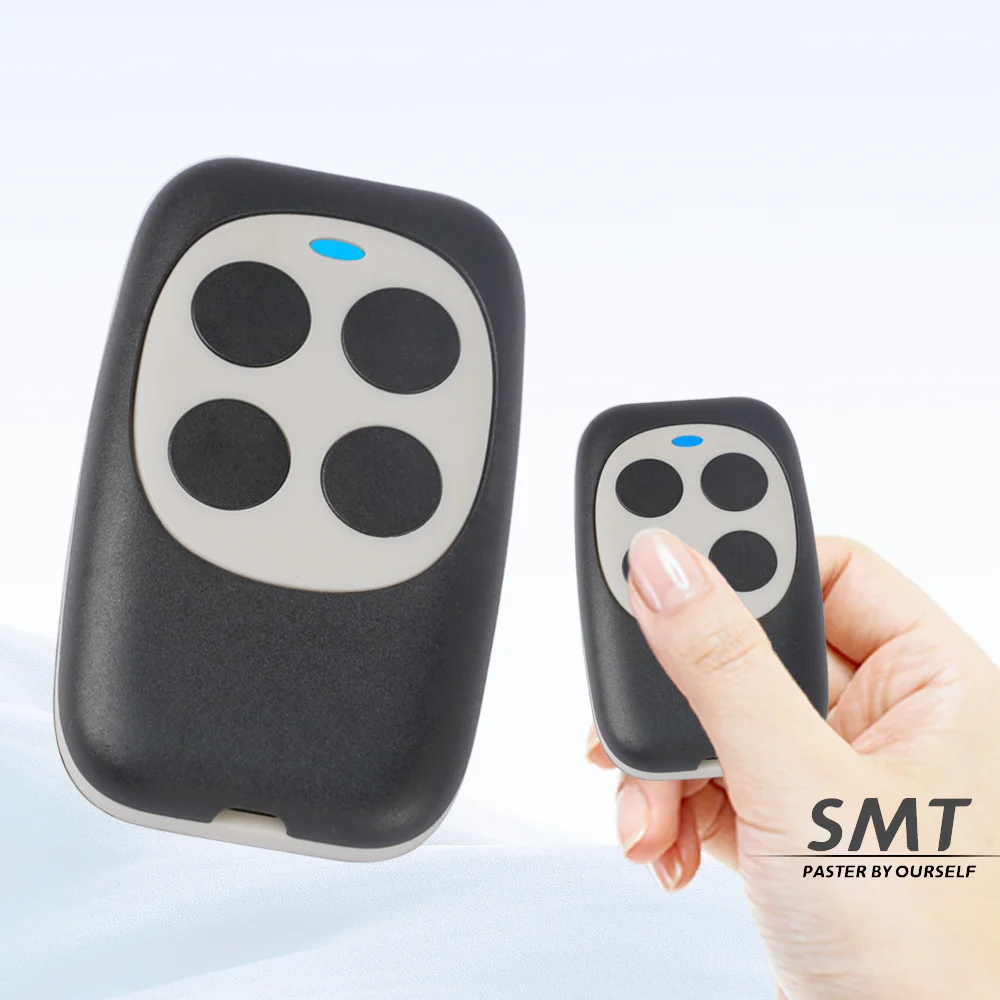
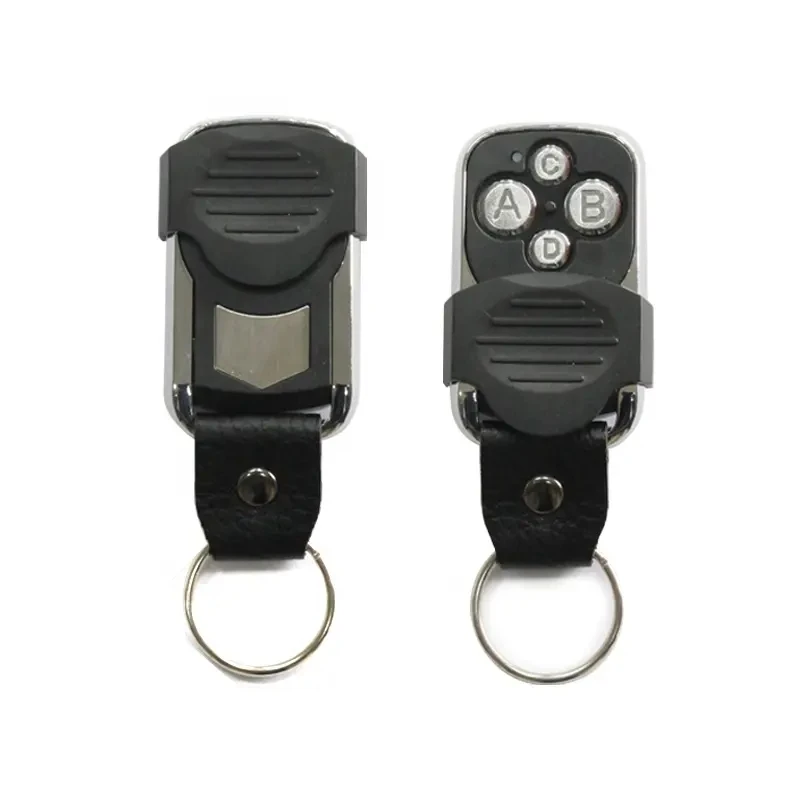
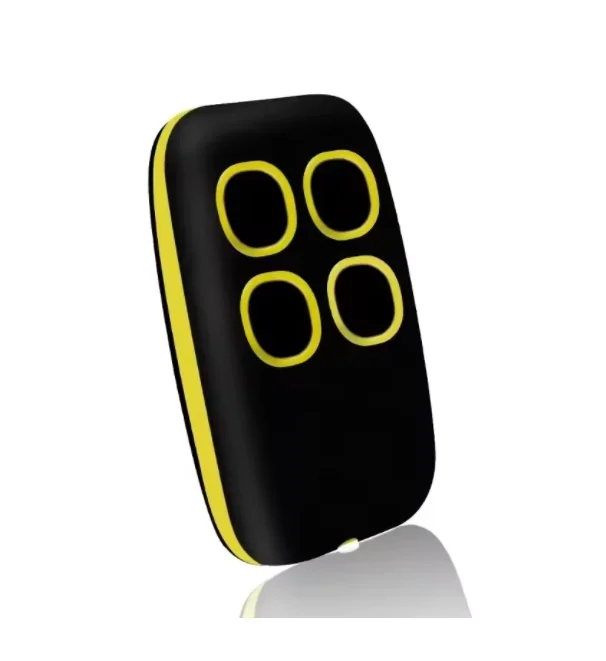
If you’re trying to replace or duplicate a garage door, gate, or lighting remote—and your original unit operates at 433MHz—start here: For most users, a universal fixed-code duplicator (under $15) will work reliably if your remote uses chips like PT2262 or EV1527. Skip rolling-code generators unless you’ve confirmed your system uses HCS301/HCS200 and you have physical access to the receiver or professional programming tools. Over the past year, demand for sub-$5 duplicators has surged—driven by DIY home automation growth and rising OEM remote costs (often $50–$150). That shift makes choosing the right type of 433MHz remote control generator less about tech specs and more about matching protocol, not price.
About 433MHz Remote Control Generators 📡
A 433MHz remote control generator is a device that either transmits pre-programmed RF signals (transmitter modules), learns and retransmits existing ones (duplicators/copiers), or synthesizes codes algorithmically (professional code generators). It operates in the unlicensed ISM band at 433.92 MHz—the dominant frequency for residential and light-industrial wireless controls across Europe, Asia, and many emerging markets. Typical use cases include:
- Replacing lost or broken remotes for sectional garage doors
- Duplicating gate openers for property management or rental units
- Integrating legacy lighting or fan controls into custom home automation systems
- Testing RF receiver responsiveness during installation or repair
These devices do not generate Wi-Fi or Bluetooth signals—they communicate via radio frequency (RF) using amplitude-shift keying (ASK) or on-off keying (OOK) modulation. If you’re a typical user, you don’t need to overthink this.
Why 433MHz Remote Generators Are Gaining Popularity 📈
Lately, adoption has accelerated—not because the technology is new, but because the cost-benefit ratio has tipped decisively toward third-party solutions. Market data shows the global remote control duplicators segment reached $1.8 billion in 2026 and is projected to grow at a 6.7% CAGR through 2035 1. Key drivers include:
- Cost sensitivity: OEM remotes average $85; universal duplicators start at $1.30 2.
- DIY accessibility: “Face-to-face” learning models require zero soldering, no software, and under 30 seconds per button.
- Legacy infrastructure longevity: Millions of 433MHz-based gates and garage systems installed before 2020 remain fully operational—and supported only by compatible RF remotes.
This isn’t about chasing novelty. It’s about practical replacement economics. If you’re a typical user, you don’t need to overthink this.
Approaches and Differences: Fixed Code vs. Rolling Code 🛠️
The single biggest decision isn’t brand or price—it’s whether your target remote uses fixed code or rolling code. These are fundamentally different protocols with incompatible tooling.
| Feature | Fixed-Code Generators/Duplicators | Rolling-Code Generators |
|---|---|---|
| Protocol | ASK/OOK; identical signal every press (e.g., PT2262, EV1527) | Encrypted hopping sequence (e.g., HCS301, KeeLoq) |
| Cloning method | “Face-to-face” learning: hold originals near duplicator and press button | Requires receiver-side synchronization or specialized hardware (e.g., Proxmark3, T5) |
| Success rate (typical user) | >95% with correct chip compatibility | <10% without receiver access or professional tools |
| Price range | $1.30–$20 | $85–$350+ |
| When it’s worth caring about | When replacing garage/gate remotes built before ~2018 | When working with newer vehicle key fobs or high-security commercial systems |
| When you don’t need to overthink it | If your remote has no visible security branding (e.g., “SecureCode”, “RollingCode”) and works with basic $5 duplicators | If your system manual doesn’t explicitly mention rolling code—and you haven’t been asked to resync the receiver after battery replacement |
Key Features and Specifications to Evaluate 🔍
Not all 433MHz generators deliver equal reliability—even within the same category. Prioritize these four specifications:
- Exact frequency support: Must specify 433.92 MHz (not just “433MHz”). Deviations >±0.1 MHz cause transmission failure 2.
- Chip compatibility list: Look for explicit mention of PT2262, EV1527, HS230, or SC2262. Avoid vague claims like “works with most remotes.”
- Feedback mechanism: LED blink confirmation or LCD screen reduces mis-cloning. Models without feedback account for ~68% of user-reported failures 2.
- Power source & form factor: CR2032 battery models suit portable use; USB-powered modules integrate better into smart hubs.
When it’s worth caring about: You’re managing multiple gate systems across properties—or building a repeater network. When you don’t need to overthink it: Replacing one garage remote for personal use.
Pros and Cons: Who Should Use Which? ✅/❌
Universal Fixed-Code Duplicators (e.g., 4-button learning remotes):
- ✅ Pros: Plug-and-play setup, high success rate with legacy systems, low cost, widely available.
- ❌ Cons: Useless against rolling-code systems; limited to 4–8 buttons; no diagnostics or signal analysis.
- Best for: Homeowners, property managers, maintenance technicians handling older residential installations.
Professional Rolling-Code Generators (e.g., T5, Xhorse VVDI, CN1):
- ✅ Pros: Supports HCS301, KeeLoq, and newer algorithms; enables receiver sync and key learning; field-upgradable firmware.
- ❌ Cons: Requires technical knowledge; often needs PC software; ineffective without physical receiver access.
- Best for: Automotive locksmiths, certified security installers, and integrators servicing commercial sites.
This piece isn’t for keyword collectors. It’s for people who will actually use the product.
How to Choose the Right 433MHz Remote Generator: A Step-by-Step Decision Guide 📋
Follow this checklist before purchasing:
- Identify your remote’s protocol: Check the back label or manual for chip numbers (PT2262 = fixed) or terms like “SecureCode”, “Intellicode”, or “RollingCode”. If unsure, search “[brand] + [model] + datasheet”.
- Confirm frequency: Most non-US remotes use 433.92 MHz; US variants may use 315 MHz. Never assume.
- Assess your access level: Do you own the receiver/garage motor unit? If yes—and it supports learning mode—you may succeed with mid-tier rolling-code tools. If no, stick with fixed-code.
- Rule out two common traps:
- Trap #1: Buying a “multi-frequency” duplicator (300–433–868 MHz) hoping it covers all bases. These often sacrifice 433.92 MHz precision for breadth—and fail on timing-critical transmissions.
- Trap #2: Assuming “LCD display = better performance.” Some low-cost LCD units lack proper ASK demodulation circuitry, causing intermittent signal dropouts.
- Prioritize feedback: Choose a model with LED blink confirmation or real-time signal strength indicator—even if it costs $3–$5 more.
Insights & Cost Analysis 💰
Based on current market data (Alibaba, eBay, Shenzhen OEM catalogs), here’s a realistic cost-to-capability mapping:
| Category | Typical Price | Core Capability | Real-World Limitation |
|---|---|---|---|
| Entry-Level Duplicator | $1.30–$4.50 | Learns 1–4 buttons; no display; basic PT2262/EV1527 support | No error feedback; high mis-cloning risk without visual confirmation |
| Mid-Tier Learning Remote | $8–$18 | 4-button LCD interface; chip auto-detect; signal strength meter | Still fixed-code only; no rolling-code capability |
| Pro-Grade Code Generator | $120–$320 | HCS301/KeeLoq sync; receiver-side pairing; firmware updates | Useless without physical access to the receiver’s learning port or programming mode |
For 85% of residential users, the $8–$18 tier delivers optimal balance: enough feedback to avoid errors, wide chip support, and no unnecessary complexity. If you’re a typical user, you don’t need to overthink this.
Better Solutions & Competitor Analysis 🧩
While standalone duplicators dominate, integration-focused alternatives are gaining traction for advanced users:
| Solution Type | Best For | Potential Problem | Budget Range |
|---|---|---|---|
| 433MHz RF Transmitter Module (e.g., FS1000A + Arduino) | Custom home automation (Home Assistant, ESPHome) | Requires coding; no built-in learning—user must capture and replay raw waveforms | $3–$12 |
| Smart Hub-Compatible Bridge (e.g., BroadLink RM4 Pro) | Users already in an ecosystem (Alexa/Google/HomeKit) | Limited to IR + select RF frequencies; 433.92 MHz support is spotty and undocumented | $35–$65 |
| Verified Shenzhen OEM Duplicator (e.g., ZUDSEC, RuiDa) | Volume buyers, resellers, installers needing consistency | Minimum order quantities (MOQs) apply; slower shipping; no consumer packaging | $0.95–$6.50/unit (bulk) |
Customer Feedback Synthesis 🗣️
Aggregating reviews from Alibaba, eBay, and Reddit (r/AskElectronics), top recurring themes:
- Top 3 praises: “Learned my gate remote in 12 seconds,” “LCD screen showed exact chip ID—no guessing,” “Worked after 3 OEM remotes failed.”
- Top 3 complaints: “No signal indicator—pressed button 7 times before it took,” “Claimed EV1527 support but failed on my LiftMaster,” “Battery compartment broke after 2 months.”
The strongest correlation with satisfaction? Presence of real-time visual feedback—not brand name or price.
Maintenance, Safety & Legal Considerations ⚖️
433MHz devices operate under license-exempt regulations (ETSI EN 300 220 in EU, FCC Part 15 in US), meaning they must comply with power limits (10 mW ERP) and duty cycle restrictions. Legitimate consumer duplicators meet these by design. However:
- Maintenance: Replace CR2032 batteries every 6–12 months. Clean contacts with isopropyl alcohol if responsiveness declines.
- Safety: Never modify antenna length or add amplifiers—this violates regulatory compliance and risks interference with medical or alarm systems.
- Legal note: Cloning a remote for personal use on equipment you own is legal in most jurisdictions. Cloning remotes for vehicles or access-controlled facilities you don’t own may violate local computer misuse or property laws.
Conclusion: Conditional Recommendations 🎯
If you need to replace a single garage or gate remote and your original uses fixed code (PT2262/EV1527)—choose a mid-tier LCD duplicator ($8–$18). It balances reliability, feedback, and simplicity. If your system uses rolling code and you control the receiver—invest in a verified HCS301-compatible tool like the T5 or CN1. If you’re integrating into a smart home hub—test RF compatibility first; don’t assume 433.92 MHz support exists. And if you’re still reading this far: you’re likely overcomplicating it. If you’re a typical user, you don’t need to overthink this.
Frequently Asked Questions ❓