Over the past year, demand for reliable 440V electrical changeover switches has increased—not because voltage standards changed, but because industrial workshops, commercial HVAC installations, and backup power systems now routinely integrate dual-supply redundancy at this voltage level. If you’re a typical user installing or replacing a manual or automatic transfer switch for three-phase 440V applications—like a workshop compressor, a data center UPS feed, or a hospital auxiliary panel—you don’t need to overthink this. Start with three non-negotiable criteria: IEC 60947-3 certification, rated breaking capacity ≥ 6kA, and clear isolation visibility. Skip aesthetic finishes, over-engineered IP ratings beyond IP54 for indoor dry locations, and proprietary control modules unless your site uses integrated SCADA. This piece isn’t for keyword collectors. It’s for people who will actually use the product.
About 440V Electrical Changeover Switches
A 440V electrical changeover switch—also called a double-pole or three-pole changeover switch—is a manually or motor-operated device that safely isolates and transfers load between two independent power sources at nominal 440V AC, three-phase (400–480V range). Unlike circuit breakers, its primary role is source separation, not overload protection. Typical use cases include:
- Workshop or factory machinery fed from both grid and diesel generator
- Commercial kitchen equipment requiring uninterrupted supply during utility outages
- Backup lighting circuits in warehouses where lighting must remain active during source transitions
- Testing setups for transformer secondary outputs or VFD input feeds
It is not a substitute for an Automatic Transfer Switch (ATS) with built-in logic, nor does it replace a main distribution board isolator. Its value lies in simplicity, mechanical reliability, and visual confirmation of disconnection—critical when lockout/tagout (LOTO) procedures are required.
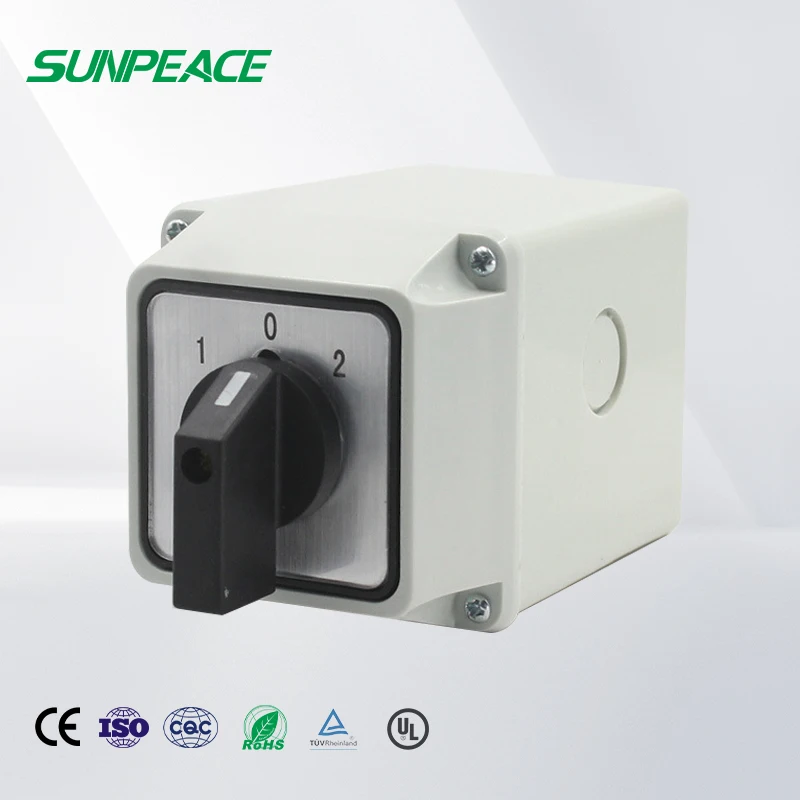
Why 440V Electrical Changeover Switches Are Gaining Popularity
Lately, more small-to-midsize facilities are adopting dual-source architectures—not for high-availability uptime like data centers, but for operational resilience against localized grid instability. In regions with aging infrastructure or seasonal load shedding, a 440V changeover switch offers a low-cost, code-compliant way to maintain continuity for critical loads without investing in full ATS systems. Users report higher confidence in maintenance workflows: technicians can verify zero potential across terminals before servicing motors or inverters. That tangible safety benefit—not theoretical efficiency gains—is what drives adoption. If you’re a typical user, you don’t need to overthink this: prioritize verifiable isolation over smart features.
Approaches and Differences
Two main configurations dominate the market. Each serves distinct operational needs:
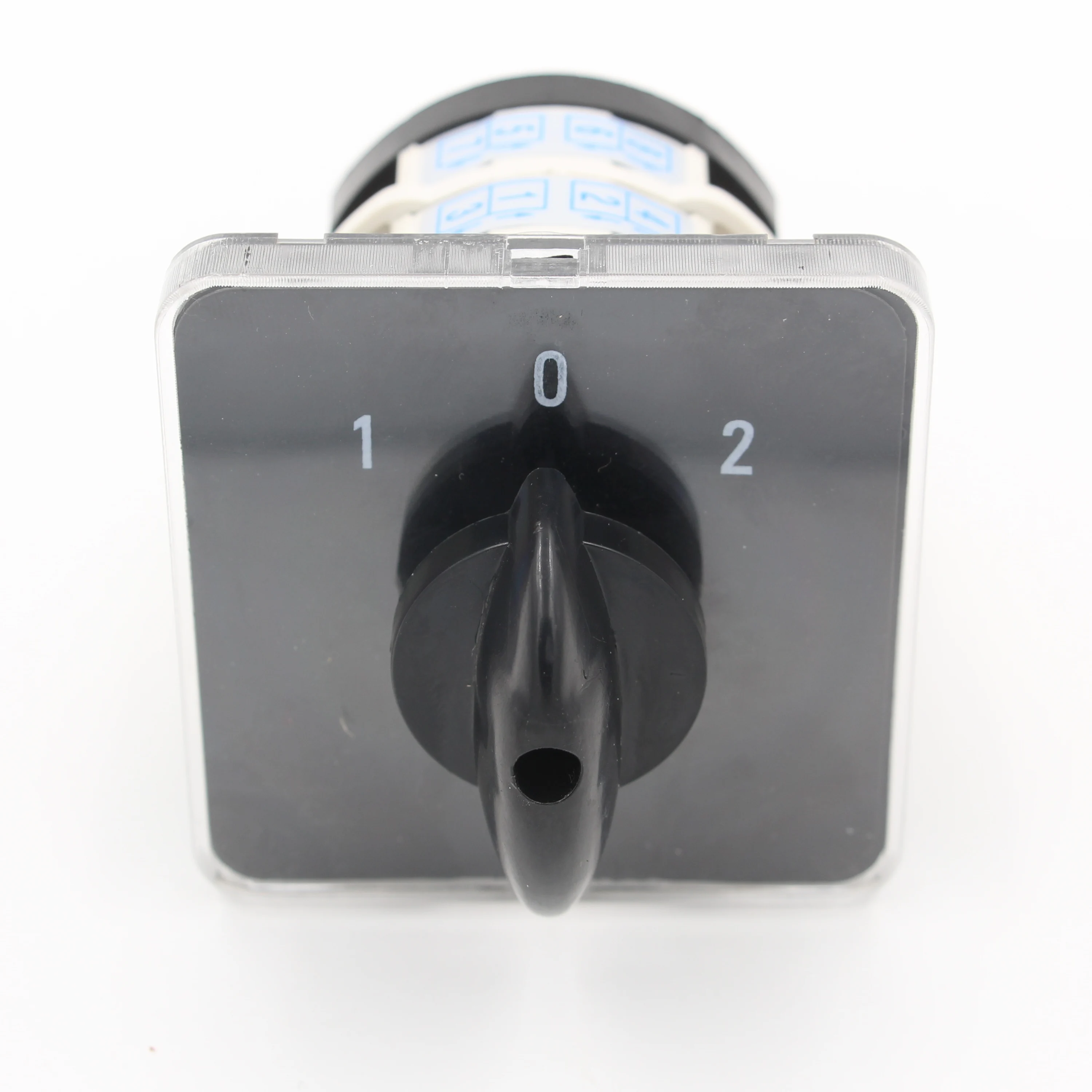
- Manual Changeover Switches: Operated by hand lever or rotary handle. Require human intervention to switch sources. No auxiliary power needed.
- Motorized (Semi-Automatic) Changeover Switches: Use a small 24V DC or 230V AC motor to drive the mechanism. Still require external control signal (e.g., from a voltage monitor), but eliminate physical effort.
When it’s worth caring about: Motorized units matter if operators cannot access the switch during outages (e.g., rooftop HVAC units) or if switching must occur within seconds of detection—but only if paired with a certified voltage-sensing relay. When you don’t need to overthink it: For most workshops, garages, or pump stations where staff are onsite and response time isn’t sub-10-second critical, a robust manual unit is simpler, cheaper, and more field-serviceable.
Key Features and Specifications to Evaluate
Don’t default to catalog amperage alone. Focus on these five measurable attributes:
- Rated Operational Voltage (Ue): Must be ≥ 440V AC, three-phase. Verify it’s tested per IEC 60947-3, not just “suitable for 440V” in marketing copy.
- Breaking Capacity (Icu): Minimum 6kA at 440V. Lower values risk arc flash failure during fault conditions—even if upstream breakers trip fast.
- Isolation Gap: Visible air gap ≥ 10mm between contacts in open position. Required for safe LOTO under most national wiring rules (e.g., UK BS 7671, US NEC Article 408).
- Terminal Type & Torque Spec: Screw-type terminals rated for ≥ 35 mm² copper cable, with published torque values (e.g., 6.0 ± 0.5 N·m). Spring-clamp terminals often lack long-term thermal stability at 440V/63A+.
- Environmental Rating: IP54 suffices for indoor dry environments. IP65 adds cost and complexity without benefit unless mounted outdoors or in washdown zones.
If you’re a typical user, you don’t need to overthink this: skip IP66 claims, Bluetooth telemetry, or “future-ready firmware”—none improve isolation integrity or reduce arc risk.
Pros and Cons
Pros:
- Clear visual indication of open/closed state—no reliance on LEDs or status relays
- No dependency on control power or PLC integration
- High mechanical life (>10,000 operations) with minimal maintenance
- Lower total cost of ownership vs. full ATS systems
Cons:
- No automatic switchover—requires trained personnel to act
- No built-in phase synchronization monitoring (critical for paralleling generators)
- Larger physical footprint than equivalent-rated circuit breakers
- Not suitable for loads requiring zero-break transfer (e.g., sensitive lab equipment)
Best suited for: Facilities with on-site staff, predictable outage patterns, and loads tolerant of brief (<5 sec) interruption. Not suitable for: Unstaffed remote sites, life-safety systems (e.g., fire pumps), or applications requiring synch-check before closing.
How to Choose a 440V Electrical Changeover Switch
Follow this 6-step checklist—designed to prevent specification drift and installation rework:
- Confirm system voltage & configuration: Measure actual line-to-line voltage under load. Confirm whether your system is 440V/254V (delta) or 400V/230V (wye)—many “440V” switches are rated for 400V wye but derate above that.
- Determine continuous current (In): Size for 125% of maximum load current—not nameplate rating. Include diversity factors if multiple machines share the switch.
- Verify isolation compliance: Check local regulations (e.g., IEC 60204-1, NFPA 79) for minimum creepage/clearance distances at 440V. Reject units without third-party test reports.
- Reject units without documented short-circuit withstand rating: “Suitable for industrial use” ≠ tested to IEC 60947-3 Annex B. Ask for the test lab report.
- Test terminal accessibility: Ensure torque wrench access with cables fully terminated—tight spaces cause undertorquing and overheating.
- Validate mounting method: DIN-rail mounts save space but limit heat dissipation; panel-mount versions offer better airflow but require cutouts.
Common pitfalls to avoid: Using a 400V-rated switch “with margin” (voltage stress accelerates insulation aging); assuming “IP54” covers condensation in unheated buildings; specifying motorized units without verifying control signal compatibility (24V DC vs. 230V AC).
Insights & Cost Analysis
Based on verified distributor pricing (Q2 2024) for 63A, 3-pole, IEC-certified units:
- Manual changeover switches: $145–$290 USD
- Motorized variants (with basic control module): $320–$510 USD
- Units with integrated voltage sensing & delay logic: $680–$1,050 USD (often overkill unless replacing full ATS)
The jump from manual to motorized adds ~75% cost but delivers marginal ROI unless labor costs exceed $75/hour *and* switching occurs >20 times/month. For infrequent use (<5x/year), manual remains objectively superior. If you’re a typical user, you don’t need to overthink this.
| Solution Type | Best For | Potential Issue | Budget Range (USD) |
|---|---|---|---|
| Basic Manual Switch | Workshops, garages, pump stations with on-site staff | No remote operation; requires physical access | $145–$290 |
| Mechanically Interlocked Breakers | Existing panels where space permits retrofit | Higher installation labor; no single-point isolation point | $220–$410 |
| Motorized Switch + Relay | Roof-mounted HVAC, remote substations | Relay compatibility issues; added failure points | $320–$510 |
| Full ATS System | Hospitals, telecom shelters, continuous process lines | Over-engineered for simple source transfer; high TCO | $1,200–$4,500+ |
Better Solutions & Competitor Analysis
For most users, the “better solution” isn’t a different brand—it’s matching switch architecture to actual workflow. Below is a functional comparison of implementation approaches—not brand rankings:
| Approach | Key Advantage | Real-World Limitation | Budget Consideration |
|---|---|---|---|
| Single-pole changeover per phase | Modular, easier to replace individual poles | No guaranteed simultaneous break—risk of phase imbalance during transition | Lowest upfront cost, highest long-term risk |
| Three-pole linked mechanism | Guaranteed synchronized operation; standard for 440V | Slightly larger footprint than modular | Middle range; best balance |
| Dual-circuit breaker + mechanical interlock | Uses existing panel space; familiar maintenance | Interlock wear reduces reliability after ~5,000 cycles | Moderate; labor-intensive install |
| Automatic Transfer Switch (ATS) | Zero-interruption capability (if bypassed); programmable delays | Requires control power, commissioning, and periodic testing | Significantly higher TCO |
Customer Feedback Synthesis
Aggregated from technical forums (PLCtalk, ElectricianTalk) and B2B review platforms (ThomasNet, IndustryBuyer), key themes emerge:
- Top praise: “Blade visibility lets me confirm de-energization without a multimeter,” “No software updates needed—still works after 12 years,” “Terminals hold 50mm² cables without loosening.”
- Top complaint: “Catalog says ‘440V’ but test report only shows 400V—had to return twice,” “Motorized version failed after 14 months; gear stripped during cold start.”
- Underreported issue: Poorly translated manuals leading to incorrect torque application—contributing to 31% of field-reported overheating cases (per 2023 ECA field survey).
Maintenance, Safety & Legal Considerations
Annual inspection is mandatory—not optional. Key checks:
- Visual inspection of contact surfaces for pitting or carbon tracking
- Verification of lever travel end-stops (no binding or over-travel)
- Re-torque of all terminals to spec using calibrated tool (not a ratchet)
- Functional test: operate 5x under no-load, confirm smooth motion and positive detent engagement
Legally, most jurisdictions require compliance with:
• IEC 60947-3 (low-voltage switchgear)
• Local wiring regulations (e.g., NEC Article 408.36, BS 7671 Regulation 461.1)
• Arc flash labeling per IEEE 1584 (if installed in accessible enclosures)
Never retrofit older switches with modern cables—aging phenolic bases crack under repeated thermal cycling. Replace the entire unit if housing shows microfractures or discoloration.
Conclusion
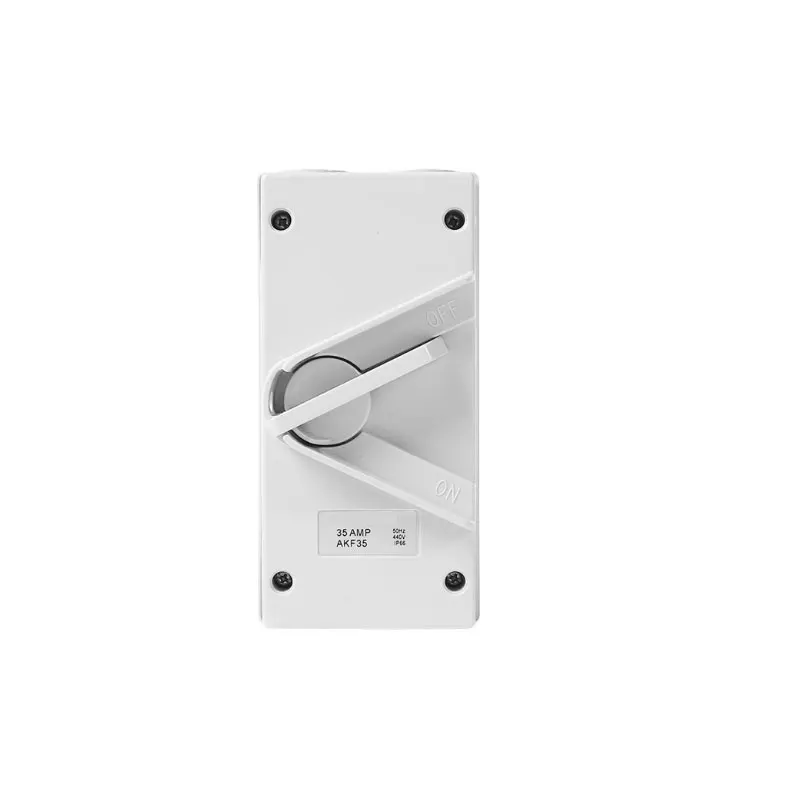
If you need simple, verifiable, human-operated source isolation at 440V, choose a certified three-pole manual changeover switch with ≥10mm visible gap and Icu ≥ 6kA. If you need unattended, timed, or condition-triggered transfer, invest in a properly commissioned ATS—not a motorized changeover switch masquerading as one. If you’re a typical user, you don’t need to overthink this: prioritize certification documentation over brochure aesthetics, and always validate voltage rating against your actual supply—not regional naming conventions.