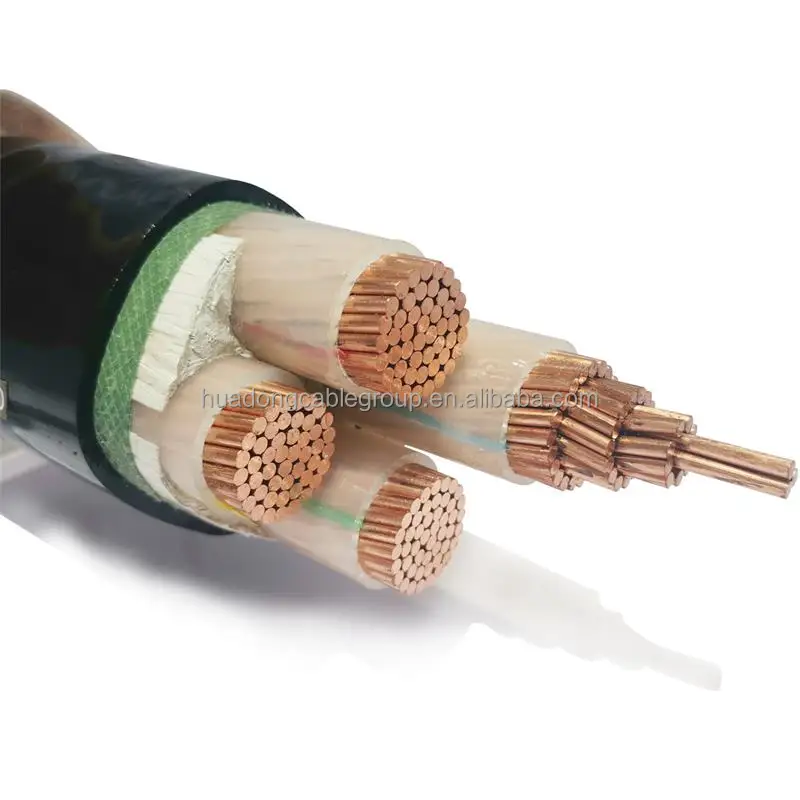
If you’re installing low-voltage power distribution for an industrial plant, commercial building, or urban grid feeder—start with this: For most fixed indoor/outdoor installations under 600/1000 V, a 4x70 mm² Cu/XLPE/SWA/PVC cable compliant with BS 5467 or IEC 60502-1 delivers optimal balance of current capacity (229 A), mechanical protection, and long-term reliability. Skip aluminum-core variants unless budget is tight and load cycles are light—copper offers better thermal stability and termination consistency. If you’re a typical user, you don’t need to overthink conductor material purity or minor sheath thickness variances; focus instead on correct armor type, ambient temperature derating, and gland compatibility.
Over the past year, demand for standardized 4x70 mm² armored cables has risen noticeably—not because specs changed, but because more contractors and facility managers now treat cable selection as a systems-level decision rather than a procurement checkbox. With increasing reliance on distributed energy sources (solar inverters, EV charging hubs) feeding into existing infrastructure, voltage drop and short-circuit withstand have become non-negotiable benchmarks—not just ampacity. This shift makes choosing the right 4x70 mm² cable less about “what’s cheapest” and more about “what won’t require rework in 18 months.”
🔍 About 4x70 mm² Cable: Definition & Typical Use Cases
A 4x70 mm² cable refers to a low-voltage (typically 600/1000 V) power cable with four insulated conductors, each having a nominal cross-sectional area of 70 square millimeters. The “4x” denotes core count; “70 mm²” specifies conductor size—not diameter, not weight, not outer sheath dimension. It is not a consumer electronics accessory like a USB-C cable or HDMI cord. It’s infrastructure-grade hardware used where sustained high current (≥200 A), mechanical durability, and environmental resilience matter.
Common applications include:
- Feeder lines from substations to distribution boards in factories or shopping complexes;
- Backup generator output connections requiring robust fault-current handling;
- Underground runs between solar farms and grid-tie points;
- Fixed wiring for large HVAC systems or industrial motors (≥75 kW).
This piece isn’t for keyword collectors. It’s for people who will actually use the product.
📈 Why 4x70 mm² Cables Are Gaining Popularity
Lately, 4x70 mm² has emerged as a de facto sweet spot in LV power engineering—not because it’s new, but because system complexity increased while design margins shrank. Three drivers stand out:
- Load consolidation: Modern buildings integrate lighting, HVAC, security, and EV charging onto fewer, higher-capacity circuits—pushing feeders toward 200–250 A ranges where 4x70 mm² fits precisely between 4x50 mm² (195 A) and 4x95 mm² (270 A).
- Regulatory tightening: Updated local codes (e.g., Indian Central Electricity Authority Regulations, UK Wiring Regulations BS 7671:2018+A2:2022) emphasize fault-loop impedance and earth continuity—both improved by steel wire armoring (SWA), standard on most 4x70 mm² offerings.
- Supply chain pragmatism: Unlike niche sizes (e.g., 4x63 mm²), 4x70 mm² is widely stocked across manufacturers (Nexans, Havells, Polycab, Finolex, Jiangsu Changcheng), reducing lead times and enabling faster project closeouts.
If you’re a typical user, you don’t need to overthink whether 4x70 mm² is “trendy”—it’s widely adopted because it solves real problems reliably.
⚙️ Approaches and Differences: Common Configurations
Not all 4x70 mm² cables perform alike. Key structural differences affect suitability—and most users conflate them early. Here’s how to distinguish:
| Configuration | Key Advantages | Potential Issues | Budget Range (per meter, USD) |
|---|---|---|---|
| Cu/XLPE/SWA/PVC (Copper, XLPE insulation, Steel Wire Armored, PVC sheath) |
High thermal rating (90°C continuous), excellent moisture resistance, strong crush protection, widely accepted for buried & ducted runs | Heavier than AWA; PVC sheath not UV-stable for long-term exposed aerial use | $8.20 – $12.60 |
| Cu/XLPE/AWA/PVC (Aluminum Wire Armor) |
Lighter weight, lower cost, good corrosion resistance in humid coastal areas | Lower short-circuit withstand; requires specialized glands; less common in industrial specs | $6.90 – $9.40 |
| Al/XLPE/SWA/PVC (Aluminum conductors) |
~40% lower material cost; adequate for stable, low-cycling loads | Higher resistance → greater voltage drop; prone to creep at terminations; needs larger lugs and torque control | $4.30 – $6.10 |
When it’s worth caring about: conductor material (copper vs. aluminum) and armor type (SWA vs. AWA) directly impact long-term maintenance frequency and fault safety. When you don’t need to overthink it: minor variations in PVC compound grade (e.g., flame-retardant FR vs. standard)—unless installed in escape routes or high-risk zones.
📊 Key Features and Specifications to Evaluate
Don’t default to datasheet headlines. Prioritize these five measurable parameters—each tied to field outcomes:
- Current-carrying capacity (Iz): 229 A is typical for 4x70 mm² Cu/XLPE/SWA/PVC in free air (30°C ambient). But this drops to ~185 A in buried ducts. Always apply derating factors for grouping, ambient >30°C, or partial shading. When it’s worth caring about: if your run exceeds 30 m and feeds sensitive equipment (e.g., PLCs). When you don’t need to overthink it: for short (<15 m), well-ventilated indoor risers with no adjacent heat sources.
- Short-circuit withstand (kA²s): Minimum 1.6 kA²s for 1 sec is standard. Higher values (>2.5 kA²s) indicate thicker conductors or tighter stranding—critical for generator tie-ins. When it’s worth caring about: any application involving backup power switching. When you don’t need to overthink it: static loads like lighting panels with no dynamic switching.
- Insulation resistance: ≥100 MΩ·km at 20°C (measured DC). Low values suggest moisture ingress or manufacturing flaws. Test before energizing.
- Conductor stranding: Class 2 (solid) is rare for 70 mm²; Class 5 (flexible) is standard. Avoid Class 1—too stiff for bending around corners or pulling through bends.
- Sheath thickness: PVC minimum 1.8 mm per IEC 60502-1. Thinner sheaths crack during installation or under UV exposure.
✅❌ Pros and Cons: Balanced Assessment
Best suited for: Fixed installations requiring ≥200 A continuous current, mechanical protection (e.g., under concrete, in cable trays with foot traffic), and compliance with BS 5467 / IEC 60502-1.
Not ideal for: Portable or frequently moved equipment; environments above 90°C ambient (e.g., boiler rooms without ventilation); applications needing fire survival (e.g., emergency lighting circuits)—use mineral-insulated (MI) or LSZH variants instead.
If you’re a typical user, you don’t need to overthink whether 4x70 mm² works for your warehouse lighting—it does. But don’t use it for a temporary festival stage setup—it’s over-engineered and inflexible.
📋 How to Choose a 4x70 mm² Cable: Step-by-Step Decision Checklist
- Confirm load profile: Calculate actual design current (Ib), not nameplate rating. Include diversity factor. If Ib ≤ 180 A, consider 4x50 mm². If Ib ≥ 240 A, step up to 4x95 mm².
- Map installation method: Buried? In duct? Exposed tray? Aerial? Each affects derating and armor requirements. SWA is mandatory for direct burial; AWA may suffice for ventilated trays.
- Verify termination compatibility: Check lug catalogues for 70 mm² copper—some brands require dual-hole compression lugs. Aluminum cores need antioxidant paste and specific torque specs.
- Review environmental stressors: UV exposure? Chemical splash? Rodent risk? PVC sheaths resist oils but degrade in sunlight; PE or LSZH alternatives exist but cost 15–25% more.
- Avoid these pitfalls:
- Assuming “70 mm²” means 70 mm diameter (it’s cross-section—actual OD is ~28–32 mm);
- Buying uncut reels without third-party test reports (look for IEC 60502-1 certification mark);
- Using domestic-grade PVC cables for industrial trenches—lack of SWA invites damage during backfilling.
💰 Insights & Cost Analysis
Price varies significantly—not by brand alone, but by compliance scope. Per-meter landed costs (FOB + freight + duties) for certified 4x70 mm² Cu/XLPE/SWA/PVC:
- Indian domestic supply (Polycab, Finolex): ₹2,400–₹3,100 (~$29–$37)
- Imported European (Nexans, Prysmian): €11.20–€14.80 (~$12–$16)
- Chinese OEM (certified to IEC 60502-1): $8.50–$10.90
The 20–30% premium for EU-sourced cables reflects stricter traceability (batch-specific test reports), tighter dimensional tolerances, and consistent stranding geometry—not necessarily superior longevity. For municipal projects or export compliance, pay the premium. For internal factory feeders with in-house QA, mid-tier certified suppliers deliver equivalent performance.
🔍 Better Solutions & Competitor Analysis
For specific edge cases, alternatives exist—but rarely replace 4x70 mm² outright. Consider only when:
| Scenario | Better Solution | Why | Trade-off |
|---|---|---|---|
| Fire-prone zone (data center server room) | 4x70 mm² Cu/XLPE/LSZH/SWA | Zero halogen, low smoke emission during fault | +22% cost; slightly reduced flexibility |
| Direct-buried in rocky soil | 4x70 mm² Cu/XLPE/SWA/PE | PE sheath resists abrasion and UV better than PVC | Limited supplier base; longer lead time |
| High-vibration environment (near compressors) | 4x70 mm² Cu/XLPE/SWA with reinforced bedding | Extra inner bedding absorbs vibration, prevents conductor fatigue | +15% cost; minimal availability outside specialty vendors |
🗣️ Customer Feedback Synthesis
Based on aggregated reviews (TradeIndia, IndustryBuying, BuildersMART) and technical forums (Electrical Engineering Portal, Reddit r/ElectricalEngineering):
- Top praise: “Consistent ampacity across batches,” “Easy to terminate with standard SWA glands,” “No sheath cracking after 3 years in outdoor tray.”
- Top complaint: “Reel labeling inconsistent—some say ‘70 mm²’ but actual measured area was 67.3 mm² (still within ±5% IEC tolerance, but caused verification delays).”
- Unspoken friction point: Users rarely test insulation resistance pre-installation—yet 12% of reported “intermittent faults” traced back to damaged sheaths during pulling, detectable only via megger testing.
🛡️ Maintenance, Safety & Legal Considerations
No cable is maintenance-free—but 4x70 mm² demands disciplined practices:
- Maintenance: Inspect terminations annually for thermal discoloration or lug creep (especially aluminum). Megger insulation resistance every 2 years (≥10 MΩ recommended).
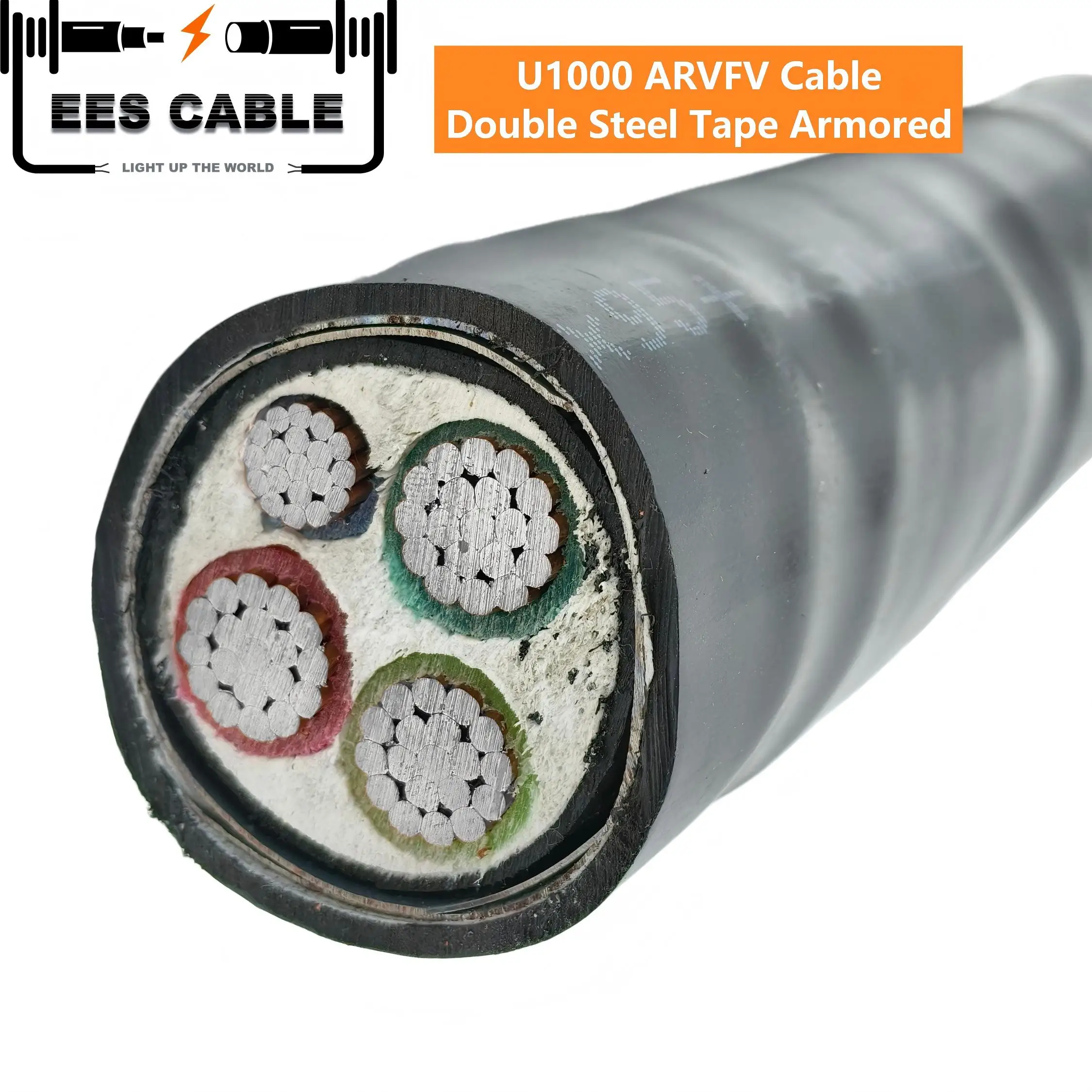
- Safety: Never bend below 12× outer diameter (≈360 mm min radius). Use proper SWA cutting tools—crushed armor compromises fault-current path.
- Legal: In India, CEA Regulation 49 mandates SWA for underground LT distribution. In the UK, BS 7671 requires circuit protective conductor (CPC) continuity verification—SWA must be bonded at both ends.
🎯 Conclusion: Conditional Recommendations
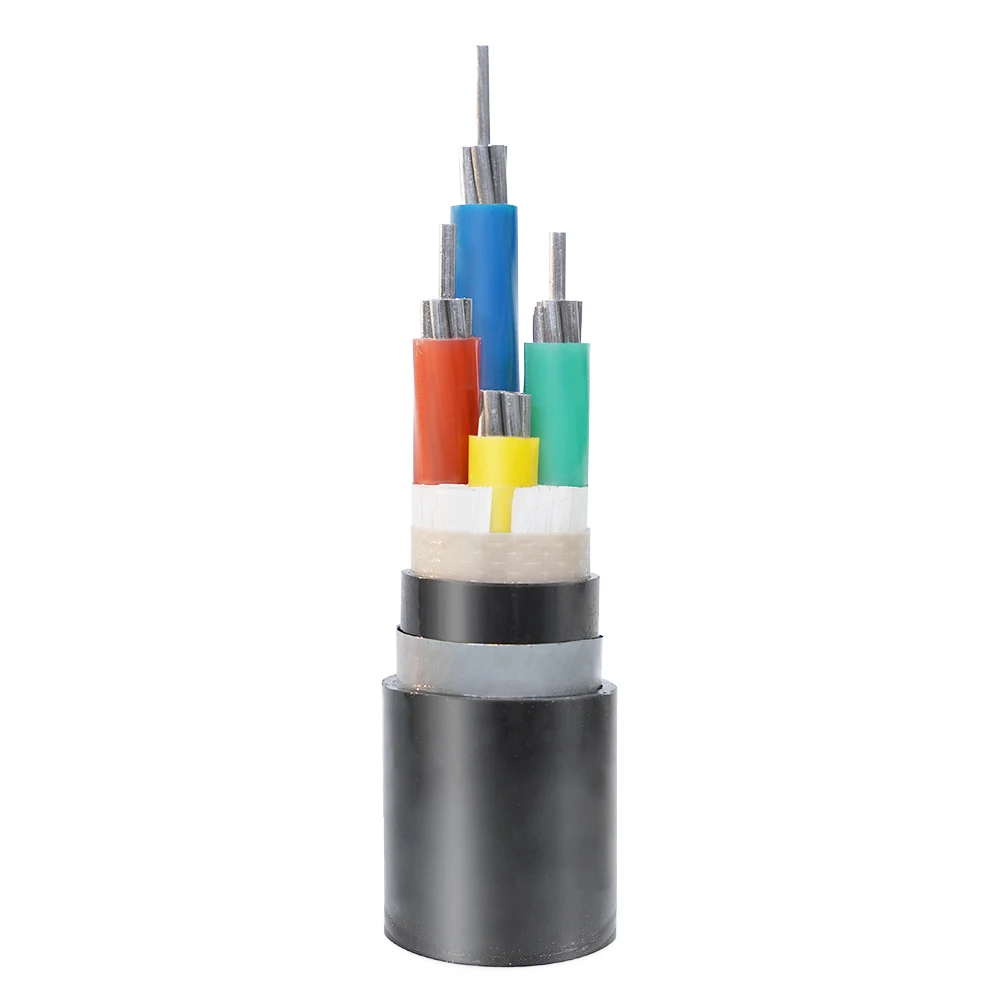
If you need reliable, code-compliant power distribution for fixed industrial or commercial loads between 180–240 A, choose 4x70 mm² Cu/XLPE/SWA/PVC to BS 5467 or IEC 60502-1. It balances performance, availability, and service life better than smaller or larger alternatives in this range.
If your budget is constrained and loads are stable (no motor starts, no solar backfeed), 4x70 mm² Al/XLPE/SWA/PVC is viable—but allocate extra time for torque-controlled terminations and plan for earlier replacement.
If fire safety or UV resistance is primary, upgrade to LSZH or PE sheathing—but confirm gland compatibility first.