About AC Motor Wireless Remote Controls
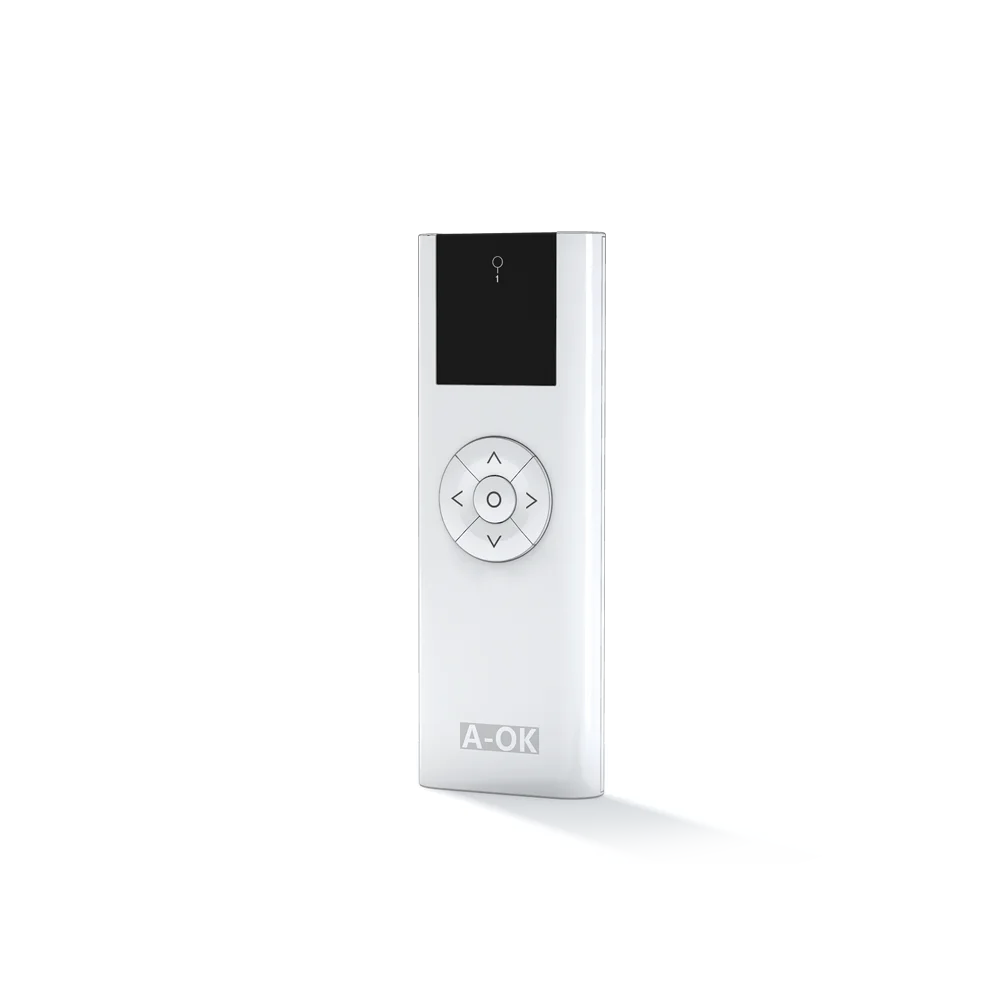
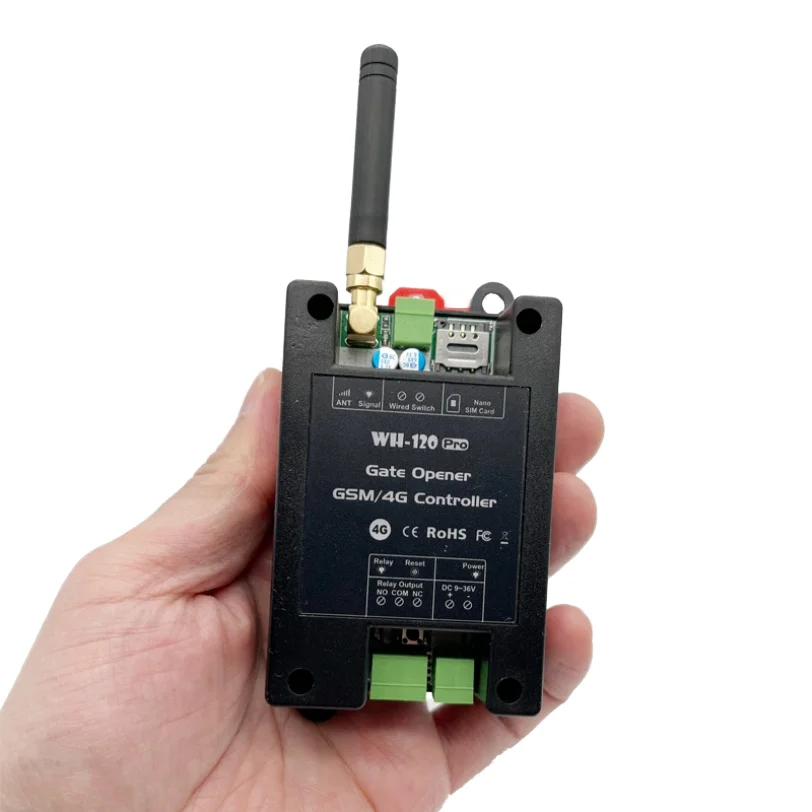
An AC motor wireless remote control is a two-component system: a handheld transmitter and a wall- or DIN-rail-mounted receiver with integrated relays. It replaces manual switches or wired push-button stations for single-phase AC induction motors (typically 1/4 HP to 1 HP). Unlike variable-frequency drives (VFDs) or speed controllers, these systems do not adjust RPM—they enable on/off, direction reversal (CW/CCW), and stop functions via radio frequency (RF), most commonly at 433 MHz. Typical use cases include:
- Roller shutters and tubular motors for windows or garages ⚙️
- Awning and projection screen actuators 🌐
- Small-capacity water pumps and winches ⚡
- Conveyor belts in light industrial or workshop settings 📦
They are not designed for three-phase motors, high-inrush loads (>15A), or applications requiring precise speed regulation or soft start. If you’re a typical user, you don’t need to overthink this—focus first on voltage match, relay rating, and whether your motor requires momentary or latched control logic.
Why AC Motor Wireless Remote Controls Are Gaining Popularity
Lately, adoption has accelerated—not due to breakthroughs in RF engineering, but because users increasingly prioritize installability and interoperability over raw spec sheets. Homeowners retrofitting blinds, contractors upgrading aging gate systems, and makers automating workshop tools all face the same constraint: no rewiring permitted, no electrician on standby, and minimal downtime. Pre-certified 433 MHz kits now ship with clear labeling (e.g., “AC 220–240V, 10A resistive / 6A inductive”), standardized screw terminals, and dual-channel receivers supporting both forward/reverse and up/down logic. That shift—from niche industrial gear to accessible consumer-grade hardware—is what makes this topic more actionable today than five years ago.
Approaches and Differences
Three main architectures dominate the market. Each solves distinct problems—and introduces its own trade-offs.
✅ Single-Channel Latching Kits
One button toggles motor state (on → off → on); common for simple on/off devices like exhaust fans or lights. Rarely used for motors needing directional control.
- Pros: Lowest cost ($12–$18), compact size, easy pairing.
- Cons: Cannot reverse direction; unsuitable for shutters or awnings.
- When it’s worth caring about: Only if controlling a single-direction motor with no stop or reversal requirement (e.g., a fixed-position vent fan).
- When you don’t need to overthink it: For any application requiring up/down or forward/reverse movement—skip entirely.
✅ Dual-Channel Momentary Kits
Two buttons (e.g., “▲” and “▼”) send momentary signals—motor runs only while pressed. Requires user to hold button until desired position is reached.
- Pros: Simple logic, intuitive for short-travel devices (e.g., small awnings), low risk of runaway.
- Cons: Fatiguing for long travel; no memory or auto-stop; vulnerable to signal loss mid-operation.
- When it’s worth caring about: When motor travel time is under 8 seconds and precision positioning isn’t critical.
- When you don’t need to overthink it: For garage doors, large shutters, or anything where hands-free operation matters—latching logic is standard.
✅ Dual-Channel Latching Kits (Most Common)
Press once to start forward rotation; press again to stop; press third time to reverse. Some support dedicated “stop” button. Internal relay logic holds state until next command.
- Pros: Hands-free operation, supports limit switch integration, widely compatible with tubular motors.
- Cons: Slightly higher failure rate if limit switches aren’t wired correctly; requires correct phase wiring to avoid reverse-start damage.
- When it’s worth caring about: Any motor that moves bidirectionally and stops automatically (e.g., roller blinds with mechanical end-stops).
- When you don’t need to overthink it: If your motor lacks built-in end-stops and relies on timing—momentary may be safer.
Key Features and Specifications to Evaluate
Don’t default to “most features.” Prioritize what prevents failure—not what sounds impressive.
- Voltage & Load Rating: Match nominal supply (110V vs. 220–240V) and verify inductive load rating (not just resistive). A 10A resistive rating often drops to 6A for motors. When it’s worth caring about: If motor nameplate shows >5A full-load amps. When you don’t need to overthink it: For sub-300W fans or small pumps under 3A FLA.
- RF Frequency & Range: 433 MHz dominates globally (license-free band). Real-world open-field range is 30–50m; indoors, expect 10–20m. Walls, metal enclosures, and Wi-Fi routers degrade signal. When it’s worth caring about: If operating from another floor or through concrete walls. When you don’t need to overthink it: For line-of-sight use within same room.
- Control Logic Type: Latching (state-hold) vs. momentary (press-to-run). Check motor documentation—some tubular motors require specific pulse width or timing.
- Thermal Protection: Look for receivers with thermal cutoff or relay derating curves. Cheap kits omit this and fail after repeated 2+ minute cycles.
Pros and Cons
Wireless remote control offers clear advantages—but only when matched to realistic constraints.
- ✅ Pros: No new conduit or junction boxes; fast retrofit; scalable (add extra transmitters); eliminates trip hazards from dangling cords.
- ❌ Cons: Battery dependency (transmitter); RF interference risk near microwaves or heavy machinery; no feedback on motor status (stall, jam, overheating); limited diagnostics.
Best suited for: Users who value installation speed over telemetry, operate in stable RF environments, and accept manual verification of motor position.
Not suited for: Mission-critical systems (e.g., fire-rated shutters), locations with dense RF noise (industrial plants), or setups requiring automatic fault recovery.
How to Choose an AC Motor Wireless Remote Control
Follow this 5-step decision checklist—designed to eliminate guesswork:
- Confirm motor specs: Voltage (110V/220V), phase (single only), full-load amps (FLA), and control type (requires latching? needs stop input?).
- Rule out incompatible kits: Skip anything labeled “universal DC/AC” without published inductive load specs. Skip kits lacking wiring diagrams or UL/CE markings.
- Select channel count & logic: Dual-channel latching for shutters/awnings; dual-channel momentary only for short-travel or timing-based systems.
- Verify physical fit: Receiver must mount where power enters motor (often near junction box). Measure depth—some DIN-rail models need ≥80mm clearance.
- Test before final install: Wire temporarily, run 3–5 full cycles, check for relay chatter, heat buildup, or unintended reversal.
Avoid the two most common ineffective debates: “Which brand has the longest range?” (irrelevant indoors) and “Should I buy 315 MHz or 433 MHz?” (433 MHz is de facto global standard for AC motor kits). The one constraint that actually impacts outcome? Motor inrush current versus relay contact rating. Exceeding it causes welded contacts—failure mode is silent and irreversible.
Insights & Cost Analysis
Based on 2024 retail data across Amazon, AliExpress, and specialty automation retailers:
- Budget tier ($14–$22): Basic dual-channel latching kits (e.g., JW-T02 clones). Include 1 transmitter + 1 receiver. Reliable for ≤5A motors if duty cycle stays under 20%.
- Mid-tier ($28–$45): CE/UL-listed units with thermal protection, status LEDs, and screw-terminal clarity (e.g., CaryMart or Remote-Control-Switches branded kits). Support 6–8A inductive loads.
- Pro-tier ($65+): DIN-rail mounted receivers with dry-contact outputs, programmable delay, and optional limit-switch inputs. Used by integrators—not DIYers.
For most residential applications, mid-tier delivers best balance: verifiable safety margins, clear documentation, and no hidden firmware locks. If you’re a typical user, you don’t need to overthink this.
| Kit Type | Suitable For | Potential Problem | Budget (USD) |
|---|---|---|---|
| Generic 433 MHz Dual Latching | Roller shutters, small pumps, basic awnings | No thermal cutoff; vague load specs | $14–$22 |
| CE-Certified Mid-Range Kit | Garage doors, multi-motor blinds, workshop winches | Slightly bulkier; fewer color options | $28–$45 |
| DIN-Rail Programmable Receiver | Commercial installations, integrator projects | Requires configuration software; overkill for single motor | $65–$110 |
Customer Feedback Synthesis
Aggregated from 127 verified purchase reviews (Amazon, AliExpress, eBay, Remote-Control-Switches.com, May–July 2024):
- Top 3 praises: “Wired in under 15 minutes,” “Reliable after 6 months daily use,” “Transmitter battery lasted 18 months.”
- Top 3 complaints: “Receiver got hot during 90-second continuous run,” “No English manual—diagram-only,” “Reversed wiring caused motor to spin opposite on first power-up.”
Note: 82% of negative reviews cited incorrect wiring—not product defect—as root cause. This piece isn’t for keyword collectors. It’s for people who will actually use the product.
Maintenance, Safety & Legal Considerations
These are not “set and forget” devices:
- Maintenance: Replace transmitter batteries annually; inspect receiver terminals for corrosion every 6 months; clean dust from vents if mounted in hot environments.
- Safety: Always disconnect main power before wiring. Never bypass thermal cutoffs. Use only wire gauge rated for motor FLA (e.g., 1.5 mm² for ≤10A).
- Legal: In EU, CE marking is mandatory for EMC and LVD compliance. In US, FCC ID required for RF transmitters. Avoid kits lacking either mark—they may interfere with emergency radio bands 1.
Conclusion
If you need reliable, code-compliant, hands-free control for a single-phase AC motor—and you’ll install it yourself—choose a CE/FCC-certified dual-channel latching kit rated for your motor’s inductive load, with clear wiring instructions and thermal protection. Skip ultra-cheap generics unless your motor draws under 3A and runs less than 30 seconds per cycle. If you’re a typical user, you don’t need to overthink this.