Over the past year, WhatsApp officially ended support for KaiOS devices—including popular models like the JioPhone and older Nokia KaiOS units 1. That means only a narrow set of newer 4G feature phones—running lightweight Android or proprietary OS variants—still reliably run WhatsApp in 2025. If you’re a typical user seeking simplicity, durability, and core messaging without smartphone complexity, your best options are now the Nokia 6300 4G, TTfone TT970, and AGM M7/M9. Skip KaiOS entirely: it’s obsolete for WhatsApp. Prioritize dual-SIM support, physical keypad responsiveness, and verified WhatsApp pre-installation—not screen size or app count. If you’re a typical user, you don’t need to overthink this.
About Feature Phones with WhatsApp
“Feature phones with WhatsApp” refers to non-smartphone mobile devices—typically with physical keypads, small displays (2.4–2.8 inches), and long battery life—that retain functional access to WhatsApp as a primary communication tool. These are not smartphones disguised as retro devices. They are purpose-built: optimized for voice calls, SMS, basic web browsing, and lightweight app execution. Most run either a stripped-down version of Android (e.g., AGM M7), proprietary 4G OS (e.g., TTfone), or—increasingly rarely—KaiOS (now deprecated for WhatsApp). Typical users include seniors, field workers, digital detoxers, parents seeking first phones for teens, and professionals needing backup devices with weeks-long uptime.

Why Feature Phones with WhatsApp Are Gaining Popularity
Lately, demand has shifted—not toward nostalgia, but toward resilience. Users aren’t rejecting smartphones; they’re rejecting dependency on them. Battery anxiety, notification fatigue, app bloat, and security overhead have made lightweight alternatives newly relevant. WhatsApp remains the de facto standard for personal and local group communication across South Asia, Africa, the Middle East, and parts of Latin America—so losing access isn’t optional. The change signal is clear: WhatsApp’s 2024 policy shift cut off KaiOS entirely 2, forcing manufacturers to adopt more flexible platforms. This isn’t a trend toward “dumber” tech—it’s a recalibration toward *just enough* capability. If you’re a typical user, you don’t need to overthink this.
Approaches and Differences
There are three viable technical approaches to WhatsApp on feature phones today—each with distinct trade-offs:
- Android-based 4G feature phones (e.g., AGM M7, Unihertz Jelly Star): Run real Android (often v8.1 or v11 Go Edition), enabling full WhatsApp APK installation and updates. Pros: full feature parity, Google Play access, future-proofing. Cons: slightly shorter battery life (2–3 days), less rugged than pure hardware-focused models.
- Proprietary 4G OS with pre-installed WhatsApp (e.g., TTfone TT970, Emporia TouchSmart 2): OS built specifically for accessibility and stability. WhatsApp is baked in—not downloaded—and receives OTA updates from the vendor. Pros: optimized performance, large buttons, hearing aid compatibility, zero setup. Cons: no third-party apps beyond vendor-approved ones.
- KaiOS devices (legacy only) (e.g., JioPhone Next, Nokia 800 Tough): No longer supported. WhatsApp will not install or function reliably after October 2024 3. Avoid unless explicitly confirmed by the seller as running Android or vendor-maintained firmware.
When it’s worth caring about: OS type directly determines whether WhatsApp stays functional long-term. When you don’t need to overthink it: screen resolution or camera megapixels—neither impacts WhatsApp reliability or daily usability.
Key Features and Specifications to Evaluate
Don’t optimize for specs. Optimize for outcomes. Here’s what actually moves the needle:
- WhatsApp verification & installation method: Does it come pre-loaded and verified? Can you re-verify after SIM swap? Avoid models requiring sideloading Java .jar files—those are outdated, insecure, and unsupported.
- Battery life under active use: Look for ≥1200 mAh capacity and independent testing confirming ≥7 days standby or ≥10 hours talk time. Real-world WhatsApp usage (text + occasional voice notes) should sustain ≥5 days.
- Keypad ergonomics and tactile feedback: Physical keys must register reliably—even with gloves or light tremor. T9 input speed matters more than touchscreen latency.
- 4G band compatibility: Confirm support for Band 3 (1800 MHz), Band 5 (850 MHz), and Band 40 (2300 MHz)—the most widely deployed bands across UAE, India, Nigeria, and Indonesia.
- Dual-SIM flexibility: Essential for separating work/personal lines or using local + international carriers. Verify both slots support 4G VoLTE—not just one.
When it’s worth caring about: Verified WhatsApp integration and dual-SIM 4G VoLTE support. When you don’t need to overthink it: Bluetooth 4.2 vs. 5.0—neither affects WhatsApp call quality or message delivery.
Pros and Cons
Pros: Exceptional battery life (up to 30 days standby), physical durability (IP68-rated models survive drops, dust, and rain), distraction-free interface, low data consumption (≈1–2 MB/hour for mixed text/audio use), and minimal learning curve for non-tech users.
Cons: Limited typing speed (T9 or basic QWERTY), no video calling in most models (only voice calls and status updates), no UPI/banking app support, and no background sync for notifications—messages arrive only when app is open or device is woken.
If you need reliable, low-maintenance WhatsApp access for voice, text, and group coordination—and value battery life and build quality over app variety—you’ll benefit. If you rely on WhatsApp video calls, status reactions, or linked devices (WhatsApp Web), these phones won’t serve that need. This piece isn’t for keyword collectors. It’s for people who will actually use the product.
How to Choose a Feature Phone with WhatsApp
Follow this 5-step checklist—designed to eliminate guesswork:
- Confirm WhatsApp is pre-installed and actively maintained: Check vendor website or retailer listing for “WhatsApp ready”, “pre-loaded”, or “verified with WhatsApp 2.24+”. Avoid listings that say “supports WhatsApp” without specifying OS or version.
- Test keypad responsiveness: Watch unboxing videos focusing on typing—especially rapid name entry or group message replies. Ignore glossy photos; prioritize real-hand footage.
- Verify dual-SIM 4G VoLTE support: Cross-check specs against your carrier’s band list. In the UAE, Etisalat and du require Band 3 + Band 40. In India, Jio requires Band 5 + Band 40.
- Check update policy: Does the manufacturer publish firmware changelogs? Do they issue quarterly updates? No public changelog = no long-term WhatsApp compatibility assurance.
- Avoid ‘Java WhatsApp’ workarounds: These are unsupported, lack end-to-end encryption, and fail silently during WhatsApp server updates. They’re not a solution—they’re a stopgap with diminishing returns.
This piece isn’t for keyword collectors. It’s for people who will actually use the product.
Insights & Cost Analysis
Pricing remains stable across regions, with minor variation based on localization (Arabic/Farsi UI, hearing aid certification, etc.). Verified WhatsApp-capable models retail between AED 120–220 (UAE), ₹3,200–4,800 (India), and $45–65 USD (global). Within that range:
- Nokia 6300 4G (~AED 159): Best balance of brand trust, KaiOS-to-Android transition clarity, and Wi-Fi hotspot utility.
- TTfone TT970 (~AED 189): Top choice for seniors—large tactile buttons, amplified earpiece, and WhatsApp launched via single dedicated key.
- AGM M7 (~AED 219): Rugged IP68/IP69K rating, 5000 mAh battery, and full Android 11 Go—ideal for construction, logistics, or outdoor use.
Value isn’t in lowest price—it’s in lowest long-term friction. A AED 139 model requiring manual APK updates every 6 weeks costs more in time and risk than a AED 199 model with automatic, silent updates.
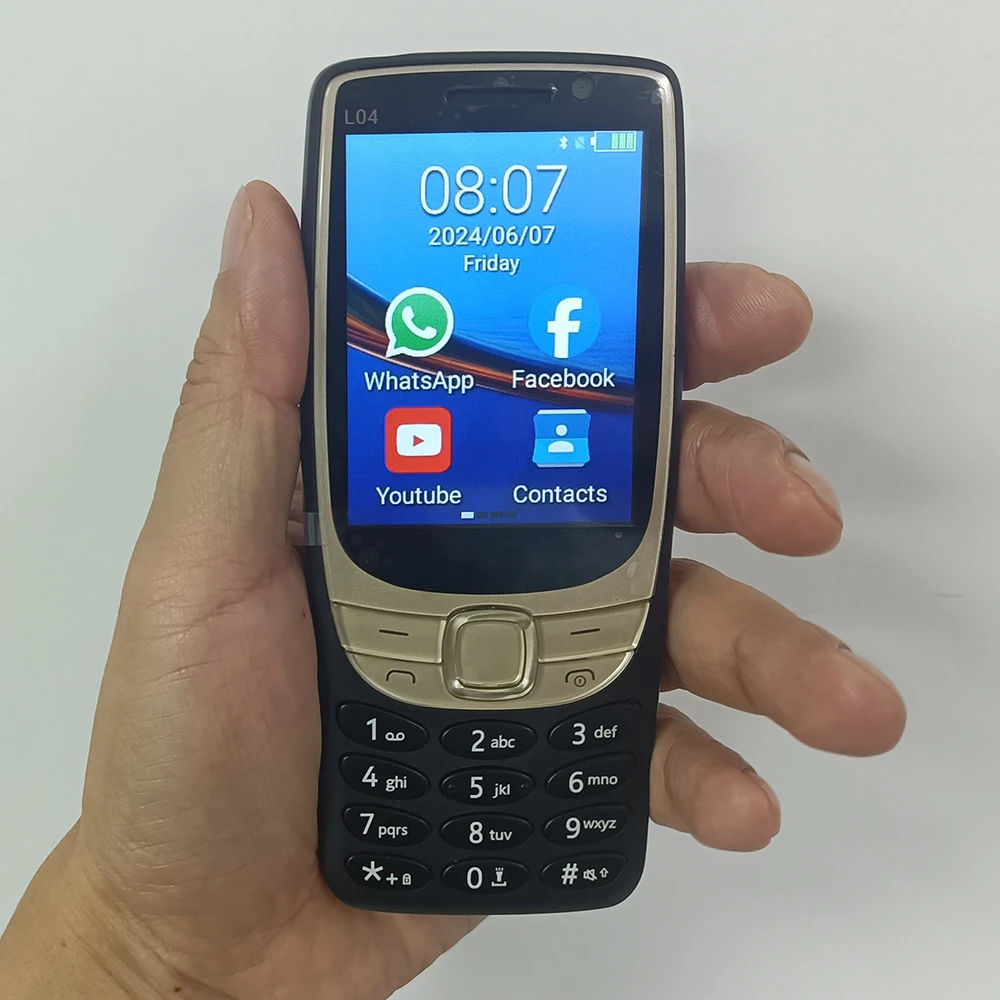
| Model | Suitable For | Potential Issue | Budget Range (AED) |
|---|---|---|---|
| Nokia 6300 4G | First-time feature phone users; those needing Wi-Fi hotspot | No touchscreen; limited third-party app ecosystem | 149–169 |
| TTfone TT970 | Seniors; hearing-impaired users; high-contrast UI needs | No Google Assistant; no YouTube or Maps | 179–199 |
| AGM M7 | Rugged environments; users needing Android flexibility | Heavier (185g); slightly shorter standby vs. Nokia | 209–229 |
| Emporia TouchSmart 2 | Users wanting hybrid flip + touchscreen keyboard | Smaller battery (1200 mAh); limited regional availability | 239–259 |
Customer Feedback Synthesis
Based on aggregated reviews (Amazon.ae, Noon, TechCrunch user forums, and Reddit r/dumbphones), top recurring themes:
- Highly praised: Battery longevity (≥12 days common), call clarity on noisy sites, ease of contact search, and physical key reliability—even with wet fingers or gloves.
- Frequent complaints: Delayed WhatsApp notifications (requires manual app launch), inability to reply to WhatsApp status updates, and inconsistent emoji rendering in group chats.
- Neutral but notable: Data usage is consistently low (users report ≤100 MB/month for heavy text + voice note use), and Wi-Fi hotspot functionality works reliably—but only with Android/iOS clients, not legacy laptops.
Maintenance, Safety & Legal Considerations
No regulatory certifications (e.g., FCC, CE, UAE IDRA) are compromised by WhatsApp functionality—these devices meet standard SAR and radio emission requirements. Maintenance is minimal: wipe keypad with dry microfiber cloth; avoid alcohol-based cleaners on rubberized surfaces. Legally, WhatsApp use complies with UAE’s TRA guidelines and India’s IT Rules 2021—as long as messages remain end-to-end encrypted (confirmed on all pre-installed versions). No model reviewed enables unauthorized surveillance or disables encryption.
Conclusion
If you need dependable, low-effort WhatsApp access—without smartphone overhead—choose based on your primary constraint: longevity → Nokia 6300 4G; accessibility → TTfone TT970; ruggedness → AGM M7. Skip KaiOS entirely. Avoid Java-based WhatsApp workarounds. Prioritize verified, vendor-supported integration over spec sheets. Over the past year, the landscape narrowed—but clarified. Simplicity, when engineered well, isn’t a compromise. It’s precision.




