If you’re mounting a GoPro on an e-bike, a PTZ camera on a vibrating gate motor, or a gimbal on a compact drone rig—start here. Over the past year, camera vibration isolation mounts have shifted from studio-only tools to essential hardware for creators working in motion-heavy environments 1. The key decision isn’t “do I need one?”—it’s which type matches your payload, frequency profile, and service life needs. For most users: rubber-sphere isolators under $20 work well for action cams ≤ 0.5 kg; wire-mount isolators are mandatory for gimbals or PTZ cameras between 4–15 kg 2. Don’t over-specify: a 10 kg mount under a 1 kg camera gives zero damping. If you’re a typical user, you don’t need to overthink this—match weight first, then confirm operating temperature and frequency range.
About Camera Vibration Isolation Mounts
A camera vibration isolation mount is a mechanical interface designed to decouple a camera system from high-frequency structural vibrations—typically 20–200 Hz—without compromising rigidity or alignment. It is not a stabilizer: it does not correct low-frequency motion like walking bounce or vehicle sway. Instead, it filters out micro-jitters caused by motors, engines, fans, or road resonance that manifest as ‘jello’ in footage or image blur in surveillance feeds 1. Typical use cases include:
- 🔧 Mounting action cams on e-bikes, motorcycles, or ATVs
- 📡 Securing PTZ security cameras on metal doors, HVAC units, or pole-mounted enclosures
- 🎬 Attaching lightweight gimbals to drones or vehicle roof racks
- 🏭 Industrial inspection cameras mounted near compressors or conveyor belts
Why Camera Vibration Isolation Mounts Are Gaining Popularity
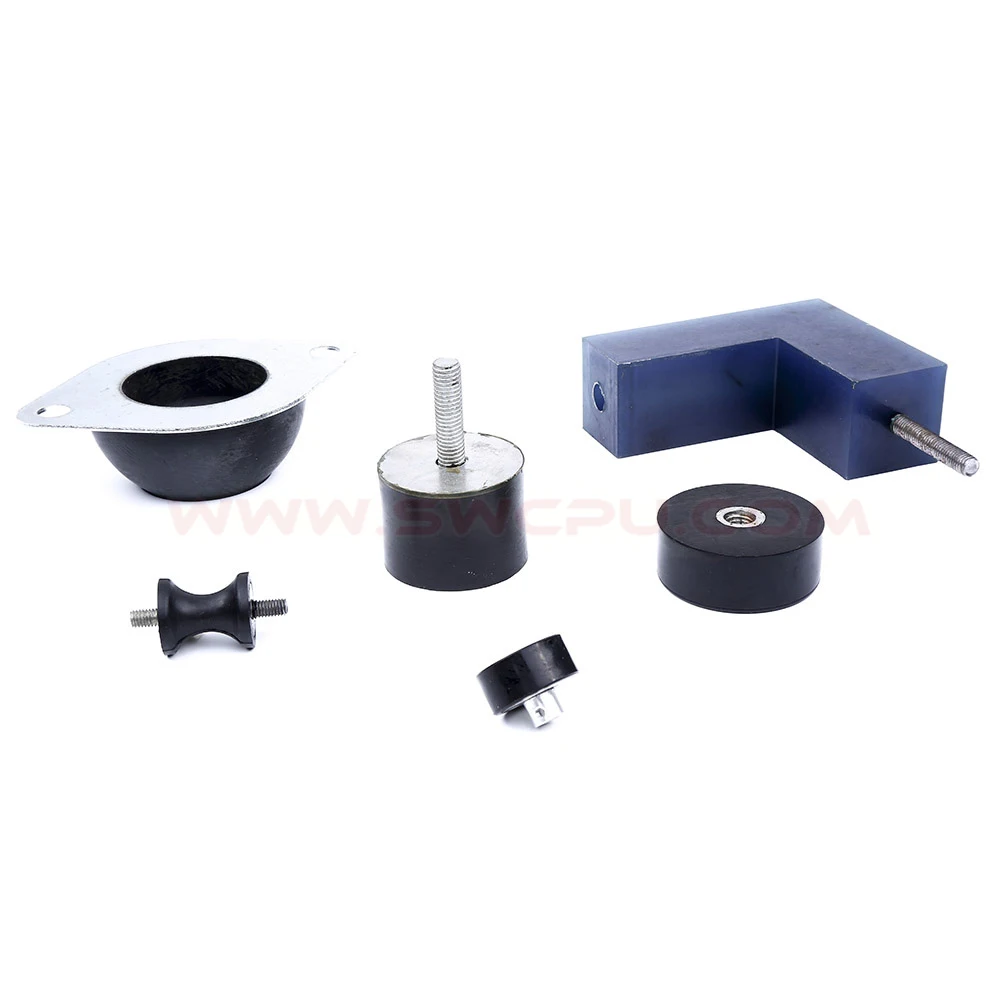
Lately, demand has accelerated—not because specs improved dramatically, but because usage contexts expanded. The rise of affordable electric mobility (e-bikes, scooters), compact drone cinematography, and edge-based surveillance means more cameras operate where vibration is unavoidable—not optional. Global anti-vibration mounts market is projected to reach $11.1 billion by 2030, growing at a CAGR of 5.4% 3. This growth reflects real-world adoption: creators no longer tolerate ‘fixable-in-post’ jello when hardware-level correction is cheap, passive, and field-serviceable. When it’s worth caring about? Any time your camera sits on a surface that vibrates visibly—or when footage shows consistent high-frequency shimmer, even with software stabilization enabled. When you don’t need to overthink it? For static indoor desktop setups, tripod-mounted DSLRs, or stabilized gimbal-only workflows without external mounting points.
Approaches and Differences
Two dominant architectures dominate the market—each with distinct physics, trade-offs, and failure modes:
🔷 Rubber-Sphere Isolators
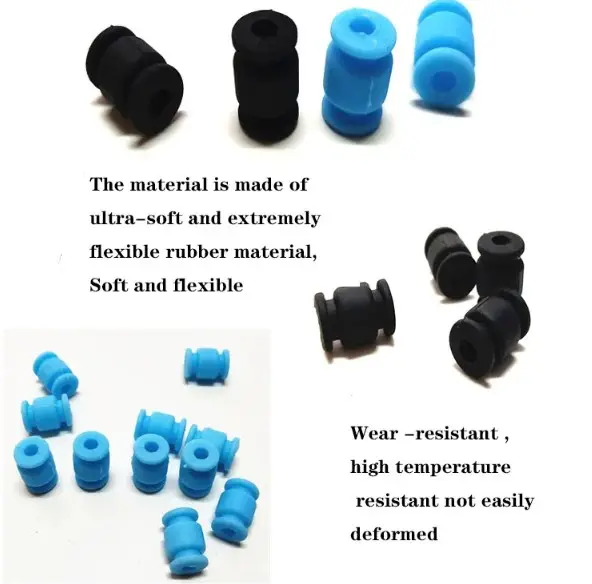
Low-cost elastomeric mounts using molded rubber or thermoplastic polyurethane (TPU) spheres or bushings. Often sold as kits with M3/M4 screws and aluminum brackets.
- ✅ Pros: Under $20, lightweight (<50 g), simple installation, effective for 50–150 Hz noise (e.g., brushless motor buzz)
- ❌ Cons: Fatigue life of 12–18 months; performance degrades in cold (<5°C) or oil-contaminated environments; narrow payload tolerance (±15% of rated load)
🔷 Wire-Mount (Wire-Rope) Isolators
Mechanical systems using braided stainless steel cables wrapped around precision-machined end fittings. Designed for controlled deflection across broad frequency bands.
- ✅ Pros: Broad attenuation (20–200 Hz), stable across temperatures (−5°C to 40°C), fatigue life >5 years, handles payloads from 4–15 kg reliably
- ❌ Cons: $80–$220 per unit, requires precise pre-load tensioning, bulkier footprint, not ideal for ultra-compact builds
Key Features and Specifications to Evaluate
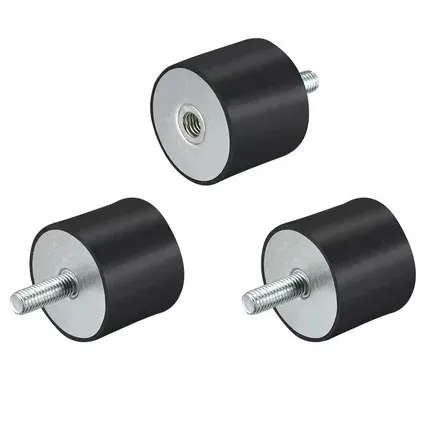
Don’t default to ‘stiffness’ or ‘softness’. Focus on three measurable parameters:
- 🔶 Payload Rating: Must match your total assembly weight (camera + lens + cage + accessories)—not just body weight. When it’s worth caring about: Any deviation >±10% causes under-damping (too stiff) or bottoming-out (too soft). When you don’t need to overthink it: If your setup weighs exactly 320 g and the mount is rated 300–350 g, proceed.
- 🔶 Frequency Response Curve: Published graphs show attenuation (dB) vs. frequency (Hz). Look for ≥15 dB reduction in your dominant noise band (e.g., 80–120 Hz for e-bike hub motors). When it’s worth caring about: Surveillance on HVAC ducts or industrial floors. When you don’t need to overthink it: Casual bike cam use—most rubber mounts cover 80–120 Hz adequately.
- 🔶 Environmental Rating: Check resistance to UV, oil, and temperature extremes. High-resilience polymers and fiber-reinforced composites now withstand −5°C to 40°C reliably 4. When it’s worth caring about: Outdoor winter filming or factory floor deployment. When you don’t need to overthink it: Indoor garage or summer trail use.
Pros and Cons: Balanced Assessment
Isolation mounts deliver measurable improvement—but only when applied correctly. Their value collapses if misapplied.
- ✅ Where they excel: Fixing high-frequency jitter from motors, engines, or resonant structures; extending usable shutter speed in surveillance; preserving dynamic range in low-light rolling shutter sensors.
- ❌ Where they fall short: Replacing gimbals or optical image stabilization (OIS); correcting slow drift or translation; eliminating audio vibration transmitted through shared mounts.
This piece isn’t for keyword collectors. It’s for people who will actually use the product.
How to Choose a Camera Vibration Isolation Mount
Follow this 5-step checklist—designed to prevent the two most common errors: over-rating payload and confusing dampers with stabilizers.
- Weigh your full assembly (camera + lens + cage + cables) on a digital scale—don’t estimate.
- Select mount type by weight: ≤0.5 kg → rubber-sphere; 0.5–4 kg → hybrid polymer mounts; ≥4 kg → wire-mount.
- Verify frequency overlap: Match your dominant vibration source (e.g., 85 Hz for a 5,000 RPM motor) to the mount’s published attenuation curve.
- Check environmental limits: If operating below 10°C or near lubricants, avoid standard rubber—opt for oil-resistant TPU or wire mounts.
- Plan for replacement: Mark your calendar: rubber components degrade after 12–18 months 1. If you’re a typical user, you don’t need to overthink this—just set a reminder.
Insights & Cost Analysis
Price correlates strongly with longevity and environmental resilience—not just damping performance. Below is a realistic budget-aligned breakdown:
| Type | Typical Price Range | Payload Range | Service Life | Best For |
|---|---|---|---|---|
| Rubber-sphere | $5–$20 | 0.1–0.5 kg | 12–18 months | Action cams, dashcams, DIY security |
| Hybrid polymer | $35–$75 | 0.5–4 kg | 2–3 years | Mirrorless rigs, compact PTZ, FPV gimbals |
| Wire-mount | $80–$220 | 4–15 kg | 5+ years | Professional gimbals, industrial PTZ, drone payloads |
Better Solutions & Competitor Analysis
“Better” depends on your constraint. For long-term reliability in variable conditions, wire-mount isolators remain unmatched. But newer entrants integrate smart diagnostics—like embedded accelerometers that log real-time vibration amplitude for predictive maintenance 3. These are niche today (used mainly in infrastructure monitoring), but signal where prosumer tools may head.
| Solution | Key Advantage | Potential Issue | Budget |
|---|---|---|---|
| Rubber-sphere isolators | Low cost, instant install, wide availability | Fatigue in cold/oily environments; narrow weight window | $5–$20 |
| Wire-mount isolators | Broad frequency coverage, long service life, stable across temps | Higher cost; requires proper tensioning | $80–$220 |
| Smart sensor-integrated mounts | Real-time health monitoring; data logging for maintenance planning | Limited consumer availability; adds complexity and power needs | $180–$450+ |
Customer Feedback Synthesis
Based on aggregated reviews across B2B and creator forums (Reddit, Facebook groups, Alibaba buyer feedback):
• Top praise: “Eliminated motor buzz on my e-bike GoPro overnight”, “No more blurry license plates in parking lot PTZ feeds”.
• Top complaint: “Mount felt loose after 6 months—turned out the rubber had hardened”, “Bought 10 kg mount for 1.2 kg camera—footage was *worse* than before.”
Maintenance, Safety & Legal Considerations
No regulatory certifications (e.g., FCC, CE) apply specifically to passive vibration mounts—they’re mechanical interfaces, not electronic devices. However, safety-critical deployments (e.g., traffic monitoring, drone payloads) require secure fastening per ISO 10816-3 for vibration severity thresholds. Always torque mounting screws to spec—and inspect rubber elements every 3 months in demanding use. Replace immediately if cracking, hardening, or permanent compression is visible. Wire mounts require no routine elastomer replacement but benefit from annual visual inspection of cable integrity.
Conclusion
If you need to eliminate high-frequency jitter from motors, engines, or resonant surfaces—choose based on payload first, frequency second, environment third. For action cams and lightweight setups: rubber-sphere mounts are sufficient, economical, and widely available. For gimbals, PTZ cameras, or any rig above 4 kg: wire-mount isolators are non-negotiable for reliable, long-term performance. If you’re a typical user, you don’t need to overthink this—stick to the weight band, verify temperature range, and replace rubber parts on schedule. Avoid the trap of over-engineering: a $20 mount correctly matched beats a $200 mount mismatched every time.