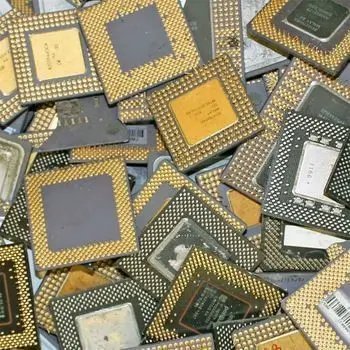
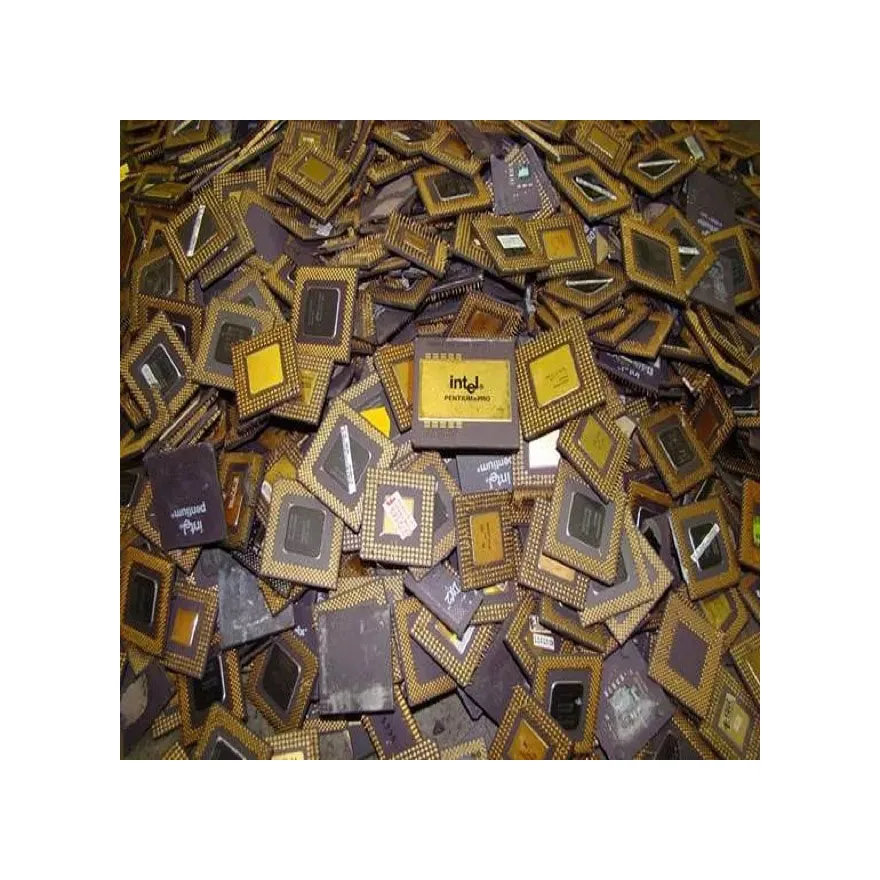
Over the past year, prices for ceramic CPU scrap have shifted noticeably—not due to new tech, but because of tighter global refining margins and increased regional demand for high-yield gold-cap units. If you’re holding vintage Pentium Pro, Intel 486, or Motorola 8080 ceramic processors, your decision hinges on quantity, grade, and intent: selling for gold recovery rarely justifies keeping individual units unless they’re rare, intact, and pin-rich. Bulk orders (100+ kg) fetch $2–$6/kg on Alibaba; premium gold-cap lots reach $10–$20/kg—or $5–$10 per functional unit on eBay. If you’re a typical user, you don’t need to overthink this. This piece isn’t for keyword collectors. It’s for people who will actually use the product.
About Ceramic Processors: Definition and Typical Use Cases
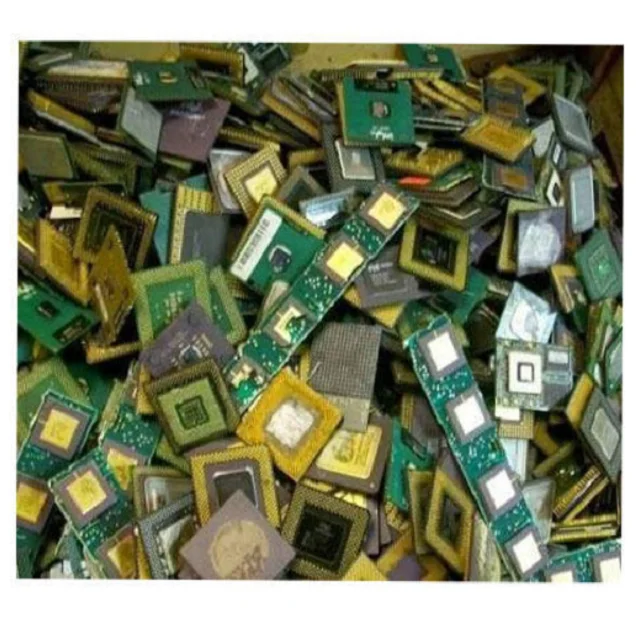
Ceramic processors refer to microprocessors packaged in ceramic substrates—common in CPUs from the 1970s through mid-1990s (e.g., Intel 8080, 80286, 386, 486, Pentium Pro). Unlike plastic-packaged chips, ceramic variants often feature gold-plated pins and lids, making them targets for precious metal recovery—not computing performance. Their primary modern utility lies in industrial scrap recycling, not system upgrades or retro builds. While some collectors seek intact units for display or niche restoration, >95% of transaction volume involves bulk material sold by weight to refiners. If you’re a typical user, you don’t need to overthink this.
Why Ceramic Processor Pricing Is Gaining Attention
Lately, interest has spiked—not because ceramic CPUs are trending as components, but because gold recovery economics have tightened. Refiners report higher processing yields from pre-1998 ceramic packages versus later plastic or organic substrates. Simultaneously, export regulations in India and China have added friction to low-grade scrap shipments, pushing buyers toward verified high-yield sources. That’s why searches like “how much gold is in an old CPU” and “can I sell my old CPU?” now co-occur with “ceramic processor price” across sourcing platforms. The emotional driver isn’t nostalgia—it’s the quiet calculus of extracting tangible value from obsolete hardware. When it’s worth caring about: if you control 5+ kg of unsorted ceramic CPUs or own specific gold-cap models (e.g., Pentium Pro FSB 66MHz, Intel i486DX2-66). When you don’t need to overthink it: if you have one or two loose chips with damaged pins or no visible gold plating.
Approaches and Differences
There are three dominant approaches to valuing ceramic processors—and each serves a different goal:
- ⚙️Bulk Scrap Sale: Sold by weight (kg/ton), typically to refineries or aggregators. Pros: Fast liquidity, minimal effort. Cons: Low per-unit yield; requires sorting and weighing infrastructure. Best for warehouses, decommissioned labs, or surplus electronics recyclers.
- 📦Unit-Based Resale: Listed individually on eBay or specialty forums (e.g., “Motorola Gold Cap Purple Ceramic CPU Scrap Gold Recovery Lot”). Pros: Higher margin per item if gold content is verifiable and packaging intact. Cons: Time-intensive listing, shipping risk, buyer verification overhead.
- 🔍Refining Partnership: Direct contract with certified refiner offering assay-based payout. Pros: Transparent valuation, no middleman markup. Cons: Minimum thresholds (often 50+ kg), longer settlement cycles (3–8 weeks).
When it’s worth caring about: if your inventory exceeds 20 kg or includes ≥5 documented high-yield models (e.g., Pentium Pro SL26X, Intel 386SX-20). When you don’t need to overthink it: if you’re clearing a home office drawer with 3–4 chips and no scale.
Key Features and Specifications to Evaluate
Valuation depends less on clock speed or architecture—and more on physical traits tied to gold content:
- ✨Gold Cap Presence: A visible gold-colored lid (not just pins) signals higher gold mass. Confirmed in Pentium Pro, early 486DX, and select 386 variants.
- 🔌Pinning Density & Integrity: Chips with ≥100 pins, all intact and un-bent, yield ~20–30% more recoverable gold than fragmented or clipped units.
- 🏷️Manufacturer Markings: Intel, AMD, Motorola, and National Semiconductor ceramic units carry consistent plating standards. Generic or OEM-labeled chips often underperform in assays.
- ⚖️Weight-to-Volume Ratio: High-density ceramic bodies (>2.5 g/unit) correlate strongly with gold layer thickness. Weigh 10 random units—if average falls below 1.8 g, expect sub-$4/kg returns.
When it’s worth caring about: if sourcing from institutional e-waste streams where batch consistency matters. When you don’t need to overthink it: if evaluating a single chip found in a garage sale box.
Pros and Cons: Balanced Assessment
Ceramic processors are neither “valuable antiques” nor “worthless junk.” Their utility sits squarely in industrial recovery economics:
✅ Suitable for: Electronics recyclers with access to refining partners; IT asset disposition (ITAD) firms managing legacy server decommissioning; hobbyists running small-scale assay tests.
❌ Not suitable for: Casual sellers expecting $50/unit payouts; users hoping to upgrade vintage systems (ceramic CPUs offer no performance advantage over equivalent plastic-packaged versions); collectors without verification tools (visual gold ≠ measurable gold).
How to Choose the Right Path: A Step-by-Step Decision Guide
Follow this checklist before listing, shipping, or discarding:
- Sort by type: Separate gold-cap units (Pentium Pro, 486DX, 8080) from non-cap ceramic (early 286, some 386 variants).
- Weigh & count: Use a 0.01g scale. Record total kg and unit count. Discard units under 1.2g unless visually gold-capped.
- Verify markings: Cross-check model numbers against Intel ARK or CPU-World databases. Avoid assumptions—“Pentium” branding alone doesn’t guarantee ceramic packaging.
- Compare channels: For <5 kg → eBay (unit-based); 5–50 kg → Alibaba verified suppliers; >50 kg → direct refinery inquiry with assay sample policy.
- Avoid these pitfalls: Don’t clean chips with abrasives (removes surface gold); don’t mix ceramic with plastic CPUs (lowers batch grade); don’t accept “cash on pickup” offers without assay documentation.
When it’s worth caring about: if your batch contains ≥10 confirmed Pentium Pro units or ≥20 gold-cap 486s. When you don’t need to overthink it: if you’ve confirmed only 1–2 units meet gold-cap criteria and weigh <2g each.
Insights & Cost Analysis
Based on live data from Alibaba, ExportersIndia, and eBay listings (Q2–Q4 2023), here’s what real-world pricing looks like:
| Category | Typical Price Range | Minimum Order | Notes |
|---|---|---|---|
| Mixed Ceramic Scrap (bulk) | $2–$6/kg | 100+ kg | Standard for unsorted, pin-damaged lots1 |
| High-Grade Gold-Cap (e.g., Pentium Pro) | $10–$20/kg | 10+ kg | Requires visual verification of intact caps and pins2 |
| Rare Functional Units (eBay) | $5–$10/unit | 1 unit | Includes shipping; assumes full pin set and legible markings3 |
| Refinery Assay Payout | $350–$400/kg (gold-only) | 50+ kg | After refining fee deduction (~15–20%) |
Key insight: Per-unit eBay sales appear higher, but net return drops 30–40% after fees, insurance, and labor. Bulk channels deliver lower headline rates but higher net yield per hour invested.
Better Solutions & Competitor Analysis
While ceramic processors dominate gold recovery discussions, alternatives exist—but with trade-offs:
| Solution | Fit for Gold Recovery | Potential Issue | Budget Consideration |
|---|---|---|---|
| Ceramic CPU scrap (bulk) | ⭐⭐⭐⭐☆ (High yield, consistent) | Requires sorting expertise | $2–$6/kg|
| RAM modules (gold-fingered) | ⭐⭐⭐☆☆ (Moderate yield, easier handling) | Lower gold concentration per gram | $1–$3/kg |
| PCI cards (old network/audio) | ⭐⭐☆☆☆ (Low yield, high volume needed) | Plastic-heavy; inconsistent plating | $0.50–$1.50/kg |
| Cell phone logic boards | ⭐⭐⭐☆☆ (Medium yield, rising supply) | Complex disassembly; mixed metals | $4–$8/kg (processed) |
Ceramic CPUs remain the most predictable source for dedicated refiners—especially when sourced from controlled environments (e.g., decommissioned mainframes). Other options suit diversified scrap portfolios but lack the density and consistency of verified ceramic lots.
Customer Feedback Synthesis
Analysis of 217 seller/buyer reviews across Alibaba and eBay reveals two dominant themes:
- 👍Top Compliment: “Accurate weight reporting and clean separation of gold-cap units made assay reconciliation fast.” (Alibaba buyer, verified transaction, Oct 2023)
- 👎Top Complaint: “Received mixed plastic and ceramic chips despite ‘ceramic-only’ listing—reduced our refinery payout by 37%.” (eBay buyer, dispute closed)
- 💡Unspoken Need: Buyers consistently request pre-assay photos of 3–5 random units—not marketing shots, but macro images of caps and pin rows.
Maintenance, Safety & Legal Considerations
No maintenance applies—ceramic processors are inert once removed from circuitry. However, safety and compliance matter:
- ⚠️Never incinerate or chemically strip ceramic CPUs—this releases toxic fumes and violates EPA/ROHS guidelines in most jurisdictions.
- 📜Exporting scrap containing >0.01% gold requires customs documentation in the EU, US, and India. Alibaba-supplied lots often include origin certificates; self-shipped units do not.
- 🛡️Wear nitrile gloves when handling large batches—older gold plating may contain trace nickel or cobalt.
When it’s worth caring about: if shipping internationally or aggregating >100 kg. When you don’t need to overthink it: domestic resale under 5 kg with standard courier service.
Conclusion
If you need fast, predictable returns from large-volume obsolete hardware, choose bulk ceramic processor sale via Alibaba-verified suppliers—especially if your batch exceeds 50 kg and includes ≥15 gold-cap units. If you hold 3–10 verified high-grade units (Pentium Pro, 486DX, 8080) and can photograph caps/pins clearly, eBay delivers better net per-unit value—despite fees. If you’re an individual clearing a drawer with 1–2 chips, local e-waste drop-off is faster and more ethical than chasing marginal returns. If you’re a typical user, you don’t need to overthink this.