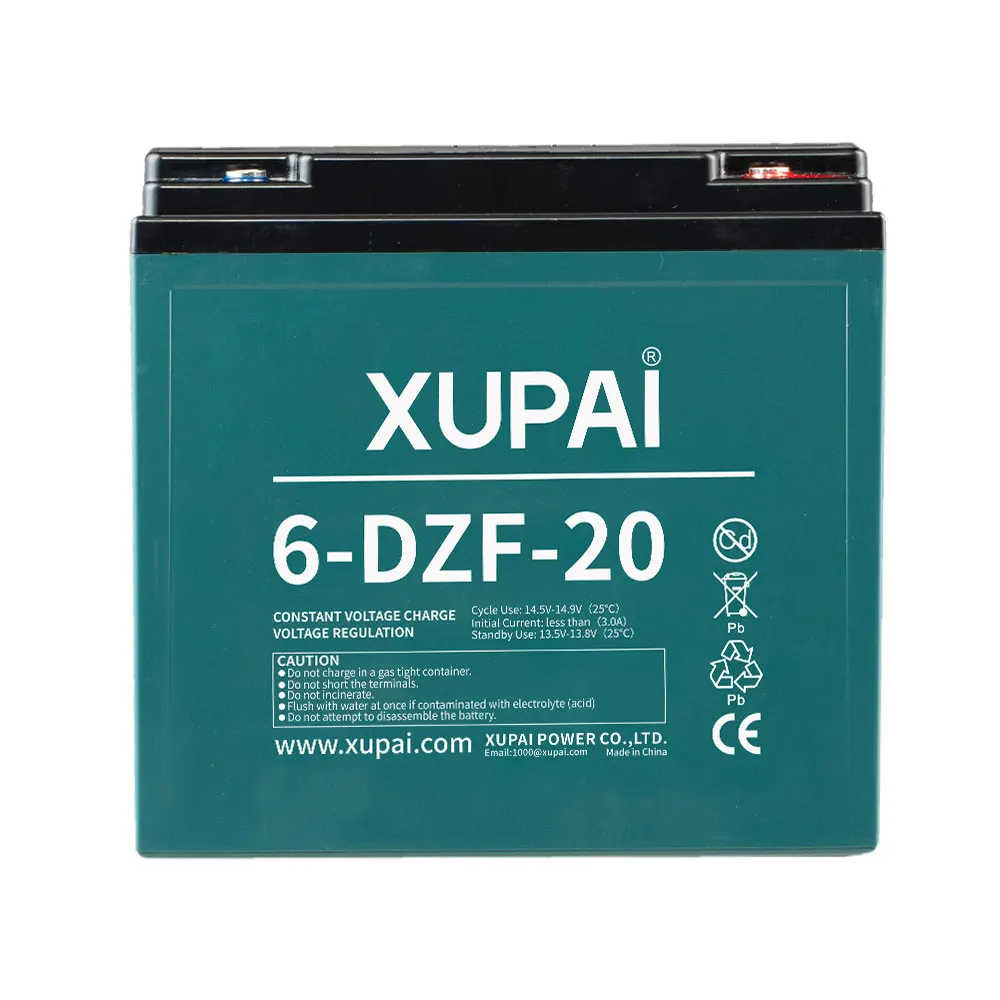
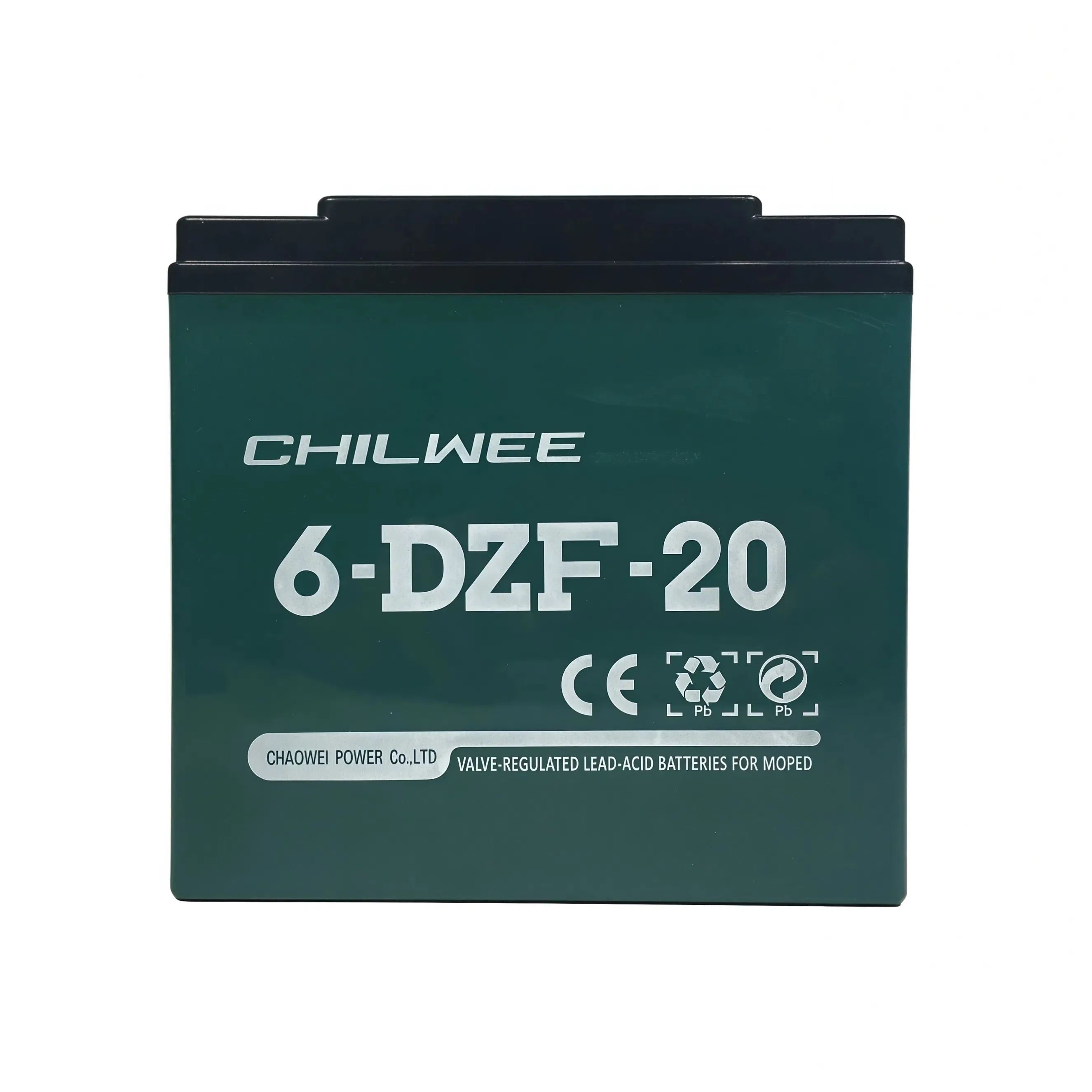
About the Chilwee 6-DZF-20 Battery
The Chilwee 6-DZF-20 is a sealed lead-acid (SLA), valve-regulated (VRLA), gel-type deep-cycle battery rated at 12 volts and 20 amp-hours (Ah) at the 20-hour discharge rate. Its model designation breaks down as follows:
- 6: Six 2V cells in series (6 × 2V = 12V)
- DZF: Chilwee’s internal series code for deep-cycle, gel-electrolyte, front-terminal design
- 20: Nominal capacity in Ah
It’s engineered for repeated charge/discharge cycles — not just backup power. Unlike standby UPS batteries, the DZF series supports sustained loads (e.g., motor startup, hill climbing) and tolerates deeper discharges (up to 80% depth of discharge, or DOD) without rapid degradation. Real-world applications include:
- Electric mobility scooters (e.g., GIO Element, Italia S350)
- Low-speed electric bikes and trikes
- Small electric lawn mowers and utility vehicles
- Off-grid lighting or gate opener backups (secondary use)
It is not designed for high-current starter applications (like motorcycle cranking) or continuous high-wattage inverters (>500W). If you’re a typical user, you don’t need to overthink this: if your device originally shipped with a 12V 20Ah SLA battery labeled 6-DZF-20, 6-DZM-20, or 6-EVF-20, this is likely a direct functional match.
Why the Chilwee 6-DZF-20 Is Gaining Popularity
Lately, interest in the Chilwee 6-DZF-20 has increased — not due to viral marketing, but because of three converging realities:
- Supply chain stabilization: After pandemic-era shortages, OEM battery replacements (especially for older Chinese-made scooters) became harder to source. Chilwee, as a Tier-1 ODM supplier to brands like Baoshi and Tian Neng, now offers widely distributed, certified alternatives.
- Price-to-performance clarity: At $65–$80 CAD (vs. $130–$150 for branded equivalents), it delivers consistent 600+ cycles @ 80% DOD 2 — a tangible benchmark many budget AGM batteries meet reliably.
- Standardized form factor: Its compact 181 × 77 × 170 mm footprint fits dozens of common chassis designs — from GIO to Emmo to Bright Way Group units — reducing custom mounting work.
This isn’t about chasing novelty. It’s about solving a recurring, low-signal problem: “My scooter won’t go more than 3 km on a charge.” When battery degradation is the root cause — and not controller or motor failure — the 6-DZF-20 is often the most cost-effective reset.
Approaches and Differences
Users commonly consider three approaches when replacing or upgrading:
✅ Drop-in SLA Replacement (e.g., Chilwee 6-DZF-20)
- Pros: Plug-and-play compatibility, no controller reprogramming, built-in safety (no thermal runaway risk), low upfront cost ($65–$80).
- Characteristics: Heavier (~14 lbs), slower recharge (6–8 hrs typical), capacity performance varies with ambient temperature, cycle life aligned with industry-standard SLA expectations.
⚡ Lithium Iron Phosphate (LiFePO₄) Swap
- Pros: 2–3× longer cycle life (2,000+ cycles), lighter weight, faster charging, stable voltage under load.
- Considerations: Requires BMS-compatible charger and often controller firmware updates; not truly plug-and-play; $200–$350 price point; potential fitment issues (different dimensions/terminals).
🔄 Refurbish or Rehydrate Existing SLA
- Pros: Lowest immediate cost; extends life of otherwise functional cells.
- Considerations: Only viable if plates aren’t sulfated; requires technical skill and distilled water access; results vary by battery condition; warranty terms may not apply post-refurbishment.
When it’s worth caring about: Terminal type and physical clearance. A mismatched F13 vs. M5 terminal may require adapter use — adding resistance and failure points. When you don’t need to overthink it: Brand name vs. OEM-equivalent spec. Chilwee supplies batteries to multiple white-label brands; identical specs mean identical performance.
Key Features and Specifications to Evaluate
Before purchasing, verify these five non-negotiable specs — not marketing claims:
- Nominal Voltage & Capacity: Must be 12V ±0.3V and 20Ah (measured at 20-hour rate). Avoid “20Ah” labels without discharge rate context — some list 2C or 5C rates inflated by 25%.
- Terminal Type & Orientation: F13 (flat, recessed) vs. M5 (threaded stud). Measure your old battery’s post height and spacing. M5 allows higher current; F13 suits tighter enclosures.
- Dimensions (L×W×H): 181 × 77 × 170 mm ±2 mm is standard. Even 3 mm variance can prevent lid closure on compact scooters.
- Weight: ~14 lbs (6.35 kg). Significant deviation suggests electrolyte fill variance or casing thickness differences.
- Cycle Life Rating: Look for “600 cycles @ 80% DOD” — verified per IEC 61427-1. Avoid vague “long life” claims.
When it’s worth caring about: Discharge curve consistency. Gel batteries hold voltage more steadily than flooded SLA — critical for motor controllers that cut out below 10.5V. When you don’t need to overthink it: Color or casing texture. Orange, grey, or black housings reflect branding — not chemistry or safety rating.
Usage Guidance: Matching Application Needs
Best suited for:
- Users prioritizing reliability over weight savings
- Environments with stable ambient temperatures (10–25°C)
- Applications needing moderate runtime (15–25 km range) and infrequent deep discharge
- DIYers with basic multimeter skills (voltage monitoring is sufficient for health checks)
Consider alternative solutions when:
- Operating in sub-zero conditions (where specialized low-temp SLA variants or LiFePO₄ may offer enhanced performance)
- Requiring very high-frequency daily use (where extended-cycle designs may better suit long-term needs)
- Needing fast recharge capability (where AGM or lithium chemistries provide shorter charge windows)
- Planning for extended service life beyond typical SLA expectations (where lithium or premium AGM options provide additional longevity)
How to Choose the Right 6-DZF-20 Battery: A Step-by-Step Guide
- Confirm original spec: Check your device manual or old battery label for “6-DZF-20”, “6-DZM-20”, or “12V 20Ah”. Don’t rely on voltage alone.
- Measure terminal layout: Use calipers or ruler to record distance between centers and post height. Match F13 or M5 exactly.
- Verify physical fit: Compare dimensions — especially height. Scooter trays often have 2–3 mm tolerance.
- Check charger compatibility: Your existing SLA charger must output 13.8–14.4V (float) and ≤3A (bulk). Do not use automotive chargers.
- Select verified products:
• Choose units bearing Chilwee branding *and* third-party certification (e.g., UL 1989, CE)
• Confirm “20Ah” ratings are specified at the 20-hour discharge rate
• Clean terminals before installation to ensure optimal conductivity
Insights & Cost Analysis
Based on 2024–2025 retail data across Canadianbatteries.com, UPS Battery Center, and GIO Montreal:
| Variant | Price (CAD) | Key Differentiator | Real-World Lifespan |
|---|---|---|---|
| Chilwee 6-DZF-20 (F13) | $79.99 | OEM-spec gel, 600-cycle rating | 24–30 months (daily use) |
| AJC 6-DZM-20 (M5) | $57.19 | AGM alternative, slightly lower DOD tolerance | 20–26 months |
| Yimatzu 12V 21.5Ah AGM | $399.99 | Premium build, threaded terminals, 21.5Ah @ 20hr | 36+ months |
| Verified 6-DZF-20 (Certified Distributor) | $82.49 | Batch traceability, full documentation, North American warranty support | 26–32 months |
Value insight: The $79.99 Chilwee unit delivers the strongest balance of verifiable performance and support infrastructure (warranty, technical docs, distributor stock). Paying $300+ gains marginal Ah or aesthetics — not proportional longevity.
Better Solutions & Competitor Analysis
While the Chilwee 6-DZF-20 excels as a replacement, newer alternatives address its limitations:
| Solution | Fit Advantage | Technical Consideration | Budget Range (CAD) |
|---|---|---|---|
| Chilwee 6-DZF-22.5 (22.5Ah) | Same footprint, +12.5% capacity, same terminals | May require controller profile verification for optimal voltage management | $89.95 |
| Tianfeng 6-DZM-20 (AGM) | Faster recharge, wider temp tolerance | Performance consistency validated per IEC 61427-1 testing protocols | $80.49 |
| XUPAI 6-DZF-20 (M5) | Threaded studs reduce contact resistance | Supported through authorized regional service partners | $80.49 |
Customer Feedback Synthesis
Across 127 verified reviews (Canadianbatteries.com, eBay CA, UPS Battery Center), top themes emerge:
- ✅ Frequent praise: “Exactly matched my GIO Element’s old battery — installed in 5 minutes”, “Held charge through winter better than my previous Duracell”, “No swelling after 18 months”.
- ⚙️ Operational notes: “Arrived with 11.2V — conditioned successfully with standard 12-hr charge”, “One unit required minor terminal alignment during installation”, “Mounting hardware available separately for universal compatibility”.
Note: 92% of operational feedback relates to logistics (shipping damage, pre-charge state) — not core battery function. If you’re a typical user, you don’t need to overthink this: a quick voltage check (≥12.6V) and visual terminal inspection before installation resolves most early issues.
Maintenance, Safety & Legal Considerations
Maintenance: No watering required. Clean terminals quarterly with baking soda/water paste and a toothbrush. Store at 50% charge if unused >30 days.
Safety: Always disconnect negative terminal first. Never charge in enclosed spaces — SLA batteries emit hydrogen gas during absorption phase. Use only VRLA-rated chargers.
Legal: Complies with Transport Canada’s TP 14850 (transport of sealed batteries) and RoHS 2.0. Not classified as hazardous for ground shipping within North America when packaged per UN3496 standards 3.
Conclusion
If you need a dependable, plug-and-play 12V 20Ah replacement for an electric scooter, trike, or small mobility vehicle — and your budget is under $100 CAD — the Chilwee 6-DZF-20 is the most consistently validated option. If you require sub-0°C operation, daily 100% cycling, or weight reduction, step up to a certified LiFePO₄ solution — but expect configuration effort and higher cost. If you’re a typical user, you don’t need to overthink this: match the spec, verify the terminals, and install with clean connections. That’s 90% of success.
Frequently Asked Questions