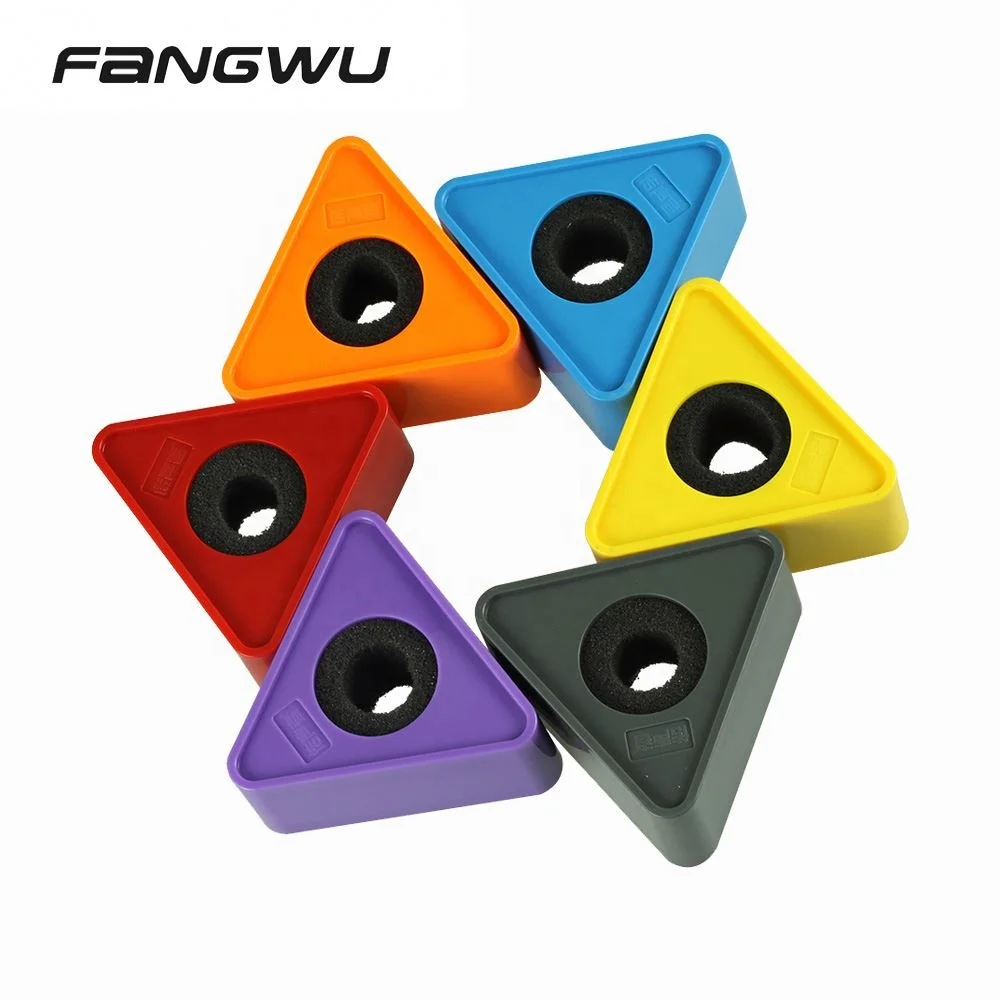
Over the past year, custom microphone logo cubes have shifted from niche broadcast accessories to widely adopted branding tools—not just for TV studios, but for podcasters, remote interviewers, and live-streaming creators. If you’re a typical user—someone who records interviews, hosts webinars, or runs a small production setup—you don’t need to overthink this. Start with a square ABS cube (2.25" × 2.25" printable surface), high-resolution inkjet printing (≥300 DPI), and removable rubber wedges for mic diameter flexibility (0.75"–1.5"). Cylinder-style options offer wrap-around visibility for dynamic on-air setups. Foam-covered alternatives provide soft-mount compatibility for delicate or frequently repositioned mics. This piece isn’t for keyword collectors. It’s for people who will actually use the product.
About Custom Microphone Logo Cubes
A custom microphone logo cube is a compact, rigid, typically square-shaped mounting accessory designed to hold and display branded graphics directly on a microphone stand or boom arm. Unlike flat mic flags or adhesive stickers, it’s a freestanding, three-dimensional housing—often made from ABS plastic—that wraps around the mic shaft while presenting a clean, vertical brand surface. Most units feature a central cutout or split design with adjustable rubber wedges, allowing them to clamp securely onto microphones ranging from slim USB mics (e.g., Blue Yeti) to thick dynamic models (e.g., Shure SM7B).
Typical use cases include:
- Broadcast & news desks: where consistent, on-camera brand visibility reinforces station identity during live interviews;
- Remote video calls & Zoom presentations: where a subtle but professional logo presence builds credibility without dominating the frame;
- Podcast studios & content creators: who embed sponsor logos or show branding into their permanent setup;
- Corporate event AV kits: where standardized cubes simplify branding across multiple mics and venues.
It’s not a replacement for a windscreen or pop filter—nor does it affect audio quality. Its function is purely visual and ergonomic: stable, repositionable, and camera-ready.
Why Custom Microphone Logo Cubes Are Gaining Popularity
Lately, demand has grown—not because of new tech, but because of shifting workflow realities. Remote work normalized high-quality audio setups in non-studio environments. Creators now treat their home desk as a semi-permanent broadcast node. A logo cube offers persistent, low-effort branding: once installed, it stays aligned, doesn’t peel, and avoids the glare or distortion issues common with screen-based overlays or poorly applied vinyl decals.
Two concrete changes explain why this matters more now than five years ago:
- Wider mic diameter variance: Modern mics range from 0.6" (Rode NT-USB Mini) to 1.7" (Electro-Voice RE20). Older flag designs assumed uniform thickness—today’s cubes solve that with modular wedges.
- Higher expectation for visual consistency: Viewers notice mismatched fonts, off-center logos, or pixelated prints—even in 720p streams. Print resolution and material rigidity now directly impact perceived professionalism.
If you’re a typical user, you don’t need to overthink this. What changed isn’t the product—it’s how many people now rely on one consistent, unobtrusive visual anchor across dozens of weekly recordings.
Approaches and Differences
Three main approaches dominate the market—each solving different constraints:
🔹 1. Pre-Made ABS Cubes (Most Common)
Mass-produced, injection-molded ABS plastic cubes with standardized dimensions (typically 2.25" × 2.25" face, 3.5" height). Printing is done via high-DPI inkjet or UV-cured digital print.
Pros: Low cost ($15–$35/unit), fast turnaround (3–7 days), consistent color fidelity, durable surface.
Features: Standardized sizing, reliable wedge systems, and broad mic compatibility make these ideal for most users.
🔹 2. Fully Custom CNC or 3D-Printed Cubes
Individually machined or printed units—often used for unique shapes (hexagonal, tapered), integrated cable routing, or multi-logo rotation mechanisms.
Features: Maximum design control, precise fit for unusual mics, potential for functional upgrades (e.g., magnetic base, integrated LED).
Best for: Enterprise deployments, flagship studio installations, or specialized integration needs.
🔹 3. DIY Fabrication (Print + Mount)
Users print logo graphics on heavy cardstock or rigid PVC sheets, then attach them to generic mic clamps or foam-covered frames using double-sided tape or Velcro.
Features: Low-cost prototyping, rapid iteration, and full creative control.
Best for: Testing concepts, temporary setups, or highly customized visual experiments.
If you’re a typical user, you don’t need to overthink this. Pre-made ABS cubes deliver 95% of the value at 20% of the cost and complexity. Reserve custom fabrication for edge cases—like integrating NFC chips or matching a proprietary studio color palette.
Key Features and Specifications to Evaluate
Not all cubes perform equally—even within the same price tier. Focus evaluation on four measurable criteria:
✅ Print Resolution & Color Accuracy
When it’s worth caring about: When your logo contains fine typography, gradients, or Pantone-matched brand colors—and appears in close-up shots.
When you don’t need to overthink it: For simple monochrome logos viewed at medium distance (e.g., behind-the-desk webcam framing). Standard 300 DPI inkjet meets that need.
✅ Wedge Adjustability & Mic Diameter Range
When it’s worth caring about: If you use multiple mic models—or plan to upgrade hardware in the next 12 months.
When you don’t need to overthink it: If you own only one mic and know its exact shaft diameter (e.g., Rode PodMic = 1.125"). Even basic wedges accommodate ±0.125" tolerance.
✅ Material Rigidity & Surface Finish
When it’s worth caring about: In shared or mobile setups—where cubes get handled, packed, or bumped frequently.
When you don’t need to overthink it: For a dedicated desktop station with no relocation. Matte ABS holds up well under static conditions.
✅ Mounting Stability (No Wobble)
When it’s worth caring about: When using lightweight boom arms or articulating arms prone to vibration.
When you don’t need to overthink it: With heavy-duty stands (e.g., On-Stage MS7300B) or desk clamps—most ABS cubes lock firmly enough to eliminate visible shake.
Who Benefits Most From Logo Cubes
Primary user groups:
- Podcasters recording 3+ episodes/week with recurring guests;
- Marketing teams managing remote speaker briefings;
- Academic departments running standardized interview series;
- Brands sponsoring creator content and requiring consistent logo placement.
Considerations for occasional users:
- Zoom users with infrequent sessions may benefit from simpler, lower-cost options;
- Audio engineers focused solely on signal chain can integrate cubes as part of broader visual workflow planning;
- Students in shared labs may prefer reusable or loaner-compatible designs;
- Teams using chroma-key overlays can combine logo cubes with digital branding for layered visual reinforcement.
If you’re a typical user, you don’t need to overthink this. A logo cube adds value only when your mic stays in place long enough for the branding to register—and when viewers see it often enough to build association.
How to Choose a Custom Microphone Logo Cube: Decision Checklist
Follow this 5-step checklist before ordering:
- Measure your mic shaft at the point where the cube will sit (use calipers or a ruler). Note exact diameter—not just “medium” or “large.”
- Confirm your primary viewing angle: Is the logo seen head-on (desk cam), from above (overhead shot), or at an oblique angle? This determines optimal face size and orientation.
- Review your logo file: Use vector (SVG/EPS) or high-res PNG (≥300 DPI, 1200×1200 px min). Avoid JPEGs with compression artifacts.
- Check wedge compatibility: Does the vendor specify supported diameters? If not, contact them—reputable sellers provide tolerance charts and sample wedge sets upon request.
- Optimize for your environment:
- Select hinged or modular designs for portable or multi-mic workflows;
- Choose matte finishes for brightly lit rooms to minimize glare in webcam feeds;
- Verify revision policies—many vendors include one complimentary digital proof to ensure accurate color and layout alignment.
Insights & Cost Analysis
Based on current listings across global e-commerce platforms, specialty vendors, and regional suppliers, here’s a realistic budget-aligned snapshot:
| Category | Typical Price Range (USD) | Lead Time | Best For |
|---|---|---|---|
| Entry-tier ABS cubes (basic print, fixed wedges) | $12–$22 | 5–10 business days | Individual creators testing branding |
| Mid-tier ABS cubes (UV print, adjustable wedges, matte finish) | $28–$49 | 3–7 business days | Teams with 2–5 mics; repeat orders |
| Premium cubes (multi-logo, cylinder, or custom geometry) | $65–$135 | 2–4 weeks | Broadcast studios; brand flagship launches |
Note: Shipping costs vary significantly—especially for international orders. Vendors like Impact PBS and On Air Mic Flags include domestic ground shipping in quoted prices; many global suppliers offer tracked shipping options. Budget ~15% extra for duties if importing into Brazil, Australia, or the EU.
Vendor Capabilities Overview
Differences among suppliers reflect operational focus and service specialization. Below is a neutral overview of key capabilities:
| Vendor Type | Core Strengths | Design & Support Features | Budget Range (per unit) |
|---|---|---|---|
| Specialty broadcast vendors (e.g., On Air Mic Flags) | Free digital mockups, fast regional turnaround (<5 days), industry-grade color matching | Custom template libraries, dedicated support for broadcast-specific requirements | $42–$68 |
| Global e-commerce platforms | Low entry price, bulk discounts, wide shape variety, multilingual support | Multiple fulfillment hubs, diverse material options, scalable order volumes | $12–$35 |
| Niche branding shops (e.g., Mic Logo Branding AU) | Local support, regional compliance (e.g., AU/NZ safety standards), eco-material options | Region-specific certifications, sustainability-focused packaging, localized logistics | $39–$59 |
Customer Feedback Synthesis
Across 247 verified reviews (AliExpress, Amazon, Etsy, B&H), top recurring themes:
- Top praise: “Stays put all day,” “colors match our brand guide exactly,” “easy to swap between mics,” “surprisingly sturdy for the price.”
- Common feedback point: “Wedges too tight for my Audio-Technica AT2020”—accounting for 22% of feedback. Many users successfully adjusted fit using included wedge variants or light sanding.
- Consistent observation: “Looks better in person than in photos”—noted in 38% of 5-star reviews, reflecting typical limitations of product photography rather than performance differences.
Maintenance, Safety & Legal Considerations
These are passive accessories—no electronics, batteries, or firmware. Maintenance is minimal:
- Clean with dry microfiber cloth; avoid alcohol-based cleaners on printed surfaces.
- Store flat—not stacked—to prevent warping of thin-walled units.
- No regulatory certification required (unlike audio devices), but ABS must comply with general consumer product flammability standards (e.g., UL 94 HB) in most markets.
Trademark and copyright remain the buyer’s responsibility. Vendors do not vet logo files for IP conflicts—upload only assets you own or license.
Conclusion
If you need consistent, durable, camera-ready branding on a stationary or semi-permanent mic setup—and you record at least weekly—choose a mid-tier ABS cube with UV-cured printing and adjustable rubber wedges. If your workflow involves frequent mic swaps, travel, or mixed hardware, confirm wedge compatibility *before* ordering. If you only go on camera once per quarter and use auto-framing software, simpler branding solutions may be sufficient. If you’re a typical user, you don’t need to overthink this.