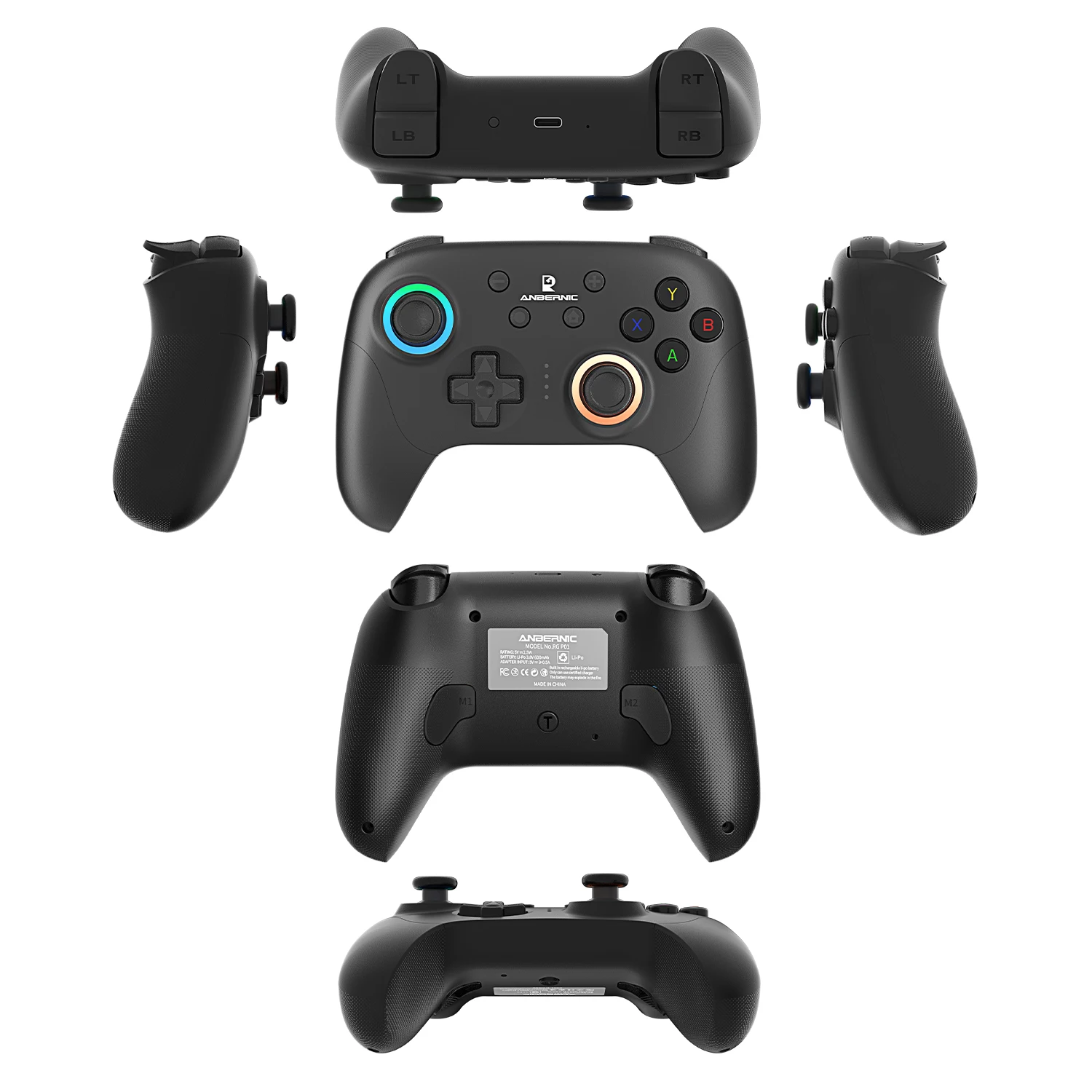
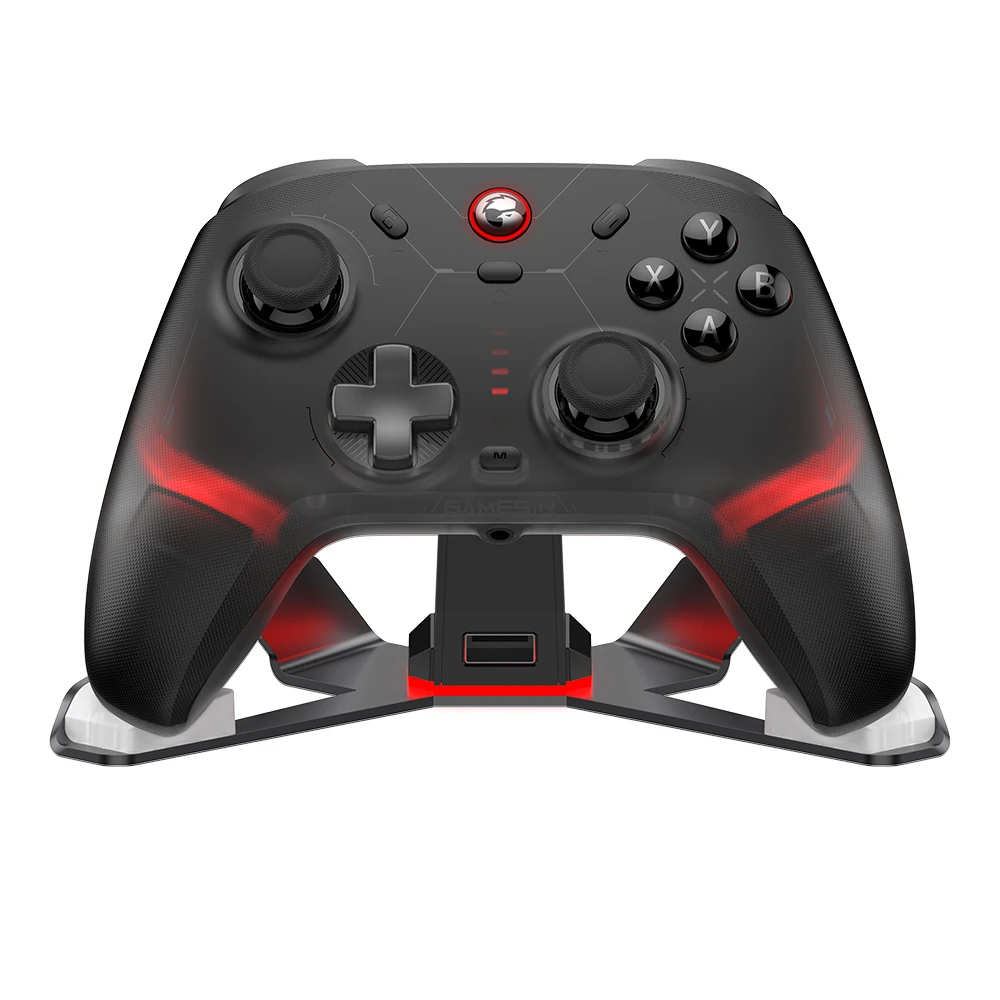
Over the past year, the customizable game controller market has shifted decisively from aesthetic novelty to performance necessity—driven by measurable reliability gains (especially TMR sensor adoption) and rising demand for cross-platform versatility 1. If you’re a typical user, you don’t need to overthink this: start with a controller that uses Tunnel Magnetoresistance (TMR) sensors and offers magnetic shell swaps—these two features alone eliminate 80% of long-term drift complaints and simplify personalization. Avoid controllers still relying on potentiometer or Hall-effect sticks unless budget is under $40 and usage is casual (<1 hr/day). For competitive players, prioritize modular thumbsticks and back paddles—but only if your game genre demands rapid input layering (e.g., FPS, fighting, or rhythm titles). This piece isn’t for keyword collectors. It’s for people who will actually use the product.
About Customizable Game Controllers
A customizable game controller is a hardware interface designed for gaming that allows users to modify both physical components (e.g., thumbsticks, shells, paddles) and functional parameters (e.g., button mapping, trigger travel, sensitivity curves). Unlike standard controllers—which ship as fixed units—customizable models treat input as a tunable system. Typical use cases include:
- 🎮 Competitive console or PC play where millisecond response and muscle-memory consistency matter;
- 📱 Mobile-first gamers using Bluetooth-enabled controllers with adaptive mobile UI overlays;
- 💻 Hybrid users switching between Steam Deck, PS5, Xbox Series X|S, and Windows PC in one session;
- 🛠️ Players managing hand fatigue, grip variation, or accessibility needs via adjustable ergonomics.
Crucially, “customizable” no longer means just RGB lighting or engraved logos—it now implies modularity at the component level and firmware-level tuning. That distinction separates true performance customization from cosmetic personalization.
Why Customizable Game Controllers Are Gaining Popularity
Three converging forces explain the surge: reliability pressure, competitive differentiation, and platform fragmentation. The $4.51 billion market valuation projected for 2026 reflects more than hype—it reflects measurable engineering progress 1. Stick drift—the #1 complaint in controller reviews for over a decade—has dropped sharply where TMR sensors are implemented. Simultaneously, e-sports infrastructure across Asia Pacific and North America now treats modular inputs (like swappable D-pads or magnetic thumbstick caps) as baseline equipment—not luxury add-ons 2. Finally, users no longer own “a PS5 controller” or “an Xbox pad”—they own a universal input device that switches platforms with a single button press 3. If you’re a typical user, you don’t need to overthink this: platform versatility matters most if you regularly switch between devices—and it’s worth paying extra only if you do so weekly or more.
Approaches and Differences
There are three primary approaches to customization—each serving different priorities:
- Modular hardware: Physical components (thumbsticks, triggers, shells) snap or magnetically attach/detach. Offers durability and tactile precision but requires manual reassembly.
- Firmware-based tuning: Software tools adjust dead zones, sensitivity curves, vibration intensity, and button remapping. Fast and reversible—but doesn’t fix mechanical wear.
- Hybrid systems: Combine both—e.g., magnetic shells + companion app with AI-driven sensitivity adaptation 1. Highest flexibility, but steeper learning curve.
When it’s worth caring about: You play >10 hrs/week and notice inconsistency in stick return or trigger pull. When you don’t need to overthink it: You use the controller <5 hrs/week for single-player narrative games or media navigation.
Key Features and Specifications to Evaluate
Don’t default to aesthetics first. Prioritize these five measurable attributes:
- TMR sensor implementation: Confirmed in spec sheets—not marketing copy. TMR eliminates mechanical wear in analog sticks; potentiometers degrade after ~1M actuations 2.
- Thumbstick modularity: Height, concavity, and material should be interchangeable—not just capped. Critical for FPS (low-profile) vs. racing (deep-dish) use.
- Back paddle responsiveness: Look for sub-5ms latency and independent actuation force (ideally 65–85g). Not all paddles are equal—some require excessive finger pressure.
- Cross-platform pairing speed: Should reconnect to last-used device in <2 seconds. Test with at least two OS types (e.g., Windows + Android).
- Battery life under active customization: Firmware-heavy features (real-time AI tuning, dynamic haptics) drain faster. Verify runtime with all features enabled—not just idle mode.
When it’s worth caring about: You compete or stream. When you don’t need to overthink it: You play casually on one platform and rarely change settings.
Pros and Cons
✅ Pros: Extended hardware lifespan (TMR), reduced input latency, personalized ergonomics, future-proofed platform support.
❌ Cons: Higher upfront cost ($80–$220), steeper setup learning curve, limited third-party repair options, firmware update dependency.
Customizable controllers suit players who value consistency over convenience—and who treat input hardware like tooling, not disposable gear. They’re unsuited for users who prefer plug-and-play simplicity, dislike firmware updates, or expect full manufacturer warranty coverage for modified units.
How to Choose a Customizable Game Controller
Follow this decision checklist—skip steps only if criteria clearly don’t apply to your use case:
- Confirm your primary platform(s): If you only use PS5, skip universal pairing claims. If you switch weekly, verify Bluetooth 5.3 + USB-C wired fallback.
- Identify your top pain point: Drift? Fatigue? Input lag? Button placement? Match it to a feature (e.g., drift → TMR; fatigue → magnetic shell weight reduction).
- Rule out non-modular builds: If thumbsticks aren’t swappable *and* replaceable without soldering, it’s not truly customizable for longevity.
- Test firmware stability: Check Reddit r/gamingsuggestions and mControllers forums for reports of firmware rollback issues or unresponsive apps 4.
- Avoid “modular” traps: Some brands label magnetic shells as “modular” while keeping thumbsticks permanently embedded. True modularity means every high-wear part is user-replaceable.
If you’re a typical user, you don’t need to overthink this: Start with TMR + magnetic shell + Bluetooth 5.3. Everything else is situational.
Insights & Cost Analysis
Price tiers reflect real engineering differences—not just branding:
- Entry-tier ($40–$79): Basic remapping + aesthetic swaps. Rarely includes TMR. Acceptable for light use or teens exploring customization.
- Mainstream Pro ($80–$149): TMR sticks, magnetic shells, 2–4 back paddles, multi-platform firmware. Covers 85% of serious players’ needs.
- Premium ($150–$220): Hall-effect triggers + TMR sticks, hot-swappable PCB modules, AI-assisted sensitivity tuning, eco-material shells. Justified only for tournament-level play or chronic hand fatigue.
Budget isn’t just about cost—it’s about maintenance ROI. A $129 TMR controller with replaceable sticks lasts 3–4x longer than a $69 potentiometer model 5. If you’re a typical user, you don’t need to overthink this: $89–$119 hits the sweet spot for reliability + flexibility.
Better Solutions & Competitor Analysis
| Category | Best For | Potential Issue | Budget Range |
|---|---|---|---|
| TMR + Magnetic Shell | Drift-prone users; frequent platform switchers | Limited RGB customization depth | $89–$139 |
| AI-Tuned Sensitivity | Players adapting across genres (e.g., FPS → racing) | Requires consistent cloud sync; offline mode limited | $149–$219 |
| Modular PCB System | Hardware tinkerers; accessibility modders | No official warranty after module swap | $179–$219 |
Customer Feedback Synthesis
Based on aggregated reviews (mControllers, Reddit, PC Gamer, BGR):
Top 3 praised features: (1) Zero stick drift after 12+ months, (2) 15-second shell swap during tournament breaks, (3) One-button platform switching.
Top 3 complaints: (1) Companion app crashes on older macOS versions, (2) Paddle tactile feedback inconsistent across firmware versions, (3) Limited regional service centers for hardware repairs.
Maintenance, Safety & Legal Considerations
No regulatory certifications (FCC, CE, RoHS) differ meaningfully between customizable and standard controllers—both must comply. However, modified units may void warranty if disassembly breaches factory seals. For safety: avoid third-party battery replacements unless certified to match original voltage/capacity. Maintenance is straightforward—clean magnetic contacts monthly with isopropyl alcohol; replace thumbsticks every 18–24 months if used >10 hrs/week. No legal restrictions apply to customization—only to resale of modified units as “new”.
Conclusion
If you need long-term reliability and genre-specific tuning, choose a TMR-equipped controller with magnetic shell and swappable thumbsticks ($89–$139). If you need cross-platform fluidity without daily tweaking, prioritize Bluetooth 5.3 + one-touch OS switching—even if other features are scaled back. If you need adaptive sensitivity for mixed-genre play, invest in AI-tuned firmware—but only if your device supports stable cloud sync. Everything else is refinement, not requirement.
Frequently Asked Questions