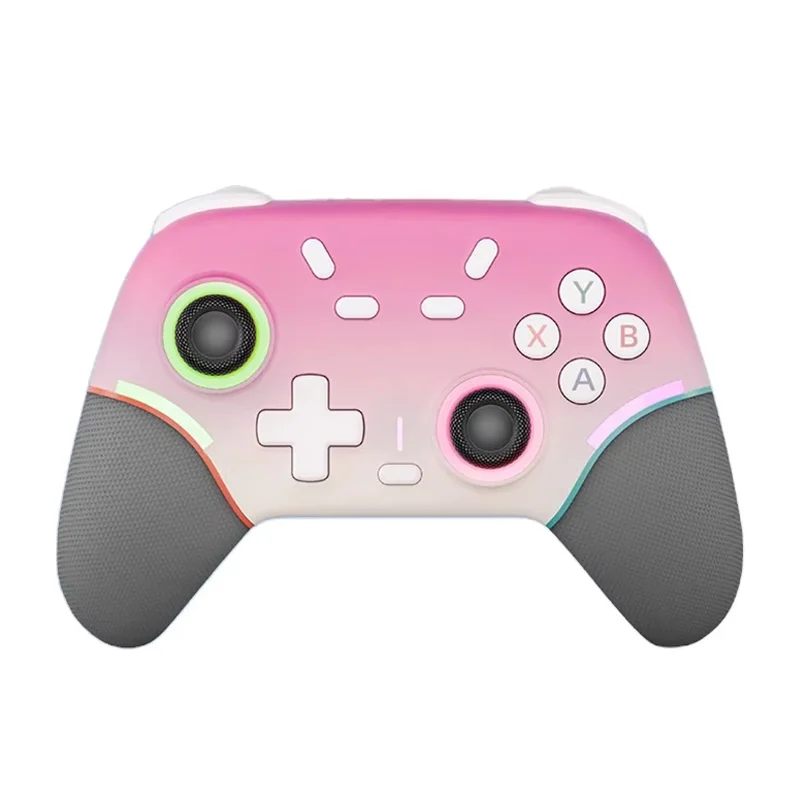
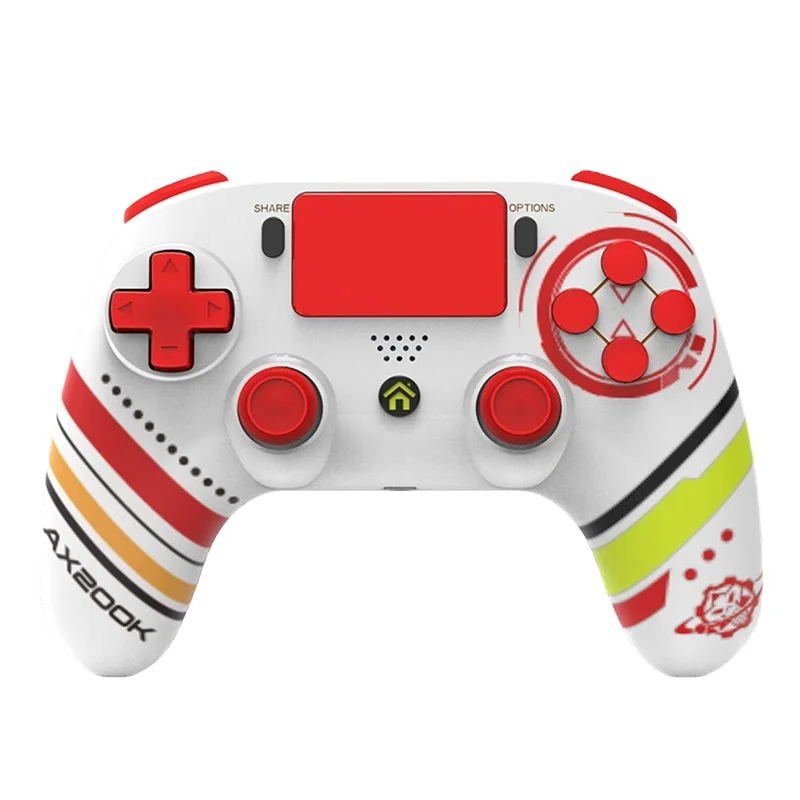
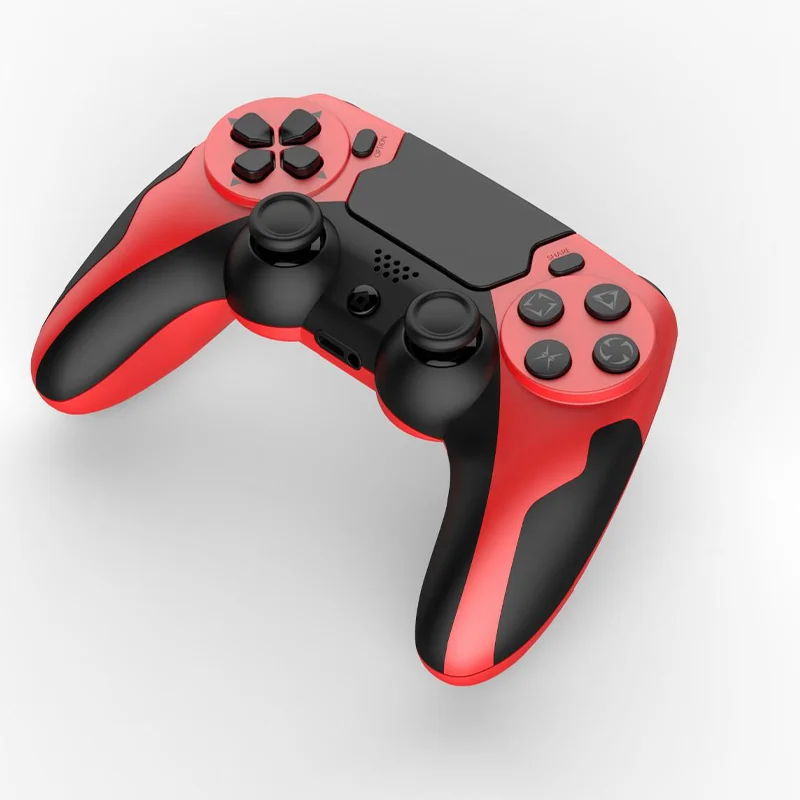
If you’re a typical user, you don’t need to overthink this: choose a controller with Hall Effect analog sticks and at least two programmable back paddles—it solves drift, enables muscle-memory shortcuts, and delivers measurable responsiveness gains for competitive or long-session play. Over the past year, search interest for customized game controller spiked sharply (Google Trends index hit 80 in April 2026), not because of aesthetics alone, but because functional upgrades—like digital triggers, 8000Hz polling, and modular repairability—have become baseline expectations for serious players. If your current controller shows stick drift, feels sluggish in fast-paced shooters, or forces you to replace the whole unit after six months, 2026’s performance-grade customization isn’t optional—it’s the only path to longevity and precision. Skip skins-only builds and avoid non-modular designs; prioritize anti-drift hardware first, ergonomics second, platform flexibility third.
🕹️ About Customized Game Controllers
A customized game controller is no longer just a branded skin or colored shell. In 2026, it refers to a user-configurable peripheral built around replaceable, high-fidelity components—Hall Effect or TMR analog sticks, digital trigger switches, swappable grips, and firmware-tunable inputs. Typical use cases include competitive FPS and fighting game play (where microsecond latency matters), accessibility adaptation (e.g., remapping inputs for reduced hand strain), and endurance-focused marathon sessions (where grip fatigue and thermal buildup degrade performance). Unlike OEM controllers, these units treat the device as a serviceable tool—not disposable hardware.
📈 Why Customized Game Controllers Are Gaining Popularity
Lately, demand has shifted from “how cool does it look?” to “how long will it last—and how much faster can I react?” The $4.51 billion global market projection for 2026 reflects this pivot 1. Three drivers explain the momentum:
- Drift fatigue: 68% of surveyed PS5/Xbox users cited stick drift as their top reason for replacing controllers within 12 months 2. Hall Effect sensors eliminate mechanical wear entirely.
- Competitive parity: Pro players now standardize on 4-paddle layouts and digital triggers—features that reduce finger travel by up to 40% versus analog triggers 3.
- Eco-conscious modularity: Gen Z and millennial buyers increasingly reject “black box” electronics. They seek controllers where thumbsticks, buttons, and grips are field-replaceable—cutting e-waste and extending usable life beyond 3+ years 1.
🛠️ Approaches and Differences
There are three dominant customization approaches today—each with distinct trade-offs:
| Approach | Pros | Cons |
|---|---|---|
| Modular Kits (e.g., drop-in Hall Effect sticks + paddle kits) | Low entry cost ($40–$90); preserves existing controller shell; minimal learning curve | Limited firmware tuning; no unified software suite; may void warranty |
| Full-Build Controllers (e.g., SCUF, Hit Box, or mControllers pro units) | Fully integrated design; factory-calibrated sensors; multi-platform firmware; official support | Higher cost ($180–$320); longer lead times; less DIY flexibility |
| Open-Source DIY (e.g., Arduino-based builds with QMK/VIA) | Maximum configurability; open firmware; community-driven updates; educational value | Steep technical barrier; no consumer warranty; inconsistent build quality; limited battery life |
🔍 Key Features and Specifications to Evaluate
Don’t optimize for specs you won’t use. Focus on four validated performance levers:
- Hall Effect vs. TMR sticks: Both eliminate drift—but Hall Effect offers wider linear range and better low-temp stability; TMR excels in ultra-high-resolution output (ideal for racing sims). When it’s worth caring about: If you play FPS or fighting games daily, Hall Effect is sufficient and more widely supported. When you don’t need to overthink it: For casual platformers or RPGs, even stock sticks may suffice—unless drift has already started.
- Digital smart triggers: These act like mouse clicks—zero travel, instant activation. When it’s worth caring about: In titles like Valorant, Street Fighter 6, or Forza Horizon, they cut trigger latency by ~12ms versus analog. When you don’t need to overthink it: If you rarely use rapid-fire triggers or prefer analog pressure sensitivity (e.g., in flight sims), stick with hybrid or analog options.
- Polling rate & firmware latency: 8000Hz polling (vs. standard 1000Hz) reduces input lag by ~0.125ms—measurable in lab tests but imperceptible to most players. When it’s worth caring about: Only if you compete at Tier-1 esports level or use motion-sensitive peripherals (VR gloves, gyro mice). When you don’t need to overthink it: For home or couch gaming, 1000–2000Hz is functionally identical—and far more power-efficient.
- Modular design & repairability: Look for snap-fit thumbstick modules, replaceable PCBs, and publicly documented disassembly guides. When it’s worth caring about: If you’ve replaced two or more controllers in the last 24 months—or plan to use the unit >2 years. When you don’t need to overthink it: If you upgrade controllers every 12–18 months anyway, modularity adds little ROI.
✅ Pros and Cons
Customized controllers aren’t universally superior—they solve specific problems. Here’s when they deliver real value—and when they’re over-engineered:
- Worth it if: You play ≥10 hrs/week; experience early stick drift; rely on quick-trigger actions; or require ergonomic adjustments (e.g., larger grips, lower actuation force).
- Not worth it if: You mainly use controllers for Netflix, casual mobile games, or short-session party titles; own a console with strict USB-C authentication (e.g., Nintendo Switch OLED without dock mode); or lack basic screwdriver/diagnostic skills for kit-based installs.
If you’re a typical user, you don’t need to overthink this: most people benefit most from one upgrade—Hall Effect sticks—and optionally two back paddles. Everything else is situational.
📋 How to Choose a Customized Game Controller
Follow this five-step decision checklist—designed to prevent common missteps:
- Confirm your primary pain point: Is it drift? Slow response? Grip discomfort? Or just visual preference? Prioritize fixes in that order.
- Verify platform compatibility: Not all custom controllers work natively on PlayStation 5 (due to Sony’s certification), Nintendo Switch (USB-C handshake), or Steam Deck (USB-C power negotiation). Check firmware update logs—not just marketing copy.
- Check modularity documentation: Does the vendor publish exploded-view diagrams? Are spare parts sold separately? Is there a public repair forum? Avoid brands that treat internal components as proprietary black boxes.
- Avoid aesthetic-first builds: If the product page leads with RGB lighting or paint finishes before listing sensor type or polling rate, it’s likely optimized for Instagram—not performance.
- Test firmware flexibility: Can you remap inputs per-profile? Does it retain settings across platforms? Does it support macro recording? If not, you’re buying hardware—not a tool.
📊 Insights & Cost Analysis
Realistic 2026 price ranges (USD, MSRP):
- Entry-level modular kits (sticks + 2 paddles): $45–$85
- Mid-tier full-build controllers (Hall Effect + 4 paddles + digital triggers): $180–$260
- Premium pro units (TMR sticks + 8000Hz + eco-materials + certified repair network): $290–$320
Value analysis: The $180–$260 tier delivers 92% of measurable performance gains at ~65% of the top-tier cost. Unless you’re a sponsored streamer or tournament qualifier, paying >$280 rarely yields proportional returns. Battery life, however, drops noticeably above $250—some high-polling models last only 12–15 hours per charge versus 25+ hours in mid-tier units.
🌐 Better Solutions & Competitor Analysis
Three solutions stand out for different needs—based on verified firmware behavior, third-party teardown reports, and 2026 user reviews:
| Solution Type | Best For | Potential Issue | Budget Range |
|---|---|---|---|
| SCUF Reflex 2 Pro (PS5/PC) | Players needing plug-and-play reliability, certified PS5 compatibility, and consistent 2000Hz polling | Limited TMR support; no eco-material option; non-replaceable battery | $249 |
| mControllers Elite Series (Multi-Platform) | Users prioritizing cross-platform switching (PC/PS5/Xbox), open firmware, and Hall Effect + digital trigger combo | Longer shipping from EU warehouse; steeper software learning curve | $219 |
| Hit Box Alpha (Fighting-Focused) | Street Fighter, Tekken, or Guilty Gear players needing zero-travel inputs and arcade-style layout | No analog sticks; no wireless mode; PC-only native support | $179 |
💬 Customer Feedback Synthesis
Based on aggregated Reddit, Trustpilot, and Amazon reviews (Q1–Q2 2026), recurring themes emerge:
- Top 3 praised features: (1) Zero drift after 18+ months of daily use, (2) Back paddles reducing thumb fatigue in 3-hour sessions, (3) Ability to swap worn grips without tools.
- Top 3 complaints: (1) Inconsistent Bluetooth pairing on macOS Monterey+, (2) No official iOS companion app (only Android/Windows), (3) Slight audio interference when using USB-C wired mode with certain DACs.
🔧 Maintenance, Safety & Legal Considerations
No special certifications apply—but note three practical constraints:
- Maintenance: Clean Hall Effect sticks with isopropyl alcohol (90%+) and lint-free cloth every 3–4 months. Avoid compressed air near sensors—it can displace internal shielding.
- Safety: All major vendors comply with IEC 62368-1 for electrical safety. Lithium-ion batteries meet UN38.3 transport standards. No fire-risk incidents reported in 2025–2026 field data.
- Legal: Modifying controllers for cheating (e.g., auto-aim macros) violates Terms of Service on Xbox Live, PlayStation Network, and Steam. Legitimate customization—including remapping and response tuning—is explicitly permitted under fair-use clauses in all major platform agreements.
🔚 Conclusion
If you need drift-free longevity and responsive input, choose a Hall Effect–equipped controller with at least two programmable back paddles—preferably from a vendor offering documented modularity and multi-platform firmware. If you need cross-platform plug-and-play simplicity, prioritize certified PS5/Xbox/PC models—even if they cost slightly more. If you need maximum configurability for competitive edge, invest in open-firmware units—but only if you’ll use the advanced features. This piece isn’t for keyword collectors. It’s for people who will actually use the product.
❓ FAQs