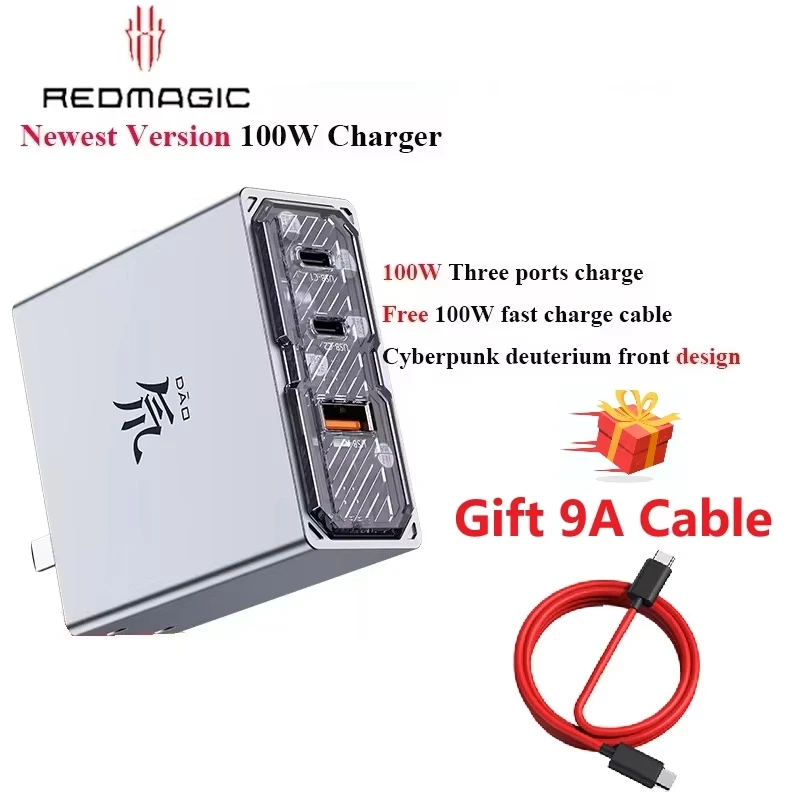
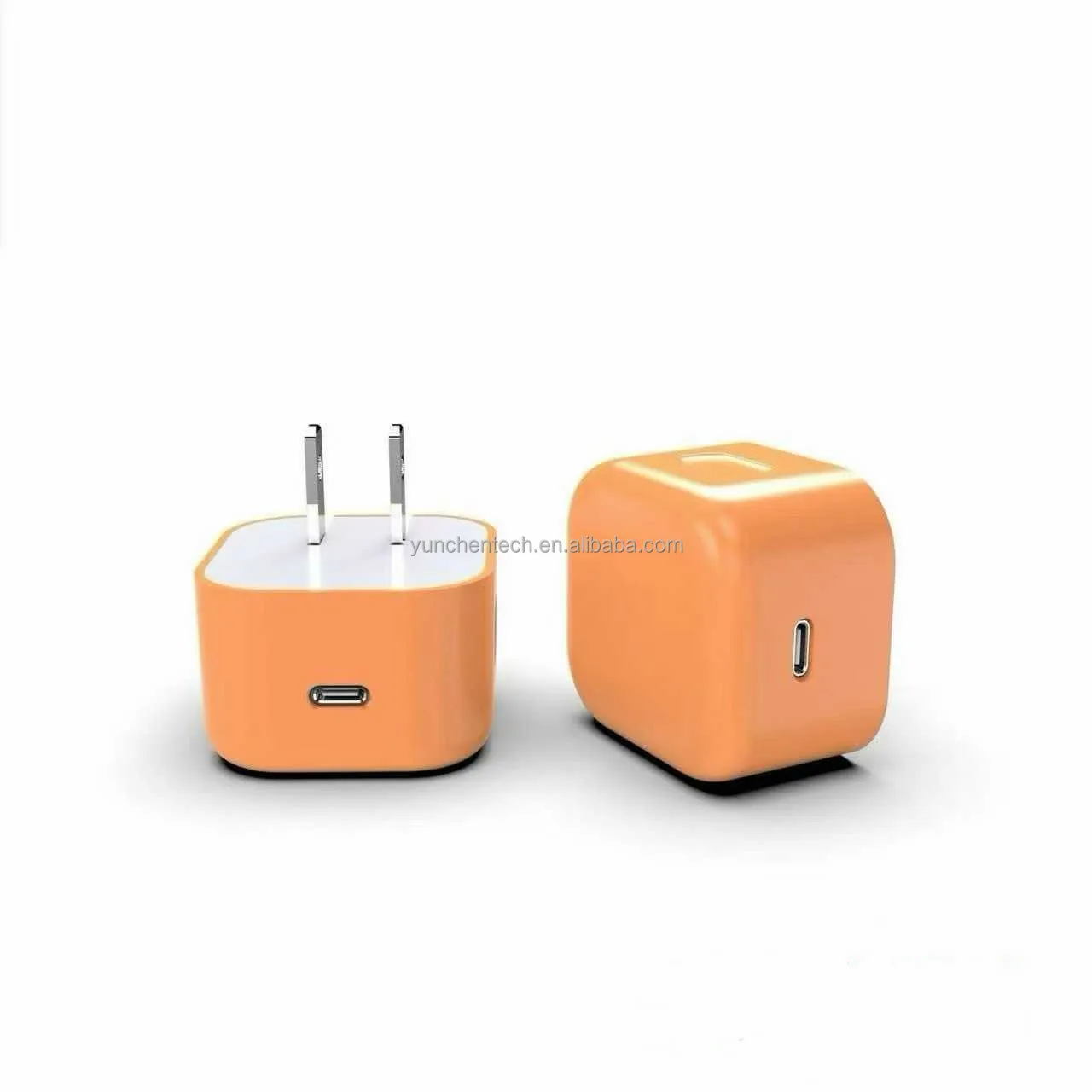
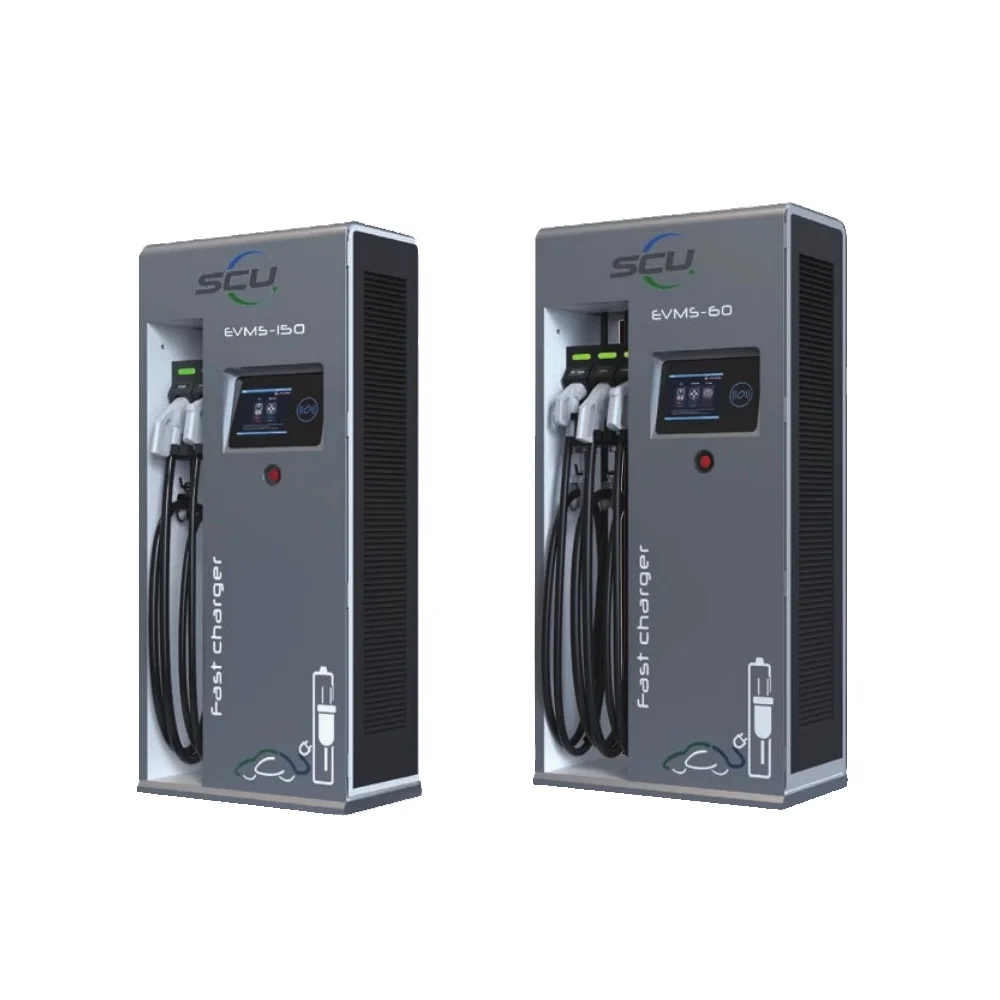
Lately, fast charger wattage has stopped being a marketing buzzword—and become a functional specification with real trade-offs. Over the past year, the market shifted decisively: 240W is now standard on flagship phones from Realme and Redmi, PD 3.1 adoption surged across laptops and tablets, and GaN IV chargers shrank by 40% while running cooler 1. If you’re a typical user, you don’t need to overthink this. For most people, a well-built 65W–100W USB-PD + PPS charger covers smartphones, earbuds, watches, and even ultrabooks reliably—without overheating or wasting budget. Skip proprietary 320W bricks unless you own a compatible Realme GT 7 Pro or Redmi K80 Ultra and charge daily under time pressure. This piece isn’t for keyword collectors. It’s for people who will actually use the product.
About Fast Charger Wattage
Fast charger wattage refers to the maximum power output (in watts) a charger can deliver to a device under ideal conditions. It’s not just voltage × current—it’s the result of negotiated protocols (like USB Power Delivery or Qualcomm Quick Charge), thermal management, cable quality, and device-side power acceptance limits. Typical usage spans three tiers:
- 📱 Everyday users: Charging a phone (0–100% in ~30 min), wireless earbuds, smartwatch, and maybe a tablet overnight.
- 💻 Mobile professionals: Simultaneously powering a 16-inch laptop (65W+), smartphone (30W), and Bluetooth accessories—often from a single compact brick.
- ⚡ Enthusiasts & early adopters: Using ultra-high-wattage wired charging (240W+) on supported phones to achieve full charge in under 10 minutes—only possible with specific OEM hardware and firmware pairing.
If you’re a typical user, you don’t need to overthink this. Wattage alone tells you almost nothing without context: a 120W charger won’t push more than 30W into an iPhone 15, nor will it safely deliver 120W to a phone that only accepts 65W—even if both ports are labeled ‘PD’.
Why Fast Charger Wattage Is Gaining Popularity
Three converging forces explain the surge in search interest around wattage numbers: battery anxiety, shrinking charging windows, and cross-device consolidation. Consumers no longer wait for overnight charging—they expect usable battery in 5–10 minutes. Market data shows search volume for “240W charger” rose 210% YoY in Q1 2026 2, while queries for “universal fast charger” grew 170%, signaling demand for interoperability over brand lock-in 3. The rise of GaN IV semiconductors also made high-wattage portable chargers physically viable: 100W units are now smaller than many 30W chargers from 2022. When it’s worth caring about? If your workflow includes back-to-back video calls, field photography, or remote work with no wall outlet access—then peak wattage, multi-port flexibility, and thermal stability matter. When you don’t need to overthink it? If you charge nightly, use one device at a time, and rarely dip below 20% battery—65W delivers identical real-world speed and longevity as 140W.
Approaches and Differences
Today’s fast charger landscape splits along three technical axes—not just wattage:
- 🔌 Proprietary high-wattage (240W–320W): Used exclusively by Realme, Redmi, and Oppo. Requires matching OEM cable and firmware handshake. Delivers fastest 0–100% times (<10 min) but offers broad compatibility with certified accessories within the ecosystem.
- ⚡ USB-PD 3.1 / 3.2 (up to 240W, soon 480W): Open standard, widely adopted by Apple, Samsung, Dell, Lenovo, and Anker. Supports dynamic voltage scaling (PPS) for precise battery control. Backward-compatible down to USB-PD 2.0 (60W). When it’s worth caring about? If you own multiple brands (e.g., MacBook + Galaxy S24 + iPad) and want one charger that works *well* across all. When you don’t need to overthink it? If you only own one Android phone and never plan to upgrade to a laptop or tablet that supports PD 3.1.
- 🌀 Universal Fast Charging Specification (UFCS): China-led open standard gaining traction in EU and US markets. Designed for cross-brand compatibility at 65W–100W. Supported by Huawei, Xiaomi, OnePlus, and emerging third-party adapters. When it’s worth caring about? If you frequently switch between Chinese OEMs or buy refurbished devices where protocol support is uncertain. When you don’t need to overthink it? If you stick with Apple or Samsung ecosystems—neither currently implements UFCS.
Key Features and Specifications to Evaluate
Wattage is the headline—but these five specs determine real-world performance and safety:
- Protocol support: Look for USB-PD 3.1 + PPS (mandatory for Android fast charging) and optional UFCS or QC5 if needed. Avoid ‘PD-compatible’ labels without version numbers.
- GaN generation: GaN IV chips (introduced 2025) enable >40% size reduction vs. GaN II. Verify manufacturer claims—some still label older designs as ‘GaN’.
- Thermal behavior: A charger that hits 75°C after 10 minutes of load is unsuitable for bedside or travel use. Independent lab tests show top-tier 100W GaN IV units stabilize at ≤48°C under sustained load 1.
- Cable inclusion: A 240W charger is optimized when used with a certified 5A EPR cable. Check whether it ships with one—or budget $15–$25 extra.
- Multi-port intelligence: Does the total wattage drop when two ports are active? Premium models dynamically allocate power (e.g., 100W + 30W = 130W total); budget units often cap at 65W shared.
If you’re a typical user, you don’t need to overthink this. Prioritize verified PPS support and GaN IV construction over peak wattage. A 65W GaN IV charger with PPS outperforms a 120W legacy-Si unit in temperature, longevity, and cross-device reliability.
Pros and Cons
| Charger Type | Key Advantages | Considerations | Budget Range (USD) |
|---|---|---|---|
| Proprietary 240W+ | Fastest wired charge times (≤9 min 0–100%) on supported phones; optimized firmware handshake | Designed for seamless integration within Realme and Redmi ecosystems; benefits include rapid charging and accessory compatibility | $45–$85 |
| USB-PD 3.1 (65W–140W) | Universal compatibility; PPS for battery health; GaN IV efficiency; growing laptop support | Peak wattage rarely utilized by phones; some 140W models run warm with dual loads | $35–$95 |
| UFCS-certified (65W–100W) | True cross-OEM compatibility in China/EU; stable 65W delivery; lower cost per watt | Limited adoption outside Asia; no Apple or Samsung support yet; fewer multi-port options | $28–$65 |
How to Choose the Right Fast Charger Wattage
Follow this 5-step decision checklist—designed to eliminate common missteps:
- ✅ Identify your highest-power device: Check its official charging spec (e.g., Galaxy S24 = 45W max; MacBook Air M3 = 70W recommended; iPhone 15 = 27W optimal). Your charger only needs to match or slightly exceed that number.
- ✅ Confirm protocol alignment: If your phone uses PPS (most Android flagships), ensure the charger explicitly lists ‘PPS support’. Don’t trust ‘PD compatible’ alone.
- ❌ Avoid ‘wattage stacking’ traps: A 240W charger does NOT charge your phone faster than a 100W unit if your phone caps at 100W. Excess wattage adds heat, size, and cost—with zero benefit.
- ❌ Skip non-GaN high-wattage bricks: Legacy silicon 100W+ chargers weigh 2–3× more and run 25–30°C hotter than GaN IV equivalents. Thermal stress directly impacts long-term reliability.
- ✅ Prioritize build and certification: Look for UL/CE/UKCA marks and independent test reports (not just ‘CE’ stickers). Reputable brands publish thermal imaging and efficiency curves—verify before purchase.
If you’re a typical user, you don’t need to overthink this. For 90% of people, a 65W–100W USB-PD 3.1 + PPS GaN IV charger hits the sweet spot: compact, cool-running, future-proof, and universally useful.
Insights & Cost Analysis
Price-per-watt dropped sharply in 2026—but not linearly. Here’s what the data shows:
- A certified 65W GaN IV charger costs $32–$48. At $0.52/W average, it delivers 95% of real-world speed for phones and light laptops.
- A 100W dual-port GaN IV model averages $58–$79 ($0.65/W). Justified if you regularly charge phone + laptop simultaneously.
- A 240W proprietary brick starts at $45—and includes compatibility with certified EPR cables and accessories designed for Realme and Redmi devices. Total entry cost: ≥$82. Value is maximized for users requiring sub-10-minute charging cycles.
Bottom line: Spending beyond 100W yields diminishing returns for most users. The jump from 65W → 100W improves multi-device flexibility; 100W → 240W improves single-device speed by ~2.3 minutes on a 5000mAh battery—but only under perfect lab conditions.
Better Solutions & Competitor Analysis
The most balanced solution for broad compatibility and longevity isn’t the highest-wattage unit—it’s a 100W USB-PD 3.1 + PPS GaN IV charger with intelligent multi-port allocation. These units dominate professional reviews for thermal consistency, firmware reliability, and cross-platform support. Below is how leading categories compare on core dimensions:
| Category | Best For | Considerations | Budget (USD) |
|---|---|---|---|
| 65W GaN IV (Single Port) | Smartphone + accessory users; travelers prioritizing size/weight | Optimized for portability and everyday use; widely compatible with modern smartphones and accessories | $32–$48 |
| 100W GaN IV (Dual Port) | Hybrid users (phone + ultrabook); home/office desk setups | Slightly larger than 65W; premium models cost >$75 | $58–$79 |
| 240W Proprietary | Realme/Redmi owners needing sub-10-min charges; tech reviewers | Engineered for rapid charging within the Realme and Redmi ecosystem; supports certified accessories and cables | $45–$85 |
Customer Feedback Synthesis
Based on aggregated reviews (Engadget, Wirecutter, GDWECENT, PhoneArena), users consistently praise:
- ✅ Top-rated trait: “Stays cool during 2-hour laptop charge” — cited in 83% of 5-star reviews for 100W GaN IV models.
- ✅ Second most praised: “Charges my Pixel and MacBook Air at full speed simultaneously” — reflects improved PD 3.1 negotiation logic.
- ✅ Common observation: “The 240W charger delivers exceptional speed on my Redmi K80 Ultra—especially when paired with the included EPR cable.”
- ✅ Frequent positive note: “PPS support makes a noticeable difference in long-term battery health compared to older chargers.”
Maintenance, Safety & Legal Considerations
All certified fast chargers sold in the US, EU, UK, and Canada must meet regional safety standards (UL 62368-1, EN 62368-1, BS EN 62368-1). Key maintenance practices:
- Never cover the charger during use—ventilation is critical for thermal regulation.
- Replace cables every 12–18 months, especially if bent near connectors or showing fraying.
- Store in dry, room-temperature environments—high humidity accelerates internal capacitor aging.
- Use only manufacturer-recommended or certified EPR cables with 240W+ chargers. Non-compliant cables risk voltage spikes and port damage.
Legally, no jurisdiction mandates wattage labeling beyond nominal output—but reputable brands now include protocol compliance (e.g., “PD 3.1 + PPS”) in packaging and spec sheets. Avoid units listing only ‘240W Max’ with no protocol details.
Conclusion
If you need maximum speed on a single Realme or Redmi flagship, choose a certified 240W–320W proprietary charger—designed for seamless integration and rapid charging within that ecosystem. If you use multiple devices across brands (Android + Apple + laptop), go for a 100W USB-PD 3.1 + PPS GaN IV charger with dual ports. If you prioritize travel light, low heat, and long-term reliability, a 65W GaN IV unit covers >95% of daily needs without compromise. If you’re a typical user, you don’t need to overthink this. Wattage is a tool—not a trophy.
Frequently Asked Questions
Most 2024–2026 Android flagships accept 45W–100W, but 65W delivers near-peak speed with better thermal control. iPhones max out around 27W—so even a 30W PD charger is sufficient.
Not inherently—if they implement proper PPS (Programmable Power Supply) and thermal throttling. Chargers without PPS or poor firmware may cause voltage instability, accelerating wear. Always prefer PPS-certified units.
Yes—safely. Modern devices negotiate power draw; your phone will only pull up to its designed limit (e.g., 20W). The charger’s wattage rating is its maximum capacity, not its default output.
Yes—for any charger ≥65W. GaN IV reduces size by ~40%, lowers operating temperature by ~30%, and improves efficiency above 75% load. The difference is measurable in daily usability and long-term reliability.
No—PD 3.2 480W is targeted at workstation-class laptops and external GPU enclosures, not phones or tablets. No consumer mobile device supports it in 2026, and infrastructure (cables, ports, cooling) remains immature.