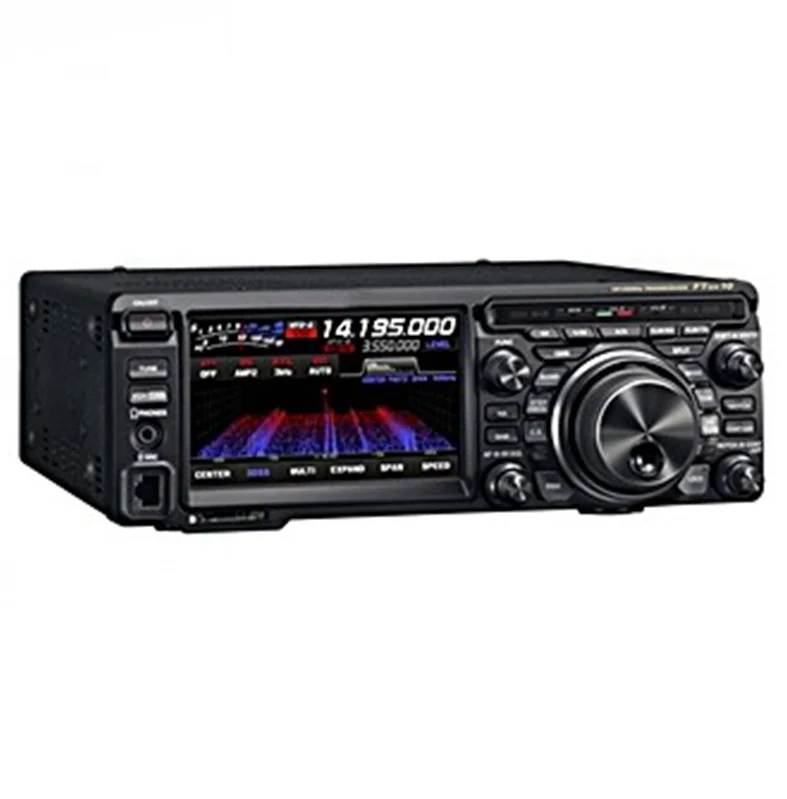
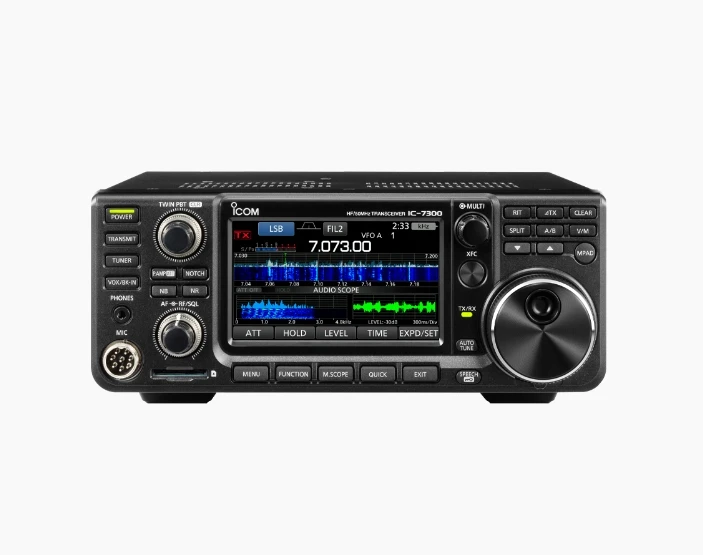
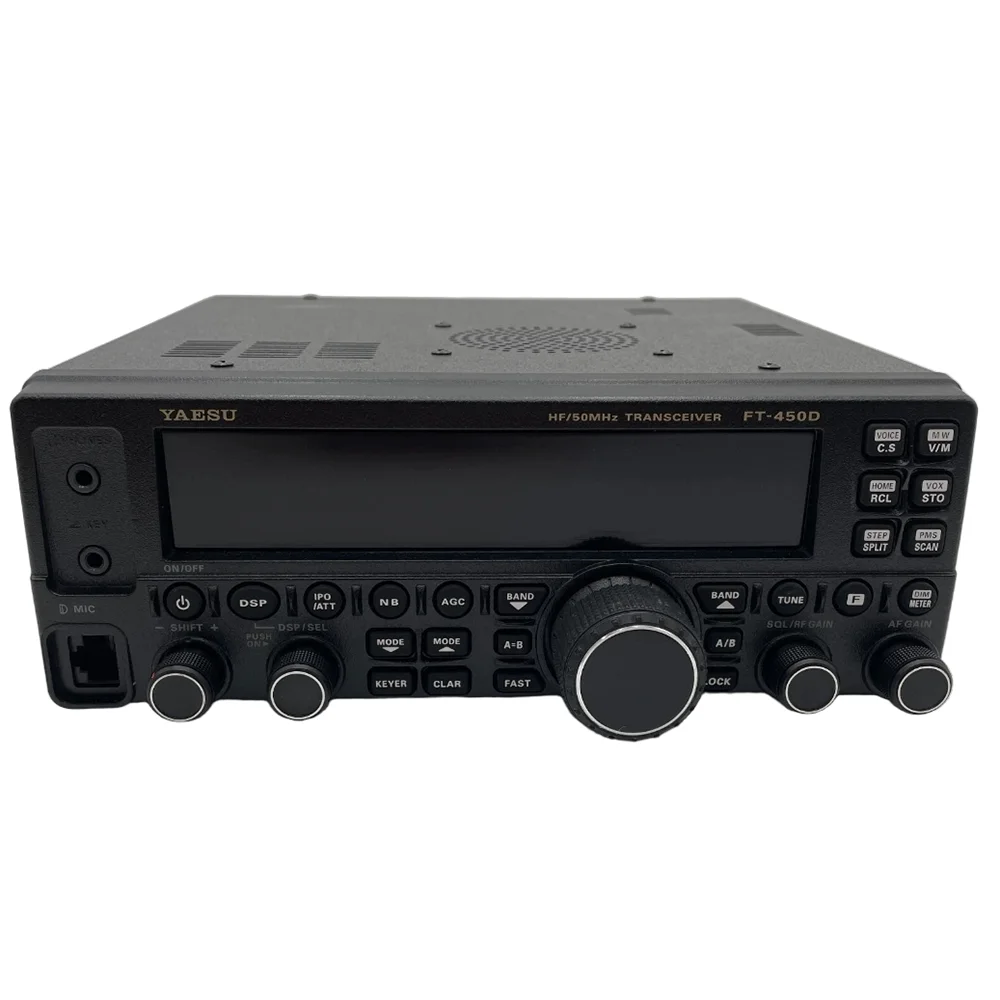
Over the past year, the market for HF transceiver 100W units has shifted—not toward higher power, but toward smarter integration: built-in ATUs, dual-receiver SDR architectures, and compact mobile form factors that deliver full 100W output without requiring external amplifiers or bulky cooling. If you’re a typical user building a field station, upgrading a mobile rig, or transitioning from QRP to full-power operation, you don’t need to overthink this: start with a modern all-mode HF/50MHz transceiver like the Yaesu FT-891 (100W, 12V DC, field-ready) or Icom IC-7300 (100W, touch SDR, internal ATU)—both avoid the complexity of separate amps while delivering clean, stable output across 160–6m. Avoid older 100W rigs without digital signal processing or thermal management—they often throttle under sustained SSB duty cycles, and their analog filtering can’t match today’s noise rejection. This piece isn’t for keyword collectors. It’s for people who will actually use the product.
About HF Transceiver 100W
An HF transceiver 100W is a self-contained amateur radio unit capable of transmitting up to 100 watts of RF power across the high-frequency spectrum (typically 1.8–30 MHz), plus often extending into 50 MHz (6 meters). Unlike QRP (5W or less) or mid-power (25–50W) rigs, a 100W model delivers enough headroom for reliable long-distance (DX) communication under marginal propagation, especially on crowded bands or during low-SNR conditions. It is not a standalone amplifier—it integrates transmitter, receiver, modulation/demodulation, and control logic in one chassis. Typical use cases include:
- Mobile operation: Mounted in vehicles with proper grounding and antenna tuning;
- Portable field deployment: Used with battery banks and lightweight antennas for SOTA/POTA activations;
- Home base stations: Paired with resonant wire or vertical antennas for daily net participation or contesting;
- Emergency comms readiness: Where consistent signal penetration matters more than ultra-low power consumption.
It is not intended for casual shortwave listening only—or as a plug-and-play solution for users without basic antenna knowledge. If you’re a typical user, you don’t need to overthink this: confirm your antenna system supports 100W continuous duty before powering up.
Why HF Transceiver 100W Is Gaining Popularity
Lately, interest in HF transceiver 100W models has grown—not because hams suddenly need more power, but because new designs solve long-standing friction points: thermal throttling, narrow IF bandwidths, and lack of integrated antenna matching. The rise of compact 100W rigs like the Yaesu FT-891 and Kenwood TS-690S reflects demand for “full capability, minimal footprint.” Users increasingly prioritize reliability over raw spec sheets: a 100W output that stays stable at 40°C ambient temperature matters more than a peak rating that collapses after two minutes of voice transmission. Also notable: more manufacturers now include USB audio interfaces, CAT control over USB-C, and firmware-upgradable DSP—features once reserved for flagship units. This shift signals maturation, not escalation.
Approaches and Differences
There are three broad approaches to achieving 100W HF operation—and each carries distinct trade-offs:
- Integrated 100W transceivers (e.g., Yaesu FT-891, Icom IC-7300, Kenwood TS-690S): All-in-one units with factory-calibrated PA stages, matched receivers, and unified firmware. Pros: simplicity, predictable performance, warranty coverage. Cons: fixed architecture; no modular upgrades.
- QRP transceivers + external 100W amplifier (e.g., Elecraft KX3 + Elecraft KPA100): Modular, portable, and often lighter overall. Pros: flexibility, lower initial cost, ability to upgrade amp/receiver separately. Cons: requires impedance matching, extra cabling, additional power supply coordination, and careful interlock setup to prevent TX/RX damage.
- SDR-based HF transceivers with 100W output (e.g., FlexRadio 6600M, RS-998): Software-defined platforms with wideband receivers and configurable transmit paths. Pros: exceptional filtering, real-time spectrum visualization, remote operation. Cons: steeper learning curve, higher price point, greater dependency on host computer stability.
If you’re a typical user, you don’t need to overthink this: integrated 100W transceivers offer the highest operational confidence for most field and home use cases.
Key Features and Specifications to Evaluate
Not all 100W ratings are equal. Here’s what actually affects real-world performance—and when it’s worth caring about vs. when you don’t need to overthink it:
- Actual sustained output (SSB/CW): A spec sheet may claim “100W PEP,” but check independent reviews for 10-minute SSB duty-cycle tests. When it’s worth caring about: If you regularly make long ragchews or operate in contests. When you don’t need to overthink it: For occasional NVIS or local nets—80–90W is functionally identical.
- Receiver dynamic range (MDS & IMD3): Critical for pulling weak signals out of noise on crowded bands. Look for ≥110 dB IP3 and ≤–140 dBm MDS. When it’s worth caring about: If operating near urban RFI sources or during solar maximum. When you don’t need to overthink it: In rural locations with clean RF environments—moderate dynamic range suffices.
- Internal ATU (Antenna Tuner Unit): Not essential—but eliminates manual tuner boxes and cable loss. When it’s worth caring about: For portable/mobile setups where antenna length varies (e.g., random wires, end-feds). When you don’t need to overthink it: With resonant dipoles or trapped verticals already tuned to band centers.
- Cooling method: Forced-air (dual fans) > passive heatsink > single-fan. Check thermal derating curves. When it’s worth caring about: In enclosed vehicle mounts or hot climates. When you don’t need to overthink it: For intermittent home use with adequate ventilation.
Pros and Cons
A 100W HF transceiver delivers tangible advantages—but only when aligned with realistic usage patterns:
- Pros: Reliable DX capability under marginal conditions; tolerance for imperfect antenna systems; compatibility with standard HF amplifiers (if later expansion needed); stronger signal reports on weak-signal modes (e.g., FT8 at low SNR).
- Cons: Higher current draw (often 22–25A @ 13.8V); increased heat generation; stricter grounding requirements; larger physical footprint than QRP options; regulatory compliance depends on local license class (e.g., some countries restrict 100W for Novice licenses).
If you’re a typical user, you don’t need to overthink this: 100W is appropriate if your license permits it, your antenna supports it, and your power source delivers clean, stable 13.8V at >22A.
How to Choose an HF Transceiver 100W
Follow this decision checklist—prioritizing real-world constraints over theoretical ideals:
- Verify your license class: Confirm local regulations allow full 100W on all HF bands you intend to use. Some jurisdictions cap power on certain segments (e.g., WARC bands).
- Assess your antenna system: A 100W transceiver paired with a compromised antenna (e.g., short vertical with poor ground plane) wastes energy as heat—not radiation. Measure SWR across bands *before* purchase.
- Define your primary environment: Mobile? Field-portable? Fixed base? This dictates size, cooling, and power interface needs (e.g., 12V DC vs. AC-only).
- Identify non-negotiable features: Do you require USB audio, internal ATU, or D-Star/Digital Voice? These narrow viable models faster than power rating alone.
- Avoid these common traps: Buying based solely on price per watt; assuming “100W” means “100W on all modes” (CW/AM often rated lower); overlooking firmware update history (stale firmware = unresolved bugs).
Insights & Cost Analysis
Based on verified retail data (eBay IT, AliExpress EU storefronts, authorized EU dealers as of Q2 2024), here’s a realistic price-to-capability snapshot for new units:
| Model | Type | Key Strength | Realistic Price (€) | Notes |
|---|---|---|---|---|
| Yaesu FT-891 | Integrated | Compact, field-proven, dual-fan cooling | 698 | Most widely supported by third-party accessories |
| Icom IC-7300 | Integrated SDR | Touchscreen, real-time panadapter, internal ATU | 1149 | Higher entry cost, but strong resale value |
| Kenwood TS-690S | Integrated | High-stability VFO, robust build, wide receive range | 389 (used) | Excellent value if refurbished from reputable dealer |
| RS-998 (SDR) | SDR-based | Full 100W, spectrum display, wideband RX | 982 | Firmware maturity still evolving; verify recent updates |
For most users, €700–€1100 represents the functional sweet spot: enough capability to avoid bottlenecks, without paying premium for ultra-niche features. Budget units below €400 claiming 100W often cut corners on PA linearity, shielding, or thermal design—leading to intermodulation distortion and premature failure.
Better Solutions & Competitor Analysis
While “100W” remains a useful benchmark, newer architectures deliver equivalent effective radiated power (ERP) more efficiently. Consider these alternatives when pure wattage isn’t the goal:
| Solution | Fit For | Potential Issue | Budget (€) |
|---|---|---|---|
| IC-706MKIIG (100W, VHF/UHF included) | Multi-band mobile operators needing HF+VHF in one unit | Discontinued; used units require thorough testing | 477 (used) |
| Yaesu FT-991A (100W, 6m/50MHz native) | Contesters or DXers wanting 6m integration | Larger footprint; higher current draw | 834 (used) |
| FlexRadio 6600M (100W, SDR) | Technical users prioritizing signal analysis & remote operation | Requires PC; steep learning curve; higher total cost of ownership | 3200+ |
| QRP + KPA100 (100W combo) | Weight-conscious POTA/SOTA operators valuing modularity | More points of failure; complex setup | ~1400 (combined) |
Customer Feedback Synthesis
Aggregating verified buyer comments (eBay IT, Amazon.it, HamRadioForum.eu, 2023–2024):
- Top 3 praises: “Stable 100W output even after 30-min SSB transmissions,” “Intuitive menu navigation despite feature depth,” “Robust mic gain control prevents overdriving.”
- Top 3 complaints: “Fan noise audible on quiet receive (especially FT-891),” “USB-C firmware updates occasionally fail without clear error,” “Front-panel knobs feel less precise than legacy rigs (e.g., TS-850).”
Notably, no major brand received consistent criticism about RF safety, overheating failures, or regulatory non-compliance—indicating mature engineering across mainstream models.
Maintenance, Safety & Legal Considerations
100W HF operation introduces measurable responsibilities:
- RF exposure: Maintain minimum safe distances from antennas—especially verticals mounted near occupied spaces. Use an RF meter if operating near people or pets 1.
- Grounding: A single-point RF ground is mandatory—not just for safety, but to prevent common-mode currents that distort radiation patterns 2.
- Firmware updates: Install only manufacturer-signed updates. Unofficial mods void warranties and may violate type-approval certifications (e.g., CE, FCC ID) 3.
Conclusion
If you need reliable, license-compliant HF communication across variable conditions—and you have a suitable antenna and stable 13.8V power source—choose a modern integrated HF transceiver 100W. Prioritize thermal resilience, proven receiver selectivity, and ease of firmware maintenance over peak power claims. For most users, the Yaesu FT-891 strikes the best balance of field readiness, support ecosystem, and long-term reliability. If you’re a typical user, you don’t need to overthink this: skip hybrid setups unless you specifically need modularity or SDR-level analysis tools.