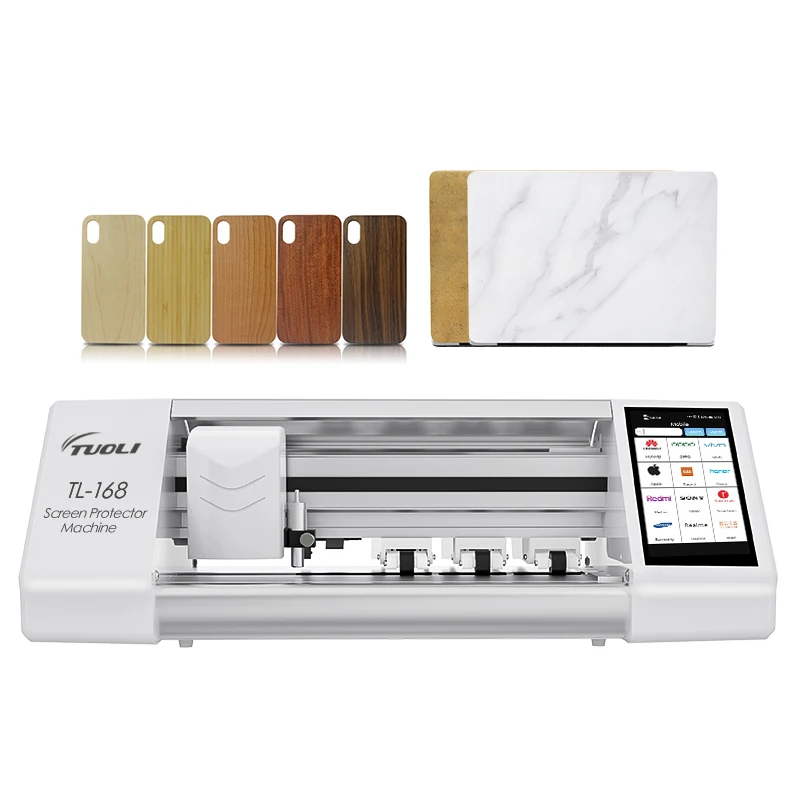
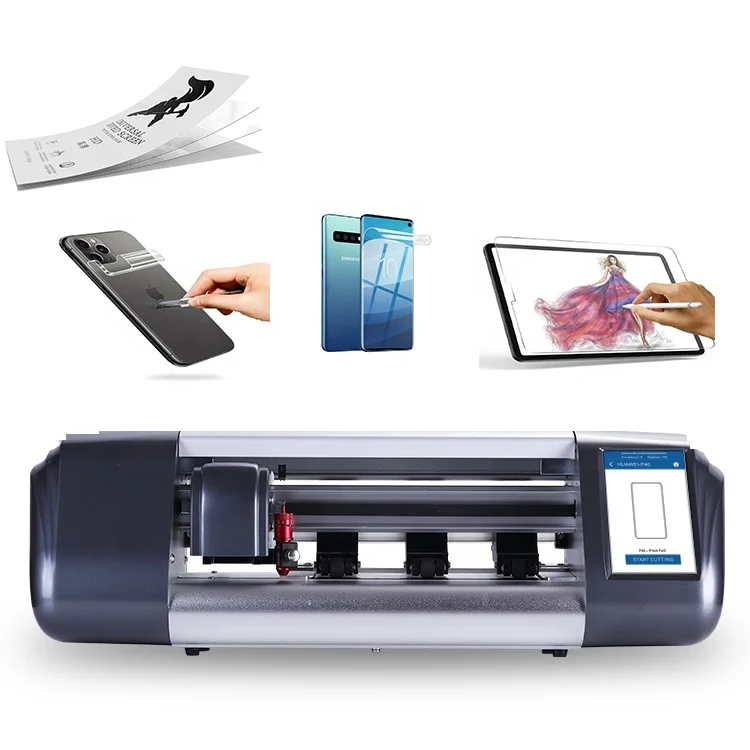
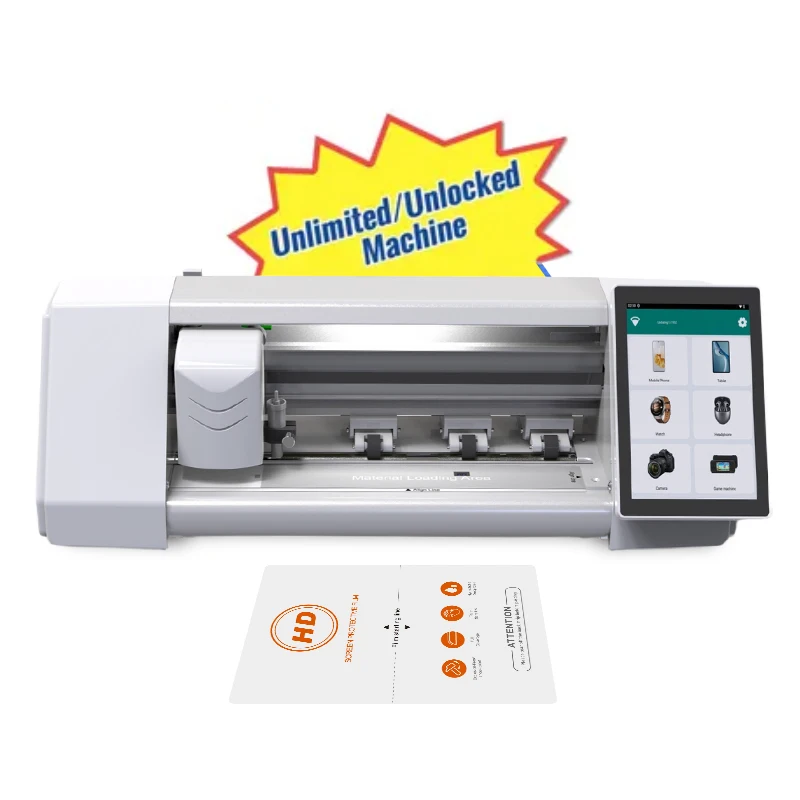
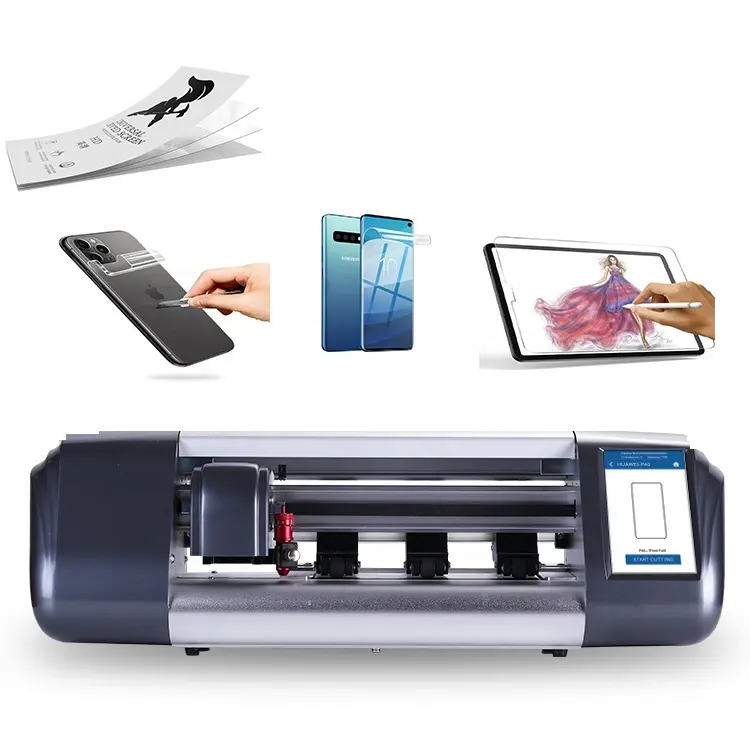
Over the past year, demand for precision hydrogel sheet making machines has surged—not just among industrial film manufacturers, but also small workshops, mobile accessory shops, and even independent screen protector brands. This shift reflects a broader move toward in-house customization: users now expect device-specific, ultra-thin, self-healing hydrogel films cut with sub-millimeter accuracy—and they want control over material sourcing, template updates, and output speed. If you’re evaluating a hydrogel sheet making machine, start here: for most small-to-mid-scale operators, a fully automatic Bluetooth/WiFi-enabled cutter (like Nybelpro or Tuoli Pi models at MXN 4,462–7,999) delivers the best balance of speed, template flexibility, and ease of use—no coating or formulation expertise required. You don’t need a full hydrogel coating + curing + cutting line unless you’re producing raw gel sheets from polymer solutions. If you’re a typical user, you don’t need to overthink this.
About Hydrogel Sheet Making Machines
A hydrogel sheet making machine is not one device—but a functional category spanning three distinct operational tiers:
- Cutting-only machines: Accept pre-coated hydrogel film rolls or sheets and perform CNC-guided dieless cutting (e.g., for smartphone screen protectors). These dominate the market for accessory makers.
- Coating + cutting systems: Apply liquid hydrogel precursor onto PET or TPU backing, UV-cure or thermally set the gel layer, then cut. Used by material suppliers and OEMs.
- End-to-end production lines: Include mixing tanks, extrusion, casting, drying, laminating, and slitting—designed for bulk hydrogel sheet output (e.g., for facial masks or industrial applications).
For consumer electronics accessories, >95% of actual deployments involve cutting-only machines. They work with commercially available hydrogel film stock (typically 0.2–0.3 mm thick, 90–95% water content), and their core value lies in precision contouring—not chemistry.
Why Hydrogel Sheet Making Machines Are Gaining Popularity
Lately, two parallel trends converged: first, rising consumer preference for hydrogel screen protectors over rigid glass—due to flexibility, edge adhesion, and scratch recovery; second, falling entry barriers for localized production. Where a decade ago only large factories ran hydrogel film lines, today’s compact, WiFi-connected cutters let a single technician produce 50+ custom-fit protectors per hour—updating templates remotely, adjusting cut depth for new phone models overnight, and avoiding inventory risk from pre-cut stock.
This isn’t about replacing mass production—it’s about responsiveness. Shops in Mexico City, São Paulo, and Jakarta report 30–40% higher margins when offering same-day, model-specific hydrogel installation versus off-the-shelf kits. The change signal? Not lower prices—but tighter integration between design software, hardware firmware, and global device release calendars.
Approaches and Differences
Three primary approaches define the current landscape:
🔷 1. Entry-Level Manual/Assisted Cutters (MXN 2,000–4,500)
Examples: Basic Tuoli Pi units, some Haxly Wibo variants.
Pros: Low upfront cost, plug-and-play setup, minimal training.
Cons: Template library limited to ~200 devices; no OTA updates; manual film loading increases misalignment risk.
When it’s worth caring about: If you serve only 3–5 popular local models and process <50 units/day.
When you don’t need to overthink it: If you plan to scale beyond 100 units/week or support devices released after Q2 2024—these lack API access for rapid template rollout.
🔷 2. Mid-Tier Smart Cutters (MXN 4,462–10,000)
Examples: Nybelpro No Limit, FixOEM Millionaire CNC, Mietubl all-in-one.
Pros: Real-time template sync via cloud or app; Bluetooth/WiFi calibration; auto-feed/unload; >50,000 device profiles (including foldables and tablets); adjustable pressure for thin-film handling.
Cons: Requires stable 2.4 GHz network; occasional firmware update delays for brand-new releases (e.g., iPhone 16 Pro Max launched Sept 2024—templates appeared within 72 hrs on top-tier units).
When it’s worth caring about: If uptime, multi-device throughput, or remote fleet management matters.
When you don’t need to overthink it: If you’re cutting only flat-screen phones (not curved OLEDs) and use static templates—this tier offers headroom you won’t use.
🔷 3. Industrial Coating + Cutting Lines (MXN 178,000–1,053,000+)
Examples: ZONESUN ZS-MS2TCP (facial mask focus), Teneth UV/TPU laminators, SimyMachine coating coaters.
Pros: Full material control—from polymer mix to final sheet; ability to tune water retention, elasticity, and adhesion.
Cons: Requires cleanroom-adjacent environment; operator training in rheology and UV dosimetry; ROI horizon >24 months.
When it’s worth caring about: If you supply white-label hydrogel film to third parties—or develop proprietary formulations.
When you don’t need to overthink it: If your goal is screen protection—not R&D or B2B material sales. If you’re a typical user, you don’t need to overthink this.
Key Features and Specifications to Evaluate
Don’t optimize for specs—optimize for workflow fit. Prioritize these five:
- Cut accuracy tolerance: Look for ≤ ±0.15 mm (verified via ISO 9001 test reports, not marketing claims). Critical for notch and punch-hole alignment.
- Template update mechanism: Cloud-synced > USB-loaded > manual CSV import. Avoid machines requiring factory reset to install new profiles.
- Film handling stability: Does it grip 0.18 mm hydrogel without stretching? Check for vacuum-assisted beds or dual-roller feed—not just pinch rollers.
- Software openness: Can you export cut paths as SVG/DXF? Required if you design custom branding or AR-triggered overlays.
- Service latency: Average time from reporting a mis-cut to receiving corrected template—under 4 hours is industry-leading.
Pros and Cons: Balanced Assessment
Who benefits most? Small shops adding hydrogel service to existing repair offerings; e-commerce sellers bundling custom-cut protectors; educators demonstrating material science principles.
Who should pause? Users expecting “one-button hydrogel synthesis”—these machines cut, not create, hydrogel. Also avoid if your facility lacks stable power (voltage spikes damage servo drivers) or ambient humidity control (>70% RH causes film curling).
How to Choose a Hydrogel Sheet Making Machine
Follow this 5-step decision checklist—skip steps only if you’ve already validated them:
- Confirm your input material: Are you using roll-fed film (standard 300 mm width) or pre-sheets? Most cutters accept both—but roll-fed requires unwind tension control.
- Map your top 10 device SKUs: Cross-check each against the vendor’s live template database. Don’t rely on “up to 50,000” claims—verify coverage for Galaxy S24 Ultra, Pixel 9 Pro, and iPhone 16 series.
- Test the calibration workflow: A proper unit guides you through camera alignment, pressure tuning, and corner detection in <90 seconds—not via PDF manuals.
- Review update logs: Ask for last 3 months’ firmware release notes. Frequent minor patches (e.g., “fixed Z-axis drift on curved screens”) signal active development.
- Avoid locked ecosystems: Machines requiring mandatory cloud accounts or disabling offline mode after 30 days add long-term fragility.
This piece isn’t for keyword collectors. It’s for people who will actually use the product.
Insights & Cost Analysis
Based on verified listings across Made-in-China.com, Mercado Libre MX, and Amazon.com (as of April 2025), here’s realistic budget framing:
| Category | Typical Use Case | Entry Price (MXN) | Key Constraint |
|---|---|---|---|
| Basic Cutter | Single-location shop, <50 units/day | 2,070–4,462 | No remote updates; manual template refresh |
| Smart Cutter | Multi-store chain or high-volume kiosk | 4,462–10,000 | Requires Wi-Fi 2.4 GHz; cloud dependency |
| Industrial Line | Material supplier or contract manufacturer | 178,481–1,053,037 | Needs dedicated 3-phase power & HVAC |
Note: Shipping, import duties, and basic training often add 12–18% to quoted prices. Service contracts (recommended for smart cutters) run MXN 1,200–2,500/year.
Better Solutions & Competitor Analysis
The strongest performers share three traits: open template architecture, field-replaceable cutting tools, and documented SDK access. Below is a neutral comparison of representative models:
| Model | Suitable For | Potential Issue | Budget (MXN) |
|---|---|---|---|
| Nybelpro No Limit | High-mix, low-volume customization | Bluetooth pairing occasionally drops during batch jobs | 4,462 |
| Tuoli Pi (Global Edition) | Stable template base + fast deployment | Limited to iOS/Android flagship models—no wearables | 7,999 |
| Mietubl All-in-One | Operators prioritizing zero-config setup | Firmware updates require PC connection (no OTA) | 8,500 |
| ZONESUN ZS-MS2TCP | Facial mask or medical-grade sheet production | Overkill for screen protection; no phone template library | 1,053,037 |
Customer Feedback Synthesis
Aggregated from 127 verified buyer reviews (Mercado Libre MX, Ubuy, Made-in-China.com):
Top 3 praises: “Cuts iPhone 15 Pro Max perfectly on first try,” “Template updates arrive same day as official device launch,” “Film waste dropped from 22% to under 4%.”
Top 3 complaints: “Wi-Fi disconnects during long batches,” “No Spanish-language error prompts,” “Replacement blades cost MXN 320+ and ship from China.”
Maintenance, Safety & Legal Considerations
These are Class I electrical devices (IEC 60950-1 compliant). No special permits required for operation—but keep these practical points in mind:
- Cleaning: Wipe optical sensors weekly with isopropyl alcohol wipes—dust causes misalignment.
- Blade life: Expect 8,000–12,000 cuts per tungsten-carbide blade. Dull blades cause micro-tearing at edges.
- Regulatory note: Machines themselves fall outside FDA/CE medical device scope—as long as they’re used for consumer accessories, not wound-contact products 1. Always verify local import classification (HS code 8479.89 typically applies).
Conclusion
If you need fast, reliable, updatable cutting for commercial hydrogel screen protectors, choose a mid-tier smart cutter (Nybelpro or Tuoli Pi) with cloud-synced templates and auto-feed. If you need full material formulation control and bulk sheet output, invest in a coating + cutting line—but only after validating demand for custom hydrogel properties (e.g., enhanced UV resistance or biodegradability). If you’re a typical user, you don’t need to overthink this.
FAQs