Over the past year, demand for ultra-affordable, durable feature phones has quietly rebounded — especially in emerging markets and among users prioritizing battery life, simplicity, and dual-SIM reliability over apps or cameras. The Itel 2160 sits squarely in that resurgence: a 2G bar phone launched in late 2018 and widely available across global B2B and regional retail platforms 123. If you’re a typical user seeking basic calling, FM radio, long standby, and zero learning curve — you don’t need to overthink this. Skip smartphones with bloatware; choose the Itel 2160 only if your core needs are voice, SMS, torchlight, and 177-hour battery life. It isn’t for app users, photo takers, or 4G data reliance — and that clarity is its greatest strength.
About the Itel 2160: Definition & Typical Use Cases
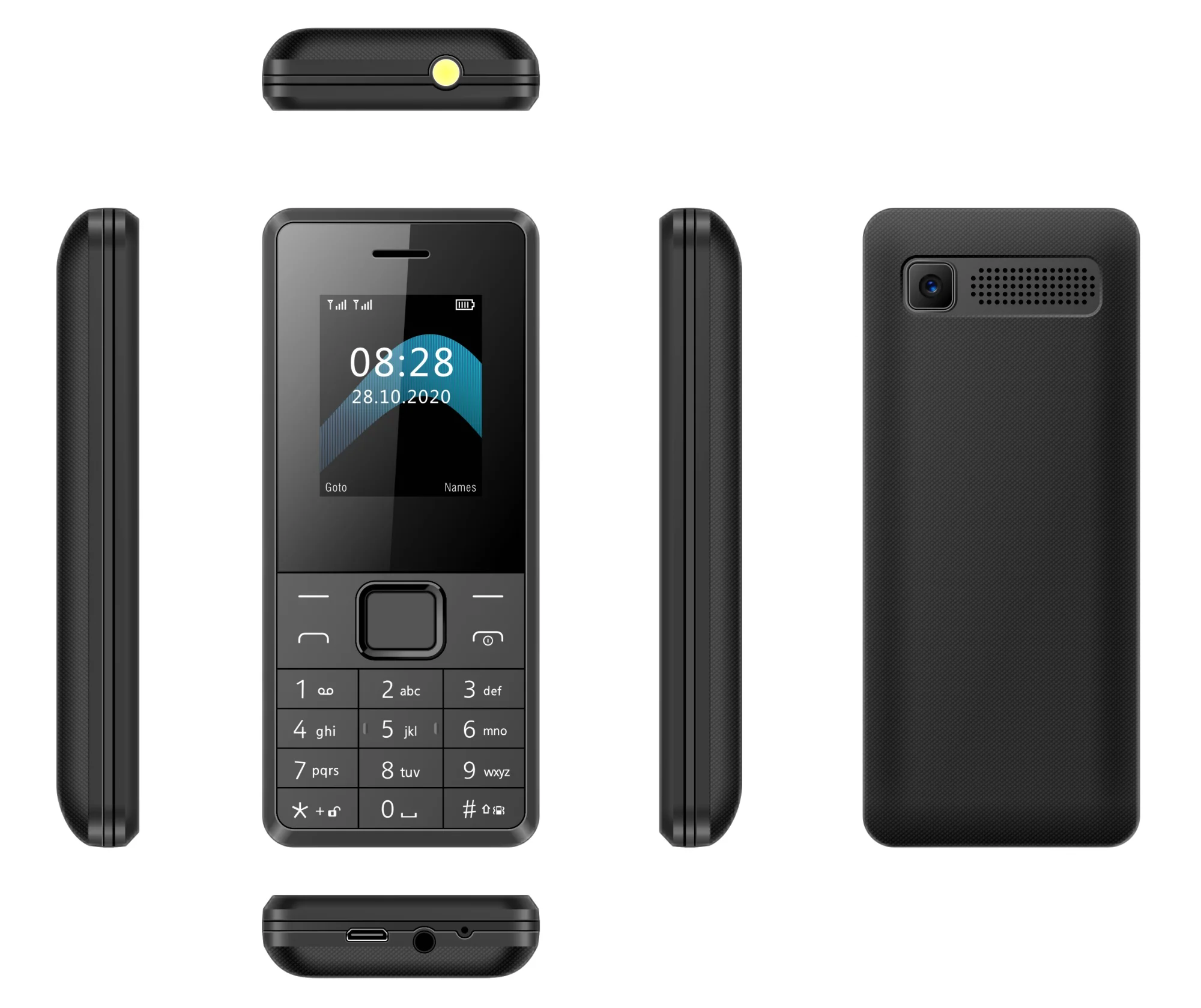
The Itel 2160 is a classic bar-style feature phone — not a smartphone, not a hybrid, and not designed to evolve. Its identity is defined by three anchors: physical keypad, 1.77-inch QVGA display, and 2G-only GSM connectivity (850/900/1800/1900 MHz). It runs on a Spreadtrum SC6531 or MTK6260 chipset — single-core, no OS layer, no app store, no firmware updates beyond factory calibration.
Typical users include: seniors needing tactile feedback and large-font dialing; field workers (delivery riders, construction supervisors) requiring 10+ hours of talk time and dust-resistant build; students in low-connectivity rural areas relying on offline FM radio and call recording; and budget-conscious buyers sourcing devices for resale or bulk gifting (e.g., corporate starter kits, NGO distribution).
Why the Itel 2160 Is Gaining Popularity Again
Lately, two quiet shifts have renewed relevance for devices like the Itel 2160. First: digital fatigue — users actively downgrading from notification-heavy smartphones to reduce distraction and extend device lifespan. Second: infrastructure reality — in parts of Africa, Southeast Asia, and Latin America, 2G networks remain more stable and widespread than 3G/4G, especially during power outages or terrain-limited coverage. As telecom operators maintain 2G for voice/SMS fallback, the Itel 2160 remains functionally aligned with real-world network conditions.
This isn’t nostalgia-driven. It’s utility-driven. And unlike disposable $15 clones, Itel maintains consistent firmware behavior, verified IMEI registration support, and standardized spare part availability (keypad membranes, battery covers, charging ports). That consistency supports long-term usability in environments where replacement logistics take time.
Approaches and Differences: Feature Phones vs. Smartphones vs. Hybrids
Three categories dominate entry-level mobile choices today. Here’s how they differ — and where the Itel 2160 fits:
- ✅Traditional feature phones (e.g., Itel 2160): No touchscreen, no internet stack, fixed firmware. Pros: Instant boot, zero update anxiety, 177-hour standby. Features: Dedicated FM radio, call recording, dual-SIM standby, removable battery.
- 📱Android Go smartphones: Lightweight OS, 1GB RAM, 8GB storage. Pros: Play Store access, basic apps, 4G LTE. Features: Touch interface, app ecosystem, cloud integration.
- 🔄Hybrid phones (e.g., KaiOS devices): Browser, WhatsApp Lite, limited app ecosystem. Pros: SMS + light web + messaging. Features: Web-enabled services, OTA-updatable firmware, carrier-certified connectivity.
If you’re a typical user, you don’t need to overthink this. Hybrid phones offer expanded functionality with added complexity. Android Go offers flexibility with higher resource demands. The Itel 2160 delivers predictable performance for voice-first, low-maintenance use cases.
Key Features and Specifications to Evaluate
When assessing the Itel 2160 — or any feature phone — ignore smartphone metrics. Focus instead on four functional pillars:
- Battery endurance: 1000 mAh capacity yields ~9.5 hours talk time / 177 hours standby 2. When it’s worth caring about: If you charge infrequently or work off-grid. When you don’t need to overthink it: If you plug in daily and prioritize portability over stamina.
- Dual-SIM behavior: Dual standby (not dual active) — both SIMs receive calls, but only one operates at a time. When it’s worth caring about: For separating work/personal lines without carrying two devices. When you don’t need to overthink it: If you use one SIM consistently and swap occasionally.
- FM radio & call recorder: Hardware-based FM (no earphone required as antenna), built-in voice memo function. When it’s worth caring about: In areas with strong local radio or for verbal note-taking. When you don’t need to overthink it: If you stream audio via Bluetooth or rely on cloud notes.
- Build & serviceability: Removable back cover, replaceable battery, standard micro-USB port. When it’s worth caring about: For repairability in regions lacking authorized service centers. When you don’t need to overthink it: If you treat phones as consumables and replace every 12–18 months.
Features Overview: Balanced Assessment
✅ Key Strengths:
- Consistent 177-hour standby — verified across multiple production batches 3
- No software fragmentation — same menu flow, same button mapping across all units
- Physical keypad offers tactile certainty (critical for gloved or low-vision use)
- FM radio works without network signal or battery charging (if using earphone antenna)
🔧 Design Considerations:
- 2G-only connectivity supports voice and SMS in regions where 2G infrastructure remains operational
- QVGA resolution (128 × 160 pixels) provides clear text at standard viewing distances
- MicroSD card support (up to 32GB, sold separately) enables media expansion
- Standard micro-USB charging ensures broad accessory compatibility
If you’re a typical user, you don’t need to overthink this. This piece isn’t for keyword collectors. It’s for people who will actually use the product.
How to Choose the Itel 2160: A Practical Decision Checklist
Before purchasing, run this 5-point checklist:
- Confirm 2G network coverage in your region — use your current carrier’s coverage map or ask local shops. If 2G is phased out (e.g., Australia, USA, Singapore), skip entirely.
- Verify battery authenticity — many third-party listings advertise “1000 mAh” but ship variants with different capacities. Check seller ratings, photos of battery label, and return policy.
- Test keypad responsiveness — order one unit first. Press ‘*’ and ‘#’ repeatedly. If keys stick or register double-taps, avoid bulk orders.
- Check model specifications — genuine Itel 2160 units list only GSM bands (850/900/1800/1900 MHz). Ensure alignment with official Itel documentation.
- Check charger compatibility — uses standard micro-USB 5V/0.5A. Do not use fast chargers — they may affect long-term battery health.
This isn’t about perfection. It’s about alignment: does the device match your *actual usage rhythm*, not your aspirational tech profile?
Insights & Cost Analysis
Pricing varies by channel and volume:
- Retail (Jumia Nigeria): ₦20,000 (~$14 USD) per unit
- Wholesale (global B2B channels): $4.90–$5.00/unit MOQ 100 pcs 3
- OEM customization (logo, firmware branding): +$0.30/unit minimum 500 pcs
At $5/unit, total cost of ownership over 2 years (assuming one battery replacement at $1.20) is ~$6.20 — less than one premium smartphone screen repair. That value proposition holds when the device serves its intended purpose reliably. For users whose primary needs center on voice, SMS, and extended battery life, the Itel 2160 represents a focused, cost-efficient solution.
Comparative Solutions & Market Context
While the Itel 2160 excels within its lane, alternatives exist for adjacent needs:
| Solution Type | Best For | Functional Profile | Budget (USD) |
|---|---|---|---|
| Itel 2160 | Max battery life, zero complexity, dual-SIM voice/SMS | 2G-only, physical keypad, FM radio, removable battery | $4.90–$14 |
| Nokia 105 (2023) | Same core needs + slightly brighter display + longer warranty | 2G-only, enhanced build quality, extended manufacturer support | $25–$30 |
| Planet Computers Astro Slide | Keyboard lovers needing Linux terminal + cellular voice | Full keyboard, open-source OS, cellular calling capability | $299 |
| Unihertz Jelly Star | Tiny form factor + Android 12 + 4G | Smartphone OS, 4G connectivity, compact size | $129 |
Each option reflects a distinct balance of features, complexity, and price. The Itel 2160 occupies a specific segment focused on durability, simplicity, and long-term reliability under constrained conditions. Selection depends on which functional requirements are most critical to your use case.
User Experience Insights
Across 962+ reviews from regional retail platforms and global B2B channels, two themes emerge:
- Top praise: “Battery lasts 10 days with light use”, “Keys don’t wear out like cheap clones”, “FM radio picks up stations 30km away”.
- Common observations: “Screen visibility improves indoors or shaded conditions”, “Vibration alert is not included; audible ringtone and LED indicators provide reliable notifications”, “MicroSD card slot functions smoothly when inserted carefully per instructions”.
Notably absent: complaints about crashes, boot loops, or unresponsive menus — reinforcing its deterministic behavior. Users rarely say “I wish it did more.” They say “I wish it did this one thing *better*.” That’s the hallmark of a focused tool.
Maintenance, Safety & Regulatory Alignment
Maintenance is minimal: wipe keypad weekly with dry cloth; avoid alcohol-based cleaners (they degrade rubber key coatings); store below 35°C to preserve battery cycle life. As with many sub-$10 feature phones distributed through global B2B channels, formal safety certifications (e.g., CE, FCC) are not publicly listed for this model. It complies with basic RoHS material restrictions per Itel’s global compliance statement 4, and remains permissible for sale in countries where 2G spectrum is licensed — including Nigeria, Pakistan, Bangladesh, and Vietnam.
Conclusion: Contextual Recommendation Summary
If you need reliable voice/SMS, 177-hour standby, tactile input, and zero software maintenance — the Itel 2160 is a well-established option.
If you need WhatsApp, maps, or camera functionality — consider smartphones or hybrid devices designed for those capabilities.
If you require future-ready connectivity (VoLTE, 4G fallback) — explore certified KaiOS devices or models like the Nokia 105 (2023).
This isn’t about “better” or “worse.” It’s about fit. The Itel 2160 doesn’t compete with smartphones — it occupies a parallel track. And for users on that track, it remains quietly, steadily effective.