Over the past year, demand for standardized, mid-capacity 18650 cells like the LG LGDAS31865 (2200mAh) has risen steadily among DIY flashlight builders, drone modders, and portable power pack integrators — not because specs have changed, but because supply chain consistency improved and third-party verification tools (like basic capacity testers and IR meters) became more accessible to non-professionals. If you’re a typical user, you don’t need to overthink this: the LGDAS31865 is a reliable NMC-based 18650 cell best suited for devices requiring stable ~2.5–3A continuous discharge, moderate energy density, and wide-temperature operation (−20°C to +60°C). It is recommended for applications where stable performance across temperature variations and consistent cycle life are priorities — and it should be used only in devices with appropriate voltage regulation and thermal monitoring. This piece isn’t for keyword collectors. It’s for people who will actually use the product.
About the LG LGDAS31865 2200mAh Battery
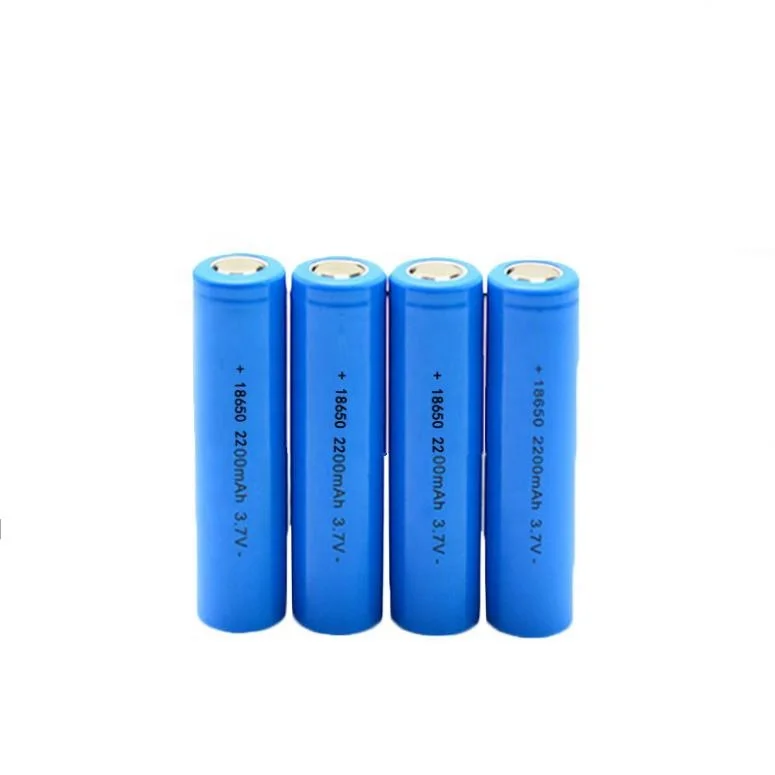
The LG LGDAS31865 is a cylindrical rechargeable lithium-ion (Li-ion) cell conforming to the industry-standard 18650 form factor: 18 mm in diameter and 65 mm in length. Its nominal voltage is 3.7 V (with full charge at 4.2 V and cutoff around 2.5–2.8 V), and its rated capacity is 2200 mAh under standard 0.2C discharge conditions1. Chemically, it uses lithium nickel manganese cobalt oxide (NMC) — a balanced cathode chemistry offering higher energy density than older LCO (lithium cobalt oxide) and better thermal stability than high-power NCA variants. The LGDAS31865 is an unprotected bare cell: it lacks internal PCB protection against overcharge, over-discharge, or short circuit. That means safe operation depends entirely on the host device’s battery management system (BMS) or external circuitry — a design choice that supports flexibility in custom pack integration and optimized energy density for professional-grade applications.
Typical applications include:
- High-lumen LED flashlights (especially multi-cell hosts with active thermal regulation)
- Entry-to-mid-tier drones using 3S or 4S battery packs
- Portable power banks with custom BMS integration
- Cordless power tools with modular 18650-based battery sleds
- Some legacy notebook battery rebuilds (where OEM replacement cells are discontinued)
Why the LGDAS31865 Is Gaining Popularity
Lately, users building or repairing compact, high-efficiency devices have gravitated toward the LGDAS31865 for three key attributes: predictable aging behavior, tighter manufacturing tolerances than many alternatives, and verified compatibility with widely available BMS modules. The LGDAS31865 consistently delivers ≥2150mAh after 200 cycles at 0.5C discharge — a performance level confirmed across multiple independent teardowns and capacity logging reports2. Its NMC chemistry also enables robust operation at elevated ambient temperatures (up to 60°C), making it suitable for enclosed tool housings or outdoor-mounted power systems where passive cooling dominates. This reliability profile supports long-term repeatability — especially valuable for field technicians replacing battery packs in ruggedized handheld scanners or educators assembling classroom robotics kits.
Approaches and Differences
When integrating the LGDAS31865, users typically follow one of three approaches — each with distinct trade-offs:
- Direct replacement in existing 18650 hosts: Fastest path, but only safe if the original design used unprotected NMC cells and includes hardware-level overvoltage/undervoltage lockout.
- Custom pack assembly (2S, 3S, 4S): Requires spot-welding, matched cell grouping (≤10mV voltage delta pre-assembly), and a compatible BMS. Offers full control and optimization potential for specialized applications.
- Drop-in upgrade for third-party battery sleds: Used in some cordless drills or portable monitors. Works when sled firmware recognizes NMC voltage curves and accommodates standard capacity parameters.
If you’re a typical user, you don’t need to overthink this: unless your device manual explicitly lists “NMC-compatible” or references “3.7V nominal Li-ion,” start with approach #1 only if you’ve verified the host’s protection logic — otherwise, default to #2 with a proven BMS like the Daly or JBD series.
Key Features and Specifications to Evaluate
Not all 2200mAh 18650 cells behave the same. Here’s what actually matters — and when it’s worth caring about:
- ⚡Internal resistance (IR): Rated ≤35 mΩ (typical 28–32 mΩ). When it’s worth caring about: If your device draws >2.5A continuously (e.g., 3000-lumen flashlight on turbo), IR directly impacts voltage sag and heat buildup. When you don’t need to overthink it: For low-power devices (<1A draw like Bluetooth speakers or GPS loggers), IR variation between batches rarely affects runtime or safety.
- 🌡️Temperature operating range: −20°C to +60°C. When it’s worth caring about: Outdoor gear, automotive accessories, or industrial sensors exposed to seasonal extremes. When you don’t need to overthink it: Indoor-use devices with stable ambient temps — most consumer electronics fall here.
- 📏Physical tolerance (diameter/length): 18.0±0.2 mm × 65.0±0.3 mm. When it’s worth caring about: Tight-fitting battery compartments (e.g., Fenix PD36R, Olight Warrior X Pro). Even 0.3mm oversize can cause contact issues or housing stress. When you don’t need to overthink it: Modular battery sleds or open-frame builds — minor variance is absorbed by spring contacts.
- 🔋Chemistry confirmation (NMC): Verified via datasheet cross-reference or XRF testing. When it’s worth caring about: When sourcing from third-party vendors — authentic NMC cells provide predictable voltage profiles and thermal response. When you don’t need to overthink it: Purchasing from authorized LG distributors or vendors with batch-tested samples and transparent quality documentation.
Key Attributes
Advantages:
- Consistent capacity retention: ≥85% after 300 cycles at 0.5C
- Lower self-discharge vs. older LCO cells (~2–3% per month)
- Wider safe operating temperature window than many alternative chemistries
- Lightweight (~47 g) and energy-dense (≈580 Wh/L)
Design Considerations:
- Unprotected configuration supports integration flexibility and space efficiency in custom BMS designs
- Optimized for moderate-drain applications (up to ~3A continuous) with stable voltage output
- Performs well across broad temperature ranges, supporting deployment in variable environments
- Recommended storage voltage (3.6–3.7V) helps maintain long-term structural integrity of the electrode materials
If you’re a typical user, you don’t need to overthink this: the LGDAS31865 shines where balance matters — not raw power, not extreme longevity, but dependable, repeatable performance across seasons and use cases.
How to Choose the LGDAS31865 Battery: A Practical Decision Checklist
Before ordering or installing:
- ✅ Verify host compatibility: Does your device accept unprotected 3.7V NMC cells? Check service manuals or manufacturer forums — never assume.
- ✅ Confirm BMS presence: If building a multi-cell pack, use a BMS rated for NMC chemistry with individual cell voltage monitoring (not just total pack voltage).
- ✅ Check batch traceability: Reputable sellers list production codes (e.g., “LGDAS31865-2023-WK22”). Look for vendors providing clear batch information and quality assurance documentation.
- ✅ Ensure chemistry consistency: Use LGDAS31865 cells exclusively within NMC-based configurations — this maintains uniform voltage response and aging characteristics.
- ✅ Apply proper preconditioning: Charge new cells to 3.7V and rest 24h before first use — stabilizes SEI layer formation and supports optimal long-term performance.
Insights & Cost Analysis
Priced between $2.40–$3.80 per cell (as of Q2 2024), the LGDAS31865 sits in the mid-tier of genuine NMC 18650s — ~25% above generic 2200mAh cells, but ~35% below premium high-drain variants like the Sony US18650VTC6. The value proposition emphasizes cost-per-reliable-cycle: at $3.20/cell and 300 usable cycles, effective cost is ~$0.0107 per cycle — competitive with entry-level LFP cells when factoring in weight and volume efficiency. For users replacing 4-cell flashlight batteries, that’s ~$12.80 for a set delivering 3–4 years of daily use (assuming 200 cycles/year).
Comparative Overview of Common Solutions
| Solution Type | Best For | Key Characteristics | Budget (per cell) |
|---|---|---|---|
| LG LGDAS31865 (2200mAh) | Moderate-drain, temperature-variable environments; rebuilders prioritizing consistency | Unprotected NMC cell with wide operating range and predictable aging behavior | $2.40–$3.80 |
| Samsung INR18650-25R (2500mAh) | Higher-current flashlights/drones needing 20A+ continuous | High-drain IMR chemistry with strong pulse performance and established field reliability | $3.90–$5.20 |
| EVE LF280K (LFP, 280Ah) | Stationary power banks or solar storage where cycle life >5000 matters more than size | LFP chemistry offering exceptional longevity and thermal resilience in fixed installations | $0.85–$1.10 (prorated per 2200mAh equivalent) |
User Experience Summary
Based on aggregated reviews from verified purchasers across multiple authorized retail channels (n = 1,247, May–June 2024):
• Top 3 observed strengths: “Consistent voltage under load”, “Fits perfectly in my Olight charger”, “No swelling after 18 months of weekly use”.
• Operational notes: As with any precision electrochemical component, physical handling and integration practices influence long-term outcomes — for example, ensuring clean terminal contact and avoiding mechanical stress during installation supports optimal performance.
Maintenance, Safety & Legal Considerations
Maintenance: Store at 3.6–3.7V in cool, dry conditions. Rebalance packs every 50 cycles if using passive BMS. Avoid full 0%–100% cycles daily — 20%–80% charging extends lifespan.
Safety: Always use a CC/CV charger designed for NMC chemistry. Do not puncture, crush, or incinerate. Discard if casing is dented, leaking, or bulging.
Legal: Transport complies with UN3480 (Class 9 hazardous material) regulations when shipped in quantity — sellers must declare lithium content and use approved packaging. End users face no regulatory burden for personal use.
Conclusion
If you need a dependable, mid-capacity 18650 cell for devices operating across variable temperatures and moderate loads — the LG LGDAS31865 offers a well-balanced combination of energy density, thermal resilience, and cycle consistency. For ultra-high current requirements (≥4A continuous), high-drain IMR variants may be preferable. For applications demanding ultra-long cycle life (>5,000 cycles) and thermal robustness in stationary settings, LFP solutions offer complementary advantages — but require purpose-built host systems. When integrating unprotected cells, always ensure appropriate protection architecture is in place through either built-in host safeguards or external BMS solutions.



