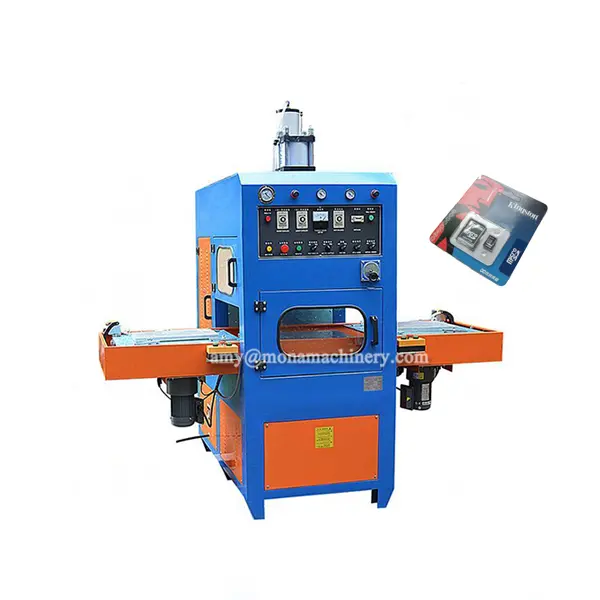
Over the past year, demand for localized, small-batch micro SD card production has risen—not because global supply chains collapsed, but because OEMs, regional electronics brands, and security-conscious government integrators increasingly require traceable, branded, and format-locked memory cards. If you’re evaluating a micro SD card manufacturing machine, start here: For most new entrants or R&D-focused producers, a semi-automatic line (100–500 cards/day) with integrated electrical testing and laser marking is the only rational starting point. Fully automated lines (>2,000/day) are over-engineered unless you already have verified volume contracts—and even then, integration complexity often outweighs throughput gains. The biggest mistake? Prioritizing speed before verifying chip sourcing, firmware compatibility, and test repeatability. If you’re a typical user, you don’t need to overthink this.
About Micro SD Card Manufacturing Machines
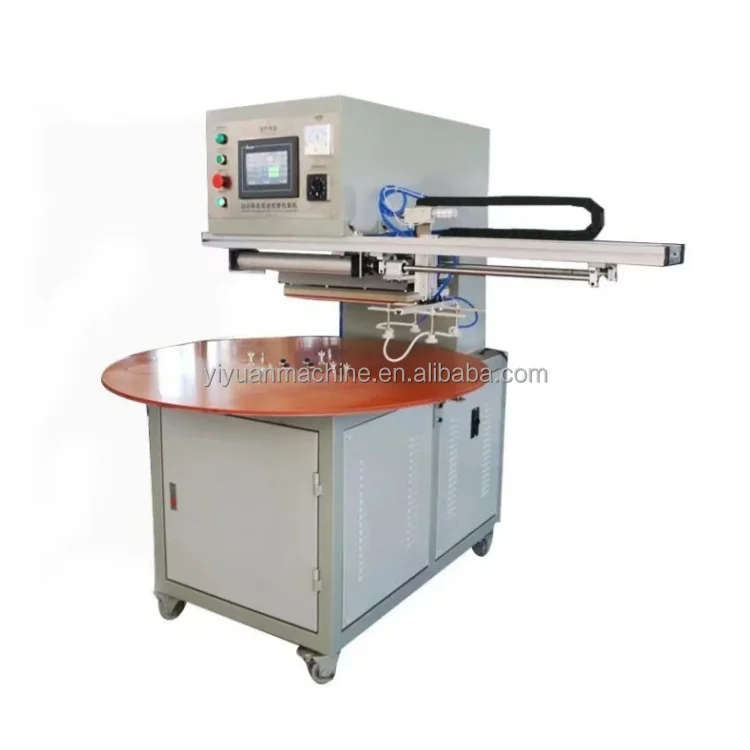
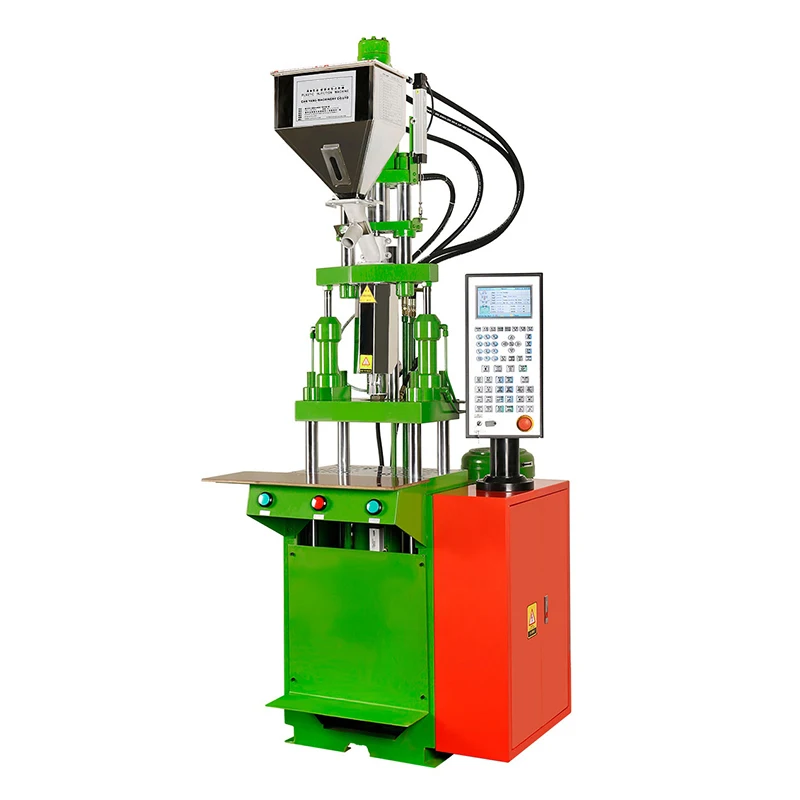
A micro SD card manufacturing machine is not a single device—it’s a coordinated system of precision modules that assemble, encapsulate, test, mark, and package flash memory cards. Unlike consumer-grade duplicators or programmers, these machines handle physical construction: bonding bare NAND die onto custom substrates (often via Chip-on-Board, or COB), molding protective resin housings, applying laser-etched serial numbers and speed-class logos, and performing real-time functional validation against UHS-I/UHS-II timing specs and capacity integrity. Typical users include contract manufacturers serving white-label brands, national ID or surveillance hardware vendors needing tamper-evident storage, and semiconductor packaging labs validating new controller-firmware combinations.
Why Micro SD Card Manufacturing Machines Are Gaining Popularity
Lately, three converging forces have shifted procurement behavior: First, geopolitical tightening around semiconductor logistics means import-dependent markets now treat memory card production as infrastructure—not just assembly. Second, counterfeit detection tools (like those shown in widely viewed YouTube teardowns1) have raised buyer expectations for verifiable origin data—something only in-house manufacturing provides. Third, edge-AI devices (e.g., smart cameras, IoT gateways) increasingly require customized partitioning, wear-leveling algorithms, or encrypted boot sectors—features impossible to add post-production without full control over firmware flashing and testing. This piece isn’t for keyword collectors. It’s for people who will actually use the product.
Approaches and Differences
There are three primary configurations—each defined by automation depth, not price alone:
- ⚙️Semi-Automatic Lines: Operator-assisted placement, manual loading/unloading, automated bonding, molding, and testing. Output: 100–500 cards/day. Ideal for prototyping, compliance validation, or low-volume OEM runs. When it’s worth caring about: You need flexibility to switch between microSDHC (32GB), microSDXC (up to 1TB), and custom form factors (e.g., industrial M.2-style microSD). When you don’t need to overthink it: You’re only producing one capacity/speed class long-term and have stable chip supply.
- ⚡Fully Automatic Lines: Robotic handling, inline vision inspection (CCD), synchronized thermal curing, and closed-loop test feedback. Output: 1,500–3,000+ cards/day. Requires cleanroom-grade environment and dedicated engineering staff. When it’s worth caring about: You’ve secured multi-year contracts with tier-1 device makers requiring ISO 9001-certified lot traceability and sub-100ppm defect rates. When you don’t need to overthink it: Your forecasted volume fluctuates >±30% month-to-month—or your firmware updates require frequent retooling.
- 🔍Modular “Plug-and-Test” Stations: Standalone units for specific functions—e.g., ultrasonic wire bonding, fiber-laser marking, or high-speed capacity verification. Often sourced separately and integrated later. When it’s worth caring about: You already own substrate printing or NAND wafer dicing equipment and only need to fill gaps in final assembly. When you don’t need to overthink it: You lack in-house mechanical or firmware validation capability—modular setups shift integration risk to you.
Key Features and Specifications to Evaluate
Don’t optimize for headline specs. Focus on what survives real-world operation:
- ✅Chip Placement Accuracy: Look for ≤±15 µm repeatability (not just “high precision”). Below this, solder joint reliability drops sharply under thermal cycling. Verified via independent calibration reports—not vendor brochures.
- 📊Test Coverage Depth: Basic continuity checks are insufficient. Demand support for sequential/random read/write latency profiling, endurance cycle logging (e.g., 10K+ write cycles), and UHS bus mode negotiation validation. If you’re a typical user, you don’t need to overthink this—but you do need confirmation that the tester logs raw timing data, not just pass/fail flags.
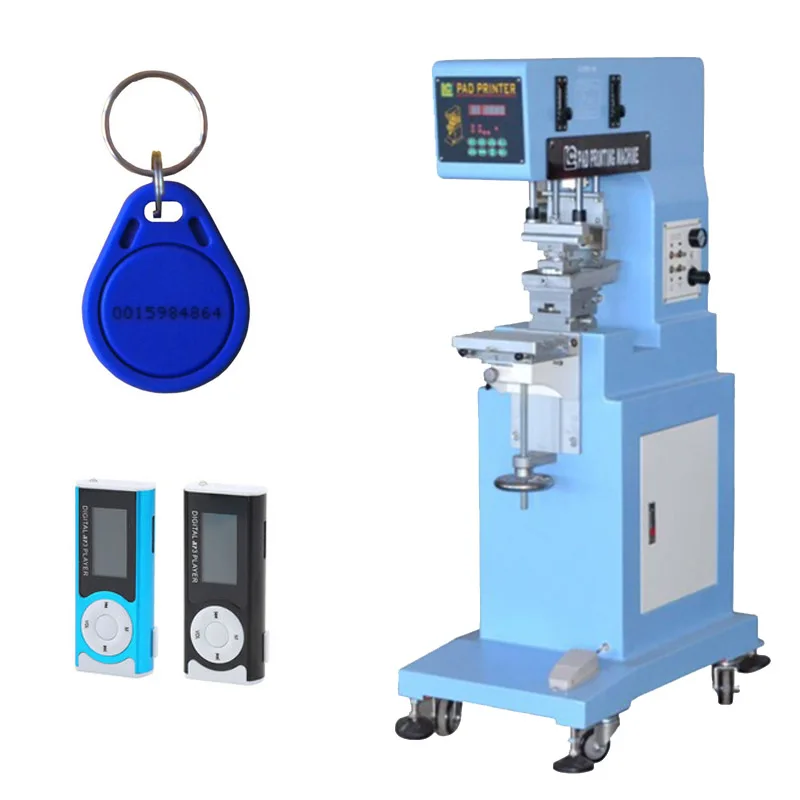
- ✨Laser Marking Resolution: Must resolve 0.1 mm characters at 10x magnification—critical for anti-counterfeit QR codes and regulatory IDs (e.g., CE, FCC ID). Fiber lasers outperform CO₂ for contrast on black resin housings.
- 📦Encapsulation Consistency: Molding pressure and resin viscosity control determine warpage and moisture ingress resistance. Ask for cross-section SEM images from production lots—not lab samples.
Pros and Cons
✔️ Pros: Full supply chain visibility; ability to lock firmware versions; compliance-ready documentation (e.g., RoHS, REACH); brand-controlled packaging and labeling.
❌ Cons: High upfront capex ($25,000–$55,000); steep learning curve for NAND controller programming; no economies of scale below ~150,000 units/year; firmware update coordination requires close partnership with controller IC vendors (e.g., Phison, Silicon Motion).
Best suited for: Companies shipping ≥50,000 branded cards/year, those integrating storage into certified hardware (e.g., medical imaging peripherals, defense comms), or firms building proprietary file systems.
Not suited for: Resellers, flash memory distributors, or startups planning to rely solely on third-party NAND sourcing without qualification testing.
How to Choose a Micro SD Card Manufacturing Machine
Follow this decision checklist—in order:
- Verify chip source compatibility first. Machines cannot compensate for mismatched NAND die voltages or controller pinouts. Request reference builds using your exact supplier’s wafer lot number.
- Require test log export in CSV/JSON format. If the machine only shows green/red lights, walk away—even if it costs less. Traceability starts with raw data.
- Confirm laser marking supports dynamic serialization. Static logos are easy. Unique per-card QR codes tied to test results require real-time database sync—test this live before signing.
- Avoid “all-in-one” claims. No single machine handles wafer dicing, die sorting, and final packaging. Clarify which stages you’ll outsource—and audit those partners.
- Insist on 72-hour continuous run validation. Not just uptime, but consistent yield and thermal stability across shifts.
The second-most common ineffective debate? “Should I buy from Alibaba or Made-in-China?” Neither matters—the decisive factor is whether the supplier provides documented process FMEA (Failure Mode and Effects Analysis) for each module. The most common wasted effort? Over-specifying throughput before validating NAND binning consistency. If you’re a typical user, you don’t need to overthink this.
Insights & Cost Analysis
Entry-level semi-automatic systems start at $22,000–$35,000 (CE-certified, includes basic tester and fiber laser). Fully automatic lines begin at $128,000 and scale to $450,000+ with advanced vision QA and humidity-controlled molding. Crucially, operational cost dominates capex after Year 1: labor for firmware loading, resin waste (3–7% per batch), and NAND yield loss (12–22% for ungraded die) drive TCO more than machine depreciation. A realistic break-even point occurs at ~180,000 units/year for mid-tier automation—not based on theoretical max output, but on sustained 85% OEE (Overall Equipment Effectiveness).
Better Solutions & Competitor Analysis
| Category | Best For | Potential Problem | Budget Range (USD) |
|---|---|---|---|
| Semi-Auto COB + Laser + Tester | Startups, compliance-first OEMs, R&D labs | Requires operator training; slower changeover between capacities$22,000–$35,000 | |
| Modular Station Bundle (Bonding + Molding + Test) | Existing SMT facilities adding memory capability | Integration overhead; inconsistent inter-unit communication protocols$48,000–$75,000 | |
| Turnkey Fully Auto Line | Established brands with ≥500K annual volume | Long lead time (6–10 months); firmware lock-in with controller vendor$128,000–$450,000+ |
Customer Feedback Synthesis
Based on aggregated reviews from Alibaba, Made-in-China, and industry forums (2023–2024):
- Top 3 praised features: (1) Real-time test data export capability, (2) Interchangeable jigs for microSD/SD/miniSD formats, (3) Onboard diagnostics for bond wire pull-test validation.
- Top 3 complaints: (1) Firmware update procedures undocumented or vendor-locked, (2) Molding resin clogging nozzles after 200+ hours runtime, (3) Laser marking fading after 500+ thermal cycles (non-compliant with JEDEC JESD22-A108F).
Maintenance, Safety & Legal Considerations
These machines operate at 120–240°C during encapsulation and use Class 4 lasers—requiring certified enclosure interlocks and fume extraction. Maintenance schedules must include quarterly nozzle calibration (bonding/molding), biannual CCD sensor recalibration, and annual laser power certification. Legally, final products must comply with regional electromagnetic compatibility (EMC) standards (e.g., FCC Part 15B, CE RED Directive) and chemical restrictions (RoHS 3, REACH SVHC). Note: Machine certification (e.g., CE, UL) does not extend to the finished card—product-level compliance remains your responsibility.
Conclusion
If you need full traceability, firmware control, or regulatory documentation, invest in a semi-automatic line with validated test logging and laser serialization. If you need volume above 2,000 cards/day with zero staffing flexibility, only consider fully automatic systems after completing a 3-month pilot with your actual NAND supplier and controller firmware stack. If you need rapid iteration without capital commitment, partner with a qualified contract manufacturer offering shared-line access—not a machine purchase. Everything else is optimization theater. This piece isn’t for keyword collectors. It’s for people who will actually use the product.