If you’re building an Edge AI device, industrial controller, or next-gen Windows PC in 2026 — skip the architecture debates. Prioritize RISC-based chips on 2nm or Intel 18A nodes, with integrated NPUs for local inference. For typical embedded projects under $50 BOM, STC8H or i.MX 94 family deliver better real-world latency than legacy x86 — unless you need Windows driver compatibility. If you’re a typical user, you don’t need to overthink this.
Lately, microprocessor selection has shifted from pure clock speed to system-level efficiency at the edge. Over the past year, the market’s pivot toward agentic actioning, sub-2nm process nodes, and RISC dominance in non-PC segments has redefined what “performance” means — especially for consumer electronics and embedded accessories. This isn’t about theoretical benchmarks. It’s about which chip lets your smart thermostat respond in 12ms instead of 80ms, or lets your portable PC run Copilot offline without throttling. This guide cuts through the node-count hype and vendor roadmaps to answer one question: Which microprocessor actually delivers usable capability — not just spec-sheet headroom — for your 2026 product?
About Microprocessors: Definition & Typical Use Cases
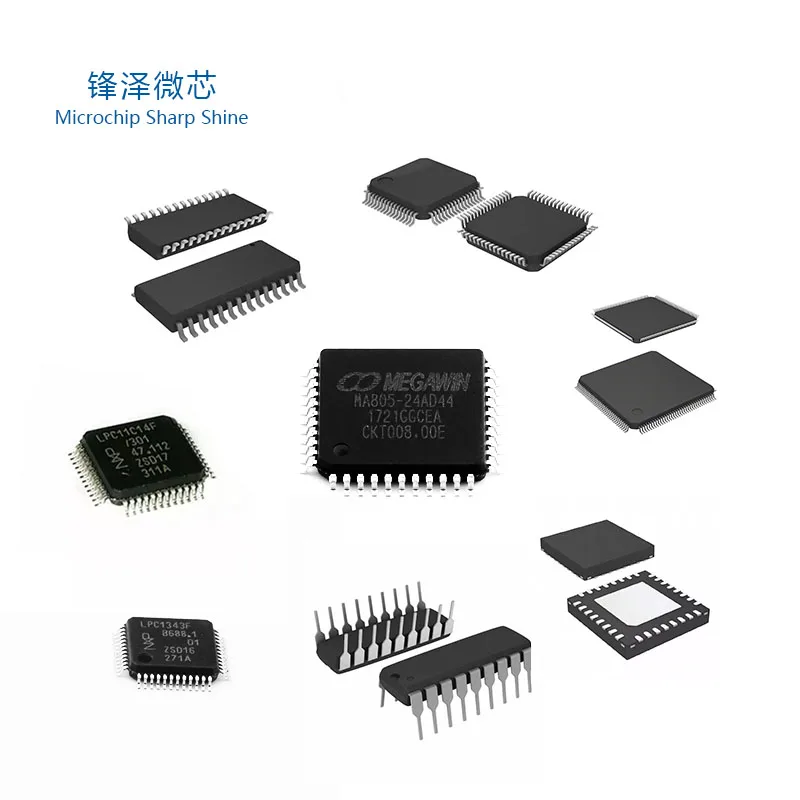
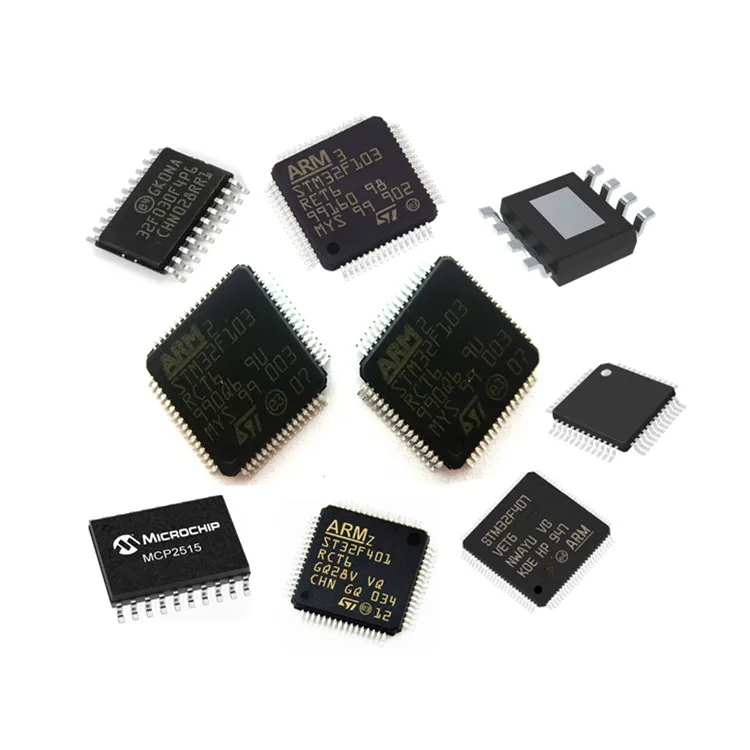
A microprocessor is the central computational unit of an electronic system — executing instructions, managing memory, and coordinating peripherals. Unlike microcontrollers (MCUs), which integrate RAM, flash, and I/O on-die, microprocessors require external memory and support higher throughput, OS-level software stacks (Linux, Windows), and complex workloads. In consumer electronics and accessories, they appear in three primary forms:
- 💻 PC-class processors: Intel Core Ultra Series 3 (Panther Lake), Qualcomm Snapdragon X Plus — used in thin-and-light laptops, 2-in-1s, and compact desktop replacements.
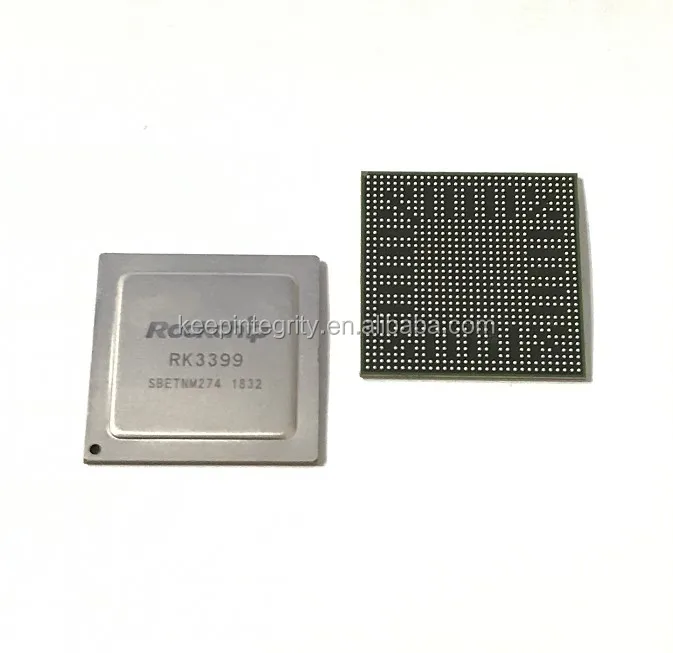
- 🏭 Industrial/embedded processors: NXP i.MX 94 family, Rockchip RK3399 — deployed in automotive telematics, robotics controllers, and high-end smart home hubs.
- 📱 Cost-optimized SoCs: STC8H series, ATmega-based 32-bit modules — found in battery-powered sensors, low-latency remote controls, and firmware-upgradable accessories.
What defines a “microprocessor” today isn’t just transistor count — it’s how tightly compute, memory bandwidth, and domain-specific accelerators (NPUs, DSPs, security engines) are co-designed for a defined use case. If you’re a typical user, you don’t need to overthink this.
Why Microprocessors Are Gaining Popularity in 2026
The 2026 surge isn’t driven by raw speed alone. Three interlocking trends have elevated microprocessor choice from a backend engineering detail to a core product differentiator:
- 🌐 Edge Intelligence Acceleration: Cloud dependency creates latency, privacy risk, and connectivity fragility. Devices now need to make decisions locally — e.g., a warehouse robot rerouting around obstacles without round-trip cloud inference. Intel’s CES 2026 announcement of “agentic actioning” reflects this shift 1.
- ⚡ Energy-Per-Task Optimization: Battery life and thermal envelope matter more than peak GHz. RISC architectures now hold ~44% market share — not because they’re “simpler,” but because their deterministic pipelines reduce wasted cycles per instruction 2.
- 🔍 Manufacturing Node Convergence: 2nm (TSMC/Samsung) and Intel’s 18A processes enable >20% performance-per-watt gains over prior generations — making high-efficiency Edge AI viable even in fanless enclosures 1.
This piece isn’t for keyword collectors. It’s for people who will actually use the product.
Approaches and Differences: Chip Families Compared
Choosing a microprocessor isn’t binary — it’s mapping architecture, process node, and ecosystem fit to your constraints. Here’s how major categories differ in practice:
- RISC-based (ARM, RISC-V): Low power, scalable cores, strong Linux/Android support. Ideal for mobile, IoT, and Edge AI where determinism matters. When it’s worth caring about: You need sub-100ms response time for sensor fusion or audio preprocessing. When you don’t need to overthink it: Your device runs simple polling logic and sleeps 99% of the time — a basic MCU suffices.
- x86/x64 (Intel, AMD): Full Windows compatibility, mature driver stacks, strong single-threaded performance. Ideal for PC accessories requiring native app support (e.g., docking stations with GPU passthrough). When it’s worth caring about: You must run unmodified Windows binaries or leverage existing enterprise management tools. When you don’t need to overthink it: You’re building a standalone embedded device with custom firmware — x86 adds unnecessary complexity and cost.
- Hybrid (NPU-integrated): Combines CPU + dedicated neural processing units (e.g., Intel Core Ultra Series 3, Snapdragon X Plus). Designed for on-device LLM inference, vision analytics, and voice wake-word detection. When it’s worth caring about: Your product’s value hinges on real-time, privacy-preserving AI (e.g., camera-based fall detection). When you don’t need to overthink it: You only need pre-trained models running once per minute — offload inference to a low-cost microcontroller with TensorFlow Lite Micro.
Key Features and Specifications to Evaluate
Don’t default to GHz or core count. Focus on metrics that correlate with real-world behavior:
- 📊 Memory Bandwidth & Latency: DDR5/LPDDR5x support matters more than CPU frequency if your workload moves large sensor buffers. A 2.4 GHz Cortex-A78 with 32 GB/s bandwidth outperforms a 3.0 GHz A76 with 18 GB/s in video preprocessing.
- 🧠 NPU Throughput (TOPS @ INT4): Not TOPS peak — verify actual sustained throughput under thermal limits. Intel’s Panther Lake NPU delivers ~10 TOPS sustained (not 45 TOPS burst) 1.
- 🔒 Hardware Security Features: TrustZone (ARM), TEE (RISC-V), or Intel TDX. Critical for devices handling PII or OTA updates — not optional for medical-adjacent or smart home products.
- 📦 Package Thermal Design Power (TDP): Fanless designs demand ≤6W sustained TDP. Check datasheet “typical” (not “max”) power under realistic load — not idle specs.
Pros and Cons: Balanced Assessment
✅ Advantages
- Enables true offline functionality (no cloud dependency)
- Reduces end-to-end latency by 3–10× vs. cloud-offloaded tasks
- Lowers long-term data transmission costs and privacy exposure
- Supports deterministic real-time scheduling (critical for robotics)
❌ Limitations
- Higher upfront engineering effort (driver porting, toolchain setup)
- Smaller community support for niche RISC-V variants
- Less predictable software update paths outside mainstream ARM/Windows ecosystems
- Thermal throttling risks if enclosure design doesn’t match package spec
How to Choose a Microprocessor in 2026: Decision Checklist
Follow this sequence — skipping steps invites costly respins:
- Define your critical path latency: Is sub-50ms response required? If yes, prioritize chips with on-die SRAM and cache-coherent interconnects (e.g., i.MX 94, RK3399).
- Map OS and software stack needs: Must you run Windows 11? Then Intel Core Ultra or AMD Ryzen AI. Linux-only? ARM/RISC-V opens lower-cost, higher-efficiency options.
- Validate NPU utility: Run your exact model (quantized INT4) on vendor SDKs — not synthetic benchmarks. If accuracy drops >5% or latency exceeds 200ms, skip integrated NPUs.
- Check supply chain reality: Avoid chips with MOQ >1k units unless you’ve secured long-term allocation. STC8H and i.MX 94 have stable lead times; cutting-edge 18A parts remain allocation-constrained 2.
- Avoid this pitfall: Selecting based on “AI-ready” marketing claims without verifying peripheral support (e.g., MIPI CSI-2 for cameras, PCIe Gen4 for NVMe storage).
Insights & Cost Analysis
Pricing reflects architecture and node maturity — not just performance:
- Budget Under $10: STC8H8K64S2 (8-bit, 22MHz) — ideal for simple control loops. No NPU, no OS support.
- Mid-tier $10–$50: NXP i.MX 942 (dual Cortex-A55 + NPU, 22nm) — $24/unit @ 10k; best-in-class for industrial Edge AI 1.
- Premium $50–$200+: Intel Core Ultra 7 185H (18A, 16-core, 16 TOPS NPU) — $179/unit @ 10k; justified only for Windows-native, high-throughput accessories.
ROI emerges fastest when you avoid over-engineering: A $24 i.MX 942 handles object detection for a smart doorbell as effectively as a $179 Core Ultra — if your firmware leverages its dual-core lockstep mode and dedicated vision pipeline.
Better Solutions & Competitor Analysis
| Category | Suitable For | Potential Issues | Budget Range |
|---|---|---|---|
| RISC-V SoCs (e.g., StarFive JH7110) | Customizable AI edge gateways, open-hardware projects | Limited Windows/Android vendor support; fewer reference designs | $15–$45 |
| ARM-based (e.g., i.MX 94, Snapdragon X Plus) | Automotive telematics, premium Windows-on-ARM PCs | Licensing fees for certain IP blocks; longer validation cycles | $24–$129 |
| x86 Hybrid (e.g., Core Ultra Series 3) | Enterprise docking stations, AI-enhanced peripherals | Higher TDP; less efficient for lightweight inference | $129–$219 |
Customer Feedback Synthesis
Based on developer forums and procurement reports (2025–2026):
- Top praise: “i.MX 94’s hardware crypto engine cut our secure boot time by 68%.” “RK3399’s PCIe Gen2 support let us add NVMe storage without redesigning the board.”
- Top complaint: “Snapdragon X Plus documentation assumes Android familiarity — we wasted 3 weeks adapting to its QNX partitioning model.” “18A chip samples arrived with inconsistent thermal pad adhesion — caused early field failures.”
Maintenance, Safety & Legal Considerations
No microprocessor requires regulatory certification itself — but your final product does. Key considerations:
- FCC/CE compliance: High-speed interfaces (PCIe, USB4) demand careful layout; reference designs reduce risk.
- Supply chain traceability: Automotive and industrial buyers increasingly require conflict mineral reporting — confirm supplier documentation upfront.
- Firmware update security: Chips with hardware root-of-trust (e.g., i.MX 94’s HABv4) simplify achieving ISO/SAE 21434 compliance.
Conclusion
If you need Windows compatibility and full application support, choose Intel Core Ultra Series 3 or AMD Ryzen AI — but only if your BOM budget exceeds $150 and thermal design accommodates ≥15W sustained load. If you need low-latency Edge AI with Linux or RTOS, the NXP i.MX 94 family delivers the strongest balance of performance, maturity, and documentation — especially for automotive and industrial accessories. If you need cost-sensitive, deterministic control without AI, STC8H or ATmega328P remain reliable, widely supported choices. If you’re a typical user, you don’t need to overthink this.
FAQs