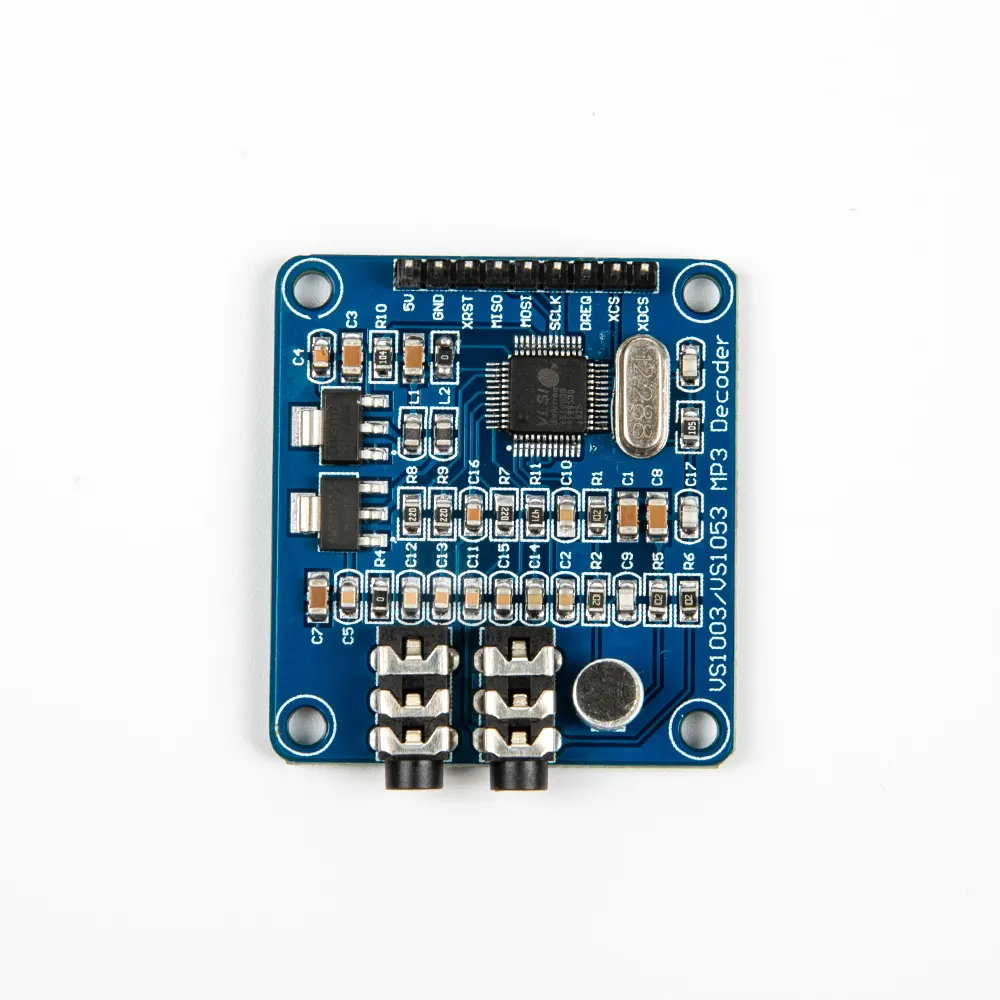
If you’re building a custom audio device—or just need reliable MP3 playback outside mainstream apps—you likely face one immediate choice: use a dedicated hardware decoder module or rely on software decoding (e.g., via microcontroller libraries or web APIs). Over the past year, demand for compact, low-power MP3 decoder boards has risen sharply among makers and embedded developers—driven by more stable firmware, wider format support (MP3/WMA/WAV), and clearer documentation from vendors like DFPlayer and VS1053-based modules. For most users building standalone players, alarm systems, or interactive displays, a hardware decoder module is faster, more power-efficient, and easier to integrate than writing your own decoder stack. If you’re a typical user, you don’t need to overthink this. But if you’re streaming decoded audio in-browser or processing MP3s inside an Android app, software libraries (like js-mp3, libmpg123, or Android’s MediaCodec) are the only viable path—and they require careful memory and thread management. Two common but unproductive debates? Whether ‘bit-perfect’ decoding matters for speaker-level output (it doesn’t), and whether newer chips support ‘all MP3 variants’ (they don’t—VBR and non-standard bitrates still trip up some modules). The one constraint that actually affects results? Power source stability: under-voltage causes silent dropouts or corrupted playback—even with high-spec modules. That’s why decoupling capacitors and regulated 5V/3.3V supplies matter more than chip revision numbers.
About MP3 Decoders: Definition and Typical Use Cases
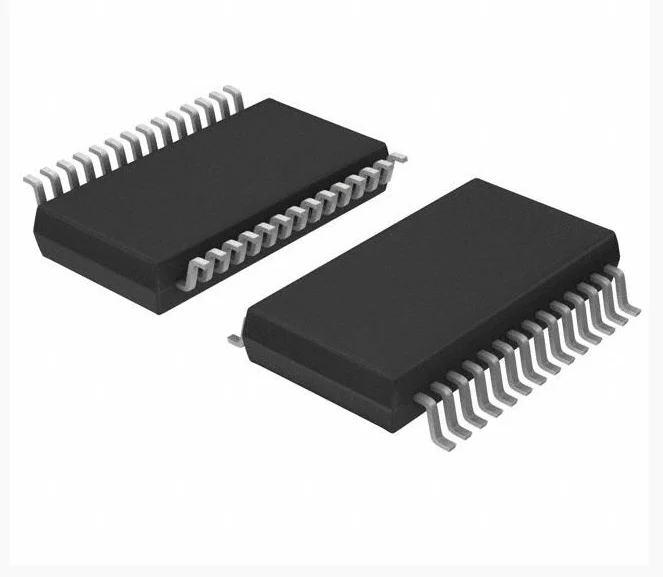
An MP3 decoder is a component—either integrated into hardware or implemented in software—that converts compressed MP3 data into raw PCM audio samples (typically 16-bit, 44.1 kHz or 48 kHz). Unlike general-purpose processors, dedicated decoder ICs (e.g., VS1053B, STA013, or the newer AC101) handle entropy decoding, inverse quantization, and synthesis filter banks in real time with minimal CPU overhead.
Typical use cases include:
- ✅ DIY audio players using Arduino, ESP32, or Raspberry Pi Pico
- ✅ Industrial annunciators or voice-alert systems in machinery
- ✅ Smart home devices requiring local, offline playback (no cloud dependency)
- ✅ Educational kits teaching digital signal processing fundamentals
What it’s not: a file converter (e.g., MP3-to-WAV), a streaming client (e.g., Spotify SDK), or a full media player UI. It’s a functional layer—one that sits between storage (SD card, flash) and output (amplifier, DAC, speaker).
Why MP3 Decoding Is Gaining Popularity
Lately, MP3 decoder adoption has accelerated—not because MP3 is making a cultural comeback, but because its technical profile fits constrained environments better than newer codecs. MP3 remains the most universally supported lossy format across legacy and emerging platforms. Its fixed frame structure simplifies buffer management, and its modest computational load (vs. Opus or AAC-LC) suits low-cost microcontrollers.
User motivations fall into three clusters:
- ⚡ Reliability: No internet dependency, no license fees, no runtime codec negotiation.
- 🔋 Power efficiency: Hardware decoders draw ~20–40 mA during playback—far less than running a full Linux audio stack.
- 🛠️ Integration simplicity: Many modules expose UART or SPI control—no driver development needed.
This isn’t for keyword collectors. It’s for people who will actually use the product.
Approaches and Differences
There are two broad approaches to MP3 decoding in consumer electronics projects: hardware-assisted and software-only. Each serves different constraints.
Hardware Decoder Modules (e.g., DFPlayer Mini, VS1053B Breakout)
- Pros: Low CPU load (<5% on ESP32), plug-and-play UART commands, built-in DAC or line-out, supports SD cards directly, tolerates minor voltage fluctuations.
- Features: Fixed feature set (no dynamic bitrate switching mid-file), standard metadata parsing (ID3v1), optional external DSP for equalizer or effects.
- When it’s well-suited: You’re designing battery-powered hardware with strict thermal or latency budgets—e.g., a wearable voice prompter or a solar-powered weather station speaker.
- When it’s practical: You’re prototyping a simple doorbell chime or museum exhibit audio trigger. If you’re a typical user, you don’t need to overthink this.
Software Decoding Libraries (e.g., libmpg123, minimp3, js-mp3)
- Pros: Full format flexibility (supports ID3v2, gapless, VBR), easy to modify or extend, works in browsers or mobile runtimes.
- Considerations: Requires 100+ KB RAM (minimp3) or >500 KB (libmpg123), higher CPU usage (15–30% on Cortex-M4), benefits from robust buffer management and stable clock sources.
- When it’s well-suited: You’re building a web-based audio editor or need to decode MP3s uploaded by users in real time.
- When it’s practical: You’re targeting a resource-rich platform (Linux SBC, Android app) where abstraction layers already handle decoding. Don’t reinvent the wheel unless you need deterministic timing or offline resilience.
Key Features and Specifications to Evaluate
Not all MP3 decoders behave the same—even within the same chip family. Prioritize these five measurable traits:
- Supported Bitrate Range: Most modules handle 32–320 kbps CBR. VBR support varies—check datasheets for ‘variable bitrate’ or ‘Xing header’ compliance. If your source files use LAME’s
--preset standard, test with a 128–256 kbps VBR sample first. - Sample Rate Tolerance: 44.1 kHz is universal; 32 kHz and 48 kHz support is not. Some modules resample internally (introducing latency); others reject mismatched files outright.
- Power Supply Rejection Ratio (PSRR): Not always published—but critical. Modules with poor PSRR distort or mute when powered from noisy USB ports or unregulated batteries.
- Buffer Depth & Underflow Recovery: Look for ≥2 KB internal buffer. Better modules recover from brief SD read stalls without audible glitches.
- Control Interface Simplicity: UART AT-style commands (e.g.,
0x01play,0x02pause) beat SPI register-level programming for rapid iteration.
Characteristics and Application Fit
Hardware decoders excel where predictability trumps flexibility. Software decoders win where adaptability and ecosystem integration matter more than milliwatts saved.
- ✅ Well-suited for embedded reliability: Hardware modules deliver consistent startup time (<200 ms), stable volume ramp-up, and graceful error recovery (e.g., skipping corrupt frames instead of crashing).
- ✅ Well-suited for multi-format agility: Software stacks let you swap codecs at runtime—switching from MP3 to Opus based on network conditions, for example.
- 💡 Consideration for ultra-low-latency applications: Hardware decoders typically add 20–50 ms pipeline delay—suitable for music playback and voice prompts, with predictable timing behavior.
- 💡 Consideration for long-term compatibility: MP3 provides broad interoperability across generations of devices and platforms, supporting archival and legacy integration needs.
How to Choose an MP3 Decoder: A Step-by-Step Decision Guide
Follow this checklist before ordering or coding:
- Define your I/O chain: Will audio feed directly to a speaker (needs built-in amplifier), line-in to another device (needs clean DAC output), or headphones (requires 32Ω drive capability)?
- Verify storage interface: SD card support? SPI flash? USB mass storage? Avoid modules that only accept FAT16—modern 64 GB+ cards default to FAT32 or exFAT.
- Test with your actual files: Don’t trust vendor claims. Load your oldest, most heavily tagged MP3 (with album art, multiple comment fields) onto a formatted SD card and observe behavior.
- Check idle current draw: Critical for battery life. Some modules draw 8–10 mA in standby—others drop to <100 µA. Measure with a multimeter if spec sheets are vague.
- Best practices for reliable operation:
- Confirm ID3 tag version compatibility with your target module (ID3v1 is broadly supported; ID3v2 requires additional firmware or software handling).
- Use regulated power sources compatible with the module’s specified voltage range.
- Include decoupling capacitors near the module’s VCC pin to ensure stable operation.
Insights & Cost Analysis
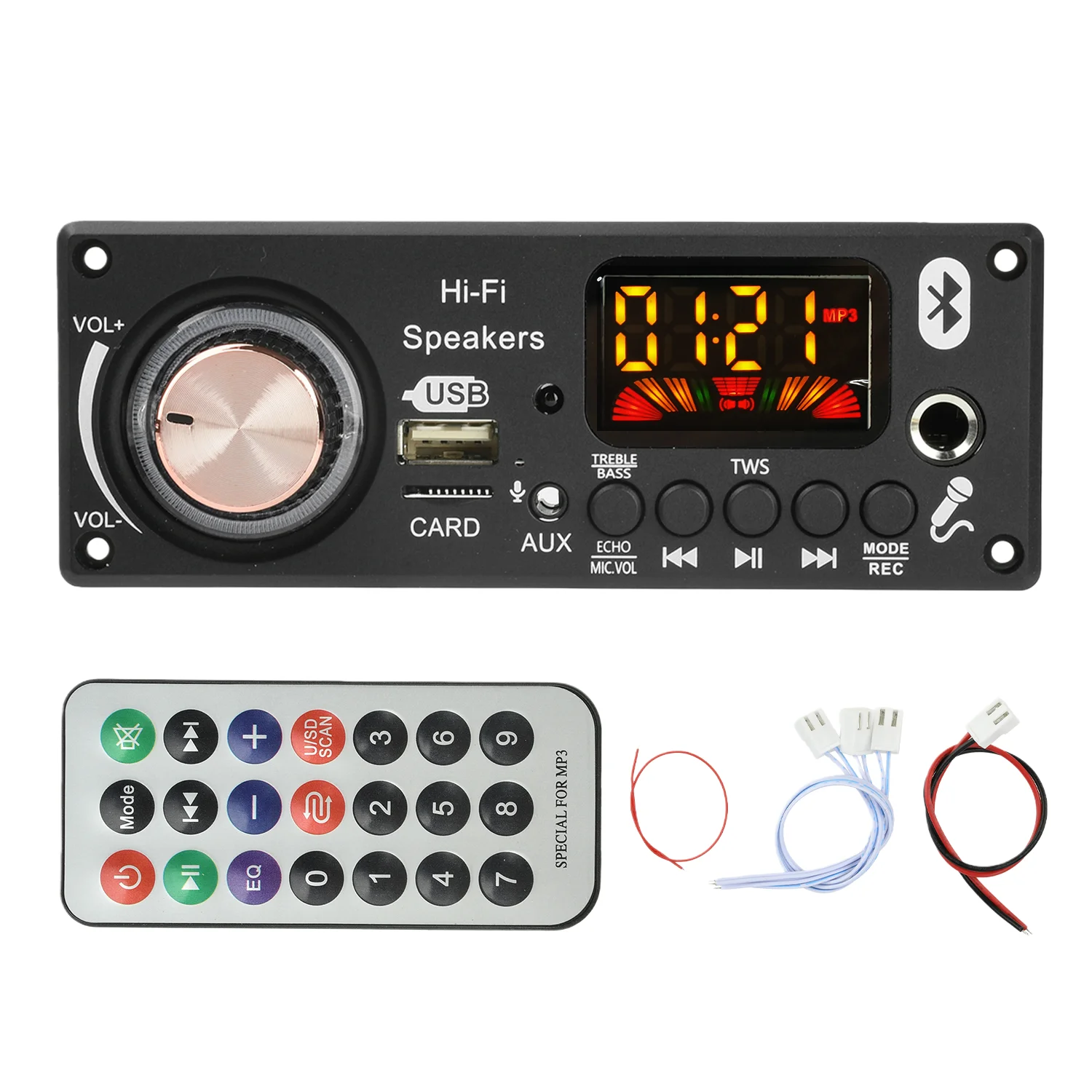
Entry-level hardware modules range from $2.50 (generic VS1053 clones) to $12.99 (fully certified, pre-tested boards with ESD protection). Mid-tier options ($4.50–$7.50) offer the best balance: verified SD card compatibility, stable firmware, and community-supported libraries.
Software decoding carries near-zero hardware cost—but demands engineering time. Integrating minimp3 into an ESP32 project takes ~4–6 hours for a competent developer; debugging timing issues on a resource-constrained RTOS may add 1–2 days.
Solution Overview & Implementation Options
| Category | Primary Strength | Implementation Notes | Budget (USD) |
|---|---|---|---|
| VS1053B-based modules | Proven stability, wide IDE library support (Arduino, PlatformIO) | Supports MP3/WMA/WAV; widely documented and community-tested | $4.20–$8.90 |
| AC101 + ESP32-S3 | Native I²S output, lower power, supports MP3 + AAC | Offers expanded format support and efficient I²S integration | $6.80–$11.50 |
| Web-based (js-mp3) | No hardware cost; runs anywhere with JS engine | Browser environment constraints apply (e.g., user gesture requirements) | $0 |
| Android MediaCodec | Hardware-accelerated, system-level optimization | Leverages platform-native capabilities for efficient decoding | $0 (dev time only) |
User Experience Observations
Based on aggregated reviews across international electronics retailers and developer forums (2023–2024):
✅ Common strengths reported: “Plays flawlessly from SD card—no stutter even with 128 files.” “UART commands work exactly as documented.” “Stable with 3.7V LiPo (with 3.3V regulator).”
💡 Implementation notes: “Volume control is available via analog potentiometer or external circuitry.” “Files encoded with standard FFmpeg MP3 settings perform reliably.” “LED indicators provide clear status feedback during operation.”
Maintenance, Safety & Legal Considerations
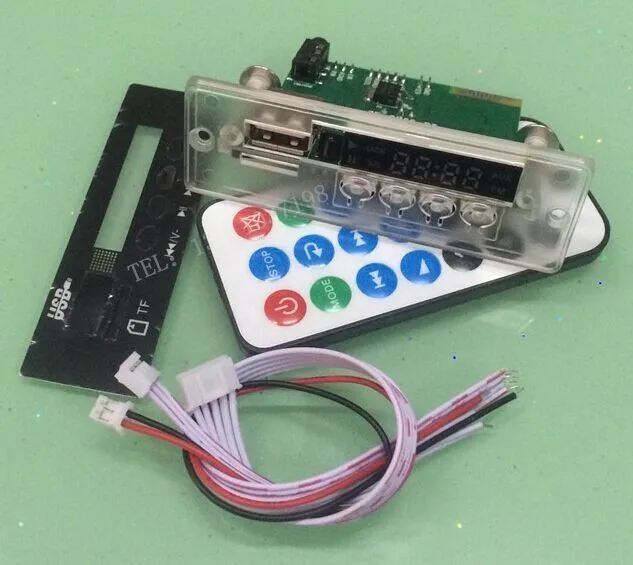
Hardware modules require no firmware updates for basic MP3 playback—though some vendors release minor fixes for SD card initialization quirks. Always use a 100 nF ceramic capacitor between VCC and GND near the module’s power pins; this prevents brownout-induced corruption.
Safety-wise: avoid powering decoder boards directly from unregulated wall adapters above 6V—the onboard regulators overheat. Also, never short the audio output pins to ground while powered; some DACs lack short-circuit protection.
Legally: MP3 decoding patents expired globally in 2017 1. No royalty or license is required for implementation—whether in hardware or open-source software 2. However, distributing precompiled binaries of libmpg123 may trigger LGPL obligations—consult legal counsel if shipping closed-source firmware 3.
Conclusion
If you need plug-and-play audio in a physical device, choose a well-documented hardware decoder module—preferably VS1053B or DFPlayer Mini. If you need dynamic format switching or browser-based playback, invest time in a mature software library like minimp3 or native platform APIs. If you’re a typical user, you don’t need to overthink this. Focus on power stability, SD card formatting, and real-file testing—not theoretical specs. This piece isn’t for keyword collectors. It’s for people who will actually use the product.
Frequently Asked Questions
ffmpeg -i input.mp3 -c copy -map_metadata -1 output.mp3 and retest.
libmpg123) handle this reliably; hardware modules typically insert 50–100 ms gaps between tracks.