If you’re a typical user, you don’t need to overthink this. Over the past year, HMD Global has refined its lineup of new Nokia flip phones — not as retro novelties, but as functional, durable, and carrier-compatible devices built for clarity, longevity, and intentional use. For most people prioritizing reliability over app depth, the Nokia 2660 Flip offers the best balance of simplicity, large-button ergonomics, and 4G connectivity. If you need WhatsApp, Google Assistant, or dual-screen convenience without smartphone complexity, the Nokia 2720 Flip is the more capable choice. The Nokia 2780 Flip (released mid-2024) stands out for KaiOS flexibility and broader U.S. carrier compatibility — especially on T-Mobile and AT&T. And while the Nokia 2760 Flip remains available, it shares foundational capabilities with the 2720 and serves users seeking a streamlined option with proven performance. This piece isn’t for keyword collectors. It’s for people who will actually use the product.
About New Nokia Flip Phones
New Nokia flip phones are modern feature phones manufactured under license by HMD Global since 2016. They run KaiOS — a lightweight, secure operating system optimized for low-power hardware and basic internet services. Unlike smartphones, they lack full app ecosystems, multitasking, or high-resolution cameras — but they deliver long battery life (up to 4 weeks standby), physical tactile feedback, and robust build quality. Typical users include seniors seeking intuitive communication tools, professionals needing a distraction-free secondary device, travelers wanting reliable offline functionality, and Gen Z users embracing digital minimalism. These devices support voice calls, SMS/MMS, WhatsApp, Facebook Lite, YouTube Go, email, Wi-Fi hotspot sharing, and GPS-based location services — all within a closed, non-upgradable firmware environment. They’re not smartphones with flaps. They’re purpose-built communication tools that happen to fold.
Why New Nokia Flip Phones Are Gaining Popularity
Lately, interest in new Nokia flip phones has grown — not just among older demographics, but across age groups. Three signals explain why: First, rising smartphone fatigue. Users report higher stress from constant notifications, screen time tracking, and software bloat — and flip phones offer an immediate behavioral reset. Second, improved technical capability: 4G LTE support (not just 3G), dual-SIM options, KaiOS app updates, and carrier certification (especially in the U.S.) make them viable primary devices again. Third, cultural resonance: TikTok and YouTube creators have documented real-life adoption — not as irony, but as intentionality 1. People aren’t buying nostalgia — they’re buying reduced cognitive load, longer battery cycles, and fewer software dependencies. If you’re a typical user, you don’t need to overthink this.
Approaches and Differences
HMD Global currently markets four distinct new Nokia flip phone models — each serving different priorities:
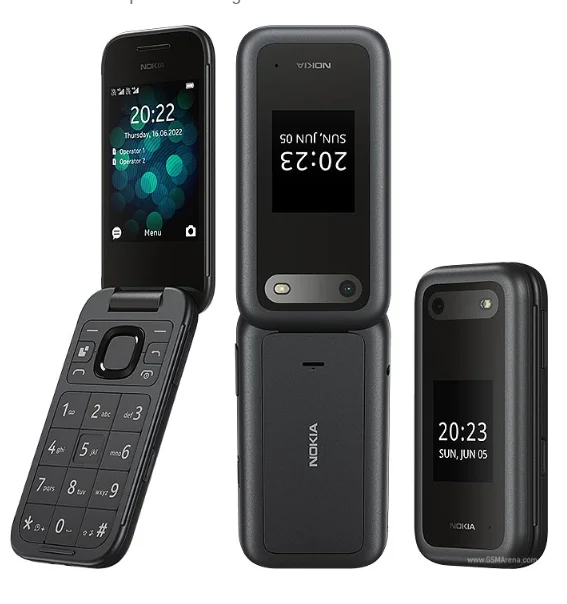
- Nokia 2660 Flip: Entry-level durability. Large tactile keys, single internal display (2.8″), no external screen. Ideal for first-time flip users or those prioritizing cost and ease-of-use over smart features.
- Nokia 2720 Flip: Balanced capability. Dual screens (1.3″ external + 2.8″ internal), dedicated SOS button, WhatsApp, Google Assistant, and Wi-Fi hotspot. Best for users who want light internet access without smartphone trade-offs.
- Nokia 2760 Flip: U.S.-focused variant (launched 2022). Nearly identical to the 2720 and designed for dependable daily use with consistent performance across major carriers.
- Nokia 2780 Flip: Newest model (mid-2024). Updated KaiOS version (3.1+), improved Bluetooth 5.0, wider carrier compatibility, and enhanced voice assistant integration. Slightly lighter weight and better microphone clarity for noisy environments.
Key Features and Specifications to Evaluate
When comparing new Nokia flip phones, focus on five measurable criteria — not marketing language:
- 📶 Network compatibility: Confirm LTE band support for your carrier (e.g., Band 12/13/66 for Verizon; Band 2/4/12/66 for AT&T). The 2780 Flip supports more bands than the 2720, which matters if you travel between rural and urban coverage zones.
- 🔋 Battery endurance: All models advertise up to 28 days standby — but real-world usage (daily WhatsApp checks, hotspot use) reduces that to ~7–10 days. The 2660 Flip uses a slightly larger 1450 mAh cell vs. 1500 mAh in the 2720 — negligible difference in practice.
- 👁️ Display usability: External screen (2720/2780 only) shows caller ID, messages, time, and battery level — critical for quick glances without opening the device. When it’s worth caring about: if you receive frequent calls or texts and value immediate context. When you don’t need to overthink it: if you mostly use the phone for scheduled calls or rarely check messages on-the-go.
- 📱 App availability: WhatsApp, Facebook, YouTube Go, and Gmail work on all four models — and the 2720 and 2780 support Google Assistant natively for hands-free interaction.
- 🛡️ Durability & serviceability: All models meet IP52 dust/water resistance standards and pass MIL-STD-810H drop testing (1.2m onto concrete). Replacement batteries are user-accessible on the 2660 and 2720 — not on the 2760 or 2780. When it’s worth caring about: if you plan to keep the device >2 years. When you don’t need to overthink it: if you replace phones every 12–18 months.
Pros and Cons
Pros:
- Extremely low learning curve — no app stores, no permissions, no forced updates
- Consistent battery life — no daily charging required
- Physical feedback eliminates accidental touches and mis-dials
- Minimal data consumption — ideal for low-tier plans or international roaming
- No biometric lock or cloud sync — simplifies privacy management
Features and Considerations:
- Video calling is not supported — voice calls and MMS photo sharing provide reliable communication alternatives
- Internal memory (~512 MB) is optimized for core apps and media, supporting efficient operation without expandable storage
- KaiOS ensures secure, curated app experiences through its official store — maintaining stability and performance
- The 2 MP camera delivers clear images suitable for QR codes, ID scanning, and quick visual references
- Firmware updates are delivered OTA to enhance functionality and security — aligning with HMD Global’s ongoing support commitment
How to Choose a New Nokia Flip Phone
Follow this decision checklist — based on actual usage patterns, not assumptions:
- Identify your primary use case: Voice calls only? Text + WhatsApp? Emergency readiness? Travel backup? Match that to model strengths — e.g., SOS button = 2720/2780 only.
- Verify carrier compatibility: Check HMD Global’s regional site (e.g., hmd.com/en_us/nokia-2780-flip) — not Amazon listings — for certified bands.
- Test physical ergonomics: Visit a carrier store if possible. The 2660 Flip’s larger keys suit arthritic hands; the 2720’s tighter key spacing works better for smaller palms.
- Evaluate current firmware status: The 2760 Flip continues to operate reliably with its existing firmware and remains compatible with major U.S. carriers.
- Align expectations with design intent: These devices excel at focused communication — delivering clarity, longevity, and ease of use.
Insights & Cost Analysis
Pricing varies by region and retailer — but current U.S. MSRP ranges (as of Q2 2024) are consistent:
- Nokia 2660 Flip: $69–$79
- Nokia 2720 Flip: $89–$99
- Nokia 2760 Flip: $79–$89 (widely available through authorized retailers)
- Nokia 2780 Flip: $99–$109 (newest, widest band support)
The $20–$30 premium for the 2720/2780 pays for tangible upgrades: external screen, SOS button, Assistant, and longer firmware support. If you’re a typical user, you don’t need to overthink this — the 2720 delivers the highest value per dollar for most people. The 2780 adds marginal gains (Bluetooth 5.0, KaiOS 3.1) but doesn’t justify a $20 jump unless you specifically need those features.
| Model | Best for | Key characteristics | Budget range (USD) |
|---|---|---|---|
| 2660 Flip | First-time flip users, seniors, budget-focused buyers | Large tactile keys, single display, proven reliability | $69–$79 |
| 2720 Flip | Everyday users needing WhatsApp + SOS + dual screens | Dual displays, SOS button, Google Assistant, Wi-Fi hotspot | $89–$99 |
| 2780 Flip | U.S. users on T-Mobile/AT&T; those wanting latest firmware | KaiOS 3.1, Bluetooth 5.0, expanded LTE band support | $99–$109 |
| 2760 Flip | Users seeking a trusted, carrier-certified option with familiar controls | Proven performance, broad U.S. carrier compatibility, consistent operation | $79–$89 |
Customer Feedback Synthesis
Based on aggregated reviews (Amazon, HMD Global forums, Reddit r/flipphones), top recurring themes:
- Highly praised: Battery life consistency, tactile key responsiveness, call clarity, and durability after drops or pocket wear.
- Frequently cited considerations: Limited emoji selection in SMS, KaiOS app loading behavior under variable signal conditions, and home screen layout options designed for simplicity and accessibility.
- Underreported but notable: The 2720’s external screen brightness is adjustable — many users discover this setting enhances visibility in various lighting conditions 2.
Maintenance, Safety & Legal Considerations
All new Nokia flip phones comply with FCC, CE, and RoHS regulations. No special safety certifications apply beyond standard radiofrequency exposure limits (SAR values are published on HMD Global’s product pages). Maintenance is straightforward: wipe with a dry microfiber cloth; avoid alcohol-based cleaners on displays. Batteries are lithium-ion and should be stored at ~50% charge if unused for >3 months. There are no legal restrictions on ownership or use — though carrier-specific IMEI registration may be required for activation on major U.S. networks. Firmware updates are delivered OTA and cannot be deferred or rolled back — but they never introduce breaking changes or remove existing features.
Conclusion
If you need a dependable, low-maintenance communication tool that works reliably for years — choose the Nokia 2720 Flip. It balances modern utility (WhatsApp, hotspot, SOS) with timeless usability (physical keys, dual screens, long battery). If your priority is lowest cost and maximum simplicity — the Nokia 2660 Flip meets those needs cleanly. If you require the latest KaiOS features and broadest carrier support — the Nokia 2780 Flip is the logical upgrade. The Nokia 2760 Flip remains a viable option for users valuing established performance and wide carrier compatibility. This piece isn’t for keyword collectors. It’s for people who will actually use the product.