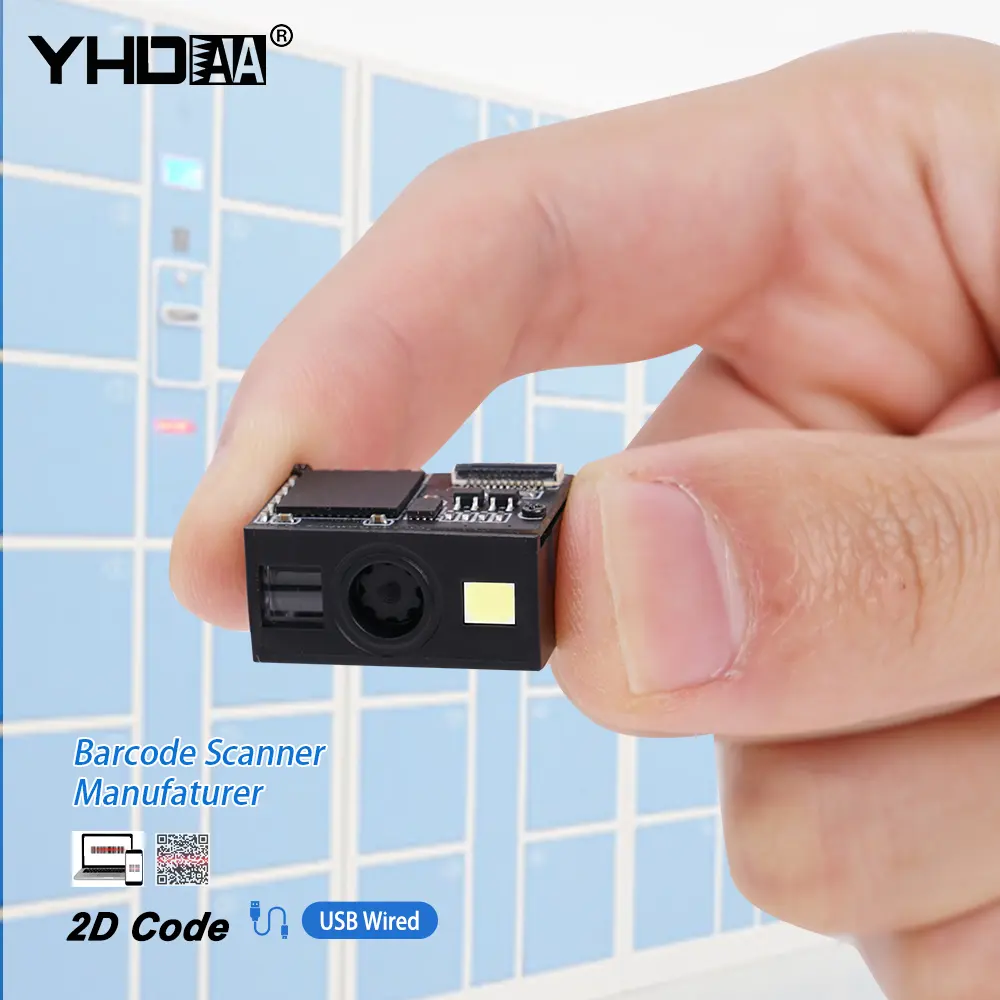
Over the past year, OEM QR code scanner module selection has shifted from a simple spec-check to a strategic integration decision—driven by GS1 Sunrise 2027 compliance deadlines, rising demand for portable scanning in logistics and retail, and tighter space constraints in kiosks and wearables. If you’re a typical user—a hardware engineer, product manager, or embedded systems developer integrating scanning into your device—you don’t need to overthink this: start with decoding reliability on low-contrast or damaged codes, prioritize hybrid IoT-ready connectivity (USB + UART + optional BLE), and avoid over-spec’ing resolution or frame rate unless your use case demands sub-0.4s latency at scale. Skip proprietary SDK lock-in; insist on standard HID/CCID or serial protocols. This piece isn’t for keyword collectors. It’s for people who will actually use the product.
About OEM QR Code Scanner Modules
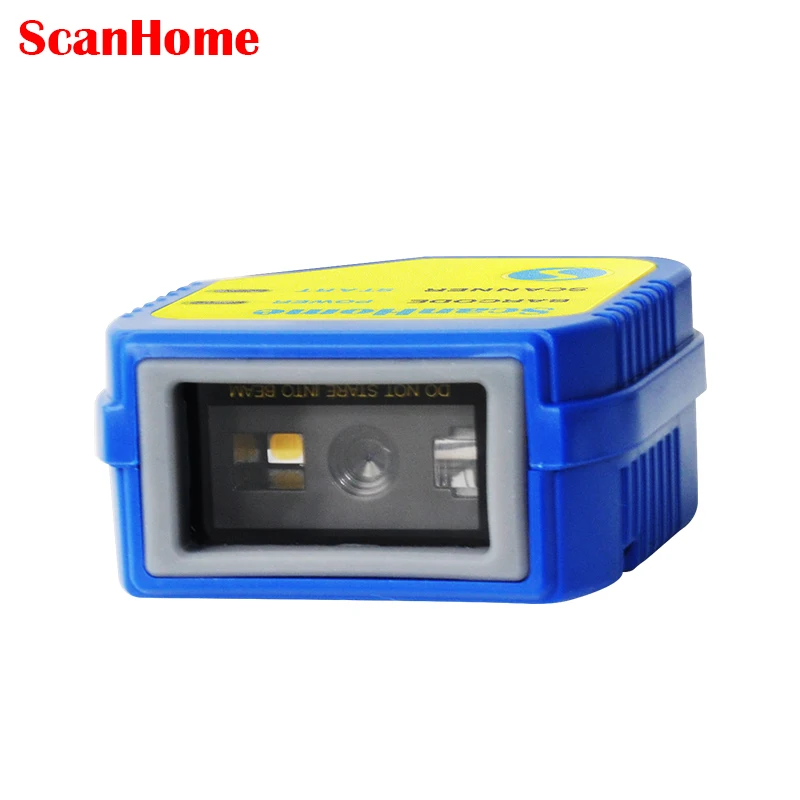
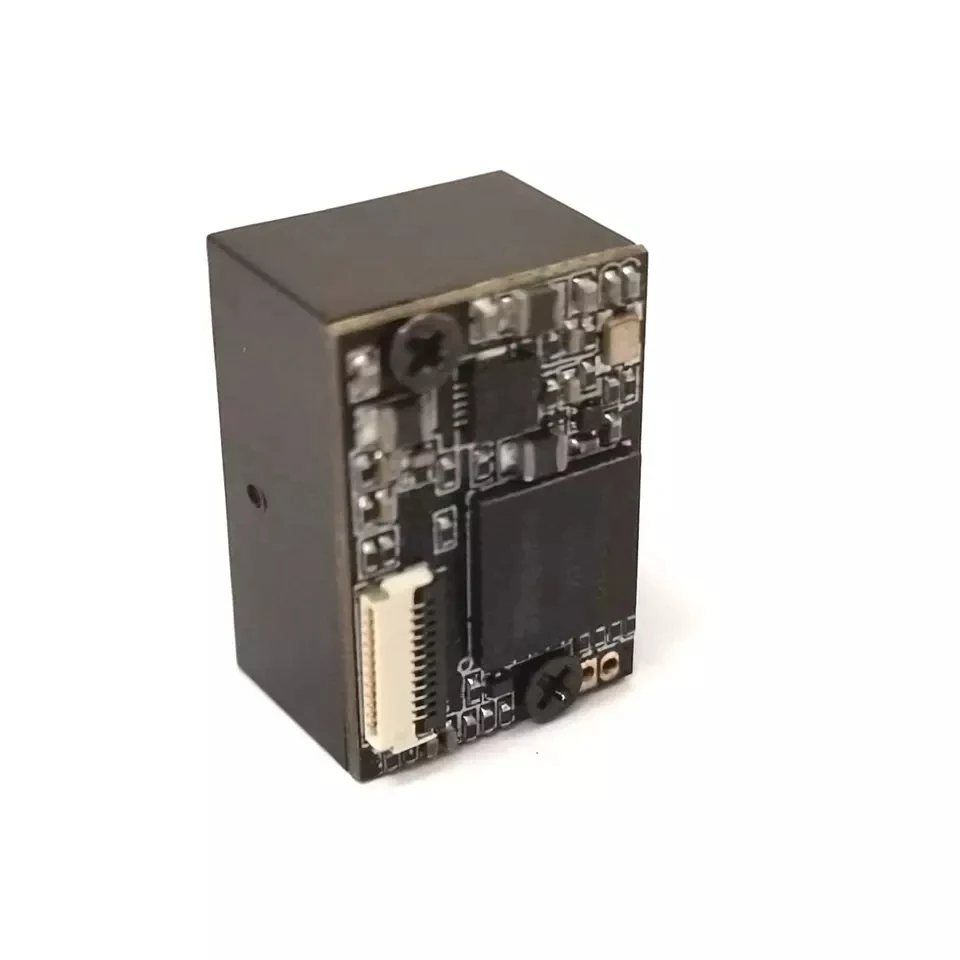
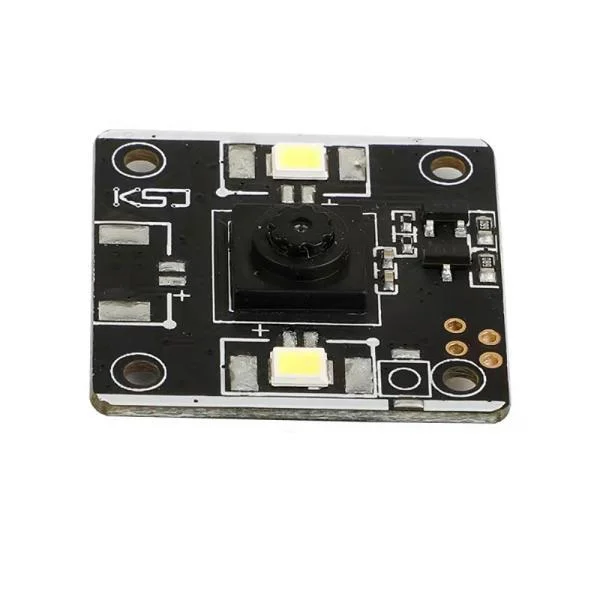
An OEM QR code scanner module is a compact, board-level scan engine designed for seamless integration into third-party devices—not standalone handheld units. It includes a CMOS imager, decoding firmware, illumination optics, and interface circuitry, but no housing, battery, or user interface. Typical use cases include self-checkout kiosks, smart lockers, warehouse tablets, delivery ring scanners, vending machines, and industrial HMI panels. Unlike consumer-grade QR readers, these modules are rated for continuous duty cycles, operate across extended temperature ranges (−20°C to 60°C), and support firmware updates via UART or USB. They’re not plug-and-play peripherals—they’re components requiring mechanical mounting, electrical integration, and host-side driver support.
Why OEM QR Code Scanner Modules Are Gaining Popularity
Lately, adoption has accelerated—not just due to rising QR usage, but because of structural shifts. First, GS1 Sunrise 2027 mandates full migration to 2D barcodes (including DataMatrix and QR) for retail and supply chain traceability, making legacy 1D-only engines obsolete for new designs. Second, e-commerce fulfillment centers in Asia-Pacific are deploying mobile scanning solutions at record pace—portable and handheld OEM modules now account for over 73% of global shipments 1. Third, miniaturization enables new form factors: wearable ring scanners, ultra-thin kiosk bezels, and even smart locker door panels now embed sub-15mm tall scan engines. If you’re a typical user, you don’t need to overthink this—the trend isn’t about novelty; it’s about compliance, scalability, and physical integration feasibility.
Approaches and Differences
Three integration approaches dominate current practice:
- Embedded CMOS modules (e.g., RT214, Rakinda RD4500): Low-cost, compact, USB/HID or TTL-serial output. Ideal for cost-sensitive POS terminals or educational devices. Pros: $6–$25 range, minimal footprint (<12 × 12 mm), easy firmware update. Cons: Limited tolerance for motion blur or extreme angles; decoding fails below ~30% contrast.
- Industrial-grade scan engines (e.g., Zebra SE4710, Honeywell N4000): Ruggedized, high-speed, multi-interface (USB, RS-232, I²C). Used in automated sortation, vehicle-mounted computers, or outdoor logistics hardware. Pros: IP54 rating, 99.9% decode success on damaged codes 2, real-time error reporting. Cons: $85–$120+, larger PCB footprint, requires thermal management design.
- AI-enhanced modules (e.g., Superlead SL-QR200, YHDAAs AI-Scan series): Integrate lightweight neural inference for adaptive focus, glare suppression, and dynamic ROI cropping. Emerging in premium kiosks and autonomous carts. Pros: Handles reflective surfaces and low-light environments without manual adjustment. Cons: Higher power draw (≥120 mA), limited vendor support outside China, SDK complexity increases integration time by 2–3 weeks.
When it’s worth caring about: You’re building for outdoor logistics, high-volume scanning (>500 scans/hour), or environments with inconsistent lighting or label quality. When you don’t need to overthink it: Your device operates indoors, scans clean, printed labels under stable lighting, and handles ≤100 scans/day—basic CMOS modules deliver consistent performance at half the cost and integration effort.
Key Features and Specifications to Evaluate
Don’t optimize for specs in isolation. Prioritize features by impact on real-world uptime and maintenance:
- Decode accuracy on degraded codes: Look for published test data on scannable contrast thresholds (e.g., “reads codes down to 15% reflectance”) and motion tolerance (e.g., “successful at 1.2 m/s swipe speed”). Not all vendors publish this—but those that do tend to have better QA rigor.
- Interface flexibility: USB-HID is plug-and-play for Windows/Linux; TTL-serial offers lowest latency but requires host-side parsing. Avoid modules with only proprietary USB drivers—these create OS compatibility debt.
- Power profile: Industrial modules often draw 350–500 mA peak; many embedded designs run off 5V/500mA USB ports. Verify sustained current draw—not just standby—and check if deep-sleep mode (≤10 µA) is supported.
- Firmware upgradability: Modules supporting field-upgradeable firmware via UART or DFU mode reduce long-term obsolescence risk. Check whether updates preserve calibration settings.
When it’s worth caring about: You’ll deploy >1,000 units across multiple regions with varying lighting conditions or label aging profiles. When you don’t need to overthink it: Prototype phase, single-market deployment, or fixed-label applications (e.g., internal asset tags with known print quality).
Pros and Cons
OEM QR code scanner modules offer decisive advantages—but only when matched to context.
- ✅ Pros: Lower BOM cost than full scanners; smaller footprint enables sleeker industrial design; direct control over trigger logic and feedback (LED/beep); easier certification path (no separate EMC testing for the whole device).
- ❌ Cons: Integration overhead (mechanical alignment, ESD shielding, thermal layout); no out-of-box usability—requires host firmware development; limited post-sales support compared to branded scanners.
They’re ideal for volume production where customization, size, and total system cost matter more than time-to-first-scan. They’re unsuitable for rapid prototyping without embedded software capacity—or for teams lacking access to optical alignment fixtures or signal integrity test equipment.
How to Choose an OEM QR Code Scanner Module
Follow this 6-step checklist before sourcing:
- Define your decode environment: Indoor/outdoor? Static label or moving conveyor? Label material (matte paper vs. glossy metal)? Capture this in a lighting & reflectance matrix—not just “QR codes.”
- Lock interface requirements early: Will your host MCU handle serial parsing? Do you need HID-class enumeration for zero-driver operation? Avoid late-stage interface mismatches—they add 3+ weeks to schedule.
- Request sample firmware logs: Ask vendors for raw decode log outputs (not just pass/fail summaries). Look for retry counts, exposure time variability, and timeout triggers—these expose real-world stability.
- Verify mechanical fit *before* committing: Use vendor STEP files—not just PDF outlines—to check lens clearance, mounting hole alignment, and PCB keep-out zones. Thermal expansion mismatches cause field failures.
- Avoid “certification by proxy”: Just because a module carries CE doesn’t mean your final product complies. Confirm whether the module’s emissions profile is characterized *in your enclosure*, not just bare-board.
- Test with *your* labels: Print 50 copies of your actual label at different DPIs and contrast levels. Scan them under worst-case ambient light (e.g., fluorescent + sunlight bleed). If >5% fail, revisit optics or illumination—not just firmware.
Insights & Cost Analysis
Pricing spans a wide band—but value isn’t linear with cost. Here’s what real projects show:
- Basic CMOS modules ($6–$25): Fit 70% of indoor retail, education, and internal tooling use cases. Decoding latency: 0.4–0.7 sec. Accuracy drops sharply below 40% contrast.
- Mid-tier modules ($35–$65): Add adaptive illumination, wider FoV (60°+), and certified decode reliability down to 25% contrast. Best ROI for logistics tablets and shared kiosks.
- Premium industrial modules ($85–$120+): Include real-time diagnostics, cloud telemetry hooks, and guaranteed 0.3–0.5 sec latency 2. Justified only when uptime >99.5% is contractually required.
If you’re a typical user, you don’t need to overthink this: For most mid-volume commercial products, the $40–$55 tier delivers the strongest balance of reliability, documentation quality, and integration maturity.
Better Solutions & Competitor Analysis
| Category | Best For / Advantage | Potential Issue | Budget Range (USD) |
|---|---|---|---|
| Entry-Level CMOS | Fast prototyping, low-risk indoor apps | Low contrast tolerance; no environmental sealing | $6–$25 |
| Mid-Tier Hybrid | Logistics tablets, kiosks, shared devices | Requires basic UART parsing; no AI features | $35–$65 |
| Industrial IoT-Ready | Automated sortation, fleet-mounted units | Higher power & thermal load; longer lead times | $85–$120+ |
Customer Feedback Synthesis
Based on aggregated developer forums, OEM integration reports, and distributor support logs (2024–2026), top recurring themes:
- ✅ Frequent praise: “Consistent decode on printed QR—even after 6 months of warehouse dust exposure”; “Clear UART protocol docs cut integration from 3 weeks to 4 days”; “Firmware updates resolved intermittent timeout issues without hardware change.”
- ⚠️ Common complaints: “No mechanical alignment jig included—had to machine one in-house”; “BLE pairing failed after 2 firmware updates; no rollback option”; “Datasheet lists ‘IP54’ but only applies to module + custom gasket—not bare board.”
Maintenance, Safety & Legal Considerations
These modules carry no inherent safety hazard—but integration choices do. Key considerations:
- ESD protection: Most modules specify ±8kV contact discharge tolerance—but this assumes proper PCB grounding and enclosure bonding. Unshielded USB traces near RF antennas cause intermittent resets.
- Laser vs. LED illumination: All mainstream OEM QR modules use LED-based illumination (Class 1, eye-safe). Avoid any vendor referencing “laser diodes” for QR reading—it’s unnecessary, adds cost, and triggers stricter regulatory scrutiny.
- Regional compliance: CE marking covers EMC and RoHS for EU sales; FCC ID is mandatory for U.S. market entry. Note: CE ≠ FCC—both must be verified independently for dual-market devices.
Conclusion
If you need reliable, scalable scanning in a constrained physical envelope, choose a mid-tier hybrid OEM QR code scanner module ($35–$65) with proven contrast resilience, standard UART/USB-HID support, and documented firmware update capability. If you need zero-integration latency for high-throughput automation, invest in industrial-grade engines—but only after validating thermal and signal integrity in your final mechanical layout. If you need fast iteration with minimal firmware lift, start with entry-level CMOS—but cap deployment at 500 units until field contrast testing confirms label consistency. This piece isn’t for keyword collectors. It’s for people who will actually use the product.
Frequently Asked Questions
OEM modules are bare-board components requiring integration into your device’s PCB, power, and firmware. Retail scanners are complete, certified peripherals with housings, buttons, and drivers. Modules offer size and cost advantages—but shift engineering responsibility to you.
No—but your *final product* must meet regional EMC, safety, and radio regulations (e.g., FCC, CE). The module’s own certifications (e.g., CE, RoHS) simplify testing but don’t exempt your full system from verification.
Yes—if it supports USB-HID or CDC-ACM (virtual COM port). Most mid-tier modules work out-of-box with Android 8+ and Raspberry Pi OS via standard kernel drivers. Avoid modules requiring vendor-specific USB drivers.
Not critical for fixed-distance scanning (e.g., kiosks, lockers). Autofocus adds cost and power draw. Fixed-focus modules calibrated for 5–20 cm work reliably for 90% of OEM use cases. Reserve autofocus for variable-distance or handheld-assist applications.