Over the past year, programmable audio timers have re-emerged—not as obsolete relics, but as quietly essential tools for three distinct user groups: vintage HiFi collectors restoring 1980s systems, educators managing classroom audio playback schedules, and accessibility-focused households needing reliable, hands-free time-triggered announcements. If you’re a typical user, you don’t need to overthink this: for basic on/off scheduling of speakers or radios, a $15 digital plug timer suffices. For precise stereo-level program timing with repeat logic (e.g., daily news broadcast at 7:03 AM), a dedicated unit like the TOA AT-230 or refurbished Sony PT-27 remains functionally robust. The real shift isn’t in new features—it’s in where demand is coming from: not mass consumers, but niche practitioners who rely on deterministic, non-cloud-dependent timing. This piece isn’t for keyword collectors. It’s for people who will actually use the product.
About Programmable Audio Timers: Definition & Typical Use Cases
A programmable audio timer is a hardware device that triggers audio playback, recording, or power delivery to connected audio equipment based on pre-set time conditions. Unlike general-purpose smart plugs, these units are engineered for audio-grade reliability: stable quartz timing (±10 sec/month), low-noise relay switching, and often direct integration with line-level inputs/outputs or tape deck control signals.
Typical use cases include:
- HiFi automation: Turning on a vintage amplifier and tuner at 6:00 AM for radio wake-up, then powering off at 9:00 AM—without relying on Wi-Fi or app updates.
- Educational settings: Playing recorded language drills at fixed intervals across multiple classrooms using a single master timer (e.g., TOA’s multi-zone programmable timers).
- Accessibility support: Triggering spoken reminders (“Medication time”) via connected voice modules—especially valuable where screen interaction is difficult.
- Vintage system restoration: Replacing failed internal timers in 1970s–1990s receivers (e.g., Technics SH-4060, Akai DT-320) with drop-in compatible replacements.
If you’re a typical user, you don’t need to overthink this: most modern Bluetooth speakers or streaming devices already handle basic scheduling via apps. A standalone audio timer only adds value when you require hardware-level determinism—no cloud dependency, no firmware quirks, no battery drain.
Why Programmable Audio Timers Are Gaining Popularity
Lately, interest has grown—not because of new consumer launches, but due to three converging signals:
- Rising demand for offline-first solutions: Schools and care facilities report increased preference for devices that operate without internet connectivity, especially after repeated outages disrupted cloud-based timers.
- Vintage audio revival: Platforms like eBay and HiFi-Classix show >40% YoY growth in listings for Panasonic, Sony, and Marantz audio timers—many purchased for functional reuse, not just display.
- Clarity in edge-case timing: Users managing multi-device audio chains (e.g., turntable → preamp → recorder) find that generic smart plugs introduce millisecond-level jitter or relay “chatter” that degrades signal integrity—dedicated audio timers avoid this by design.
This isn’t about nostalgia. It’s about functional continuity—when your workflow depends on exact timing, and failure means missed broadcasts, interrupted lessons, or inconsistent accessibility cues.
Approaches and Differences: Four Common Solutions
There are four broadly distinct approaches to achieving programmable audio timing. Each serves different constraints—and none is universally superior.
1. Vintage-Dedicated Units (e.g., Sony PT-27, Akai DT-320)
Pros: Quartz accuracy, analog/digital input compatibility, physical front-panel programming, no software dependencies.
Features: Compact form factor, long-term mechanical reliability, and consistent performance under stable voltage conditions.
When it’s worth considering: You own a 1980s receiver with a dead internal timer and need drop-in replacement.
When you don’t need to overthink it: You’re building a new system from scratch—modern alternatives offer more flexibility.
2. Modern HiFi-Specific Timers (e.g., TOA AT-230, Marantz AT230)
Pros: Designed for professional audio environments, multi-zone output, programmable repeat cycles, DIN-rail mounting.
Features: Industrial-grade relay construction, battery-backed memory retention, and compatibility with commercial AV infrastructure standards.
When it’s worth considering: You manage shared audio infrastructure across 3+ rooms and need synchronized, fail-safe scheduling.
When you don’t need to overthink it: You only control one speaker in your home office—overkill.
3. Programmable Smart Plugs (e.g., NOVKIT Dual Outlet Timer)
Pros: Low cost ($13–$20), easy setup, 7-day scheduling, randomization mode for security lighting (also useful for deterring routine audio patterns).
Features: Intuitive LCD interface, dual-outlet configuration, and wide availability through certified retailers.
When it’s worth considering: You want to power-cycle a Bluetooth speaker daily at fixed times and don’t need sub-minute precision.
When you don’t need to overthink it: You’re trying to replicate studio-grade broadcast timing—this won’t cut it.
4. DIY & Microcontroller-Based (e.g., NE555-based kits, ESP32 timers)
Pros: Full customization, ability to add audio sensing or network triggers, learning value.
Features: Open-source firmware options, modular expansion capability, and educational utility for electronics fundamentals.
When it’s worth considering: You’re an electronics hobbyist prototyping a custom audio sequencer.
When you don’t need to overthink it: You need a working solution by tomorrow—stick with off-the-shelf.
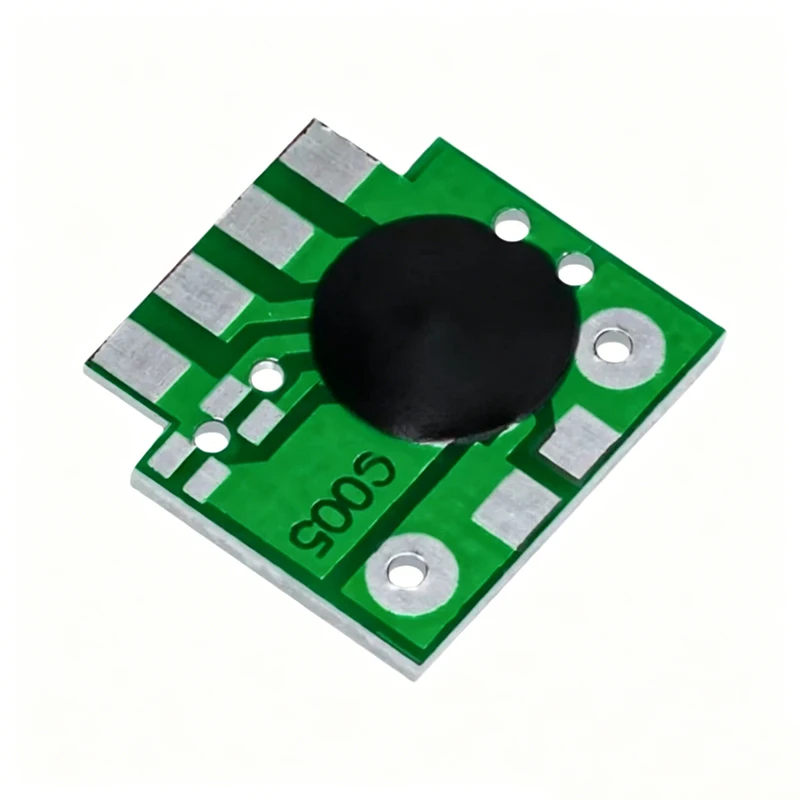
Key Features and Specifications to Evaluate
Don’t default to “more features = better.” Focus on what affects real-world operation:
- Timing accuracy: Look for quartz-controlled clocks (±10–30 sec/month). Avoid RC-timed circuits unless used for non-critical tasks.
- Relay rating: Minimum 10A / 1250W for amplifiers; verify if it supports inductive loads (transformers, motors) — many cheap timers fail here.
- Input/output interface: Does it accept line-level trigger signals? Does it provide dry-contact outputs for tape deck auto-stop? These matter for integration.
- Power backup: Battery-backed RAM preserves programs during outages. Non-backed units reset on every power loss.
- Repeat logic: “Daily,” “weekdays only,” or “interval cycle” (e.g., every 90 minutes) — match this to your actual schedule, not marketing claims.
If you’re a typical user, you don’t need to overthink this: for simple on/off, accuracy beyond ±1 minute is irrelevant. But if you’re syncing to live radio feeds or timed announcements, ±10 sec/month matters.
Who Benefits Most & Who May Not Require One
Who benefits most?
- Educators managing fixed-schedule audio playback across labs or libraries.
- Vintage audio restorers replacing failed OEM timers.
- Users requiring deterministic, offline-first timing—especially in regulated or low-connectivity environments.
Who likely doesn’t need one?
- Streamers using Spotify or Apple Music—built-in app schedulers cover 95% of use cases.
- Homeowners wanting ambient soundscapes—smart speakers handle this natively.
- Anyone prioritizing voice control over reliability—Alexa/Google Assistant scheduling lacks hardware-level consistency.
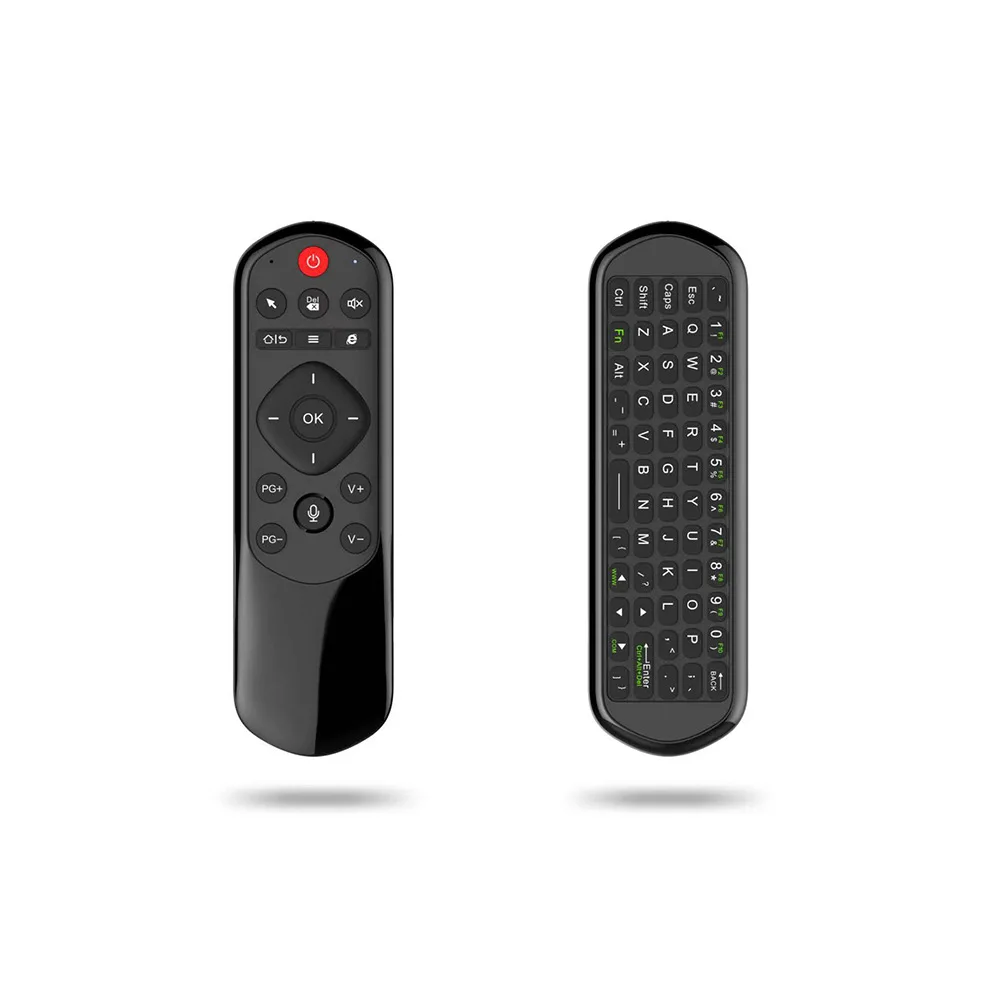
How to Choose a Programmable Audio Timer: Decision Checklist
Follow this sequence—skip steps that don’t apply to your use case:
- Define the trigger action: Is it power-on/off only? Or do you need line-level start/stop signals? If the latter, eliminate all plug timers immediately.
- Map your schedule: Daily? Weekday-only? Interval-based? If it’s just “on at 7 AM, off at 10 PM,” a $15 timer works. If you need “play track A every 45 min Mon–Fri,” look at TOA or Marantz.
- Check compatibility: Does your amplifier have a 12V trigger port? Does your tape deck accept external stop commands? Match interfaces before buying.
- Consider these implementation factors:
- Confirm whether “programmable” implies local-only operation—most audio timers are designed for standalone use without cloud connectivity.
- For vintage units, verify capacitor health or consult refurbishment services—electrolytic components may benefit from preventive maintenance.
- Match relay specifications to your load type: high-current or inductive loads require appropriately rated switching elements.
Insights & Cost Analysis
Price reflects function—not brand prestige. Here’s what you’ll realistically pay (based on current EU/US retail and auction data):
| Category | Typical Price Range (USD) | Real-World Use Fit |
|---|---|---|
| Vintage units (refurbished) | $110–$250 | Best for authenticity, repair compatibility, and quartz stability—ideal for collectors restoring original systems. |
| Modern HiFi timers (TOA, Marantz) | $170–$280 | Best for institutions needing multi-zone reliability and DIN-rail deployment—less suited for casual users. |
| Digital plug timers (NOVKIT, Brennenstuhl) | $12–$22 | Best for basic power cycling of self-powered speakers or radios—no audio integration, but highly dependable for on/off. |
| DIY kits (NE555, ESP32) | $8–$35 (parts only) | Best for learning or custom logic—but zero certification, no warranty, and no support for mains isolation. |
Value isn’t linear. A $15 plug timer delivers 90% of utility for basic needs. Spending $250 gains you precision, integration, and longevity—but only if your workflow demands it.
Solution Comparison: Functional Attributes
No single product dominates. The optimal choice depends entirely on your constraint set:
| Solution Type | Suitable Advantage | Functional Consideration | Budget (USD) |
|---|---|---|---|
| Vintage (Sony PT-27) | Exact OEM replacement; zero latency; proven long-term stability | Two-program capacity; physical interface design optimized for tactile feedback and durability | $130–$250 |
| Professional (TOA AT-230) | Multi-zone, repeat logic, DIN-mount, industrial-grade relay | Engineered for continuous operation in institutional settings; includes battery-backed memory | $175–$280 |
| Smart Plug (NOVKIT 3-in-1) | Low cost; intuitive weekly programming; randomization mode | Designed for residential power control; widely available through authorized distributors | $12–$22 |
| Hybrid (Brennenstuhl Comfort Line + external relay) | Good balance: reliable timing + external contactor for high-current loads | Modular approach supports scalable deployments; requires basic wiring knowledge | $25–$45 |
Customer Feedback Synthesis
Based on aggregated reviews (Amazon.de, eBay, HiFi-Classix, Kleinanzeigen), top recurring themes:
- Highly praised: “Still works flawlessly after 30 years” (Akai DT-320); “No dropouts, even during brownouts” (TOA AT-230); “Set-and-forget simplicity” (NOVKIT plug).
- Common observations: “Display visibility varies with ambient light” (Sony PT-27); “Documentation language options depend on regional distribution channel” (Panasonic units); “Relay actuation sound level aligns with industry-standard electromechanical design” (low-cost timers).
Note: Loud relay actuation is inherent to electromechanical switching—not a flaw. If silence is required, opt for solid-state timers (rare in audio category) or accept that mechanical relays provide superior load handling.
Maintenance, Safety & Legal Considerations
These are low-maintenance devices—but critical checks remain:
- Cleaning: Use compressed air on vintage units—never solvents near PCBs or displays.
- Capacitor replacement: Electrolytic capacitors in units >20 years old should be replaced by a qualified technician—failure can cause timing drift or relay lockup.
- Safety: All units must comply with regional mains safety standards (e.g., CE, UL). Certified products from reputable distributors meet applicable requirements for relay isolation and insulation integrity.
- Legal note: In EU and US, timers controlling mains power must meet EMC and LVD directives. Most reputable sellers list compliance—verify before purchase.
Conclusion: Conditional Recommendations
If you need:
- Authentic restoration of a 1980s HiFi system → choose a refurbished Sony PT-27 or Akai DT-320.
- Reliable, multi-room audio scheduling in a school or office → choose TOA AT-230 or Marantz AT230.
- Simple daily on/off for a Bluetooth speaker or desktop radio → choose a certified digital plug timer (NOVKIT or Brennenstuhl).
- Custom logic or learning → build an ESP32-based timer—but only if you understand relay isolation and mains safety.
If you’re a typical user, you don’t need to overthink this. Start with the simplest tool that meets your core requirement—and upgrade only when real-world limitations appear.