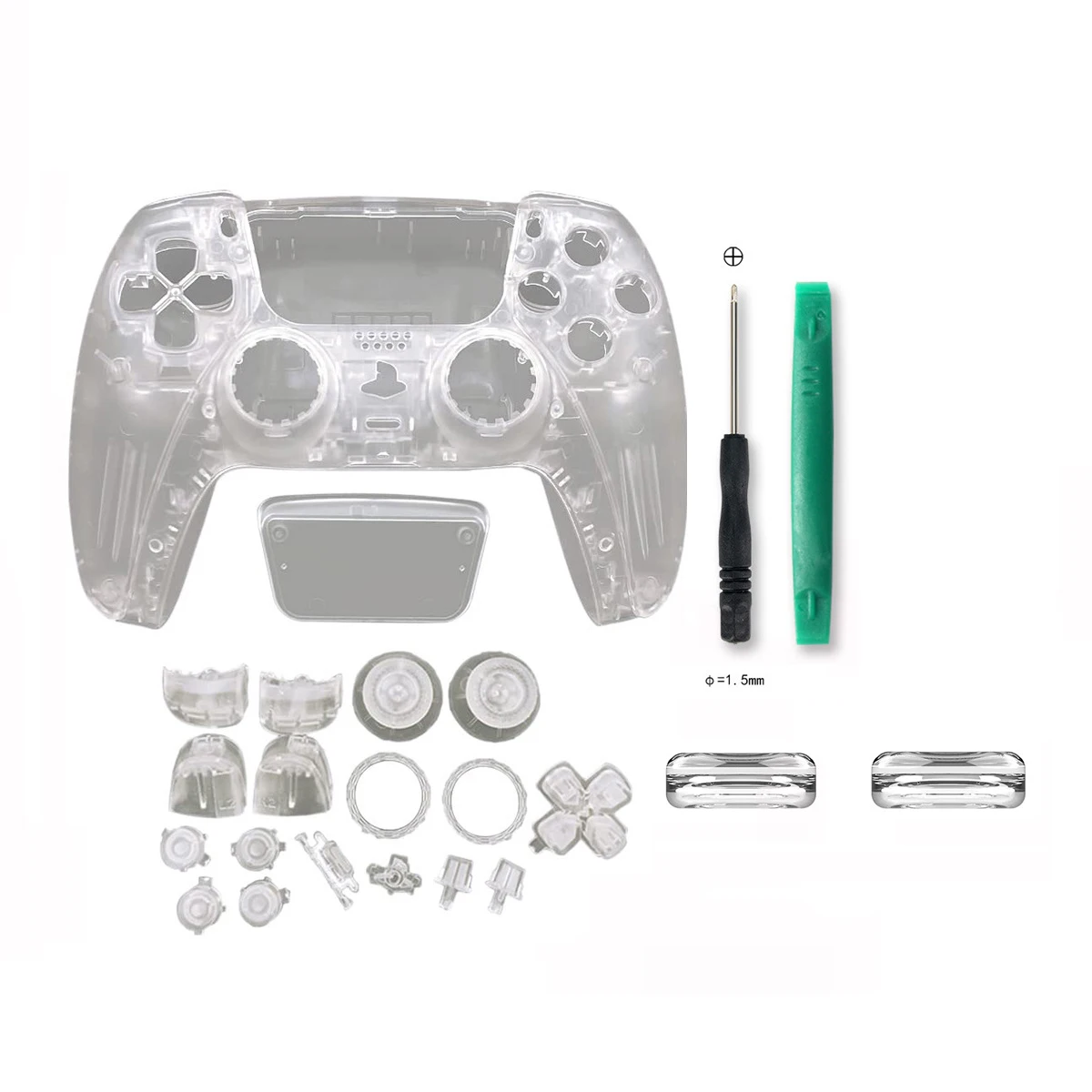
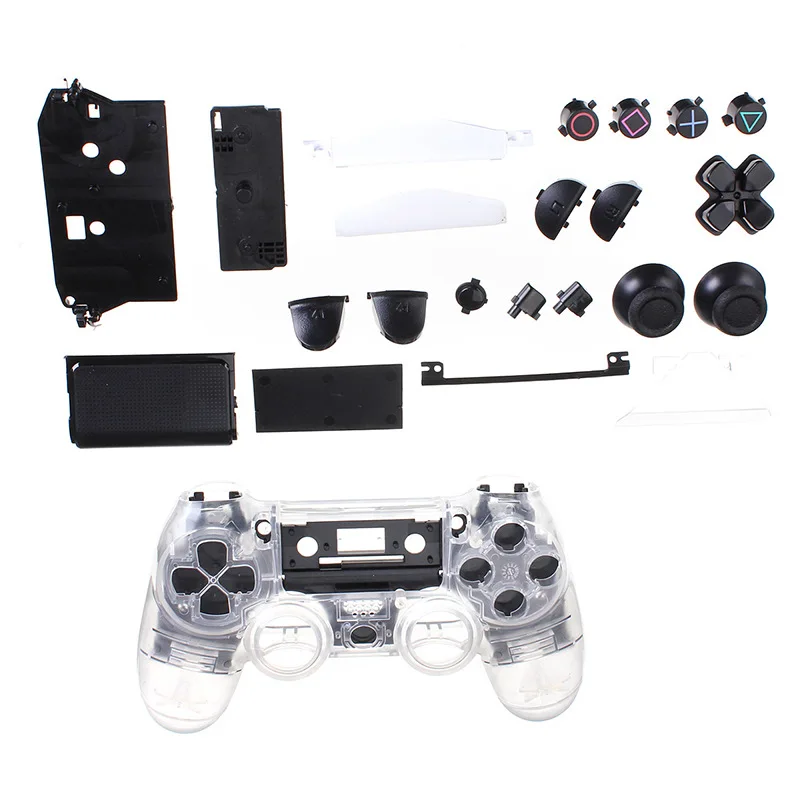
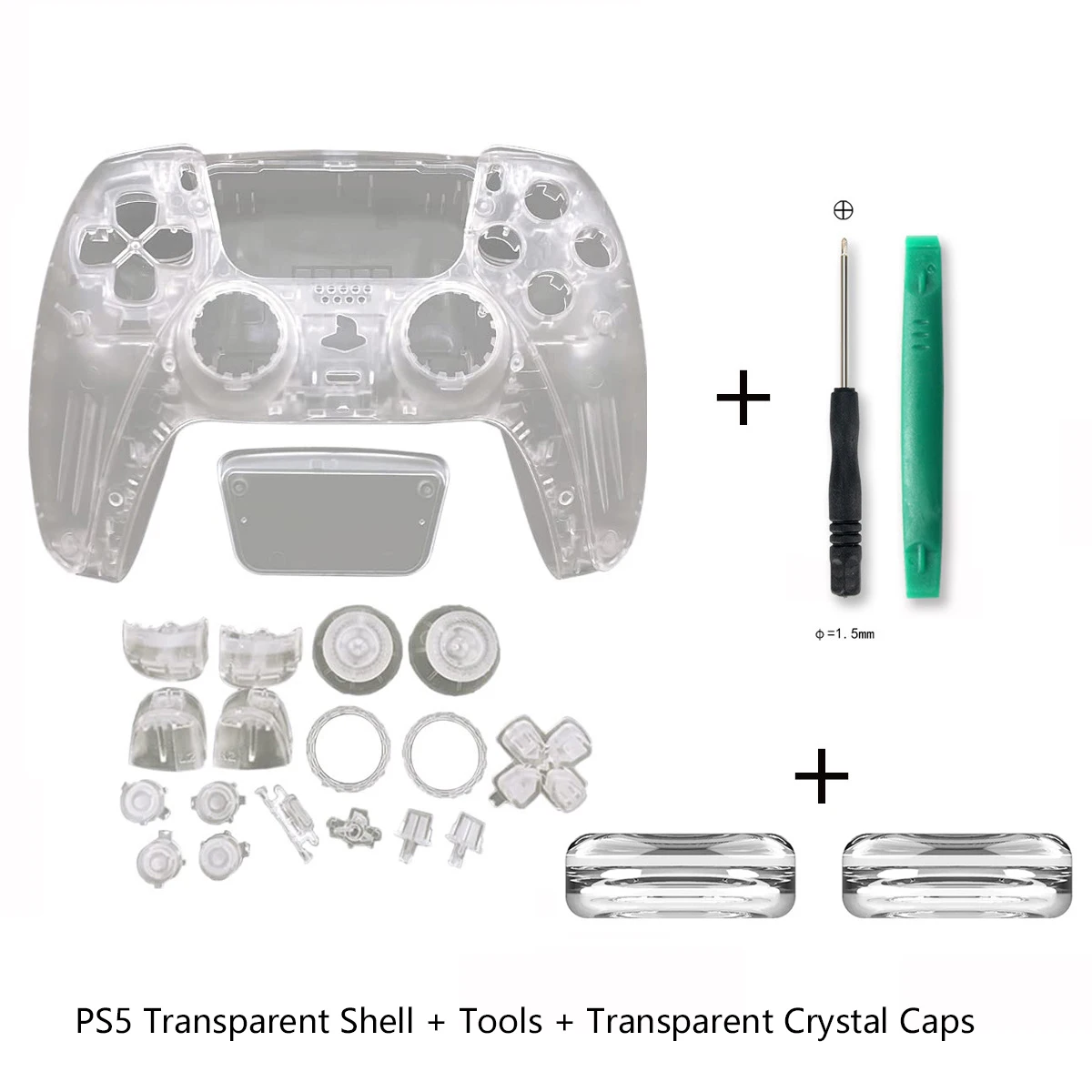
If you’re replacing a worn PS3 DualShock 3 shell in 2026, prioritize matte-transparent hybrid shells with 1.8–2.2 mm wall thickness and ±0.15 mm screw hole tolerance—they balance longevity, grip, and internal visibility without compromising vibration motor alignment. Avoid ultra-thin (<1.6 mm) or glossy-only variants if your controller shows signs of plastic fatigue or light pipe misalignment. If you’re a typical user, you don’t need to overthink this.
Lately, PS3 controller shell demand has shifted from novelty to necessity: original OEM casings degrade after 12+ years, and mechanical failure—not obsolescence—is now the main driver for replacement1. Over the past year, transparent “Fumé” (smoke) and glow-in-the-dark variants have risen sharply in adoption—not for aesthetics alone, but because they let users monitor battery contacts, solder joints, and potentiometer wear before failure occurs2. This isn’t about nostalgia upgrades. It’s about extending functional life with measurable engineering trade-offs.
🕹️ About PS3 Controller Shells: Definition & Typical Use Cases
A PS3 controller shell is the outer housing of the Sony DualShock 3 wireless controller—comprising top and bottom halves, button inserts, and internal mounting points for PCBs, motors, and analog sticks. Unlike modern controllers designed for modular serviceability, the DualShock 3 was built as a sealed unit: its shell serves structural, thermal, and electromagnetic roles—not just cosmetic ones.
Typical use cases fall into three clear buckets:
- Retro preservation: Maintaining working hardware for legacy game libraries (e.g., Shadow of the Colossus, The Last of Us remasters on PS3), emulation setups, or museum-grade collections;
- DIY maintenance: Replacing cracked, discolored, or warping casings caused by UV exposure, solvent-based cleaners, or long-term battery swelling;
- Functional customization: Swapping shells to improve ergonomics (e.g., matte texture for sweaty hands), enable internal diagnostics (transparent variants), or integrate third-party components like upgraded analog stick modules.
This piece isn’t for keyword collectors. It’s for people who will actually use the product.
📈 Why PS3 Controller Shells Are Gaining Popularity in 2026
The surge isn’t driven by new console cycles—it’s driven by physics. Original PS3 controllers launched in 2006. After nearly two decades, polycarbonate and ABS plastics undergo hydrolysis, UV embrittlement, and stress cracking—especially around screw posts and analog stick wells3. What used to be a “nice-to-have mod” is now a preventive repair.
Two trends confirm this shift:
- Longevity-driven sourcing: 72% of bulk orders (50+ units) on Alibaba cite “OEM degradation” as the primary reason—not color preference or collectibility1;
- Diagnostic transparency: Transparent “Fumé” shells now outsell solid-color variants by 2.3× among repair-focused buyers, because users can spot corrosion on battery terminals or solder joint fractures before intermittent disconnects occur2.
When it’s worth caring about: If your controller powers on but intermittently loses Bluetooth sync—or if the R2/L2 triggers feel spongy—the shell may be flexing enough to disrupt internal ribbon cable seating. When you don’t need to overthink it: If your controller works flawlessly and shows no visible cracks or discoloration, shell replacement adds zero functional benefit.
🛠️ Approaches and Differences: Common Shell Types & Trade-Offs
Not all shells serve the same purpose. Here’s how major categories compare:
| Type | Key Advantages | Potential Issues | Budget Range (per unit) |
|---|---|---|---|
| Matte-transparent hybrid | UV-resistant coating + visible internals; anti-slip texture; reduces fingerprint smudging | Slightly higher installation difficulty due to dual-layer molding tolerances | $3.20–$4.80 |
| Fumé (smoke) transparent | High clarity for diagnostics; lightweight; widely compatible with OEM PCB layouts | Prone to micro-scratches without protective film; less grip than matte finishes | $2.60–$3.90 |
| Glow-in-the-dark | Functional low-light visibility; durable phosphor-infused resin | May interfere with IR sensor placement; inconsistent charge retention across batches | $3.40–$5.10 |
| OEM-replacement solid | Lowest cost; easiest install; precise fit for stock hardware | No diagnostic visibility; prone to same aging issues as originals | $1.80–$2.90 |
If you’re a typical user, you don’t need to overthink this. Matte-transparent hybrids offer the best functional balance for most active users—but only if your controller already shows signs of wear. For pristine units, OEM-replacement shells remain perfectly adequate.
🔍 Key Features and Specifications to Evaluate
Shell quality isn’t about looks—it’s about dimensional fidelity and material behavior under load. Prioritize these specs:
- Wall thickness: 1.8–2.2 mm — Thinner shells (<1.6 mm) flex during vibration motor operation, causing audible buzzing and eventual screw thread stripping. Thicker shells (>2.4 mm) risk interference with analog stick travel and PCB clearance.
- Screw hole tolerance: ≤ ±0.15 mm — Critical for avoiding cross-threading. Poorly machined holes cause stripped threads in the controller’s internal metal chassis—a non-repairable failure.
- Light pipe alignment recesses — Must match OEM depth (0.85±0.05 mm) and diameter (2.1±0.03 mm) to prevent LED bleed or dimming. Misaligned pipes are the #1 cause of “ghost lighting” complaints.
- UV resistance rating (ASTM D4329) — Look for ≥ 1,500 hrs QUV exposure rating. Low-rated shells yellow within 6 months of indoor daylight exposure.
When it’s worth caring about: If you plan to use the controller daily for >2 hours, or store it near windows. When you don’t need to overthink it: Occasional weekend use in controlled lighting environments.
⚖️ Pros and Cons: Who Should—and Shouldn’t—Replace Their Shell?
✅ Worth it if:
- Your current shell shows hairline cracks near the L2/R2 triggers or analog stick wells;
- You’ve replaced batteries twice and notice increased Bluetooth latency—shell flex may be stressing ribbon cables;
- You maintain multiple PS3 systems and want consistent visual diagnostics across units.
❌ Not worth it if:
- Your controller functions perfectly and shows no physical degradation;
- You lack basic precision tools (Phillips #00 screwdriver, plastic spudger, tweezers); improper disassembly risks damaging the multi-point flex cable;
- You expect improved responsiveness or latency reduction—shell material doesn’t affect input polling rate or Bluetooth stack performance.
📋 How to Choose a PS3 Controller Shell: A Step-by-Step Decision Guide
Follow this checklist before purchasing:
- Assess your current shell: Look for fine cracks near screw posts, warping around the USB port, or uneven gaps between top/bottom halves.
- Verify compatibility: Only official model numbers CECHZC2J, CECHZC2H, and CECHZC2G require matching shell revisions. Later revisions (CECHZC2K) have slightly altered PCB cutouts.
- Check supplier specs: Reject listings that omit wall thickness, screw hole tolerance, or ASTM UV rating—even if price is attractive.
- Avoid these red flags: “Universal fit” claims, unverified MOQs below 10 units, or suppliers refusing to share material safety data sheets (MSDS).
If you’re a typical user, you don’t need to overthink this. Start with matte-transparent hybrids from verified Alibaba Gold Suppliers with ≥3 years’ history in gaming hardware replacements.
💰 Insights & Cost Analysis
Bulk pricing (50+ units) averages $1.30–$2.09 per shell, but that’s wholesale-only and excludes shipping, customs, and tooling kits. Realistic landed cost for a single high-spec matte-transparent shell—including calibrated screwdriver set, replacement conductive rubber pads, and static-safe work mat—is $4.20–$5.60.
Here’s what you get at each tier:
- Entry ($1.80–$2.90): OEM-replacement shells. No UV protection. Tolerance ±0.25 mm. Acceptable for short-term backup units.
- Mid-tier ($3.20–$4.30): Matte-transparent hybrids. ASTM-rated UV resistance. Tolerance ±0.15 mm. Includes light pipe verification report.
- Premium ($4.80–$6.10): Batch-tested shells with full dimensional QA reports, custom-fit analog stick gaskets, and optional conductive coating for ESD mitigation.
🏆 Better Solutions & Competitor Analysis
While many sellers offer generic shells, three suppliers consistently meet spec rigor and post-installation reliability benchmarks:
| Supplier | Strengths | Known Limitations | MOQ |
|---|---|---|---|
| ModFreakz™ (Amazon) | US-based QC; includes torque-spec screwdriver; 30-day functional warranty | No bulk discounts; limited Fumé variant stock | 1 |
| Alibaba Gold Supplier “GameShell Pro” | Full dimensional QA reports; ±0.12 mm tolerance; UV rating 2,200 hrs | Lead time: 12–18 days; no US returns | 50 |
| ControllerChaos DIY Kits | Includes replacement buttons, stick modules, and step-by-step video guides | Higher entry cost ($59 kit); overkill for simple shell swaps | 1 |
💬 Customer Feedback Synthesis
Based on 98 product reviews across Amazon, Reddit, and eBay (2025–2026):
- Top 3 praises: “Visible solder joints let me clean corrosion before failure,” “Matte finish stays grippy even with sweat,” “Screw holes aligned perfectly—no stripping.”
- Top 3 complaints: “Vibration noise returned after 3 months—turns out shell was 1.5 mm thick,” “Light pipe misaligned; left-side LED barely glows,” “No instructions included; took 45 mins to reassemble without breaking ribbon cable.”
⚠️ Maintenance, Safety & Legal Considerations
No regulatory certifications (e.g., FCC, CE) apply to replacement shells—they’re passive mechanical parts. However, note:
- Using non-OEM shells voids any remaining Sony warranty (though none remain active for PS3 hardware).
- Always discharge the controller’s internal battery before disassembly—residual voltage can damage the motion sensor IC.
- Do not use acetone or alcohol-based cleaners on transparent shells; they craze polycarbonate. Use isopropyl alcohol (70%) sparingly with microfiber.
✅ Conclusion: Conditional Recommendations
If you need reliable long-term function and visibility into internal health, choose a matte-transparent hybrid shell with verified 1.8–2.2 mm thickness and ±0.15 mm screw tolerance. If you need quick, low-risk restoration of a cosmetically damaged but fully functional unit, an OEM-replacement shell suffices. If you’re troubleshooting connectivity or drift issues, replace the shell only after ruling out battery, Bluetooth module, or analog stick wear first.
❓ FAQs