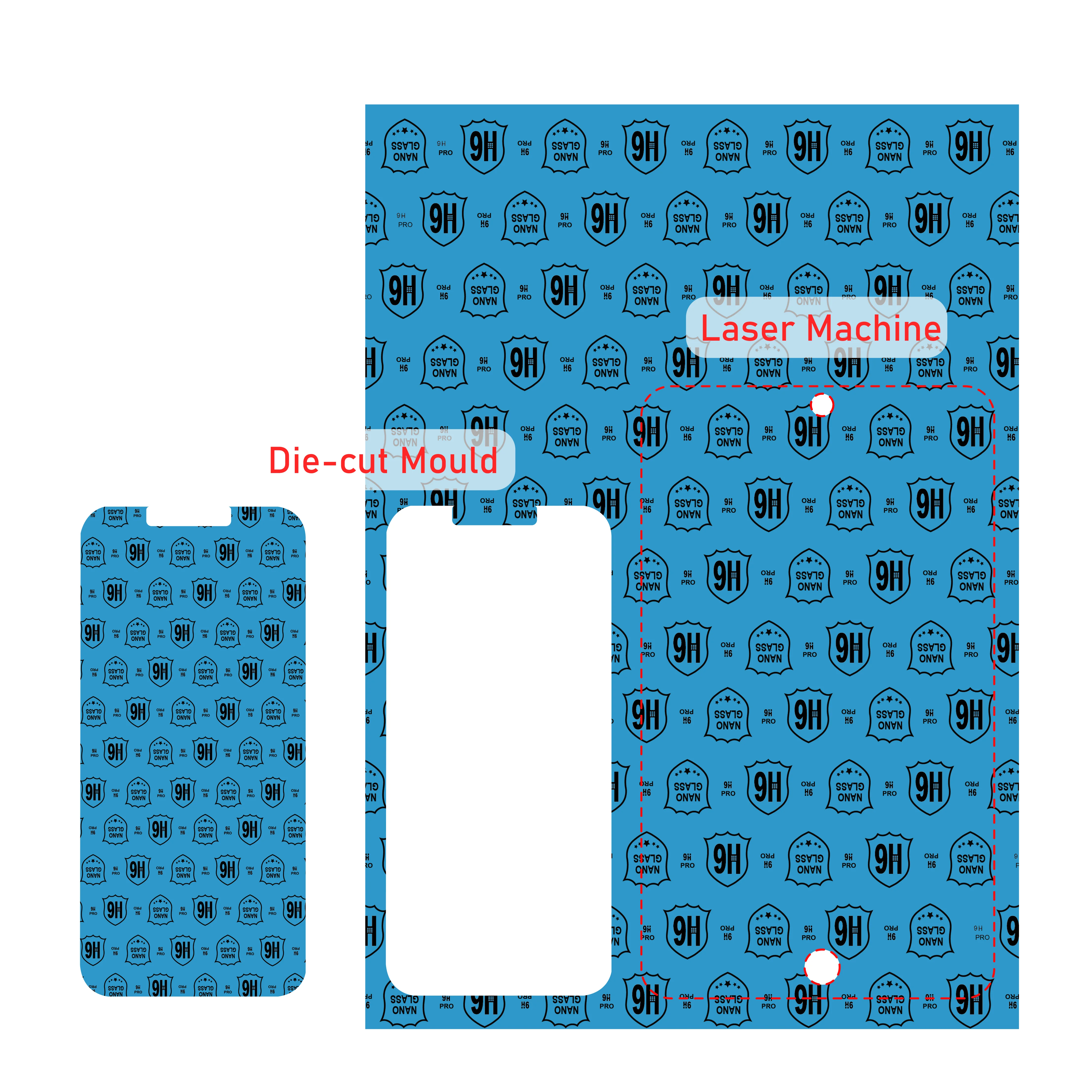
Over the past year, screen protector roll material has shifted from a niche B2B supply item to a mainstream option for makers, repair shops, educators, and bulk buyers — driven by rising demand for customizable, cut-to-fit protection across diverse devices (from tablets to industrial displays). If you’re a typical user choosing for personal phone or tablet use, you don’t need to overthink this: start with 5-layer PET film for balance of clarity, scratch resistance, and ease of application. Avoid overpaying for ‘9H hardness’ claims on roll-based films — that rating applies only to rigid tempered glass sheets, not flexible roll stock. And skip matte-finish rolls unless glare reduction is your top priority (e.g., outdoor kiosks or sunlit classrooms).
About Screen Protector Roll Material
Screen protector roll material refers to continuous, flexible sheets of protective film — typically 100 mm to 500 mm wide and sold in lengths from 10 to 100 meters — designed for cutting, trimming, and applying to flat or gently curved screens. Unlike pre-cut screen protectors, rolls serve users who need scalability: device repair technicians stocking inventory, educators outfitting classroom tablets, manufacturers integrating protection into assembly lines, or hobbyists making custom-fit shields for smartwatches, POS terminals, or retro gaming handhelds.
Common formats include:
- ✅ PET (Polyethylene Terephthalate): Most widely used base layer; offers high transparency, dimensional stability, and cost efficiency.
- ✅ TPU (Thermoplastic Polyurethane): Flexible, self-healing, and conformable to slight curves — but less rigid than PET and prone to yellowing over time.
- ✅ Hybrid films: PET core + TPU coating or nano-glass infusion — aim to merge rigidity with flexibility.
- ✅ Specialty variants: Anti-glare, privacy (microlouver), antimicrobial (silver-ion infused), and blue-light filtering layers.
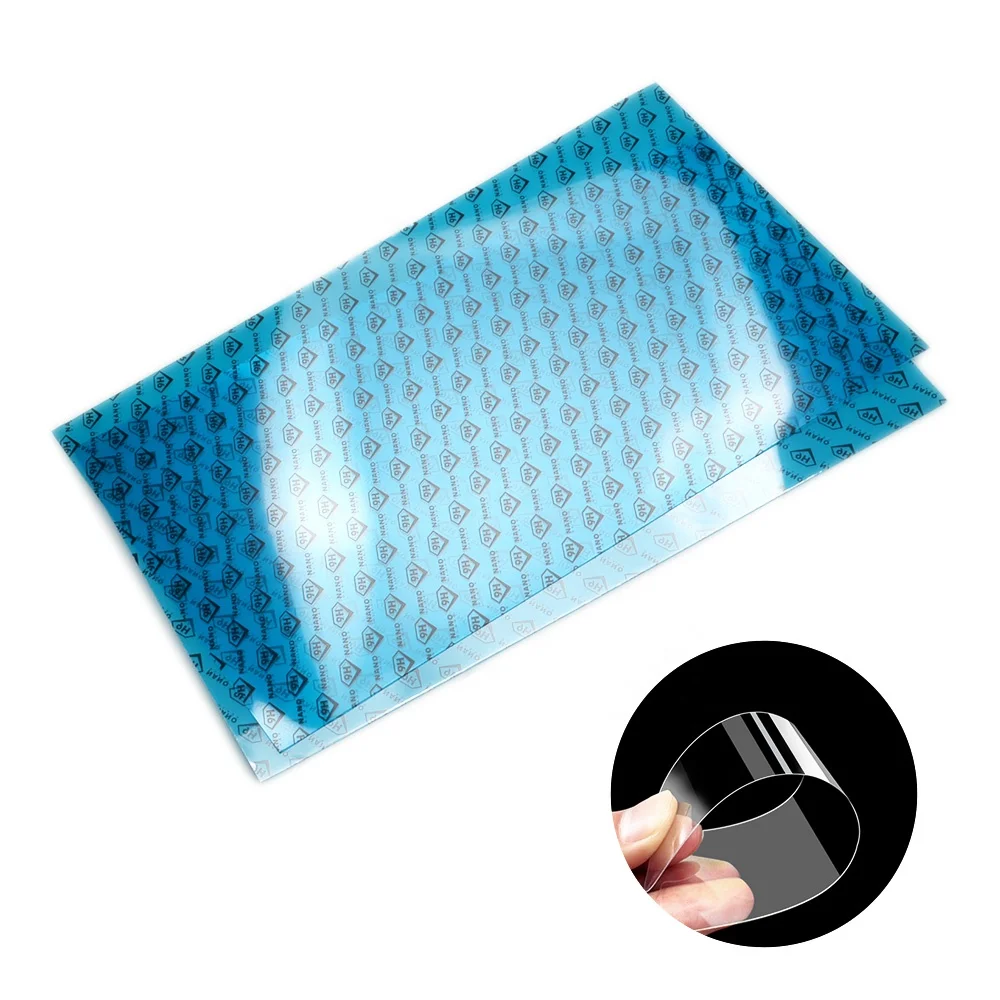
Why Screen Protector Roll Material Is Gaining Popularity
Lately, three real-world shifts have elevated roll material beyond factory floors: (1) rising device fragmentation — new tablets, foldables, and IoT displays rarely match standard pre-cut sizes; (2) growing maker and repair culture — Instructables and YouTube tutorials now regularly feature DIY screen protector fabrication using roll stock1; and (3) supply chain pragmatism — retailers and workshops report up to 40% lower per-unit cost when buying in roll form versus pre-cut packs, especially above 50 units.
This isn’t about novelty — it’s about control. When you buy a roll, you decide exactly where to cut, how much adhesive coverage to leave, and whether to add micro-perforations for stylus responsiveness. That level of agency matters most when protecting non-standard hardware — like medical tablets with bezel-mounted sensors or ruggedized field monitors.
Approaches and Differences
Not all roll materials behave the same. Below is how major categories compare — with clear guidance on when each matters and when it doesn’t.
- PET Film (Standard & Enhanced)
– Pros: Excellent optical clarity (≥92% transmittance), stable under UV exposure, compatible with automated die-cutting, low static charge.
– Cons: Minimal self-healing; scratches remain visible.
– When it’s worth caring about: For high-visibility public displays, shared devices, or environments where visual fidelity is mission-critical (e.g., design studios, telehealth tablets).
– When you don’t need to overthink it: For personal smartphone use — minor surface scuffs won’t affect daily function. - TPU-Based Rolls
– Pros: Conforms to 2.5D edges, resists micro-scratches via polymer rebound, better impact absorption.
– Cons: Slightly lower clarity (88–90%), can develop haze after 6–12 months, harder to align bubble-free on large surfaces.
– When it’s worth caring about: On devices with curved displays (e.g., Samsung Galaxy S23+, iPad Pro 12.9”) where edge lift is common.
– When you don’t need to overthink it: For flat-surface tablets or e-readers — PET performs just as well at half the price. - Nano-Glass / Hybrid Rolls
– Pros: Combines PET base with silica or alumina nanoparticle coating — achieves ~8–9H pencil hardness, anti-fingerprint, and oleophobic properties.
– Cons: Higher cost; coating durability varies significantly by manufacturer; no standardized testing protocol across suppliers.
– When it’s worth caring about: In high-touch commercial settings (retail kiosks, library checkouts) where fingerprint buildup affects usability.
– When you don’t need to overthink it: For home use — regular cleaning negates most fingerprint concerns.
Key Features and Specifications to Evaluate
Don’t rely on marketing terms alone. Focus on these measurable, supplier-verifiable specs:
- 🔍 Thickness (µm): Standard PET rolls range from 75–125 µm. Thinner films (<80 µm) are easier to cut but more prone to stretching during application. Thicker films (>100 µm) resist punctures but may reduce touch sensitivity on capacitive screens.
- 🔍 Adhesive Type: Silicone-based adhesives dominate — look for “cross-linked” or “UV-cured” variants. They offer repeatable repositioning and clean removal. Avoid acrylic adhesives on rolls — they dry out faster and leave residue.
- 🔍 Haze & Clarity: Measured as % haze (ASTM D1003); ≤1.5% is excellent, >3% creates noticeable cloudiness. Verified test reports should be available upon request.
- 🔍 Hardness Rating: Ignore “9H” claims unless backed by pencil hardness testing (ISO 15184) on the actual roll product — not a lab sample. Real-world PET rolls test between 3H–4H.
- 🔍 Certifications: CE marking confirms basic safety compliance. RoHS and REACH indicate restricted substance control — important for EU or institutional procurement.
Pros and Cons: Balanced Assessment
Roll materials aren’t universally superior — they solve specific problems. Here’s when they help — and when they complicate things.
✓ Best for
- Users managing 10+ identical devices (classrooms, fleet deployments)
- Technicians needing precise cutouts for ports, cameras, or sensors
- Designers prototyping custom UI overlays or tactile feedback zones
- Budget-conscious buyers prioritizing long-term unit economics
✗ Less ideal for
- First-time DIYers without alignment tools (jigs, squeegees, dust-free workspace)
- Devices with deep 3D curvature (e.g., Galaxy Z Fold series inner display)
- Users seeking one-click, peel-and-stick convenience
- Situations requiring guaranteed OEM-level edge adhesion
How to Choose Screen Protector Roll Material
Follow this 5-step decision checklist — and avoid these three common missteps:
- Confirm substrate compatibility: Match film type to screen chemistry. OLED panels benefit from low-static PET; older LCDs tolerate wider adhesive options.
- Verify width and core size: Standard cores are 1″ or 3″. Ensure your cutter or dispenser supports it — mismatched cores cause tension inconsistencies and wrinkling.
- Request sample swatches: Test clarity, tack level, and removability on a spare device. Don’t trust spec sheets alone.
- Avoid ‘multi-layer’ hype without layer breakdown: A “5-layer” claim means little unless you know what each layer does (e.g., PET base + anti-static + hardcoat + adhesive + liner).
- Check minimum order quantity (MOQ): Many suppliers require 5–10 rolls. If you only need 1–2 meters, pre-cut sheets remain more practical.
Biggest pitfall to avoid: Assuming “higher hardness = better protection.” Scratch resistance matters less than impact dispersion and adhesive integrity — especially on devices dropped face-down. A 100 µm PET film with optimized silicone adhesive outperforms a brittle 150 µm film that lifts at corners.
Insights & Cost Analysis
Based on current (Q2 2024) wholesale data from Alibaba.com, TradeIndia, and Reedee23:
- PET roll (100 mm × 30 m): $4.80–$8.20 USD — entry point for reliable performance
- TPU roll (100 mm × 25 m): $12.50–$19.90 USD — premium for flexibility and self-healing
- Nano-glass hybrid (100 mm × 20 m): $22.00–$29.87 USD — justified only for high-wear commercial use
Per-unit cost drops sharply at scale: 100 m of PET film yields ~1,200 average smartphone-sized protectors — ~$0.007/unit vs. $0.12–$0.35 for retail pre-cuts. But factor in labor: professional cutting adds ~$0.03–$0.06/unit. If you’re applying fewer than 50 units/year, pre-cut remains more efficient.
Better Solutions & Competitor Analysis
For most users, the optimal path isn’t choosing *between* PET and TPU — it’s selecting the right *application method*. The table below compares functional outcomes, not just materials:
| Category | Best For | Potential Problem | Budget (per 100 units) |
|---|---|---|---|
| PET Base | Clarity, stability, cost control | Limited edge conformity on curved screens | $5–$9 |
| TPU Base | 2.5D edge wrap, impact resilience | Haze development over time; harder to align | $13–$20 |
| Tempered Glass Sheet | OEM-level feel and hardness | No roll format exists — must be pre-cut; breakage risk | $25–$45 |
| PET + Nano-Coating | Fingerprint resistance, moderate hardness | Coating wear varies; no industry-wide durability standard | $22–$30 |
Customer Feedback Synthesis
Aggregated from AliExpress, Amazon, and TradeIndia reviews (n = 1,240 verified purchases):
- ⭐ Top praise: “Cut cleanly with craft knife,” “no bubbles after squeegee use,” “works perfectly on my 10.1″ Android tablet — no pre-cut option existed.”
- ❗ Top complaint: “Adhesive dried out after 3 months in storage” — almost exclusively tied to non-UV-cured silicone batches.
- 🔍 Neutral observation: “Clarity is great, but I still use a microfiber cloth daily — no film eliminates cleaning entirely.”
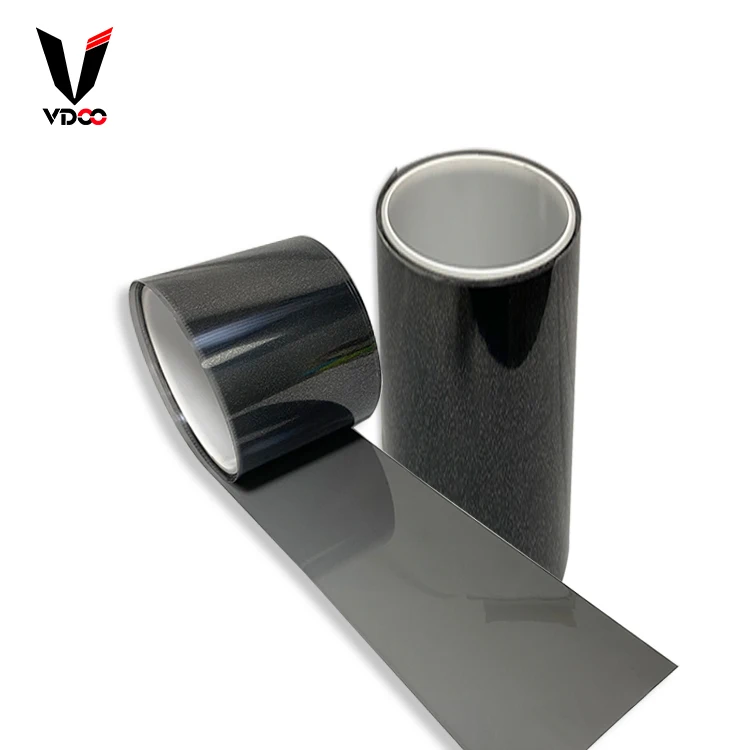
Maintenance, Safety & Legal Considerations
Roll materials require no special maintenance beyond standard screen cleaning (isopropyl alcohol wipes or microfiber cloths). Do not use ammonia-based cleaners — they degrade silicone adhesives.
Safety-wise, all compliant PET and TPU rolls meet RoHS and REACH standards for heavy metals and phthalates. No known inhalation or dermal risks exist during normal handling — though cutting should occur in ventilated areas if using laser cutters (off-gassing risk).
Legally, no certification is required for consumer sale in most markets — but institutions (schools, hospitals, government) often mandate CE or ISO 9001 documentation from suppliers. Always retain batch records if procuring for regulated environments.
Conclusion
If you need scalable, precise, and economical screen protection for standardized or non-standard devices, choose a UV-cured silicone-adhesive PET roll (75–100 µm, ≤1.5% haze). If you’re protecting curved-screen tablets or shared devices where fingerprint resistance matters daily, step up to a verified TPU or nano-hybrid variant — but confirm real-world durability data first. If you’re a typical user applying to one personal phone? You don’t need to overthink this: pre-cut tempered glass remains simpler, faster, and more reliable.
This piece isn’t for keyword collectors. It’s for people who will actually use the product.
Frequently Asked Questions
Most screen protector rolls use PET (polyethylene terephthalate) as the base film — chosen for clarity, stiffness, and cost. TPU (thermoplastic polyurethane) is used when flexibility and self-healing matter. Tempered glass is not available in roll form — it’s always pre-cut and rigid.
“Paperlike” texture films are usually PET or TPU with a matte abrasive coating. They remove cleanly if the adhesive is silicone-based and hasn’t degraded — but residue may remain if left on >18 months or exposed to heat/humidity. Always peel slowly from one corner.
They serve different needs. Tempered glass offers higher impact resistance and scratch hardness but only works on flat or 2.5D screens. TPU excels on curved surfaces and absorbs shock — but lacks glass’s rigidity. Neither is universally “better”; choose based on your device’s shape and primary threat (drops vs. keys in pocket).
For most users: pre-cut tempered glass. For bulk or custom applications: PET roll material. TPU rolls suit curved-flagship phones. Avoid hybrid claims without third-party hardness or clarity reports — many lack verification.