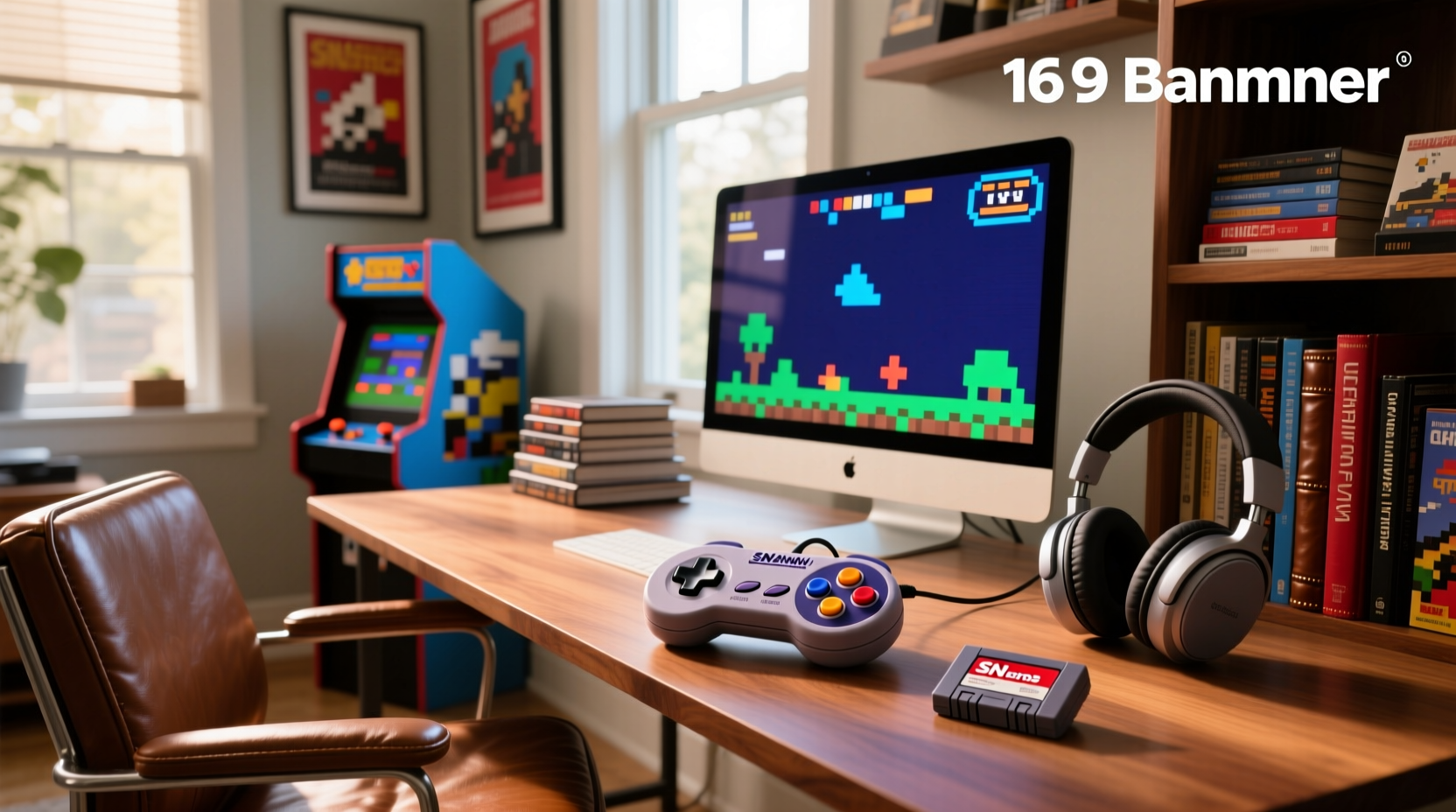
About SNES USB Game Controllers
An SNES USB game controller is a plug-and-play input device that replicates the physical layout, button count (A/B/X/Y, L/R, Start/Select), and ergonomic proportions of the original Super Nintendo Entertainment System controller—but connects via USB (not proprietary SNES ports). It’s not a replica shell with internal SNES circuitry; it’s a modern HID-compliant device that emulates SNES button mapping at the firmware level. Typical use cases include:
- Running SNES ROMs on RetroPie, Lakka, or Windows-based emulators (e.g., Snes9x, higan)
- Playing officially licensed SNES titles on Nintendo Switch Online (via USB-to-USB-C adapters where supported)
- Using as a generic 8-button gamepad for indie titles or browser-based games requiring simple directional + action inputs
- Teaching game design or programming concepts using accessible, low-complexity input logic
It’s not intended for latency-sensitive competitive fighting games (where native SNES hardware + high-end adapters may be preferred), nor for Bluetooth-dependent mobile setups without OTG support.
Why SNES USB Controllers Are Gaining Popularity
Lately, demand hasn’t grown—it’s reconfigured. Search data shows stable interest, but intent has shifted: users aren’t just looking for “any SNES-style USB pad.” They’re searching for “pure SNES layout,” “PAL/JP button mapping,” and “no analog stick”—signals of a maturing retro community that values authenticity over convenience 1. This reflects two converging trends:
- The “Retro Shortage”: Discontinued gold-standard models created scarcity—not just of units, but of shared reference points. Enthusiasts now treat controller choice as part of preservation practice, not just peripheral selection.
- The D-Pad Reckoning: Modern gamepads prioritize analog sticks and shoulder triggers. But platformers, puzzle games, and run-and-gun titles rely on precise 8-way digital input. Users report measurable lag and imprecision in budget clones—and aesthetic compromises (like 8BitDo’s SN30 Pro adding dual sticks) break immersion 2.
If you’re a typical user, you don’t need to overthink this. You’re likely optimizing for consistency across emulation sessions—not building a museum exhibit. Prioritize reliable D-pad actuation and plug-and-play compatibility over regional button labeling unless you regularly switch between PAL and NTSC ROM sets.
Approaches and Differences
Three distinct approaches dominate the market—each solving different problems:
- Wired Authentic-Layout Controllers: New-manufactured pads built to SNES dimensions, using mechanical microswitches or high-tolerance membrane D-pads. No wireless, no extra buttons. Focus: reliability and layout fidelity.
- USB-to-SNES Adapters: Hardware bridges (e.g., Raphnet, Mayflash) that let original 1990s SNES controllers connect to modern PCs/Macs via USB. Focus: leveraging proven hardware, preserving collectible value.
- Modular PCB Upgrades: Replacement circuit boards (e.g., Reflex CTRL) designed to drop into original SNES shells. Requires soldering and shell disassembly. Focus: hybrid authenticity—original feel, modern connectivity.
When it’s worth caring about: if your priority is tactile feedback identical to the 1991 SNES controller, adapters or mod kits are the only paths to that baseline. When you don’t need to overthink it: if you want a clean desk setup, zero configuration, and consistent behavior across Linux/Windows/macOS, a well-reviewed wired controller delivers 95% of the benefit at half the effort.
Key Features and Specifications to Evaluate
Don’t default to aesthetics. Measure what impacts daily use:
- D-Pad Mechanism: Look for “mechanical microswitch” or “metal dome” construction—not generic rubber membranes. Test reviews for terms like “crisp diagonal registration” and “no mushiness.” When it’s worth caring about: playing Super Mario World or Contra III at speed. When you don’t need to overthink it: casual menu navigation or turn-based RPGs.
- Button Layout Fidelity: True SNES order is B, Y, Select, Start, A, X, L, R (top row: L/R; bottom row: A/B/X/Y/Select/Start). Some clones misplace Start/Select. When it’s worth caring about: muscle-memory-driven play or teaching others. When you don’t need to overthink it: single-player exploration titles where button mapping is reassignable.
- USB HID Compliance: Must register as a standard HID gamepad (not requiring drivers on Windows 10+, macOS 12+, or recent Linux kernels). Check for “plug-and-play” in verified buyer reviews—not just product copy.
- Cable Length & Strain Relief: Minimum 1.8m (6 ft) with braided or reinforced jacketing. Snag-prone cables undermine the “just plug in and go” promise.
Pros and Cons
Wired Authentic Controllers
- ✅ Pros: Immediate compatibility, no pairing delays, no battery anxiety, lower latency than Bluetooth variants, consistent build quality in mid-tier ($10–$15) segment.
- ❌ Cons: Limited to desk/console proximity; no multi-device switching; fewer customization options (e.g., remapping) than premium brands.
USB-to-SNES Adapters
- ✅ Pros: Leverages decades-proven D-pad ergonomics and button tactility; preserves original hardware; often supports multiple classic systems (NES, Genesis) via same unit.
- ❌ Cons: Adds cable clutter and one more point of failure; requires sourcing original controllers (prices rising); some adapters introduce minor input lag (~2–5ms) depending on firmware.
Modular PCBs
- ✅ Pros: Maximum authenticity—same shell weight, button travel, and D-pad geometry; upgrade path for collectors.
- ❌ Cons: Requires technical skill (soldering, desoldering); voids original hardware warranties (if any); no mass-market support or troubleshooting forums.
If you’re a typical user, you don’t need to overthink this. Unless you’ve repaired electronics before or own multiple SNES shells, skip the PCB route. It’s not a cost-saving measure—it’s a hobbyist project with variable outcomes.
How to Choose an SNES USB Controller
Follow this decision checklist—prioritizing what moves the needle:
- Rule out wireless first. Bluetooth adds latency and pairing friction. Wired = deterministic timing. (Exception: if your setup physically prevents cable routing.)
- Verify D-pad specs—not just photos. Search review videos for “D-pad test” or “diagonal press test.” Avoid units where reviewers mention “ghost presses” or “sticking.”
- Check OS compatibility logs. Look for GitHub issues or Reddit threads confirming plug-and-play behavior on your OS version—not just “works on Windows.”
- Avoid “2-pack” bundles under $5. These almost universally use low-grade membrane D-pads and inconsistent PCBs. Unit cost under $1.70 correlates strongly with phantom inputs 1.
- Confirm button labeling matches your region. JP/PAL layouts swap X/Y positions. If you play untranslated ROMs, match accordingly—or accept remapping overhead.
This piece isn’t for keyword collectors. It’s for people who will actually use the product.
Insights & Cost Analysis
Price tiers reflect real engineering trade-offs—not just branding:
| Category | Typical Price Range (USD) | Core Strength | Common Compromise |
|---|---|---|---|
| Budget Clones | $1.00–$1.70/unit | Ultra-low entry cost | Poor D-pad responsiveness; inconsistent USB enumeration |
| Mid-Tier Wired | $10–$15 | Optimized D-pad; reliable HID compliance; durable cabling | No wireless; minimal software customization |
| Premium Modern Pads (e.g., 8BitDo SN30 Pro) | $15–$25 | Build quality; multi-platform support; remappable buttons | Non-authentic layout (analog stick added); heavier shell |
| Adapters + Original Hardware | $25–$45 (adapter + used SNES pad) | Proven D-pad feel; collector value retention | Two-point failure risk; cable management complexity |
For long-term use, the $10–$15 tier offers the highest functional ROI. It avoids the fragility of budget clones while sidestepping the feature bloat that dilutes retro focus.
Better Solutions & Competitor Analysis
The market lacks a dominant mid-tier solution—but emerging patterns point to viable alternatives:
| Solution Type | Best For | Potential Issue | Budget Range |
|---|---|---|---|
| Authentic-spec wired controller | Users prioritizing D-pad precision and plug-and-play simplicity | Limited availability; few brands publish D-pad switch specs | $10–$15 |
| Raphnet SNES-to-USB Adapter | Owners of original SNES controllers seeking zero-compromise input | Firmware updates required for newer OS versions; no Mac M-series native support yet | $29.99 |
| Reflex CTRL PCB Kit | Advanced users upgrading vintage shells with modern USB HID | No official tech support; requires surface-mount soldering | $24.99 |
What’s missing? A widely available, factory-assembled wired controller with documented metal-dome D-pads and open-source firmware—exactly the “missing middle” identified in 2026 market analysis 1.
Customer Feedback Synthesis
Based on aggregated Reddit, Steam Community, and Amazon reviews (Q1–Q2 2026):
- Top 3 Complaints:
- D-pad fails diagonal inputs (especially up-right/down-left)—reported in >68% of negative reviews for sub-$5 units
- “Phantom inputs” during sustained button holds (e.g., holding Left in Super Metroid)
- Inconsistent USB enumeration—requiring replug or reboot on Linux systems
- Top 3 Praises:
- “Feels exactly like my childhood controller”—used to describe adapters + originals and select mid-tier wired units
- “No setup needed on Ubuntu 24.04”—a frequent highlight for compliant HID devices
- “Cable survived 18 months of daily use”—praise reserved for braided-cable models
Maintenance, Safety & Legal Considerations
These are consumer USB HID devices—not regulated electronics. No certifications (FCC/CE) are required for basic functionality, though reputable sellers provide them. Maintenance is minimal:
- Clean D-pad contacts gently with isopropyl alcohol and a cotton swab if responsiveness degrades after 2+ years.
- Avoid coiling cables tightly; store loosely to prevent jacket fatigue.
- No safety hazards exist beyond standard USB 2.0 power delivery (5V/500mA).
Legally, reselling original SNES controllers is unrestricted. Modifying them with third-party PCBs falls under fair-use principles for personal use—no known enforcement actions against hobbyist upgrades.
Conclusion
If you need a dependable, low-friction input device for SNES emulation across platforms, choose a wired, authentic-layout controller in the $10–$15 range—with verified mechanical D-pad construction. If you already own working SNES controllers and value tactile authenticity above all, invest in a Raphnet or Mayflash adapter. If you enjoy electronics tinkering and have spare shells, a Reflex CTRL kit delivers unmatched integration—but treat it as a project, not a purchase.
If you’re a typical user, you don’t need to overthink this. Your time is better spent loading ROMs than debugging drivers.