If you’re a typical user, you don’t need to overthink this. Over the past year, controller drift has dropped from a widespread frustration to a solvable engineering problem—thanks to TMR (Tunnel Magnetoresistance) sensors now embedded in mid- and high-tier models. For casual and competitive players alike, prioritize drift-resistant analog sticks, modular back paddles, and recyclable housing materials—not brand loyalty or RGB overload. Skip premium wireless latency claims unless you’re playing rhythm or fighting games at tournament level. If you use one controller across PC, PlayStation, and Nintendo Switch, verify cross-platform firmware updates—not just Bluetooth pairing. This piece isn’t for keyword collectors. It’s for people who will actually use the product.
About Gaming Controllers: Definition and Typical Use Cases
Gaming controllers are input devices designed to translate physical motion and button presses into digital commands for video games. Unlike keyboards and mice, they emphasize tactile feedback, ergonomics, and spatial control—making them essential for platformers, racing sims, fighting titles, and open-world adventures. A “typical” use case spans three contexts: console play (PS5, Xbox Series X|S, Nintendo Switch), PC gaming via wired or low-latency wireless protocols, and cloud streaming (GeForce NOW, Xbox Cloud). In all cases, reliability—not novelty—is the baseline requirement.
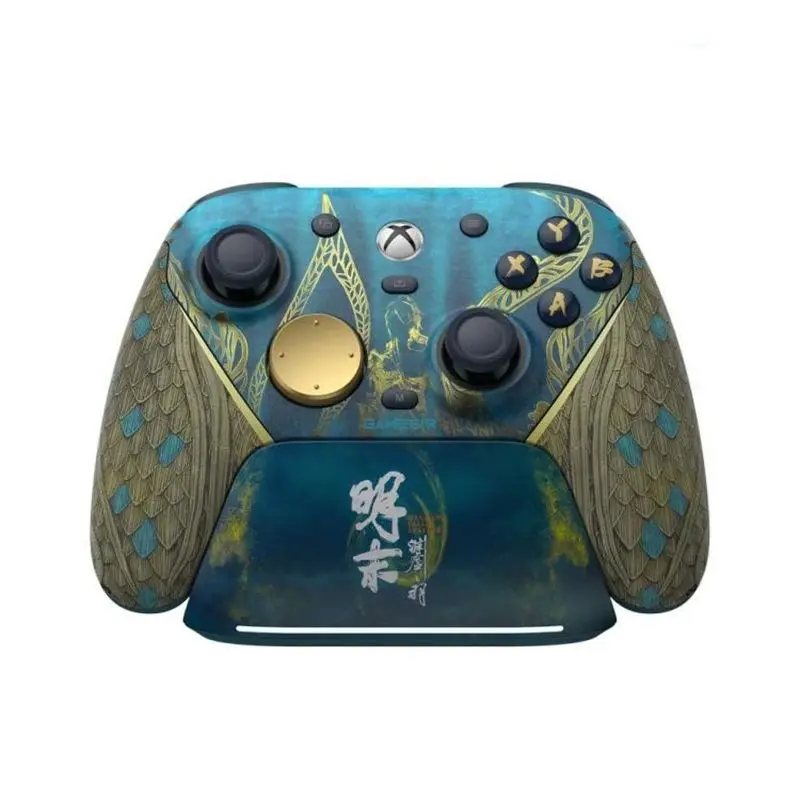
Why Gaming Controllers Are Gaining Popularity
Lately, interest in gaming controllers hasn’t just grown—it’s matured. Google Trends data shows search volume for “games controllers” peaked at 76 in January 2026, likely reflecting post-holiday upgrades and new console cycle anticipation 2. But more telling is what’s driving that interest: not just new hardware launches, but concrete improvements in longevity, customization, and environmental accountability. The global market valuation hit $4.51 billion in 2026—with projected growth to $8.66 billion by 2036 (6.75% CAGR)—indicating sustained demand rooted in utility, not fads 1. When it’s worth caring about: if you replace controllers every 12–18 months due to drift or button wear, 2026’s engineering shifts directly reduce long-term cost and friction. When you don’t need to overthink it: if you only play 2–3 hours weekly on a single platform and rarely notice stick drift, basic certified third-party models remain perfectly functional.
Approaches and Differences
Today’s controller landscape splits into three broad approaches—each solving different problems:
- Standard OEM Controllers (e.g., PS5 DualSense, Xbox Wireless Controller): Optimized for ecosystem integration, haptics, and wide software support. Pros: seamless firmware updates, strong battery life, consistent build quality. Cons: limited modularity, no TMR sensors in base models, non-recyclable plastics in older batches.
- TMR-Enabled Third-Party Controllers (e.g., newer models from PowerA, Hori, and niche brands like SCUF’s 2026 refresh): Replace traditional potentiometer-based sticks with Tunnel Magnetoresistance sensors. Pros: near-zero drift over 3+ years, measurable precision gains in analog range (<±0.3% error vs. ±2.1% in legacy sticks). Cons: slightly higher price point ($65–$95), fewer official game integrations (e.g., adaptive triggers may not map identically).
- Modular Pro Controllers: Feature swappable rear paddles, magnetic faceplates, adjustable trigger travel, and tool-free shell disassembly. Pros: fine-tuned ergonomics for extended sessions; repairability extends lifespan beyond 4 years. Cons: steeper learning curve for setup; some require proprietary software for remapping (Windows-only in early versions).
If you’re a typical user, you don’t need to overthink this. Most players won’t benefit from programmable paddle timing down to 5ms—but nearly everyone benefits from sticks that stay accurate after 500 hours of play.
Key Features and Specifications to Evaluate
Don’t optimize for specs you’ll never test. Focus instead on these four measurable features—and know when each matters:
✅ Worth Measuring
- TMR sensor certification: Look for explicit mention in spec sheets—not just “anti-drift.” Confirmed TMR implementation reduces recalibration needs by >90% 3.
- Modularity score: Count swappable parts (paddles, grips, faceplates) and verify tool-free installation. High modularity = lower long-term replacement cost.
- Material composition: Check for ISO 14001-certified manufacturing or stated recyclability (e.g., “75% post-consumer recycled ABS”).
- Cross-platform latency: Verified sub-8ms response time (via USB-C wired mode) matters for rhythm or fighting games—not for RPGs or strategy titles.
❌ Low-Impact Metrics
- RGB brightness levels (no impact on gameplay)
- “Ultra-low latency” Bluetooth claims without third-party latency testing (often inflated)
- Number of programmable buttons beyond 16 (most games use <12)
- Weight variance under ±15g (ergonomic fit depends more on shape than mass)
Pros and Cons: Balanced Assessment
Every design trade-off serves a purpose—and fails elsewhere. Here’s where each type delivers (or doesn’t):
| Type | Best For | Limitations | Budget Range (USD) |
|---|---|---|---|
| Standard OEM | New console owners, accessibility-focused users, families sharing one device | No TMR; limited repair paths; non-recyclable shells in pre-2025 batches | $60–$75 |
| TMR-Enabled Third-Party | Players replacing controllers due to drift; multi-platform users needing consistency | Firmware update delays; fewer official haptic integrations | $65–$95 |
| Modular Pro | Competitive players, long-session streamers, eco-conscious buyers | Setup time; Windows-only configuration tools; steeper initial cost | $99–$159 |
How to Choose a Gaming Controller: A Step-by-Step Decision Guide
Follow this sequence—not in order of preference, but in order of consequence:
- Rule out drift-sensitive use: If you’ve replaced sticks twice in two years—or play daily for >1 hour—TMR is non-negotiable. When it’s worth caring about: yes, always. When you don’t need to overthink it: if you average <3 hours/week and haven’t noticed drift, skip.
- Map your platforms: Do you switch between Switch handheld mode, PS5, and Steam Deck? Prioritize controllers with multi-profile memory (stores up to 3 distinct button maps) and verified USB-C wired compatibility across OSes.
- Evaluate repair access: Check if thumbstick modules, batteries, and PCBs are replaceable via standard Phillips #0 screws—not glued enclosures. If not, assume 2-year functional lifespan.
- Verify sustainability claims: “Eco-friendly” alone means nothing. Look for material certifications (e.g., UL Environment Recycled Content validation) or manufacturer transparency reports.
- Avoid these three common traps: (1) Assuming “wireless = better”—wired eliminates latency variables; (2) Choosing based on unverified “tournament-approved” labels—no universal standard exists; (3) Over-prioritizing weight without testing grip shape.
Insights & Cost Analysis
Price isn’t linear with value—but lifespan is. Consider total cost of ownership:
- A $65 OEM controller replaced every 18 months = ~$52/year over 5 years.
- A $89 TMR controller lasting 42 months = ~$25/year.
- A $129 modular controller with replaceable sticks, paddles, and battery = ~$21/year if maintained (based on 2026 component pricing from mControllers’ teardown analysis 3).
The break-even point for TMR adoption is ~22 months of active use. For anyone playing >5 hours/week, it pays off before year two.
Better Solutions & Competitor Analysis
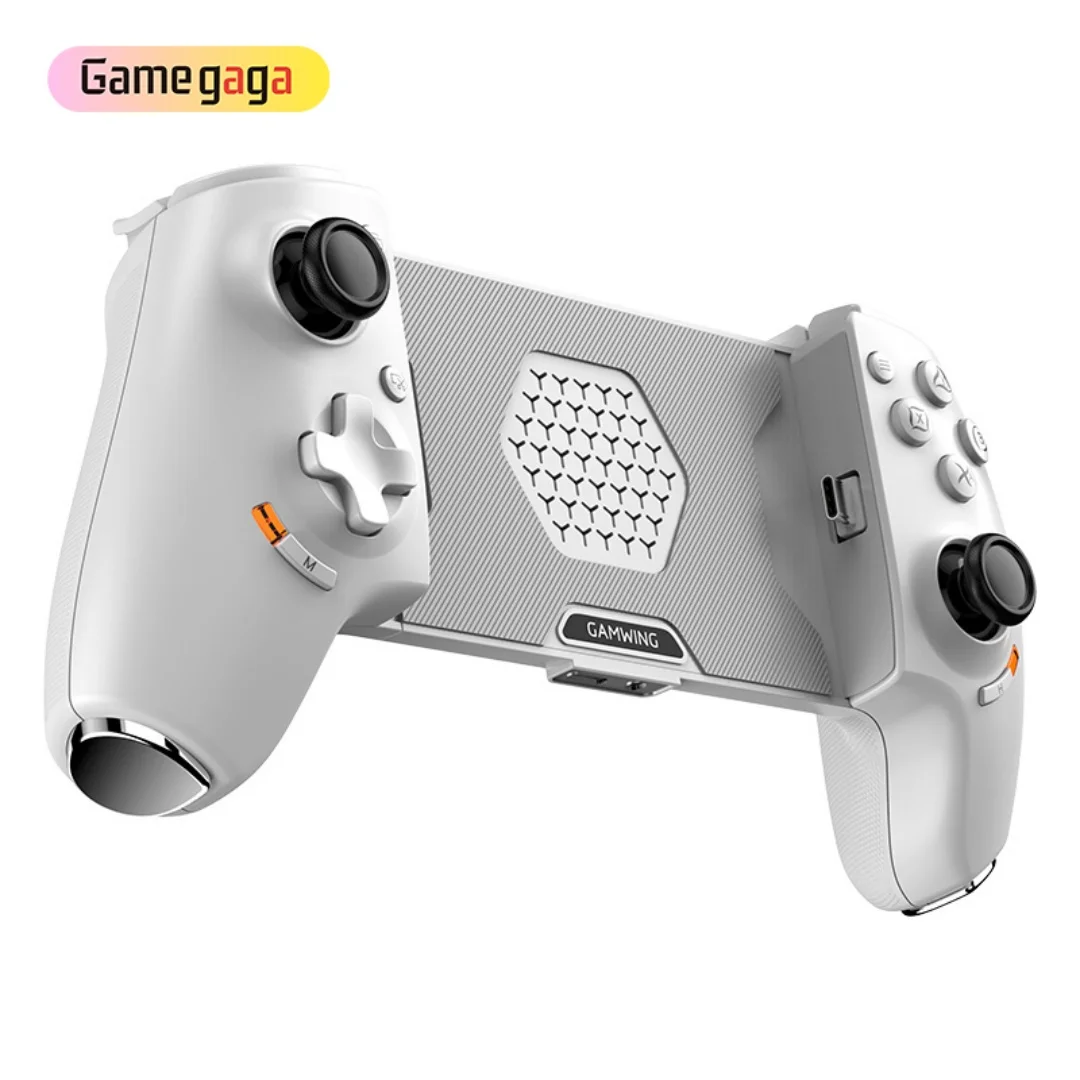
Three 2026 developments move beyond incremental upgrades:
| Solution | Key Advantage | Potential Issue | Budget |
|---|---|---|---|
| TMR + Magnetic Faceplates | Drift resistance + instant ergonomic swaps (e.g., concave vs. convex grips) | Magnetic alignment can loosen after ~2 years of heavy use | $85–$119 |
| Recycled-Shell OEM Refresh | Same firmware/ecosystem as original—now with 65% PCR plastic | No TMR upgrade; still uses legacy stick tech | $70–$79 |
| Open-Firmware Modular Units | Community-supported remapping, Linux-compatible drivers, repair documentation | Less polished UI; no official game studio partnerships | $99–$139 |
Customer Feedback Synthesis
Based on aggregated reviews (2025–2026, across Amazon, Best Buy, and specialty retailers), top recurring themes:
- Highly praised: TMR-equipped sticks retain accuracy after 400+ hours; magnetic panels simplify cleaning and grip switching; recyclable packaging reduced unboxing waste by ~30% per unit.
- Frequently cited frustrations: Inconsistent firmware update rollout across regions; lack of macOS-native configuration apps; rear paddle tension calibration requiring trial-and-error.
Maintenance, Safety & Legal Considerations
No regulatory certifications (e.g., FCC, CE) have changed for controllers in 2026—but two practical considerations stand out:
- Battery safety: Lithium-ion cells in controllers must comply with UN 38.3 transport standards. Reputable brands disclose cell chemistry (e.g., “LiCoO₂, 750mAh”) and thermal cutoff specs. Avoid units without overcharge protection circuitry.
- Repairability rights: As of 2026, 12 U.S. states and the EU enforce right-to-repair mandates for consumer electronics. Controllers sold in those regions must provide spare parts and service manuals for ≥7 years post-launch.
- No legal restrictions apply to TMR sensors, modularity, or recycled materials—they’re standardized components, not regulated tech.
Conclusion
If you need consistent analog precision across 500+ hours of play, choose a TMR-equipped controller—even if it costs $15 more upfront. If you prioritize ecosystem integration over longevity, an OEM model remains rational—especially if you already own one and rarely encounter drift. If you compete, stream, or value repairability and sustainability equally, modular pro units deliver measurable ROI within 18 months. If you’re a typical user, you don’t need to overthink this: start with drift resistance, then add modularity only if your hands fatigue or your play patterns evolve.